Korea Property Tax Overhaul 2026: What Investors Must Know
“`html
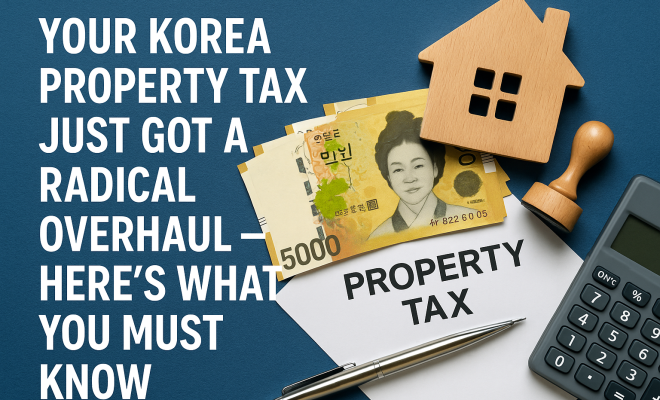
If you own property in South Korea, or if you’re even just thinking about investing there, you’re about to see some pretty dramatic changes. The government recently dropped a bombshell: a complete revamp of its comprehensive real estate tax system. This isn’t just a tweak; it’s a fundamental shift in how property is taxed, and it’s going to ripple through the entire market. The core idea? Moving the tax base from simply counting the number of homes you own to assessing the total combined value of your properties. This Korea property tax reform, announced on July 26, 2026, is a big deal, and it’s already sparking intense debate.
For years, the system has been criticized for penalizing people who might own a few smaller, less valuable homes, while potentially letting owners of single, extremely high-value properties off with a comparatively lighter burden. The new approach aims to correct that perceived imbalance. The government’s stated goal is to ease the load on those with multiple lower-value properties, while simultaneously ratcheting up the taxes on the truly ultra-high-end real estate, especially those palatial homes or luxury apartments clocking in at 3 to 4 billion won or more. It’s a move that has significant implications for wealth distribution, investment strategies, and the very fabric of the South Korean housing market.
The Rationale Behind the Korea Property Tax Reform: Fairness or Financial Engineering?
So, why now? The South Korean government, like many around the world, has grappled with housing affordability and wealth inequality for quite some time. The previous comprehensive real estate tax system, often referred to as the ‘Jongbuse,’ was originally designed to curb speculative investment and stabilize housing prices. However, its focus on the number of properties owned, rather than their aggregated value, created some peculiar outcomes. Imagine someone owning three modest apartments in less affluent areas, each worth, say, 300 million won. Under the old system, they’d face a higher comprehensive real estate tax burden than an individual owning a single, sprawling penthouse in Gangnam valued at 2 billion won. Does that seem fair? To many, it didn’t.
This structural anomaly became a point of contention, especially as property values surged in recent years. Critics argued that the system disproportionately affected middle-class families who might have inherited a small property or bought a second, smaller home for a child or as a retirement investment, while the truly wealthy, who could consolidate their assets into one or two opulent residences, faced a lighter relative burden. The government, under pressure to address these equity concerns, decided a dramatic change was necessary. This Korea property tax reform isn’t just about collecting more revenue; it’s fundamentally about recalibrating who pays what, and why.
It’s also important to consider the broader economic context. South Korea’s real estate market has seen periods of intense speculation and price volatility. Governments frequently use taxation as a tool to cool down overheated markets or to redirect investment. By targeting ultra-high-value properties more aggressively, the administration might be hoping to discourage excessive concentration of wealth in luxury real estate, or at least to ensure that those who benefit most from rising property values contribute more proportionally to the national coffers. It’s a complex dance between economic policy, social equity, and political expediency.
From Counting Doors to Calculating Worth: The Core Mechanism of Change
Let’s get down to the brass tacks of this Korea property tax reform. The most striking element is the shift from a ‘per-unit’ assessment to a ‘total aggregated value’ assessment. Previously, if you owned, say, five residential properties, you were subject to a progressive tax rate based on the fact that you owned multiple units, regardless of their individual or collective modest values. The tax bracket you fell into was heavily influenced by that headcount.
Now, the government will tally up the official market value of all your residential properties. It doesn’t matter if you own two homes or ten; what matters is the grand total. If that total value crosses a certain threshold, you’ll be subject to the comprehensive real estate tax. And crucially, the higher that aggregated value, the higher the progressive tax rate applied. This is a crucial distinction. It means that the person with five small apartments totaling 1.5 billion won might now pay less than someone with a single luxury villa worth 2.5 billion won, whereas under the old system, the person with five apartments would almost certainly have paid more due to the sheer number of properties.
This change is designed to be a win for those who hold multiple, lower-value assets. Think about a family that owns their primary residence, a small apartment for rental income, and maybe a tiny inherited cabin in the countryside. Under the old rules, simply having three properties could push them into a higher tax bracket. Now, if the combined value of those three properties is still relatively modest, their comprehensive real estate tax burden should decrease. Conversely, if you own a few sprawling estates or a portfolio of high-end apartments that collectively reach several billion won, you’re likely looking at a significant increase in your tax bill. The government is essentially saying: it’s not how many you have, but how much they’re all worth together that counts.
The Public Debate: Where the Rubber Meets the Road for Korea Property Tax Reform
While the announcement on July 26, 2026, laid out the broad strokes, the devil, as always, will be in the details. The South Korean government isn’t just unilaterally imposing this; they’ve wisely scheduled a national public debate for July 27, 2026. This isn’t just a formality; it’s a crucial step in ensuring that the specific criteria and thresholds are established with some degree of public consensus, or at least with a full airing of concerns.
Expect fireworks. Property taxation is rarely a quiet affair, and this Korea property tax reform is no exception. We’ll likely see passionate arguments from various stakeholders. Owners of high-value properties, perhaps those who previously benefited from the old system, will undoubtedly raise concerns about potential disincentives for investment, unfair targeting of wealth, or even the practicalities of valuation. On the other hand, groups advocating for greater social equity and housing affordability will likely champion the changes, perhaps even pushing for more aggressive thresholds or higher rates. (See: Taxation in South Korea.)
Key questions will emerge: What will be the exact threshold at which the comprehensive real estate tax kicks in for aggregated values? How will ‘market value’ be assessed and updated to ensure fairness and prevent manipulation? Will there be exemptions or special considerations for certain types of properties, like those used for public good or inherited family homes? The public debate will be the arena where these critical details are hammered out, and where the government will have to balance its policy objectives with the practical realities and political sensitivities of its populace.
Who Wins and Who Loses? A Look at the Impact on Property Owners
Let’s be clear: this Korea property tax reform creates winners and losers, or at least those whose tax burdens will lighten and those whose burdens will grow heavier. The clear beneficiaries are owners of multiple lower-value homes. If you own, say, three apartments, each valued at 500 million won, your total property value is 1.5 billion won. Under the old system, simply owning three properties could have landed you in a higher tax bracket. Under the new system, if the aggregated threshold for comprehensive real estate tax is, for example, 2 billion won, you might find yourself paying less, or even falling below the threshold entirely, depending on the specifics.
Conversely, owners of ultra-high-end properties are squarely in the crosshairs. If you own a single luxury villa worth 3 billion won, or a combination of properties that total 4 billion won or more, you should brace yourself for a significantly higher tax bill. The government explicitly mentioned properties valued at 3 to 4 billion won or more as targets for increased taxation. This isn’t just about tweaking a few percentages; it could mean substantial annual increases for the wealthiest property holders, potentially running into hundreds of millions of won for the most expensive assets.
There’s also a middle ground to consider. What about individuals with a single, moderately high-value property? Their situation might remain relatively stable, or they might see a slight adjustment depending on how the new progressive tax brackets are structured. The key takeaway is that the days of strategically distributing wealth across multiple, individually modest properties to minimize comprehensive real estate tax are likely over. The focus is now firmly on the collective worth of your real estate portfolio.
Broader Market Implications: What This Means for Real Estate and Investment
This Korea property tax reform isn’t just about individual tax bills; it’s poised to send ripples throughout the broader real estate market and influence investment decisions. One immediate effect could be a shift in demand. With lower-value multi-property owners getting a break, we might see continued, or even increased, interest in more affordable housing units. This could help stabilize prices in those segments, or even provide a slight boost.
On the flip side, the luxury real estate market could see some interesting dynamics. Owners of ultra-high-end properties facing substantially higher tax burdens might consider divesting some assets, especially if they own multiple such properties. This could lead to an increase in supply in the luxury segment, potentially softening prices or at least slowing their appreciation. We might also see a shift in how wealth is held, with some investors perhaps diversifying away from high-value residential real estate into other asset classes that aren’t subject to such aggressive property taxation.
Moreover, the reform could influence urban development. If the tax burden on ultra-high-value properties becomes significant, it might disincentivize the construction of purely speculative luxury developments, pushing developers towards more mid-range or essential housing projects. It’s a complex interplay, and the full extent of these market shifts will only become clear over time, but it’s safe to say that anyone involved in real estate in South Korea needs to pay very close attention to these developments.
The Wealth Distribution Angle: A Push Towards Equity
At its heart, this Korea property tax reform is a powerful statement about wealth distribution and social equity. The government is explicitly trying to level the playing field, or at least tilt it more towards those with fewer resources. By increasing the tax burden on the wealthiest property owners, the administration is signaling its commitment to addressing the growing gap between the rich and the rest of society.
This isn’t an isolated phenomenon in global politics. Many countries are grappling with how to make their tax systems more progressive and how to ensure that economic growth benefits everyone, not just a select few. In South Korea, where rapid economic development has sometimes led to significant wealth disparities, such a move carries particular resonance. It’s a political act as much as an economic one, aimed at assuaging public concerns about fairness and the concentration of wealth in the hands of a few.
Of course, there will be arguments about whether this approach actually achieves its goals, or if it might have unintended consequences. Some might argue that high taxes on luxury properties could stifle investment and economic growth. Others will counter that a fairer society, where the benefits of prosperity are more widely shared, is a stronger and more stable society in the long run. The debate about wealth distribution is never simple, but this tax reform unequivocally places South Korea on the side of using fiscal policy to actively reshape economic equity.
Expert Perspectives: Weighing the Economic and Social Impacts
Economists are divided on the long-term effects of such a significant tax overhaul. Dr. Lee Min-jun, a prominent economist specializing in real estate at Seoul National University, suggests that while the reform addresses a clear equity issue, the government must carefully monitor its impact on market liquidity. “There’s a risk that overly aggressive taxation on high-value properties could create a ‘locked-in’ effect, where owners are reluctant to sell due to the high transaction and capital gains taxes that often accompany property sales, especially after a significant value increase,” he noted in a recent interview. This could, paradoxically, reduce the supply of luxury homes on the market, potentially keeping prices high despite the increased annual tax burden.
On the other hand, social policy analysts like Professor Kim Ji-yeon from Yonsei University emphasize the crucial role of such reforms in fostering social cohesion. “When housing affordability becomes a national crisis, and wealth becomes visibly concentrated in luxury assets, it erodes public trust,” she argues. “This reform, even with potential market frictions, sends a powerful message that the government is responsive to the struggles of ordinary citizens. The social benefits of perceived fairness can outweigh some short-term economic adjustments.” These varying perspectives highlight the intricate balance policymakers must strike between economic efficiency and social justice when implementing such sweeping changes. (See: South Korea's property tax changes.)
Comparison with International Models: Learning from Global Tax Regimes
South Korea isn’t the first country to grapple with property tax reform aimed at wealth redistribution. Many developed nations employ various forms of progressive property taxation. For instance, countries like France and Switzerland have wealth taxes that often include real estate as a component, though these have seen mixed success and frequent revisions. In the United States, property taxes are generally levied at the local level and are based on assessed value, but the progressive nature often comes through state-level income taxes on capital gains from property sales rather than an annual wealth tax on aggregated property value.
Japan, a close neighbor, has a fixed asset tax and a city planning tax, both based on assessed value, with some exemptions and special rates for residential land. While not as overtly focused on wealth redistribution as South Korea’s new reform, Japan’s system aims for stability and local revenue generation. The key difference in Korea’s approach is its explicit, centralized aggregation of all residential property values to determine a national comprehensive real estate tax, placing it more in line with a direct wealth-targeting mechanism than many other systems. Observing the outcomes in these diverse international contexts offers valuable lessons for South Korea as it refines its own unique approach.
Legal and Financial Ramifications: A Bonanza for Advisors
For individuals and businesses navigating this new landscape, the legal and financial ramifications are substantial. This isn’t a DIY project for your average property owner. The complexities of the new tax base, the valuation methods, and the progressive rates mean that expert advice will be more crucial than ever. This creates a significant monetization angle for various professional services.
Tax lawyers and consultants will be in high demand, helping clients understand their new obligations, identify potential exemptions, and strategically plan their property holdings to optimize their tax situation. Financial advisors will need to re-evaluate investment portfolios, particularly for high-net-worth clients whose real estate assets might now incur a much heavier tax burden. They’ll be advising on diversification, asset restructuring, and long-term financial planning in light of the new rules.
Real estate platforms and agencies will also feel the impact. They’ll need to educate their clients, update their valuation models, and perhaps even adjust their marketing strategies to reflect the changing tax landscape. For these professionals, the Korea property tax reform isn’t just a policy change; it’s a massive business opportunity, as individuals and companies scramble to adapt and ensure compliance while minimizing their financial exposure.
Looking Ahead: The Road from Debate to Implementation
The national public debate on July 27, 2026, is just the beginning of a longer process. Once opinions are gathered, the government will need to draft specific legislation, outlining the exact thresholds, rates, and implementation timelines. This legislative process itself can be lengthy and fraught with further debate, amendments, and political maneuvering. It’s unlikely that the final version of the law will look exactly like the initial proposal, as various interest groups push for their perspectives to be incorporated. (the unseen force in housing)
Even after the law is passed, there will be a period of adjustment. Property owners, tax authorities, and the real estate industry will need time to understand and adapt to the new rules. There will undoubtedly be edge cases, interpretive challenges, and perhaps even legal challenges to specific aspects of the reform. Effective communication from the government will be paramount to ensure clarity and minimize confusion during this transition period.
Ultimately, the success of this Korea property tax reform will be measured not just by its ability to generate revenue or shift tax burdens, but by its impact on housing affordability, wealth distribution, and the overall stability of the South Korean economy. It’s an ambitious undertaking, and its unfolding will be closely watched both domestically and internationally.
Preparing for the New Era of Korean Property Taxation
For anyone with a stake in South Korean real estate, now is the time to get proactive. Don’t wait until the final legislation is enacted to start thinking about how these changes will affect you. If you own multiple properties, especially if some are of high value, you absolutely need to consult with a tax professional or financial advisor who specializes in Korean property law. They can help you model different scenarios, understand your potential future tax liabilities, and explore any available strategies for minimizing your burden within the bounds of the new law.
Even if you own a single property, it’s worth understanding the new valuation methods and how they might impact your future comprehensive real estate tax. Stay informed by following the news and the outcomes of the public debate. The landscape of Korea property tax reform is undergoing a significant transformation, and being prepared is your best defense against unexpected financial surprises. This isn’t just a policy change; it’s a recalibration of the fundamental relationship between property ownership and taxation in one of Asia’s most dynamic economies. You’ll want to be on top of it. (See: New property tax reform in South Korea.)
Frequently Asked Questions About Korea Property Tax Reform
What is the primary goal of the Korea property tax reform?
The main goal is to shift the basis of the comprehensive real estate tax from the number of properties owned to the total aggregated value of all residential properties an individual owns. This aims to ease the burden on owners of multiple lower-value properties while increasing taxes on ultra-high-value real estate to promote fairness and address wealth inequality.
When was this reform announced, and when will it likely take effect?
The reform was announced on July 26, 2026. A national public debate is scheduled for July 27, 2026. After this, specific legislation will be drafted and passed. The exact implementation timeline will depend on the legislative process, but it’s crucial to stay informed as details emerge.
How does the new “total aggregated value” assessment work?
Instead of taxing based on how many separate residential units you own, the government will calculate the combined official market value of all your residential properties. If this total value exceeds a certain threshold, you’ll be subject to the comprehensive real estate tax, with progressive rates applying to higher total values.
Will foreign property owners in South Korea be affected by this reform?
Yes, if you own residential property in South Korea, regardless of your nationality, you will be subject to the new comprehensive real estate tax rules. Foreign investors should seek expert advice to understand their specific obligations and potential tax implications.
What are the potential impacts on the luxury housing market?
The luxury housing market could see increased supply as owners of ultra-high-value properties face higher tax burdens, potentially leading them to divest some assets. This might soften prices or slow their appreciation in the high-end segment, and could also shift investment away from speculative luxury developments towards more mid-range housing.
Are there any exemptions or special considerations planned?
The details regarding exemptions or special considerations are expected to be discussed during the public debate and finalized in the legislative process. It’s common for tax systems to include provisions for certain types of properties, such as those used for public good or inherited family homes, but specifics are yet to be determined.
What should property owners do to prepare for these changes?
Property owners, especially those with multiple or high-value residential properties, should consult with a tax professional or financial advisor specializing in Korean property law. They can help you understand potential tax liabilities, explore optimization strategies, and keep you updated on the evolving legislation. Staying informed through official government announcements and reputable news sources is also vital.
“`
Trending Now
- our breakdown of retatrutide weight loss: the triple-threat drug that could redefine obesity treatment
- This New AI Crypto Project Could…
- our breakdown of unseen danger: new ‘ghostware’ threatening america’s water and power is more insidious than you think
- read the full story
Frequently Asked Questions
What changes were made to property tax in South Korea?
The South Korean government has overhauled its property tax system by shifting from taxing the number of homes owned to assessing the total combined value of properties. This reform aims to create a fairer tax structure, especially targeting ultra-high-end real estate while easing the burden on owners of multiple lower-value properties.
How will the new property tax affect homeowners in Korea?
The new property tax system will likely increase taxes for owners of high-value properties, such as luxury homes worth 3 to 4 billion won or more. In contrast, it aims to alleviate the tax burden on those with multiple lower-value properties, promoting a more equitable distribution of tax responsibilities.
Why did South Korea change its property tax system?
The reform was prompted by ongoing concerns over housing affordability and wealth inequality. The previous tax system, which focused on the number of properties owned, was criticized for unfairly penalizing owners of smaller homes while favoring those with high-value properties, necessitating a change for fairness.
When was the new property tax reform announced in South Korea?
The comprehensive property tax reform in South Korea was announced on July 26, 2026. This significant change marks a pivotal moment in the country's real estate taxation approach, aiming to address previous imbalances in the tax burden.
What is the impact of Korea's property tax reform on investors?
Investors in South Korea will need to reassess their strategies due to the new property tax system. The focus on property value rather than quantity means that investments in high-end real estate may incur higher taxes, potentially affecting profitability and investment decisions moving forward.
Agree or disagree? Drop a comment and tell us what you think.