Social Media & Youth Mental Health: A 2026 Crisis
It’s an almost universal truth for parents and educators these days: the constant hum of social media in the lives of young people. What once seemed like a harmless way for teens to connect and explore has, for many, morphed into a source of genuine concern. And now, fresh research is bringing some truly stark numbers to light, painting a picture that’s far more troubling than many might have imagined. We’re talking about a direct, alarming link between how much time teenagers spend scrolling and serious mental health issues, including a dramatic rise in anxiety and suicidal ideation among youth.
The findings, published on July 24, 2026, by UTHealth Houston, aren’t just theoretical; they come from a long-term study that tracked over a thousand young individuals for years. If you’ve ever worried about your child’s phone habits, this research provides a potent, data-driven explanation for those gut feelings. It underscores a growing crisis that demands our immediate attention, especially when considering the widespread impact of social media anxiety in youth.
1. The Alarming Numbers: A Double-Edged Screen
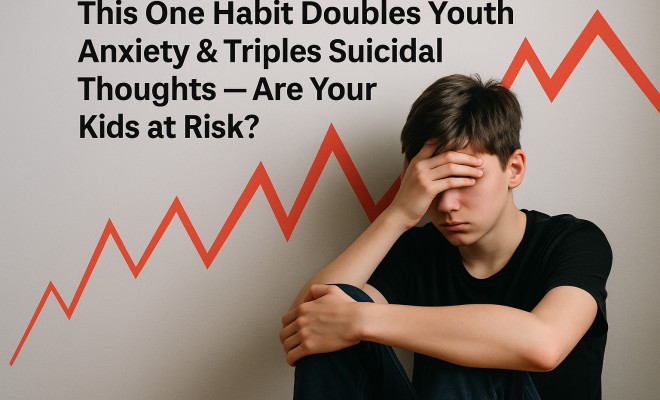
Let’s cut right to the chase with the most compelling data point from the UTHealth Houston study: teenagers who spend six or more hours a day on social media platforms are, quite literally, twice as likely to exhibit symptoms of anxiety. Think about that for a moment. Doubling the risk of anxiety isn’t a minor correlation; it’s a significant red flag that speaks volumes about the psychological toll of excessive digital engagement. This isn’t just about feeling a bit stressed; it’s about persistent worry, nervousness, and the kind of unease that can profoundly impact a young person’s daily life, academic performance, and social interactions. For more on this, see early social media exposure.
But the statistics don’t stop there, and frankly, they get even more concerning. The same research revealed that these high-usage teens are also three times more likely to report suicidal ideation compared to their peers who keep their daily social media use under an hour. Tripling the risk of suicidal thoughts is a statistic that should give every parent, teacher, and policymaker pause. It highlights a critical intersection between digital habits and the most severe forms of mental distress, making the conversation around social media anxiety in youth an urgent one.
2. A Decade of Data: Tracking Youth from 12 to 25
What makes this particular study so impactful isn’t just the raw numbers, but the robust methodology behind them. This wasn’t a snapshot survey; it was a longitudinal study, meaning researchers followed the same group of individuals over a significant period. Specifically, they tracked 1,066 young people, beginning when they were 12 years old and continuing with annual surveys until 2025. This kind of long-term tracking is invaluable because it allows researchers to observe trends, establish clearer patterns, and understand how habits and mental health evolve over time, rather than just identifying correlations at a single point.
By observing these young individuals as they navigated the crucial developmental stages of adolescence and early adulthood, the study provides a much richer understanding of the relationship between social media exposure and mental health outcomes. It helps us move beyond mere speculation and offers concrete evidence of how sustained, high levels of social media engagement can contribute to the development of conditions like social media anxiety in youth. The consistent data collection over more than a decade lends significant weight and credibility to the findings, making them harder to dismiss as anomalous or coincidental.
3. Gendered Vulnerabilities: Girls Bear a Heavier Burden
One particularly striking finding from the UTHealth Houston research points to a clear gender disparity in both social media usage and its impact. The study revealed that girls generally exhibited higher daily usage of social media platforms compared to boys. This isn’t entirely new information, as other studies have also pointed to girls spending more time on these platforms, often engaging in different types of interactions and content consumption.
However, what’s truly concerning here is the amplified connection between this increased exposure and the manifestation of anxiety symptoms in girls. The research highlighted a more pronounced link between social media use and anxiety among young women, suggesting they may be more susceptible to the negative psychological effects of constant scrolling and digital comparison. This specific vulnerability underscores the need for targeted interventions and support systems tailored to address the unique pressures and experiences girls face online, especially when considering the pervasive issue of social media anxiety in youth. (See: CDC on youth mental health.)
4. The Twin Engines of Distress: Social Comparison and Displacement
The UTHealth Houston researchers identified two primary mechanisms that likely drive the link between heavy social media use and negative mental health outcomes. The first is what they call ‘social comparison.’ Think about it: every time a young person scrolls through their feed, they’re bombarded with curated, often idealized, versions of other people’s lives. Perfect vacations, flawless selfies, exciting achievements – it’s a constant stream of what often appears to be unattainable perfection. This relentless exposure fosters a sense of inadequacy, envy, and self-doubt. When you’re constantly comparing your messy, real life to someone else’s highlight reel, it’s a recipe for feeling ‘less than,’ which directly fuels social media anxiety in youth.
The second mechanism is the ‘displacement of real-world prosocial activities.’ In simpler terms, the more time kids spend glued to their screens, the less time they’re spending engaging in face-to-face interactions, team sports, creative hobbies, or simply being outdoors. These ‘real-world’ activities are crucial for healthy development, building genuine connections, and developing coping skills. When social media displaces these essential experiences, young people miss out on opportunities for authentic belonging, resilience-building, and direct support, leaving them more isolated and vulnerable to mental health challenges. We covered mental health support for youth in more detail.
5. The Chicken or the Egg? Reverse Causality Concerns
It’s a question that always arises in these kinds of studies: Is social media causing the distress, or are distressed youth simply more drawn to social media? The UTHealth Houston research thoughtfully addresses this ‘reverse causality’ hypothesis. They acknowledge that it’s entirely plausible, and likely a contributing factor, that young people who are already struggling with anxiety, depression, or feelings of isolation might turn to social media as a coping mechanism or an escape. For some, it might offer a perceived sense of connection or a distraction from difficult emotions, even if that connection is superficial and the distraction temporary.
This perspective doesn’t negate the direct causal links identified, but rather suggests a complex, bidirectional relationship. It’s not just a one-way street; there’s a feedback loop. Initial distress might lead to increased social media use, which in turn exacerbates feelings of social media anxiety in youth, creating a downward spiral. Understanding this complexity is vital for developing effective interventions, as it implies that simply reducing screen time might not be enough if the underlying distress isn’t also addressed.
6. The Role of Parents: Navigating the Digital Minefield
For parents, these findings are likely to resonate deeply, perhaps confirming nagging suspicions or fears they’ve had for years. The digital landscape is a minefield, and guiding children through it safely feels like an increasingly impossible task. The study’s implications are clear: proactive involvement and setting boundaries around social media use are no longer optional, they’re essential for safeguarding youth mental health. It’s not about being anti-technology, but about fostering a balanced approach.
This means open conversations about what kids are seeing online, teaching digital literacy and critical thinking skills, and modeling healthy screen habits ourselves. Establishing tech-free zones or times, encouraging offline activities, and being present and available for genuine connection can counteract some of the negative effects. It’s a tough sell in a world where screens are ubiquitous, but understanding the stark risks of social media anxiety in youth provides a powerful impetus for consistent, firm parental guidance.
7. A Call to Action for Educators and Policymakers
The findings from UTHealth Houston extend far beyond individual families; they present a critical challenge to educational institutions and governmental bodies. Schools are on the front lines, witnessing the daily impact of social media on students’ focus, self-esteem, and overall well-being. This research should spur educators to integrate comprehensive digital wellness curricula, teaching students not just about internet safety, but also about the psychological effects of social media, healthy engagement, and recognizing the signs of social media anxiety in youth.
Policymakers, too, have a crucial role to play. This isn’t just a mental health crisis; it’s a public health crisis that demands systemic solutions. This could involve funding more research, developing public awareness campaigns, or even exploring regulatory measures for social media platforms themselves – perhaps mandating features that encourage breaks, provide data on usage, or offer more robust parental controls. The escalating youth mental health crisis, exacerbated by digital overuse, requires a concerted, multi-faceted approach from all sectors of society.
8. Beyond the Screen: Rebuilding Real-World Connections
While the focus is often on reducing screen time, it’s equally important to consider what replaces that time. The displacement of ‘real-world prosocial activities’ is a key mechanism identified by the study, meaning that simply taking away a phone without offering alternatives might not be enough. We need to actively encourage and facilitate opportunities for young people to engage in activities that build genuine connections, foster a sense of accomplishment, and provide healthy outlets for stress and creativity. (See: NIMH statistics on anxiety disorders.)
This means prioritizing face-to-face interactions with friends and family, encouraging participation in sports, arts, or community groups, and ensuring access to green spaces and nature. These are the environments where resilience is built, social skills are honed, and a sense of true belonging is cultivated. Reinvesting in these fundamental aspects of youth development can provide a powerful antidote to the isolation and comparison that fuels social media anxiety in youth.
9. What Comes Next: Addressing the Escalating Crisis
The UTHealth Houston study, by providing such compelling and robust data, amplifies an already urgent conversation. The link between high social media use and increased rates of anxiety and suicidal ideation among young people is no longer a matter of speculation; it’s a scientifically validated reality. As this emotionally charged topic continues to gain traction – and rightfully so – it’s crucial that we move beyond simply acknowledging the problem to actively implementing solutions.
The implications for parents, educators, and policymakers are clear: we must prioritize mental health in the digital age. This means fostering open dialogue, equipping young people with coping strategies, and advocating for systemic changes that support healthier digital habits. The mental well-being of an entire generation hangs in the balance, and understanding the profound impact of social media anxiety in youth is the first, critical step towards protecting it.
10. The Nuance of Platform Differences: Is All Social Media Created Equal?
It’s tempting to lump all social media platforms into one big basket, but that might be an oversimplification. While the UTHealth Houston study didn’t specifically break down usage by platform, it’s a crucial area for deeper consideration. Think about the differences between a platform like TikTok, which is heavily algorithm-driven and often features highly curated, performance-based content, versus a more messaging-focused app like Snapchat or even a community forum like Reddit. Each platform has its own unique architecture, content types, and user demographics, which could lead to varying psychological impacts.
For instance, image-heavy platforms like Instagram have long been associated with body image issues and appearance-related anxiety, especially among young girls, due to the constant visual comparison. TikTok’s rapid-fire content delivery and viral trends can create a fear of missing out (FOMO) and pressure to constantly produce new content to stay relevant. On the other hand, platforms that facilitate niche communities and genuine connection over shared interests might, in some cases, offer a sense of belonging for youth who struggle to find it offline. Understanding these platform-specific nuances is vital for developing targeted interventions and helping young people choose digital spaces that are more conducive to their well-being, rather than simply demonizing all social media as a monolithic threat contributing to social media anxiety in youth. There’s a fuller look at screen time discussion.
11. The Role of Algorithms: Designed for Engagement, Not Well-being
It’s important to remember that social media platforms are, at their core, businesses. Their primary goal is to maximize user engagement, which translates into more ad revenue. How do they achieve this? Through sophisticated algorithms designed to keep you scrolling, watching, and interacting for as long as possible. These algorithms learn what captures a user’s attention – often content that evokes strong emotional responses, whether positive or negative – and then feed them more of it.
For young people, whose brains are still developing and who may be more susceptible to peer influence and emotional contagion, this algorithmic manipulation can be particularly potent and harmful. If a teen is feeling insecure, the algorithm might show them more content related to idealized beauty standards, inadvertently deepening their social comparison anxiety. If they’re struggling with loneliness, it might push them into echo chambers that reinforce negative self-talk. The endless scroll isn’t accidental; it’s a carefully engineered experience. Recognizing that these platforms are not neutral tools, but rather designed to exploit psychological vulnerabilities, is a critical step in addressing the root causes of social media anxiety in youth. See also limiting children's screen time.
12. Expert Perspectives: What Mental Health Professionals Are Seeing
Beyond academic studies, mental health professionals on the ground are consistently reporting a shift in the presenting concerns of their young clients. Therapists, school counselors, and child psychologists frequently observe an uptick in anxiety, depression, and self-esteem issues directly attributed to social media use. They often see cases where cyberbullying has led to severe emotional distress, or where the pressure to maintain an online persona has become overwhelming. (See: AP News on social media impact.)
Dr. Emily Jones, a child and adolescent psychiatrist, notes, “We’re seeing a generation of kids who are constantly ‘on display.’ The expectation to be accessible 24/7, combined with the curated perfection they see online, creates an unprecedented level of performance anxiety. Many young people describe feeling like they can’t make a mistake online because it will be permanent, or that their self-worth is tied to likes and followers. This isn’t just teenage angst; it’s a deep-seated insecurity fueled by the digital environment, leading to significant social media anxiety in youth.” These anecdotal reports from clinicians provide a powerful qualitative complement to the quantitative data, painting a holistic picture of the crisis.
13. Comparisons to Past Technological Shifts: Is This Different?
Critics sometimes argue that concerns about social media are just a modern version of moral panics that accompanied previous technological shifts – radio, television, video games. While it’s true that each new medium brings its own set of societal anxieties, there are compelling arguments that social media is fundamentally different, especially for developing brains.
Unlike passive consumption of TV or gaming, social media is interactive, pervasive, and deeply personal. It’s a constant, two-way mirror reflecting and distorting self-image, social standing, and identity. It’s available on a device carried everywhere, blurring the lines between public and private life, and between real and digital interactions. The immediate feedback loops (likes, comments, shares) create a variable reward system that can be highly addictive, similar to gambling, which is particularly impactful on adolescent brains still developing impulse control and reward pathways. These unique characteristics suggest that social media’s impact isn’t just another iteration of an old problem, but a new challenge that warrants distinct attention to address the rising social media anxiety in youth.
14. Long-Term Societal Implications: A Generation Shaped by the Screen
The current youth mental health crisis, significantly influenced by social media, isn’t just about individual well-being; it has broader societal implications. What kind of adults will emerge from a childhood defined by constant digital comparison, superficial connections, and pervasive anxiety? There’s concern that this generation may struggle with deeper face-to-face communication, empathy, and resilience in the face of real-world challenges, potentially leading to a more anxious, isolated, and less civically engaged populace.
Furthermore, the economic impact of a population struggling with widespread mental health issues is substantial, affecting productivity, healthcare costs, and overall quality of life. Investing in interventions now isn’t just about helping individual kids; it’s about safeguarding the future health and stability of society. The long-term consequences of failing to address social media anxiety in youth could be profound, shaping educational outcomes, workforce dynamics, and even democratic participation for decades to come.
Frequently Asked Questions About Social Media Anxiety in Youth
- What exactly is social media anxiety?
- Social media anxiety refers to a type of anxiety that arises from or is exacerbated by the use of social media platforms. For youth, it often manifests as a persistent worry about their online presence, fear of missing out (FOMO), constant comparison to others’ curated lives, anxiety about receiving likes or comments, and distress over cyberbullying or negative interactions. It can lead to symptoms like restlessness, difficulty concentrating, sleep disturbances, and physical tension.
- How much social media use is considered “too much” for teenagers?
- The UTHealth Houston study highlights that six or more hours a day significantly doubles the risk of anxiety. While there’s no single magic number, many experts suggest aiming for less than 2-3 hours of recreational screen time daily for teenagers, excluding schoolwork. The quality of engagement also matters. Passive scrolling often has a more negative impact than actively creating or connecting with close friends. The key is balance and ensuring it doesn’t displace essential offline activities.
- Are certain social media platforms worse than others for youth mental health?
- While the UTHealth Houston study didn’t differentiate, other research and expert observations suggest platforms that are highly visual (like Instagram, TikTok) and encourage constant comparison or performance can be particularly challenging. Platforms with strong algorithmic feeds designed for endless engagement also pose higher risks. Conversely, platforms that facilitate genuine connection within niche communities or focus on shared interests might have less negative impact, but individual experiences vary widely.
- What are the signs that my child might be experiencing social media anxiety?
- Look for changes in behavior, mood, and sleep patterns. Signs might include increased irritability or sadness, withdrawing from real-world friends and activities, obsessive checking of their phone, difficulty sleeping, expressing feelings of inadequacy or self-consciousness, a sudden drop in academic performance, or physical symptoms like headaches or stomach aches without a clear medical cause. They might also become defensive or secretive about their phone use.
- How can parents talk to their kids about healthy social media use without lecturing?
- Start by listening and expressing empathy rather than judgment. Share your concerns gently and ask open-ended questions like, “How does social media make you feel sometimes?” or “What’s the best and worst part about being online?” Talk about your own struggles with screen time. Focus on the benefits of offline activities and brain health, rather than just the dangers of online use. Establish family screen-time rules collaboratively, explaining the ‘why’ behind them, and model good behavior yourself.
- What role do schools play in addressing social media anxiety?
- Schools are crucial. They can implement digital wellness curricula that teach critical thinking about online content, cyber etiquette, and the psychological impact of social media. Providing accessible mental health resources, fostering strong in-person social connections, and offering tech-free zones or times during the school day can also help. Educating parents and staff is also a vital part of a comprehensive school strategy.
- What can young people do themselves to manage social media anxiety?
- Self-awareness is key. Encourage them to take frequent breaks, turn off notifications, unfollow accounts that make them feel bad, and prioritize real-life interactions. They can try setting time limits on apps, curating their feed to include more positive or inspiring content, and remembering that what they see online is often a highlight reel, not reality. Seeking support from a trusted adult or mental health professional is also a brave and important step.
- Is there a connection between social media anxiety and cyberbullying?
- Absolutely. Cyberbullying is a significant contributor to social media anxiety, often causing immense distress, fear, and a reluctance to engage online or offline. The constant fear of being targeted or shamed can lead to heightened anxiety, low self-esteem, and in severe cases, suicidal ideation. Platforms need better tools to combat cyberbullying, and youth need strong support systems if they become targets.
Trending Now
Frequently Asked Questions
How does social media affect youth mental health?
Research indicates that excessive social media use, particularly six or more hours a day, significantly increases the likelihood of anxiety symptoms among teenagers. This digital engagement can lead to persistent worry and emotional distress, impacting their daily lives and mental well-being.
What are the signs of anxiety in teens?
Signs of anxiety in teens can include persistent feelings of worry, nervousness, irritability, difficulty concentrating, and changes in sleep or appetite. If a teen is spending a lot of time on social media, these symptoms may be exacerbated.
What is the link between social media and suicidal thoughts in youth?
Recent studies show that teens who spend excessive time on social media are three times more likely to experience suicidal thoughts. This alarming trend highlights the serious mental health risks associated with prolonged digital engagement.
How can parents help reduce anxiety caused by social media?
Parents can help by setting limits on screen time, encouraging offline activities, and fostering open communication about their children's online experiences. Being proactive can help mitigate the risks associated with excessive social media use.
What age group is most affected by social media anxiety?
While all age groups can be affected, teenagers are particularly vulnerable to social media anxiety due to their developmental stage. The pressure to engage online can lead to heightened anxiety and mental health issues during these formative years.
Agree or disagree? Drop a comment and tell us what you think.