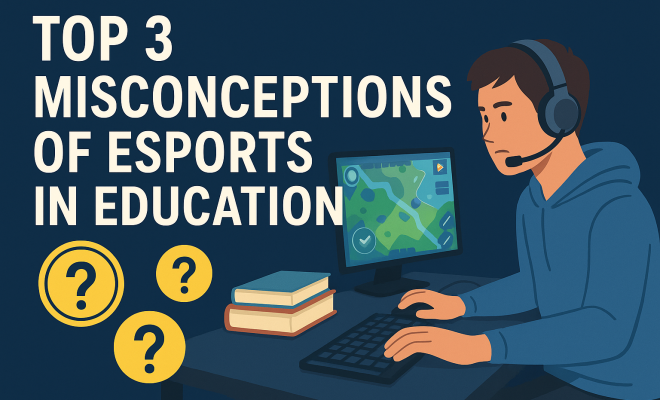
Top 3 Misconceptions Of Esports In Education
“`html
Esports in education has been a hot topic in recent years, garnering attention from educators, parents, and students alike. As schools explore ways to integrate esports into their curricula, several misconceptions about its value and impact have emerged. This article aims to debunk the top three myths surrounding esports in education, providing you with a clearer understanding of its potential benefits and challenges.
1. Esports Are Just Video Games
One of the most common misconceptions is that esports in education are merely about playing video games recreationally. While it’s true that competitive gaming involves playing video games, the context and framework of esports is fundamentally different from casual gaming. In an educational setting, esports are structured, competitive, and designed to promote teamwork, critical thinking, and problem-solving skills among students.
Educational esports programs often focus on specific games that require strategic planning, coordination, and communication. For instance, games like League of Legends or Overwatch involve teamwork and strategy that mirror real-world scenarios. Players must assess the strengths and weaknesses of their teammates and opponents, make quick decisions, and adapt their strategies accordingly. This competitive aspect helps students build essential soft skills that are increasingly valued in today’s job market.
2. Esports Encourage Negative Behavior
Another misconception is that engaging students in esports promotes negative behavior, such as aggression or addiction. Critics often highlight instances of toxic behavior in gaming communities without considering the controlled environment that educational esports provide. In fact, many schools implementing esports have established strict codes of conduct that promote respect, fair play, and sportsmanship among participants.
Moreover, esports programs can serve as a platform to teach students about digital citizenship and responsible gaming. Schools incorporate discussions about online etiquette, the importance of mental health, and the consequences of negative behavior in gaming. For example, programs like Gaming for Good encourage students to focus on empathy and collaboration, emphasizing that successful teams are built on mutual respect and support. This builds on tips for inspiring students.
3. Esports Are Not an Effective Educational Tool
Some skeptics argue that esports lack educational value and fail to contribute to a student’s academic growth. However, a growing body of research suggests otherwise. Studies indicate that participation in esports can lead to improved academic performance and enhanced engagement in school. For instance, a report by the National Association of Esports Coaches and Directors highlights that students involved in esports tend to have higher GPAs and improved attendance rates compared to their peers.
Esports can also foster a sense of community and inclusion among students, particularly those who may feel marginalized in traditional sports. For example, students who struggle with social interactions may find it easier to connect with peers through shared interests in gaming. Schools that implement esports also report increased participation from diverse student populations, bridging gaps between different social groups.
4. Esports Are Only for Tech-Savvy Students
Another misconception is that esports in education are only suitable for students who are already familiar with technology or gaming. This belief can deter schools from implementing esports programs, leading to missed opportunities for a wide range of students. In reality, esports can be accessible to all students, regardless of their prior experience.
Many educational institutions provide training sessions and workshops to help students develop essential gaming skills and strategies. These initiatives often include mentorship programs where experienced players can guide newcomers. By promoting inclusivity, schools can ensure that students from various backgrounds can benefit from esports participation, fostering diverse skill sets and perspectives.
5. Esports Programs Are Too Expensive to Implement
Cost is often cited as a significant barrier to introducing esports in educational settings. While it’s true that setting up an esports program requires an initial investment in equipment and resources, many schools find innovative ways to minimize costs. Community partnerships, sponsorships, and grants aimed at promoting technology in education can help alleviate financial burdens.
Furthermore, schools can start small with basic equipment, gradually expanding their programs as interest and funding grow. Many successful programs have begun with just a few gaming consoles or computers, focusing on an inclusive and engaging environment. The long-term benefits of fostering student engagement, teamwork, and technical skills far outweigh the initial costs involved in launching esports initiatives. (See: New York Times on esports in education.)
6. Esports Have No Career Path
A common myth is that careers in esports are limited to professional gaming. The reality is far more complex; the esports industry offers a variety of career paths, including roles in game design, event management, marketing, content creation, and coaching. As the esports industry continues to grow, it presents numerous opportunities for students who are involved in educational programs.
Many colleges and universities now offer scholarships for students pursuing careers in esports and gaming-related fields. For instance, institutions like Miami University and University of California, Irvine have established esports programs that prepare students for careers in the booming industry. Exposure to esports during high school can provide students with insights into these paths and better prepare them for future opportunities.
7. Esports Replace Traditional Sports
Some argue that the rise of esports will overshadow traditional sports in educational settings. This viewpoint overlooks the complementary nature of both forms of competition. While traditional sports foster physical fitness and teamwork, esports offer unique benefits, including enhanced digital literacy, strategic thinking, and collaboration skills.
Many schools successfully integrate esports alongside traditional sports, creating a more inclusive environment where students can choose their preferred form of competition. Programs often encourage students to participate in both, recognizing that each offers different benefits and experiences. By promoting a diverse range of activities, schools can engage more students and foster a well-rounded educational experience.
8. Esports Programs Lack Structure and Oversight
Finally, there’s a misconception that esports programs lack the structure and oversight that traditional sports possess. In reality, many educational institutions that implement esports establish guidelines, coaching staff, and competition schedules to ensure a well-organized experience for students. This oversight is crucial in fostering a safe and competitive environment.
Additionally, various governing bodies, such as the National Association of Esports Coaches and Directors, provide resources and frameworks for schools looking to develop structured esports programs. These organizations help schools navigate the complexities of running a program, offering support on everything from competition organization to player development. With proper structure in place, esports can thrive in educational environments, providing students with valuable experiences both in and out of the gaming arena.
9. The Growing Importance of Esports in Education
As technology continues to evolve, the relevance of esports in education is becoming more pronounced. Schools are recognizing that integrating esports into their curricula can provide students with necessary skills for the future. According to a report from the Entertainment Software Association, 73% of parents believe that esports can improve teamwork and problem-solving abilities. This growing acceptance reflects a shift in how we view gaming not just as entertainment, but as a potential learning tool.
Esports can also serve as a bridge to introduce students to STEM (science, technology, engineering, and mathematics) concepts. For instance, game design requires a deep understanding of programming, graphics design, and physics, making it an appealing entry point for students interested in these fields. Schools can host coding camps or workshops that focus on game design, allowing students to create their own games while enhancing their technical skills.
10. Academic Performance and Esports
Research continues to indicate a positive correlation between esports participation and academic performance among students. The Journal of Educational Technology & Society published a study showing that students engaged in esports achieved a 20% increase in math scores compared to those not involved in any gaming activities. This change can be attributed to the strategic thinking and analytical skills developed through gameplay. Related reading: Bay Path's STEM initiative.
Additionally, many esports programs include a focus on academic achievement, where students must maintain certain GPA requirements to compete. This policy encourages students to prioritize their studies while still enjoying their passion for gaming. Schools that have adopted this approach often report a significant rise in student motivation and academic commitment.
11. Building Future Leaders
Esports in education can also play a key role in building leadership skills among students. By taking on roles such as team captains or strategists, students learn how to lead and inspire their peers. Many esports teams operate with a hierarchy similar to that of traditional sports, where students must develop skills in communication, conflict resolution, and decision-making.
For example, the High School Esports League has documented success stories of students who, through their involvement in esports, have gone on to lead initiatives in their communities or have taken on leadership roles in college. The experiences gained from managing a team or participating in competitive matches translate well into real-world scenarios.
12. Frequently Asked Questions about Esports in Education
What are the main benefits of esports in education?
Esports in education can enhance student engagement, foster teamwork and communication skills, improve academic performance, and create pathways to careers in technology and gaming. (See: Research on esports and education.)
Are esports programs safe for students?
Yes, when structured properly, esports programs can provide a safe environment for students to engage in gaming. Schools often implement rules and codes of conduct to ensure respectful behavior.
How can schools fund esports programs?
Schools can explore community sponsorships, grants focused on educational technology, and partnerships with local businesses to help fund their esports initiatives.
Are there age restrictions for esports in schools?
This depends on the specific games and the policies of individual schools. Most educational esports programs welcome students from all grades, prioritizing inclusivity and participation.
Can students participate in esports while focusing on academics?
Absolutely! Many esports programs require students to maintain a certain GPA, encouraging them to balance their academic responsibilities with their passion for gaming.
How do esports compare to traditional sports in education?
Both esports and traditional sports offer unique benefits. While traditional sports promote physical fitness, esports enhance digital literacy and critical thinking. Many schools find value in offering both options to engage a wider array of students. See also technology's role in education.
13. The Future of Esports in Education
The future of esports in education looks promising. With the industry rapidly expanding, we can expect more schools to recognize the potential benefits of integrating esports into their curricula. Online platforms and competitive leagues provide students with opportunities to showcase their skills while collaborating with peers from different backgrounds.
As educational policies continue to adapt, esports might become a staple in school programs, similar to traditional sports. This will require ongoing dialogue among educators, parents, and industry professionals to ensure that programs are developed with student well-being and educational objectives in mind. The landscape of education is changing, and esports is poised to play a significant role in shaping the future of learning.
14. The Role of Technology in Esports Education
Technology is at the heart of esports, and its role in education cannot be overstated. Schools that implement esports programs often utilize advanced software and hardware to facilitate effective learning experiences. From communication tools like Discord to streaming platforms such as Twitch, technology helps students develop not only gaming skills but also essential tech-savvy abilities necessary for the modern workforce.
Furthermore, many esports programs incorporate aspects of data analytics, teaching students how to analyze game statistics to improve performance. This hands-on experience with data not only enhances their understanding of gameplay but also provides them with a competitive edge in careers that increasingly rely on data-driven decision-making.
15. Esports and Social Emotional Learning
Esports can significantly contribute to social-emotional learning (SEL), which is an essential component of a well-rounded education. Through participation in esports, students learn to manage emotions, demonstrate empathy, and work collaboratively to achieve common goals. These skills are particularly important in today’s world, where teamwork and emotional intelligence are crucial in both personal and professional contexts.
For example, working with teammates on strategy and responding to in-game challenges helps students develop resilience and adaptability. Schools can leverage these experiences to teach critical SEL concepts, ensuring that students not only excel academically but also grow as well-rounded individuals.
16. Global Perspectives on Esports in Education
Esports is not just a phenomenon in the United States; it has gained significant global traction as well. In countries like South Korea, esports has been integrated into educational systems for years, with schools offering specialized programs and dedicated esports training facilities. These programs have produced some of the best professional gamers in the world and have set a precedent for how educational institutions can leverage esports for student engagement and skill development.
In Europe, countries like Sweden and Germany are also investing in esports education, recognizing the potential for career pathways and the development of critical skills. This international perspective highlights that esports in education is a global movement, with schools worldwide seeking to harness the benefits of competitive gaming. There’s a fuller look at activists reshaping K-12.
17. The Skills Students Learn Through Esports
Students participating in esports develop a plethora of skills that are highly transferrable to various career fields. Strategic thinking and planning are paramount, as players must anticipate their opponent’s moves while coordinating with their teammates. This type of critical thinking is invaluable in careers such as project management, marketing, and even software development.
Additionally, communication skills are honed as students learn to articulate strategies and offer constructive feedback during gameplay. These skills are essential not just in gaming but also in any collaborative work environment. By fostering these competencies, esports can effectively prepare students for success in their future careers.
18. Incorporating Inclusive Practices in Esports
Inclusion is a significant aspect of any educational program, and esports is no exception. Schools can create inclusive esports programs that cater to students of all ability levels, backgrounds, and interests. This might include hosting events specifically designed for students with disabilities, ensuring that everyone has the opportunity to participate and flourish in a competitive environment.
Additionally, schools can utilize diverse game selections that appeal to varying interests and skill levels, making it easier for all students to engage. By creating an inclusive environment, schools not only promote equity but also enhance the overall learning experience, fostering a sense of community among students.
As esports continue to grow in popularity, understanding the realities of esports in education is essential. By debunking these misconceptions, we can pave the way for a future where esports serve as a valuable educational tool, nurturing the next generation of thinkers, leaders, and innovators.
“`
Trending Now
Frequently Asked Questions
What are the benefits of esports in education?
Esports in education promotes teamwork, critical thinking, and problem-solving skills. Students engage in structured, competitive gaming that mirrors real-world scenarios, helping them build essential soft skills valued in the job market.
Are esports just video games?
No, esports in education are not just about casual gaming. They are structured and competitive, focusing on strategic planning, coordination, and communication, which contribute to important educational outcomes.
Do esports promote negative behavior in students?
Contrary to popular belief, educational esports can foster positive behavior. Many schools implement strict codes of conduct that encourage respect, fair play, and sportsmanship, and they also teach digital citizenship.
How do esports help with teamwork skills?
Esports require players to work together, assess strengths and weaknesses, and make quick decisions as a team. This collaborative environment enhances teamwork skills that are crucial in both academic and professional settings.
What misconceptions exist about esports in education?
Common misconceptions include the belief that esports are merely video games and that they promote negative behavior. In reality, esports in education are structured competitions that foster valuable skills and positive conduct.
Have you experienced this yourself? We'd love to hear your story in the comments.