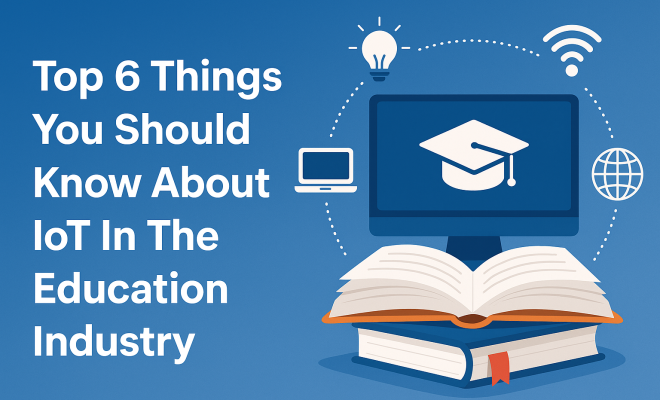
Top 6 Things You Should Know About IoT In The Education Industry
“`html
The Internet of Things (IoT) is not just a buzzword in tech circles; it’s rapidly changing the landscape of various industries, particularly education. From smart classrooms to personalized learning experiences, IoT in education is paving the way for a more interconnected and efficient educational environment. In this article, we will explore six crucial aspects of IoT that every educator and stakeholder should understand to maximize the benefits of this technology.
1. Understanding IoT in Education
At its core, IoT refers to the network of physical devices that connect to the internet and exchange data. This concept is making significant strides in the education sector, where devices like smartboards, learning management systems, and even student devices are becoming increasingly interconnected. Schools are adopting IoT technologies to create smarter, more responsive educational environments.
The integration of IoT in education is not just about technology for technology’s sake. It is about enhancing learning experiences, improving operational efficiency, and providing real-time data analysis to inform teaching methods and curriculum development. Schools can use IoT to track student progress, optimize resources, and provide personalized learning pathways.
2. Enhanced Learning Experiences
One of the most significant benefits of IoT in education is the ability to enhance learning experiences. Smart classrooms equipped with IoT devices enable interactive learning, where students can engage with the content in real time. For instance, IoT-enabled devices can facilitate collaborative projects and allow students to work on group assignments from different locations, breaking down geographical barriers.
Moreover, educational apps and platforms can leverage IoT data to provide personalized learning experiences. These platforms track individual student performance, helping educators tailor instruction to meet each student’s needs. As a result, students can learn at their pace, improving retention and engagement.
3. Data-Driven Decision Making
The integration of IoT in education generates vast amounts of data. This data can be invaluable for educators and administrators looking to make informed decisions. By analyzing data from IoT devices, schools can identify trends in student performance, attendance, and engagement, allowing them to adjust teaching strategies accordingly. We covered ways tech can improve learning in more detail.
For instance, if data shows that students are struggling with a specific subject, educators can implement targeted interventions to address these challenges. Additionally, schools can optimize resources, such as classroom space and teacher assignments, based on real-time data, leading to improved operational efficiency.
4. Improved Safety and Security
Safety is a top priority in any educational institution, and IoT technology plays a crucial role in enhancing security measures. Smart surveillance systems, connected alarms, and access control systems can help create a safer environment for students and staff. With IoT, schools can monitor facilities in real-time, ensuring that any potential threats are addressed promptly.
Furthermore, IoT devices can assist in emergency response situations. For example, a connected building management system can communicate with emergency services, providing real-time data on the school’s layout, allowing for quicker and more effective responses. This integration can substantially enhance the overall safety infrastructure of educational institutions.
5. Cost Efficiency and Resource Management
Implementing IoT solutions can lead to significant cost savings for schools. By using IoT technology, schools can more efficiently manage resources like energy and physical space. Smart lighting and heating systems can automatically adjust based on occupancy, reducing energy consumption and lowering utility bills.
Additionally, inventory management can be improved with IoT. Schools can track supplies and materials in real-time, ensuring that they are adequately stocked while minimizing waste. This level of resource management helps educational institutions operate more efficiently, allowing them to allocate budgets to areas that directly impact student learning and success. (See: New York Times on IoT in Education.)
6. Challenges and Considerations
While the benefits of IoT in education are substantial, there are also challenges that institutions must address. Privacy and security concerns are paramount, as increased connectivity can expose sensitive student data to potential breaches. Schools need to implement robust cybersecurity measures and ensure compliance with regulations regarding data protection. For more on this, see implementing personalized education.
Moreover, there is a learning curve associated with adopting new technologies. Educators and staff must receive training to effectively utilize IoT devices and applications. Investing in professional development and support systems is crucial for a successful transition to an IoT-enhanced educational environment.
7. The Role of IoT in Hybrid Learning Environments
The shift to hybrid learning models, which combine in-person and online education, has been accelerated by the COVID-19 pandemic. IoT technology plays a vital role in facilitating this blended approach. Devices such as smart cameras and interactive whiteboards can connect remote learners with those in the classroom, creating a cohesive learning experience.
For example, a teacher can use an IoT-enabled smartboard to display the work of both in-class and remote students simultaneously. This fosters an inclusive environment where every student feels represented, regardless of where they are learning from. Additionally, IoT can help educators track student engagement in real-time, allowing for immediate adjustments to lesson plans based on student reactions.
8. IoT and Personalized Learning
Personalized learning is a teaching approach tailored to the individual needs and learning paces of each student. IoT devices can revolutionize personalized learning by gathering data on student performance and preferences through various channels. For instance, wearable technology can monitor a student’s physiological responses during lessons, indicating which subjects captivate their interest and which ones lead to disengagement.
Using this data, educators can customize learning experiences by modifying content delivery, offering additional resources, or changing instructional strategies. This adaptive learning environment ensures that all students receive the attention and resources they need to succeed, ultimately leading to better academic outcomes.
9. Case Studies of IoT Implementations in Education
Several educational institutions worldwide have already begun implementing IoT technologies with remarkable results. For instance, a school district in Singapore adopted IoT solutions to monitor air quality and temperature in classrooms. This initiative aimed to enhance student comfort and concentration levels, leading to improved academic performance. Post-implementation studies indicated a noticeable decrease in student absences and an increase in overall satisfaction rates among both students and teachers.
Another example comes from a high school in California that integrated IoT-enabled devices for attendance tracking. Rather than relying on traditional roll-call methods, the school utilized RFID tags embedded in student ID cards. This system not only streamlined attendance tracking but also allowed educators to analyze attendance patterns and intervene when necessary, leading to increased overall student engagement.
10. Future Trends of IoT in Education
As technology continues to evolve, the future of IoT in education looks bright. One emerging trend is the use of Artificial Intelligence (AI) in conjunction with IoT devices to further enhance learning experiences. AI can analyze data collected by IoT devices to provide insights and recommendations tailored to individual student needs.
Furthermore, the rise of augmented reality (AR) and virtual reality (VR) applications, paired with IoT, could provide immersive learning experiences like never before. Imagine students being able to explore historical sites in real-time or conduct virtual science experiments from the comfort of their classrooms. These advancements could redefine traditional teaching methods and make learning more engaging and effective.
11. FAQ About IoT in Education
What is IoT in education?
IoT in education refers to the interconnected network of devices that facilitate data exchange and automation in educational settings. It encompasses smart classrooms, connected educational tools, and data-driven decision-making processes.
How does IoT enhance learning experiences?
IoT enhances learning experiences by enabling interactive and personalized learning environments. Smart devices can facilitate collaboration among students, provide real-time feedback, and tailor educational content to meet individual student needs.
What are the security concerns associated with IoT in education?
Security concerns include the potential for data breaches, unauthorized access to student information, and the overall safety of connected devices. Schools must implement strong cybersecurity measures to protect sensitive data. (See: Research on IoT in Education.) There’s a fuller look at must-know educational tech tools.
Can IoT help with resource management in schools?
Yes, IoT can significantly improve resource management. By using smart devices to track inventory, manage energy consumption, and optimize classroom space, schools can operate more efficiently and reduce costs.
What role does IoT play in hybrid learning environments?
In hybrid learning, IoT facilitates connections between in-person and remote learners, ensuring that all students can engage with the curriculum simultaneously. Devices like smart cameras and interactive boards enhance the learning experience for everyone involved.
12. Global Adoption of IoT in Education
The adoption of IoT in education is a global trend, with institutions across various countries leveraging this technology. For instance, in Europe, several countries are rolling out national strategies to integrate IoT into their education systems. The European Commission has recognized the potential of IoT to improve educational outcomes and foster innovation in teaching and learning.
In Asia, countries like South Korea and Japan are at the forefront of this movement, utilizing IoT to create smart campuses that enhance student engagement and learning. The availability of high-speed internet and advanced technological infrastructure plays a vital role in facilitating these initiatives.
In North America, educational institutions are increasingly investing in IoT solutions to modernize their classrooms. A survey conducted by the Consortium for School Networking revealed that over 75% of school districts in the U.S. have implemented some form of IoT technology in their operations, ranging from smart lighting systems to interactive learning tools.
13. IoT in Special Education
IoT technology is also making strides in special education, providing unique tools and resources for educators and students with disabilities. For example, IoT devices can help track and analyze the progress of students with special needs, ensuring that they receive the appropriate interventions and support.
Wearable devices can monitor physiological responses, allowing educators to understand how students react to different learning environments or stimuli. With this data, tailored strategies can be developed to improve the learning experience for each student. Schools can also use IoT to enhance communication among students, teachers, and parents, fostering a more inclusive educational experience.
14. Integration with Learning Management Systems (LMS)
Learning Management Systems (LMS) are essential for managing educational content and tracking student progress. The integration of IoT with LMS can significantly enhance the educational experience. By connecting IoT devices to an LMS, educators can gather real-time data on student engagement and performance, allowing for more informed decision-making.
For example, if a student is lagging in a particular subject, the LMS can automatically alert the instructor, who can then intervene with additional resources or support. This level of connectivity empowers educators to personalize learning experiences based on real-time data, ensuring that all students receive the support they need to thrive academically.
15. Investment and Funding for IoT Initiatives in Education
Funding remains a critical factor in the implementation of IoT in education. Various organizations, government programs, and private sectors are starting to recognize the importance of investing in educational technologies. For instance, the U.S. Department of Education has launched initiatives to support the integration of technology in schools, including grants specifically aimed at IoT projects.
Additionally, partnerships between educational institutions and tech companies are becoming more common, allowing schools to leverage expertise and resources that might otherwise be unavailable. These collaborations can lead to innovative solutions that enhance the educational landscape and provide students with the tools they need to succeed in an increasingly connected world.
16. Community and Parental Involvement
As schools adopt IoT technologies, community and parental involvement becomes increasingly important. Educators should engage with parents and community members to ensure they understand the benefits and challenges of IoT in education. Workshops and informational sessions can help build a supportive community around technology in schools. tips for inspiring leadership offers useful background here.
By fostering a collaborative environment, school districts can ensure that all stakeholders are on board with IoT initiatives. This support can lead to more effective implementations and positive outcomes for students and educators alike.
17. The Importance of Training and Professional Development
As with any new technology, the successful implementation of IoT in education hinges on the training and professional development of educators and staff. Schools must invest in comprehensive training programs that equip teachers with the skills necessary to effectively use IoT devices and applications.
These programs should not only focus on technical skills but also on best practices for integrating IoT into teaching and learning. Continuous professional development opportunities will help educators stay informed about emerging technologies and evolving pedagogical strategies, ultimately enhancing student outcomes.
18. Evaluating the Impact of IoT on Education
Evaluating the impact of IoT in education is essential to understand its effectiveness and make informed decisions about future investments. Schools should establish metrics to assess the outcomes of IoT implementations, such as improved student engagement, academic performance, and resource management effectiveness.
Surveys and feedback from students, teachers, and parents can provide valuable insights into the experiences and perceptions of those directly affected by IoT initiatives. This feedback can guide continuous improvement efforts and ensure that IoT solutions meet the evolving needs of educational institutions.
19. Conclusion: Embracing the Future of Education
The potential of IoT in education is enormous, promising enhanced learning experiences, better safety measures, and improved resource management. By understanding and embracing these critical aspects, educators and administrators can harness the power of IoT to transform classrooms and elevate student learning. As technology continues to evolve, staying informed and proactive about IoT’s applications will be essential for shaping the future of education.
“`
Trending Now
Frequently Asked Questions
What is IoT in education?
IoT in education refers to the network of physical devices connected to the internet that enhance learning environments. This includes smartboards, learning management systems, and student devices, which work together to provide real-time data, improve operational efficiency, and create personalized learning experiences.
How does IoT enhance learning experiences?
IoT enhances learning experiences by enabling interactive and collaborative learning environments. Smart classrooms allow students to engage with content in real time, work on group projects from different locations, and receive personalized instruction based on their performance data.
What are the benefits of IoT in schools?
The benefits of IoT in schools include improved operational efficiency, enhanced learning experiences, real-time data analysis for informed teaching methods, resource optimization, and personalized learning pathways tailored to individual student needs.
How can IoT personalize education?
IoT personalizes education by using data from connected devices to track individual student performance. This information allows educators to tailor their instruction and learning materials to better meet the unique needs and progress of each student.
What devices are commonly used in IoT-enabled classrooms?
Common devices used in IoT-enabled classrooms include smartboards, tablets, learning management systems, and various educational apps that facilitate interactive learning and collaboration among students, enhancing the overall educational experience.
What did we miss? Let us know in the comments and join the conversation.