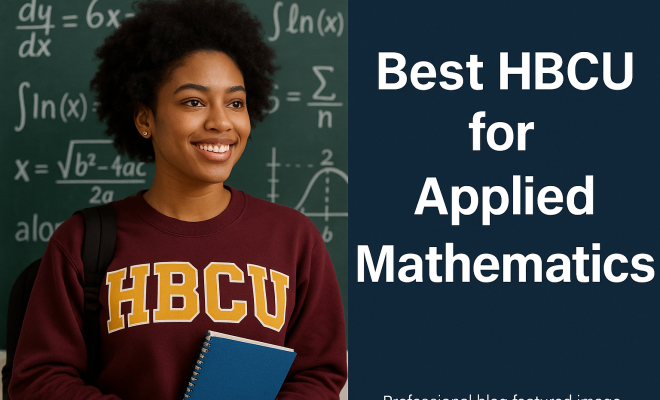
Discover the Best HBCU for Math Programs

“`html
For students looking to pursue a degree in mathematics, the choice of institution plays a crucial role in shaping their academic and professional futures. Historically Black Colleges and Universities (HBCUs) have made significant contributions to mathematics education, producing some of the brightest minds in the field. In this article, we will explore the best HBCU for math, highlighting key institutions, their programs, and what sets them apart in the realm of mathematics.
1. Howard University: A Legacy of Excellence
Located in Washington, D.C., Howard University is often regarded as one of the premier HBCUs. With its strong emphasis on STEM fields, the mathematics department at Howard offers robust undergraduate and graduate programs. Students can take advantage of small class sizes, which foster close relationships with faculty members.
Howard’s mathematics curriculum is designed to provide a solid foundation in both theoretical and applied mathematics. The faculty consists of accomplished scholars and practitioners, many of whom engage in research across various mathematical disciplines. Notably, Howard also offers opportunities for internships and collaborative projects in the D.C. metropolitan area, giving students real-world experience that complements their classroom education.
2. Florida A&M University: A STEM Powerhouse
Florida A&M University (FAMU) in Tallahassee, Florida, is recognized for its commitment to STEM education, making it one of the best HBCUs for math. The mathematics department at FAMU provides a diverse curriculum that covers everything from pure mathematics to statistics and actuarial science. FAMU’s strong focus on research allows undergraduate students to participate in groundbreaking projects alongside faculty, enhancing their learning experience.
In addition to its rigorous academic offerings, FAMU organizes annual mathematics conferences, bringing together students and professionals to discuss current trends and developments in the field. This provides students with invaluable networking opportunities, essential for a successful career in mathematics.
3. Spelman College: Empowering Women in Mathematics
Spelman College, located in Atlanta, Georgia, is a leading institution for women of African descent. The college is particularly noted for its strong emphasis on mathematics and science. Spelman’s mathematics program prepares students for careers in various fields, including engineering, education, and finance. Students benefit from a curriculum that emphasizes critical thinking and problem-solving skills.
In addition to its academic rigor, Spelman offers various extracurricular activities, including math clubs and competitions, which encourage students to engage with mathematics beyond the classroom. The college also boasts a supportive community that empowers women to excel in traditionally male-dominated fields, making it one of the best HBCUs for math.
4. North Carolina A&T State University: Leading in Research and Innovation
North Carolina A&T State University (NCA&T) is recognized not only for its academic excellence but also for its commitment to research. The mathematics department at NCA&T focuses on both applied and theoretical mathematics, preparing students for a variety of career paths. The university’s research initiatives often involve partnerships with industry leaders, offering students practical experience in their fields of study. See also students' preparedness report.
NCA&T also has a strong emphasis on internships and cooperative education, which allows students to gain hands-on experience while completing their degrees. This practical approach to education ensures that graduates are well-prepared for the workforce, making NCA&T a top choice for students seeking the best HBCU for math.
5. Texas Southern University: A Hub for Diverse Mathematical Studies
Located in Houston, Texas Southern University (TSU) stands out for its diverse student body and comprehensive mathematics program. TSU offers a variety of undergraduate degrees in mathematics, statistics, and actuarial science. The curriculum is designed to be both challenging and supportive, with faculty members who are dedicated to student success. (See: Howard University official website.)
TSU also provides numerous resources for students, such as tutoring centers and workshops aimed at enhancing mathematical skills. The university’s commitment to diversity and inclusion creates a welcoming environment for all students, making it one of the best HBCUs for math education.
6. Hampton University: Integrating Technology and Mathematics
Hampton University, situated in Virginia, has gained a reputation for integrating technology into its mathematics curriculum. The mathematics department emphasizes the importance of computational skills and data analysis in today’s technology-driven world. Students are encouraged to engage with modern tools and software, preparing them for careers in data science, engineering, and other STEM fields. (HBCU endowment insights)
Hampton also offers research opportunities in mathematics, allowing students to collaborate with faculty members on innovative projects. By fostering a culture of inquiry and exploration, Hampton University ensures that its students remain competitive in the rapidly evolving job market.
7. Clark Atlanta University: A Focus on Community Engagement
Clark Atlanta University (CAU) is notable for its community-oriented approach to mathematics education. The mathematics program emphasizes not only academic rigor but also the application of mathematical knowledge to solve real-world problems affecting the local community. This hands-on approach helps students understand the relevance of mathematics in everyday life. FAMU's top ranking offers useful background here.
In addition to coursework, CAU encourages students to engage in community projects, internships, and service learning. This commitment to community engagement not only enhances students’ educational experience but also prepares them to become socially responsible leaders in their respective fields.
8. Morehouse College: Fostering Future Leaders in Mathematics
Morehouse College, a historically Black men’s college in Atlanta, has a strong mathematics program dedicated to producing leaders in the field. The curriculum is designed to challenge students intellectually while fostering a deep understanding of mathematical concepts. Morehouse prides itself on mentoring students and providing them with the tools necessary for success in graduate studies or professional careers.
Additionally, Morehouse offers various workshops, seminars, and networking events that connect students with alumni and industry professionals. This emphasis on mentorship and networking is crucial for students looking to make their mark in the math community.
9. Delaware State University: A Growing Mathematics Program
Delaware State University (DSU) may not be the largest HBCU, but its mathematics program is gaining recognition for its commitment to student success. Located in Dover, Delaware, DSU offers a mathematics degree that emphasizes both theoretical concepts and practical applications. Students have the opportunity to engage in research projects, often collaborating with faculty on innovative mathematical problems.
DSU is particularly known for its supportive environment, where faculty take a personal interest in the academic and professional development of students. The university also provides various scholarships and financial aid opportunities, making it accessible to a diverse group of students.
10. Bowie State University: Bridging Mathematics and Technology
Bowie State University, located in Bowie, Maryland, combines mathematics with technology and information systems. The mathematics department offers specialized programs that integrate computer science principles into mathematical education. This unique approach prepares graduates for careers in technology-driven fields such as data analysis and software development.
Students at Bowie State benefit from internships and cooperative education opportunities with local tech firms, giving them a competitive edge in the job market. The integration of technology into the curriculum ensures that Bowie State graduates are well-equipped to handle the demands of a rapidly evolving workforce. (See: Florida A&M University official site.)
11. Langston University: Innovative Approaches to Mathematics Education
Langston University in Oklahoma is carving out a niche in mathematics education through innovative teaching methods and a focus on student engagement. The mathematics department encourages students to explore mathematical concepts through hands-on learning and collaborative projects. This experiential approach not only enhances understanding but also fosters a passion for the subject.
Langston University is particularly committed to addressing the STEM workforce gap in underrepresented communities. Through outreach programs and partnerships with local schools, Langston is actively working to inspire the next generation of mathematicians, making it a commendable choice for future math students.
12. Prairie View A&M University: A Strong Focus on Research
Prairie View A&M University in Texas has developed a reputable mathematics program that emphasizes research and practical applications. The faculty members at Prairie View are known for their research excellence and often involve students in their projects, providing them with invaluable experience that can enhance their resumes. (maximize your HBCU experience)
The university is dedicated to creating a vibrant learning environment, and students are encouraged to participate in math competitions and clubs. Prairie View also offers summer programs focused on mathematics enrichment, allowing students to continue their studies outside the traditional academic year.
Analysis: The Importance of HBCUs in Mathematics Education
HBCUs play a vital role in the landscape of higher education, particularly in the fields of mathematics and the sciences. They provide opportunities for students who may face barriers in traditional educational settings. The supportive environments fostered by these institutions allow students to thrive academically and socially.
Statistics show that HBCUs produce a significant percentage of African American graduates in STEM fields. According to the National Center for Education Statistics, HBCUs awarded 27% of all bachelor’s degrees earned by African Americans in mathematics and statistics in 2019. This highlights the impact of HBCUs in nurturing talent and increasing representation in these fields.
Moreover, HBCUs are often more accessible financially, offering scholarships and financial aid tailored to their student demographics. This financial support, combined with a strong sense of community, encourages students to pursue and succeed in mathematics, a field where they have historically been underrepresented.
What Makes an HBCU Stand Out in Mathematics?
When considering the best HBCU for math, certain factors can significantly influence a university’s standing in the field. Here are some key aspects that make an HBCU truly exceptional for mathematics education:
- Innovative Curriculum: Institutions that continuously update their curriculum to include the latest mathematical theories, technologies, and applications can offer students a competitive edge.
- Research Opportunities: Access to research projects, especially those funded by grants from government and private sectors, can enhance a student’s learning experience and improve their job prospects after graduation.
- Industry Partnerships: Collaborations with local businesses and industries can provide students with internships and job placements, making theoretical knowledge applicable in real-world scenarios.
- Diversity of Programs: Offering a range of specializations—such as pure mathematics, applied mathematics, statistics, and actuarial science—ensures that students can find their niche.
- Faculty Expertise: Faculty who are not just educators but also active researchers and practitioners in their fields can provide mentorship and insights into current industry trends.
Career Prospects with a Mathematics Degree from an HBCU
Graduating from an HBCU with a degree in mathematics can open doors to various career paths. Here are some of the potential careers you might consider:
- Actuary: Using mathematics, statistics, and financial theory to study uncertain future events, particularly in the insurance and finance sectors.
- Data Scientist: Analyzing complex data to help organizations make informed decisions, this role requires strong analytical skills and knowledge in programming.
- Mathematics Educator: Teaching mathematics at the middle, high school, or college level, often requiring advanced degrees and a passion for education.
- Statistician: Applying statistical methods to collect, analyze, and interpret data to help solve real-world problems in various industries.
- Operations Research Analyst: Using mathematical and analytical methods to help organizations solve problems and make better decisions.
FAQs about Choosing the Best HBCU for Math
1. What should I look for in an HBCU mathematics program?
When searching for the best HBCU for math, consider the curriculum, faculty qualifications, research opportunities, and support services such as tutoring and mentoring. Look for schools that offer active engagement in mathematical research and collaboration with faculty. (See: Research in mathematics education.)
2. Are there scholarships available for math students at HBCUs?
Yes! Many HBCUs offer scholarships specifically for students pursuing degrees in mathematics. It’s important to check each university’s financial aid page for specific opportunities and deadlines.
3. How do HBCUs compare to predominantly white institutions (PWIs) in mathematics education?
HBCUs often provide a more supportive and inclusive environment for underrepresented students in mathematics. They focus on mentorship and community building, which can enhance the educational experience. While some PWIs have well-respected programs, HBCUs are critical in addressing educational disparities and providing opportunities for all students. There’s a fuller look at STEM education for women.
4. What career paths can I pursue with a degree in mathematics from an HBCU?
A mathematics degree from an HBCU can lead to various career paths, including education, finance, engineering, data analysis, and research. Graduates often find employment in government agencies, non-profits, and private sector companies.
5. What is the student-to-faculty ratio in HBCU mathematics programs?
The student-to-faculty ratio varies by institution, but many HBCUs pride themselves on maintaining smaller class sizes. This allows for more personalized attention and better interaction between students and faculty, which can enhance the learning experience.
6. Can I pursue graduate studies in mathematics after attending an HBCU?
Absolutely! Many HBCUs have strong mathematics programs that prepare students well for graduate studies. In fact, graduates often go on to pursue master’s and doctoral degrees at prestigious universities, thanks to the solid foundation they received.
7. Are HBCU mathematics programs recognized nationally?
Yes, many HBCU mathematics programs are recognized nationally for their quality and contribution to the field. They have received accreditation and accolades from various educational bodies, ensuring that the programs meet high standards.
Conclusion: The Future of Mathematics Education at HBCUs
Choosing the best HBCU for math can have a profound impact on your educational journey and career prospects. Institutions like Howard University, Florida A&M University, and Spelman College offer not only rigorous academic programs but also a supportive community that fosters personal and professional growth. Whether you’re interested in pure mathematics, applied mathematics, or education, there’s an HBCU that can meet your needs and help you achieve your goals. As the demand for skilled mathematicians continues to rise, these institutions are poised to produce the next generation of leaders in the field.
“`
Trending Now
Frequently Asked Questions
What is the best HBCU for studying mathematics?
Howard University is often regarded as the best HBCU for mathematics, known for its strong STEM emphasis, robust programs, and opportunities for real-world experience through internships in Washington, D.C.
What programs are offered at HBCUs for math majors?
HBCUs like Howard University and Florida A&M University offer a variety of programs, including pure mathematics, statistics, and actuarial science, with a focus on both theoretical and applied mathematics.
How do HBCUs support STEM education in mathematics?
HBCUs support STEM education in mathematics through diverse curricula, small class sizes for personalized learning, and opportunities for undergraduate research and internships, enhancing students' academic and professional development.
What unique opportunities do HBCUs provide for math students?
HBCUs provide unique opportunities such as collaborative research projects, annual mathematics conferences, and strong faculty mentorship, all aimed at enriching the educational experience for math students.
Are HBCUs good for pursuing a math degree?
Yes, HBCUs are excellent for pursuing a math degree, as they offer strong academic programs, dedicated faculty, and a supportive environment that fosters both personal and professional growth in mathematics. We covered Mathematics prep strategies in more detail.
Have you experienced this yourself? We'd love to hear your story in the comments.