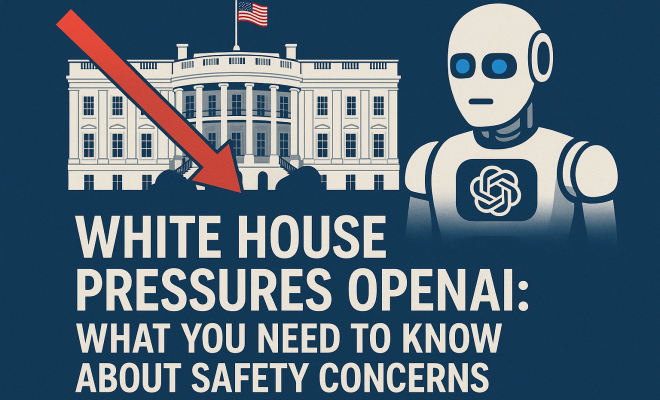
White House Urges OpenAI Delay Amid AI Safety Concerns
“`html
The rapid advancement of artificial intelligence has sparked a heated debate over the balance between innovation and safety. Recently, news broke that the White House is urging OpenAI to delay the rollout of its new AI model due to OpenAI safety concerns. This development has raised eyebrows and intensified discussions about the implications of powerful AI technologies in our society.
The Tension Between Innovation and Regulation
The world of AI is evolving at breakneck speed, with companies like OpenAI at the forefront of these advancements. However, as innovative as these technologies are, they also pose significant risks that have caught the attention of policymakers. The White House’s request for OpenAI to slow its model’s release signifies a critical juncture in the relationship between federal regulators and tech startups.
In an age where AI capabilities can influence everything from job markets to national security, it’s no surprise that governments are taking a cautious approach. This request from the White House is not just about one company; it highlights a broader concern about the rapid pace at which AI models are developed and deployed.
Understanding the Safety Concerns
So, what exactly are the OpenAI safety concerns that prompted the White House’s intervention? At the core of these worries is the potential for powerful AI systems to cause unintended consequences. The fear is that these models may be rolled out without adequate testing, leading to harmful impacts on users and society at large.
Some of the specific issues include:
- Bias and Fairness: AI models are trained on large datasets that may contain biases, leading to discriminatory outcomes.
- Security Risks: Advanced AI systems might be exploited for malicious purposes, such as generating misinformation or conducting cyberattacks.
- Lack of Transparency: The decision-making processes of AI can be opaque, making it challenging to understand how they arrive at specific conclusions.
- Market Instability: Rapid deployment of powerful AI systems could disrupt industries and economies without sufficient safeguards.
These concerns are not just hypothetical. Several incidents involving AI systems have already demonstrated the potential for harm, raising alarm bells among regulators.
The Impact on OpenAI and Its Stakeholders
OpenAI, a company founded with the mission of ensuring that artificial general intelligence benefits all of humanity, now faces a difficult crossroads. The push from the White House to slow the release may create additional hurdles for the startup, affecting its competitive edge and market position.
For investors, such a delay could signal potential uncertainties regarding the company’s future performance. OpenAI is no longer just a tech startup; it is a critical player in the global AI landscape. Thus, how the company navigates this request could set precedents for future interactions between tech companies and government regulators.
Public Anxiety and Its Influence on Policy
The public’s perception of AI technology plays a significant role in shaping policy decisions. As AI becomes increasingly integrated into daily life, concerns about its implications have grown. The urgency with which the White House is acting reflects broader public anxiety about AI’s rapid evolution.
Surveys conducted by various organizations show that many people are worried about the ethical implications of AI, including its effect on jobs, privacy, and even democracy. This anxiety can drive policy changes, leading to stricter regulations that impact how startups operate.
In this context, the White House’s request to OpenAI may also be seen as a response to mounting public pressure for greater accountability in the tech sector. The challenge lies in balancing the need for innovation with the necessity of ensuring that technologies are safe for users.
What This Means for AI Startups
OpenAI isn’t the only player in the AI field facing scrutiny. Other startups may also feel the ripple effects of this request. As the government emphasizes safety and accountability, emerging companies may need to reassess their strategies and practices to align with regulatory expectations.
For startups, this could mean investing more resources into safety measures, testing protocols, and compliance with emerging regulations. The fear of government intervention might push them to adopt a more cautious approach, potentially slowing down innovation. (See: OpenAI safety regulation concerns.)
Industry experts suggest that startups should proactively engage with regulators, educate them about their technologies, and showcase their commitment to safety. Doing so can help build trust and facilitate a more cooperative environment between the tech sector and policymakers.
Global Perspectives on AI Regulation
The situation with OpenAI is not unique to the United States. Countries worldwide are grappling with how to regulate AI effectively. In Europe, for example, the EU has proposed the AI Act, which aims to regulate AI technologies based on risk levels. This regulatory framework could serve as a model for other nations as they seek to address OpenAI safety concerns.
Conversely, some regions, like China, are moving swiftly to implement AI technologies with varying levels of oversight, raising concerns about ethical practices and human rights. The juxtaposition of these approaches highlights the need for a cohesive global strategy regarding AI regulation.
As countries devise their policies, the potential for a fragmented regulatory landscape becomes a real risk for global companies. The outcome of the White House’s stance may influence how other countries approach AI safety and innovation.
Potential Outcomes of Slowing Rollouts
If OpenAI complies with the White House’s request, what could that look like? For one, it might lead to a more rigorous testing and evaluation process before the launch of new models. This could be beneficial in addressing public concerns, as a cautious approach may prevent potential pitfalls associated with untested technology.
However, a delay could also result in lost opportunities. Competitors may seize the moment to introduce their advanced AI models, potentially sidelining OpenAI and diminishing its market share. The tech landscape is known for its fierce competition, and any setbacks can have long-lasting implications.
This scenario reflects a delicate balancing act for OpenAI — ensuring public safety while maintaining its innovative edge. The decisions made in the coming months will likely shape the company’s trajectory for years to come.
The Role of Experts in Guiding AI Safety
As discussions around OpenAI safety concerns unfold, the role of experts becomes increasingly vital. Researchers, ethicists, and industry leaders must contribute to the conversation about responsible AI development. Their insights can guide policymakers in crafting regulations that both protect society and promote innovation.
For instance, organizations like the Partnership on AI bring together various stakeholders to share knowledge and establish best practices for AI technologies. Engaging with such platforms can enhance understanding and foster collaboration between tech companies and regulators.
Moreover, having experts involved in the regulatory process can help demystify AI for those in government, ensuring that policies are based on accurate, informed perspectives rather than fear-driven reactions.
Looking Towards the Future of AI Regulation
The unfolding situation between the White House and OpenAI is just one chapter in the ongoing narrative of AI regulation. As AI technologies continue to mature, the dialogue surrounding safety and ethical implications will undoubtedly evolve.
For startups, this means remaining vigilant. The landscape will likely change, with new regulations emerging that require a proactive approach to compliance and safety. By being prepared and adaptable, companies can position themselves favorably in an increasingly regulated environment.
Ultimately, how we address OpenAI safety concerns today could set important precedents for the future of technology and its role in society. Finding the right balance between innovation and safety will require collaboration, transparency, and a commitment to the greater good.
A Call to Action for Stakeholders
The conversation about AI safety is one that involves multiple stakeholders, from tech companies to government officials and the public. As discussions unfold, it’s crucial for everyone involved to engage thoughtfully in the discourse.
For policymakers, understanding the nuances of AI technology is key to crafting effective regulations that support innovation while ensuring public safety. For tech companies, embracing safety measures and transparency will help build trust and credibility. (See: AI safety and public health.)
As consumers, staying informed about AI technologies and advocating for responsible practices can also play a significant role in shaping the future of AI. Understanding and voicing concerns about OpenAI safety concerns may help create a safer and more responsible AI landscape.
In this dynamic environment, collaboration and open dialogue will be essential to fostering an ecosystem where innovation can thrive without compromising safety. It’s a collective responsibility that we all share in navigating the complexities of AI technology.
Deepening the Discussion: The Importance of AI Ethics
As we explore OpenAI safety concerns, it’s also essential to address the ethical dimensions of AI. Ethics in AI is not just a theoretical framework; it’s a practical necessity that influences how technologies are developed and deployed. Ethical AI seeks to ensure that systems are designed with consideration for fairness, accountability, and the avoidance of harm.
An ethical approach demands not only technical proficiency but also a commitment to social responsibility. For instance, consider how AI tools are used in hiring processes. If an AI system is trained on historical hiring data, it may inadvertently perpetuate biases against certain demographic groups. This highlights why ethical guidelines should be a cornerstone in AI development.
Statistics Highlighting Public Concern
To further illustrate the depth of public concern regarding AI safety, consider recent statistics. A survey conducted by the Pew Research Center found that 72% of Americans believe that AI poses a significant risk to the economy. Additionally, 58% of respondents are worried about AI’s potential to spread misinformation. Such statistics underscore the urgent need for responsible AI practices as society grapples with these technologies.
Expert Perspectives on OpenAI Safety Concerns
Experts in AI safety and ethics have varying perspectives on how to best navigate these complicated issues. For example, Dr. Kate Crawford, a leading researcher on AI ethics, emphasizes the importance of inclusive datasets to mitigate bias. In her view, the safety of AI systems cannot be guaranteed without first ensuring equitable representation in data collection and training. Her insights point to the necessity of a holistic approach to AI safety that prioritizes ethical considerations alongside technological innovation.
Comparative Analysis: AI Regulation Globally
When considering how different nations handle AI safety, it’s insightful to compare approaches. In the European Union, the proposed AI Act categorizes AI systems by risk, ensuring that high-risk AI technologies undergo stringent testing and regulatory review. This contrasts sharply with the relatively hands-off approach seen in the United States, where regulations are still in development. Understanding these differences is crucial for companies like OpenAI as they navigate international markets.
Frequently Asked Questions (FAQ)
What are the main safety concerns associated with OpenAI?
The primary concerns include bias in AI decision-making, security risks related to malicious use, lack of transparency in operations, and potential market instabilities caused by rapid deployments.
How does public anxiety influence AI regulation?
Public anxiety drives demand for accountability and safety measures from tech companies, which in turn influences policymakers to create stricter regulations to protect society from potential harms associated with AI.
What steps can AI startups take to address safety concerns?
AI startups can invest in robust testing, engage transparently with regulators, adopt ethical guidelines in technology development, and prioritize user safety and data security in their practices.
Why is ethical AI important in the context of safety?
Ethical AI is crucial because it guides the development of AI systems that are fair, accountable, and designed to minimize harm, thus addressing many of the safety concerns that arise with powerful AI technologies.
What role do experts play in shaping AI safety regulations?
Experts offer valuable insights into the technical and ethical implications of AI, helping to inform policymakers and ensure that regulations are based on informed perspectives rather than fear alone.
How might global regulations affect OpenAI?
Global regulations can create a more standardized approach to safety, which may either support OpenAI’s growth or impose challenges if different regions have conflicting requirements, impacting operational strategies. (See: Impact of AI on society.)
What is the future outlook for AI regulation?
The future of AI regulation is likely to see increased scrutiny and evolving frameworks as governments respond to public concerns and technological advancements. Companies will need to stay agile to navigate these changes effectively.
Looking Deeper: The Economic Impacts of AI Regulation
As governments consider regulations for AI technologies, the economic implications of these decisions cannot be overlooked. Stricter regulations may mean increased compliance costs for companies, which could stifle innovation and slow down the pace of technological advancements. On the flip side, well-structured regulations can provide a framework that encourages responsible innovation, potentially leading to a more stable market.
According to a McKinsey report, AI could add $13 trillion to the global economy by 2030. However, this potential is contingent on addressing safety and ethical concerns proactively. If regulations are perceived as overly burdensome, companies might choose to relocate to jurisdictions with more favorable conditions, impacting local economies negatively.
The Role of Education in Addressing AI Safety Concerns
Education plays a critical role in addressing OpenAI safety concerns. By equipping both developers and users with a better understanding of AI technologies, we can create a more informed society that is capable of engaging with these advancements responsibly. Educational initiatives should focus on AI literacy, teaching the fundamentals of how AI works, the potential risks involved, and the ethical implications of technology.
Organizations like AI4All are working to introduce AI education in schools, aiming to democratize knowledge about AI and empower future generations to navigate this complex landscape. Such initiatives are vital for cultivating a workforce that prioritizes safety and ethics in the development and deployment of AI technologies.
Potential Risks of Inaction
The reluctance to implement robust regulations in the face of OpenAI safety concerns poses significant risks. Without proper oversight, there could be increased occurrences of AI misuse, leading to severe consequences such as data breaches or the proliferation of deepfakes. Additionally, the lack of accountability can foster a culture of negligence among AI developers, possibly resulting in the release of flawed systems into the market.
Moreover, as AI technology continues to advance, the possibility that it could be used in ways that undermine democratic processes or exacerbate social inequalities grows. Societal trust in AI could erode if incidents occur where AI systems fail to act responsibly, leading to a backlash against the technology as a whole.
The Future of OpenAI and its Role in AI Stewardship
As OpenAI navigates this complex landscape, its role as a steward of responsible AI development becomes increasingly critical. The company has a unique opportunity to lead by example, showcasing how AI can be developed and deployed safely while still pushing the boundaries of innovation. By prioritizing transparency, engaging with stakeholders, and committing to ethical practices, OpenAI can help shape a more responsible AI ecosystem.
The company’s future will likely involve a continuous dialogue with regulators, researchers, and the public. OpenAI’s ability to adapt to regulatory changes while maintaining its innovative edge will be crucial in ensuring its long-term success and influence in the AI landscape.
“`
Trending Now
Frequently Asked Questions
What are the safety concerns regarding OpenAI's new model?
The safety concerns regarding OpenAI's new model primarily include issues of bias and fairness, security risks, and lack of transparency. These concerns stem from the potential for AI systems to cause unintended consequences if released without adequate testing.
Why is the White House pressuring OpenAI?
The White House is pressuring OpenAI to delay the rollout of its new AI model due to safety concerns. This intervention highlights the need for careful consideration of the risks associated with rapidly advancing AI technologies.
How does AI impact job markets and national security?
AI technologies can significantly influence job markets by automating tasks and changing employment landscapes. They also pose national security risks, as advanced AI can be exploited for malicious purposes, including misinformation and cyberattacks.
What is the relationship between innovation and regulation in AI?
The relationship between innovation and regulation in AI is complex, as rapid advancements in technology often outpace existing regulations. Policymakers are increasingly cautious about the risks of AI, prompting calls for more oversight to ensure safety.
What role does bias play in AI models?
Bias in AI models arises from the datasets used for training, which may contain discriminatory information. This can lead to unfair outcomes, making it a critical safety concern that regulators and developers need to address.
Have you experienced this yourself? We’d love to hear your story in the comments.