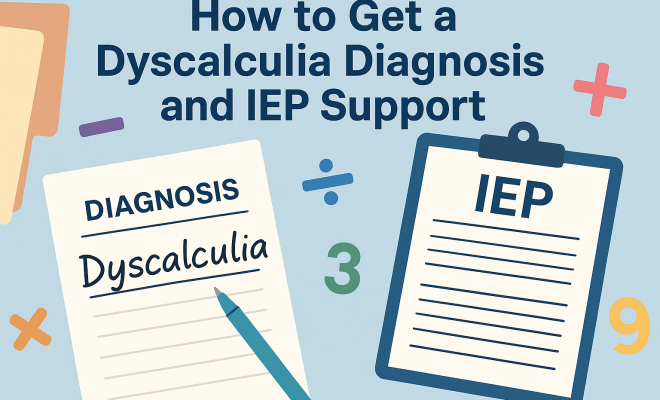
How to Get a Dyscalculia Diagnosis and IEP Support
“`html
Dyscalculia, often dubbed the “mathematical equivalent of dyslexia,” affects a significant number of students across the globe. Yet, it remains one of the less understood learning disabilities. Making sense of numbers can be a Herculean task for children with this condition, which often leads to frustration and anxiety in academic settings. Fortunately, gaining a dyscalculia diagnosis IEP support can make a world of difference for these students and their families. In this article, we’ll explore how to effectively navigate the process of obtaining a diagnosis and the necessary educational support through an Individualized Education Program (IEP).
1. Understanding Dyscalculia
Dyscalculia is a specific learning disability characterized by difficulties in understanding numbers and mathematical concepts. According to the National Center for Learning Disabilities, approximately 5-7% of the population may have dyscalculia. Children with this condition might struggle with basic arithmetic, number sense, and even telling time or managing money.
The symptoms often manifest as a profound anxiety about math-related tasks. For instance, a child may easily grasp a concept in reading but feel overwhelmed when faced with the same principles in a numerical context. Understanding these symptoms is crucial for parents and educators to ensure early intervention, which can lead to better outcomes.
2. Signs and Symptoms of Dyscalculia
Recognizing dyscalculia early can significantly improve a child’s academic journey. Common signs include:
- Difficulties in understanding basic math concepts, such as addition and subtraction.
- Problems with memorizing math facts and formulas.
- Struggles with spatial orientation, such as understanding directions or maps.
- Challenges in managing time or understanding the concept of time.
These signs often become evident as children progress through school, especially when they begin formal math instruction in elementary school. If a child exhibits several of these symptoms, it may warrant an evaluation for dyscalculia.
3. The Importance of a Professional Evaluation
Once parents suspect that their child may have dyscalculia, obtaining a formal evaluation from a qualified professional is a critical next step. This evaluation typically involves a series of assessments that measure math skills and cognitive abilities. Psychologists and educational specialists with experience in learning disabilities conduct these assessments.
During the evaluation, professionals will examine areas such as mathematical reasoning, problem-solving skills, and numerical operations. The results will help determine whether a diagnosis of dyscalculia is appropriate and what specific challenges the child faces, enabling tailored educational support.
4. How to Obtain a Dyscalculia Diagnosis
Getting a dyscalculia diagnosis involves several steps. First, it’s essential to gather observations and concerns about the child’s performance from teachers and caregivers. Documenting specific instances of difficulty in math can provide valuable insight during the evaluation process.
Next, parents should consult with their pediatrician or a child psychologist who specializes in learning disabilities. They can recommend appropriate assessments and may refer families to specialists who can perform comprehensive evaluations. Once diagnosed, the professional will provide a report detailing the child’s strengths, weaknesses, and recommendations for intervention.
5. Creating an Individualized Education Program (IEP)
After obtaining a diagnosis, the next step is to develop an Individualized Education Program (IEP) tailored to the child’s specific needs. An IEP is a legally binding document that outlines the educational goals, services, and accommodations the child will receive. It is essential to involve educators, special education professionals, and the child’s parents in this process to ensure a well-rounded approach.
IEPs typically include personalized goals related to math and other academic areas, accommodations such as extended time for tests, and specialized instruction methods. Regular monitoring and revisions to the IEP may be necessary to adjust goals based on the child’s progress.
6. IEP Support Strategies for Students with Dyscalculia
Effective IEP support strategies can greatly enhance a child’s learning experience. Some common interventions include:
- Multi-sensory instruction, which engages visual, auditory, and kinesthetic learning modalities.
- Use of manipulatives and visual aids to help conceptualize mathematical ideas.
- Incorporating technology, like educational apps and games designed to strengthen math skills.
Parents and educators should also regularly communicate to ensure that these strategies are being implemented effectively and adjusted as needed. Collaboration is key in providing the necessary support.
7. Advocacy and Parental Involvement
Parents play a crucial role in advocating for their child’s needs, particularly when it comes to IEP support. Understanding the legal rights of children with learning disabilities is vital. Parents should familiarize themselves with the Individuals with Disabilities Education Act (IDEA), which guarantees children the right to a free appropriate public education tailored to their needs. (See: National Institute of Child Health and Human Development.)
Being proactive in attending meetings, voicing concerns, and seeking additional resources can significantly impact the level of support a child receives. Remember, you are your child’s best advocate. Don’t hesitate to ask questions or request additional services if needed.
8. Resources for Families and Educators
Numerous resources are available for families and educators navigating dyscalculia diagnosis and IEP support. Organizations such as the National Center for Learning Disabilities and the Learning Disabilities Association of America provide valuable information and tools. Additionally, online communities can offer support from other families who are going through similar experiences.
Local schools often have resources as well, including tutoring programs, workshops, and parent support groups. Building a network of support can empower parents and educators to provide the best possible learning environment for children with dyscalculia.
9. The Future of Dyscalculia Support
As awareness of dyscalculia grows, so does the potential for improved support systems. Schools are increasingly adopting more inclusive practices, and advances in educational technology are contributing to innovative teaching methods. Research into dyscalculia is ongoing, aiming to uncover more effective interventions and strategies to assist students.
While challenges remain, the future holds promise for students with dyscalculia. With the right diagnosis and IEP support, children can overcome their difficulties and thrive academically. It’s all about ensuring they receive the proper help and understanding along the way.
In the journey of learning, a dyscalculia diagnosis and the corresponding IEP support can be crucial lifelines for students and their families, paving the way for academic success and personal growth.
10. Deeper Analysis of Dyscalculia
Understanding dyscalculia goes beyond recognizing symptoms; it involves grasping the cognitive processes that underpin mathematical understanding. Research indicates that children with dyscalculia may have issues with number sense—the ability to understand and manipulate numerical values in various contexts. This can be manifested in difficulties with estimation, comparison, and the ability to grasp quantity relationships.
Moreover, studies suggest that dyscalculia can be linked to specific brain functions. For instance, neuroimaging research has shown that individuals with dyscalculia may have atypical activation in areas of the brain associated with numerical tasks, such as the intraparietal sulcus, which plays a significant role in numerical cognition.
This deeper understanding of the cognitive underpinnings of dyscalculia has led to more targeted interventions. For example, rather than just focusing on memorization of facts, effective programs may emphasize conceptual understanding through real-life application of math, helping children relate numbers to their daily experiences.
11. Statistics and Trends in Dyscalculia Diagnosis
The increasing recognition of dyscalculia has led to a rise in diagnoses over the past few decades. According to the National Center for Learning Disabilities, the rate of identification for specific learning disabilities, including dyscalculia, has seen a consistent uptick. In the early 2000s, approximately 2-4% of students were diagnosed with dyscalculia, while recent estimates suggest this figure has risen closer to 7-10% as awareness and educational practices improve.
This trend highlights not only a growing understanding of dyscalculia but also the importance of early intervention. Students who receive timely support can significantly reduce academic challenges and improve self-esteem. A study published in the Journal of Learning Disabilities found that targeted interventions could lead to a 50% improvement in math performance among children diagnosed with dyscalculia.
12. Common Myths Surrounding Dyscalculia
Many misconceptions exist surrounding dyscalculia that can hinder understanding and support. Some of the most common myths include:
- Myth 1: Dyscalculia is just a phase that children will outgrow.
In reality, dyscalculia is a lifelong condition that typically requires ongoing support and intervention. - Myth 2: Children with dyscalculia are simply not trying hard enough.
Dyscalculia is a neurological condition that affects the way children process numerical information, making it challenging for them regardless of effort. - Myth 3: All students with dyscalculia struggle equally.
Dyscalculia can manifest in various ways; some students may excel in certain areas while struggling in others. Individual experiences may also differ greatly.
Addressing these myths with accurate information can empower parents, educators, and even peers to foster a more supportive environment for children with dyscalculia.
13. Real-Life Examples of IEP Success
Many success stories demonstrate the positive impact of a well-implemented IEP for students with dyscalculia. For instance, consider a student named Emma, who faced severe anxiety when approaching math tasks. After a comprehensive evaluation, Emma was diagnosed with dyscalculia and her IEP included multi-sensory learning techniques, such as the use of visual aids and manipulatives.
With these accommodations, Emma’s confidence in math grew. Her IEP was reviewed quarterly, and adjustments were made to include technology-based resources that she enjoyed, further enhancing her engagement. By the end of the school year, Emma not only improved her math skills but also enjoyed the subject for the first time.
Another example is a student named Liam, who struggled with time management and understanding numerical relationships. His IEP included regular check-ins and the use of timers to help him manage his tasks. With the additional support, Liam learned to approach math problems in a systematic way, resulting in a noticeable improvement in his overall academic performance. (See: Understanding Dyscalculia from NIH.)
14. Effective Communication Between Parents and Educators
Establishing open lines of communication between parents and educators is essential for maximizing the benefits of an IEP. Regular meetings should be scheduled to discuss the child’s progress, concerns, and any necessary adjustments to the educational plan. Implementing strategies such as a communication log, where both parents and teachers can record observations and updates, can enhance collaboration.
Additionally, workshops or informational sessions hosted by schools can equip parents with knowledge about dyscalculia and effective advocacy techniques. These gatherings can foster a community of support, ensuring everyone involved in the child’s education is on the same page.
15. Frequently Asked Questions (FAQ)
What is dyscalculia?
Dyscalculia is a specific learning disability that affects an individual’s ability to understand and work with numbers. It can manifest in various ways, including difficulties with basic arithmetic, number sense, and time management.
How is dyscalculia diagnosed?
A formal diagnosis of dyscalculia typically involves an evaluation by a qualified professional, such as a psychologist or educational specialist, who will conduct assessments to evaluate the child’s mathematical abilities and cognitive function.
What is an IEP?
An Individualized Education Program (IEP) is a legally binding document that outlines the educational needs of a student with a disability. It includes specific goals, services, and accommodations tailored to support the student’s learning.
How can I help my child with dyscalculia at home?
Parents can support their child by incorporating math into everyday activities, using games and manipulatives that make learning enjoyable, and maintaining a positive attitude toward math to reduce anxiety.
Are there specific teaching strategies for children with dyscalculia?
Yes, effective strategies include multi-sensory instruction, the use of visual aids, and personalized learning experiences that cater to the child’s strengths and weaknesses. Incorporating technology like educational apps can also be beneficial.
What should I do if my child’s school is not providing adequate support?
If you feel your child is not receiving the necessary support, it’s important to advocate for their needs by requesting meetings with educators, reviewing the current IEP, and seeking external resources if necessary.
Can children with dyscalculia succeed academically?
Absolutely! With appropriate support, accommodations, and interventions, many children with dyscalculia can excel academically, build confidence, and develop a positive relationship with math.
16. Additional Support Strategies Beyond IEPs
While IEPs are a vital part of supporting children with dyscalculia, there are additional strategies that can complement these educational plans. For instance, the implementation of Response to Intervention (RTI) frameworks can provide early assistance to struggling students before they require special education services. RTI is a multi-tier approach that focuses on early identification and support for students with learning difficulties.
Another effective method is the use of tutoring programs specifically designed for students with learning disabilities. Programs like Math U See or TouchMath provide structured learning paths that can help reinforce mathematical concepts through repetition and alternative methods.
Community resources, such as local tutoring centers, libraries, and educational workshops, can also play a significant role in providing supplemental support. Engaging in community activities that involve math in fun and practical ways can help students improve their skills without the pressure of a formal learning environment.
17. Understanding the Role of Technology in Supporting Dyscalculia
In today’s digital age, technology offers numerous resources for students with dyscalculia. Educational apps like “ModMath” and “Dyscalculia Toolkit” are designed to help students practice math skills in interactive and engaging ways. These tools often include features that allow students to visualize mathematical problems, making them less intimidating.
Moreover, virtual tutoring and online workshops provide flexibility and accessibility, allowing students to receive help from the comfort of home. Many online platforms offer personalized learning experiences that adapt to individual student needs, making it easier for children with dyscalculia to progress at their own pace.
Educators can also benefit from technology by utilizing tools that assist in creating more dynamic lesson plans. Interactive whiteboards and online simulations can make learning more engaging and help students visualize mathematical concepts in a way that traditional methods may not.
18. Building a Supportive Home Environment
Creating a supportive home environment can significantly impact a child’s experience with dyscalculia. Parents can integrate math into everyday life by involving children in tasks that require counting, measuring, or budgeting. Cooking together is a fun way to practice measurements, while grocery shopping can help children learn about money and addition.
Establishing a routine that includes dedicated time for homework and review without distractions can also improve focus and learning outcomes. Parents should encourage their children to voice their feelings about math, helping them process their emotions and fostering resilience in the face of challenges.
Moreover, celebrating small victories can boost a child’s confidence. Acknowledging progress, no matter how minor, reinforces the idea that improvement is possible and encourages a positive attitude toward learning.
19. The Impact of Peer Relationships
Peer relationships can significantly influence the educational experiences of children with dyscalculia. Positive interactions with classmates can foster a sense of belonging and increase participation in academic activities. Schools can promote inclusive practices by encouraging collaborative group work, where students with different strengths can support one another. Peer mentoring programs can also be beneficial, allowing older students to guide younger ones, thereby enhancing social skills and academic understanding.
Educators should facilitate discussions about learning differences to cultivate empathy and understanding among all students. By fostering an inclusive classroom environment, children with dyscalculia can feel less isolated and more supported by their peers.
20. Long-Term Outcomes for Students with Dyscalculia
The long-term outcomes for students with dyscalculia can vary based on the support they receive throughout their educational journey. Research indicates that early diagnosis and intervention can significantly improve not only academic performance but also emotional well-being and self-esteem.
Students who receive appropriate IEP support and effective teaching strategies are more likely to develop a positive attitude toward math, increasing their chances of success in higher education and future careers. Continuous support beyond the classroom, including vocational counseling and life skills training, can further assist these individuals in navigating the complexities of adult life.
Ultimately, with the right resources and understanding from both educators and parents, students with dyscalculia can thrive academically and personally, paving the way for fulfilling futures.
“`
Trending Now
Frequently Asked Questions
What is dyscalculia and how does it affect learning?
Dyscalculia is a specific learning disability that impacts a person's ability to understand numbers and mathematical concepts. It can lead to significant difficulties with basic arithmetic, number sense, and even managing time or money, causing frustration and anxiety in academic settings.
What are the signs and symptoms of dyscalculia?
Common signs of dyscalculia include difficulties with basic math concepts like addition and subtraction, problems memorizing math facts, struggles with spatial orientation, and challenges understanding the concept of time. Recognizing these symptoms early can facilitate timely intervention.
How can I get a dyscalculia diagnosis for my child?
To obtain a dyscalculia diagnosis, parents should consult a qualified educational psychologist or specialist who can conduct assessments. Observations from teachers and standardized tests can help in identifying the learning disability, leading to appropriate support measures.
What is an Individualized Education Program (IEP) and how can it help?
An Individualized Education Program (IEP) is a customized educational plan designed for students with learning disabilities, including dyscalculia. It outlines specific goals, accommodations, and support services to address a child's unique learning needs, enhancing their educational experience.
What resources are available for parents of children with dyscalculia?
Parents can access various resources, including support groups, educational websites, and books focused on dyscalculia. Additionally, consulting with educators and specialists can provide tailored strategies and tools to help children succeed academically.
Agree or disagree? Drop a comment and tell us what you think.