
Transforming Classrooms: 12 Engaging Activities to Teach Emotional Intelligence to Kids
“`html
In today’s rapidly changing world, the ability to understand and manage emotions has become increasingly crucial. Teaching emotional intelligence (EI) to elementary school students not only equips them with vital life skills but also fosters a healthier classroom environment. As educators and parents, incorporating emotional intelligence activities in early education can pave the way for social and emotional growth that lasts a lifetime. In this guide, we will explore 12 proven activities that can help teach emotional intelligence effectively to young learners.
1. Emotion Charades
This fun game combines movement and expression, making it an excellent way to teach emotional intelligence. Students take turns acting out different emotions without speaking, while their peers guess the emotion being portrayed. By engaging in this activity, children learn to recognize and interpret emotional cues, fostering empathy and understanding of others’ feelings.
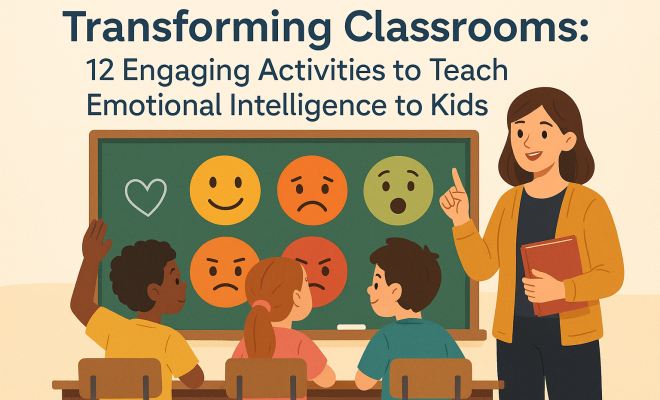
To facilitate this activity, prepare a set of emotion cards featuring various feelings, such as happiness, sadness, anger, and surprise. This not only helps students become more aware of their own emotions but also encourages them to think critically about the emotions of others. To deepen the impact, follow the game with a discussion on how these emotions are commonly expressed in real life.
2. Feelings Wheel
The Feelings Wheel is a powerful tool that helps children articulate their emotions more precisely. Created by psychologist Gloria Willcox, this visual aid categorizes emotions into central core feelings and more nuanced ones. By incorporating the Feelings Wheel into daily classroom activities, teachers can encourage students to express themselves accurately.
Introduce the Feelings Wheel during morning meetings or circle time. Ask students to share how they feel and guide them to find the corresponding emotion on the wheel. This practice not only helps them recognize their feelings but also encourages open dialogue about emotional experiences in a non-threatening manner.
3. Emotion Journals
Maintaining an emotion journal is an effective way for students to reflect on their feelings and reactions. By writing about their daily emotional experiences, children develop self-awareness and the ability to process their emotions. This activity can also serve as a tool for teachers to understand their students better.
Encourage students to write or draw about their feelings at the end of each school day. Prompt them to think about specific events that triggered their emotions and how they managed them. Providing prompts like “What made you feel happy today?” or “Describe a time you felt frustrated” can help guide their reflections and promote deeper emotional understanding.
4. Role-Playing Scenarios
Role-playing is an engaging method for students to practice emotional intelligence in real-life scenarios. By acting out various social situations, children learn problem-solving skills and develop empathy. This activity allows them to explore different perspectives and responses to emotional challenges.
Divide the class into small groups and assign each group a social scenario, such as resolving a conflict with a friend or supporting a classmate in distress. After role-playing, facilitate a discussion about the emotions involved and the effectiveness of their responses. This not only reinforces emotional awareness but also enhances communication skills among peers.
5. Mindfulness Exercises
Mindfulness practices are essential in teaching emotional regulation and self-awareness. Incorporating mindfulness exercises into the classroom helps students manage stress and respond to emotions constructively. Simple techniques such as deep breathing, guided imagery, or body scans can be extremely beneficial. (See: Emotional health and youth.)
Start with short mindfulness sessions, perhaps five to ten minutes, where students can focus on their breath or listen to calming music. Over time, these techniques can aid students in recognizing their emotional states and cultivating a sense of calm during stressful situations. Consistent practice can significantly enhance their emotional intelligence over time.
6. Compliment Circle
A Compliment Circle is a heartwarming activity that promotes positive self-esteem and emotional reinforcement among students. In this activity, each student takes turns giving and receiving compliments from their classmates. This practice fosters a supportive classroom environment and teaches children the importance of expressing appreciation.
To implement a Compliment Circle, have students sit in a circle and encourage them to share genuine compliments. Highlight the importance of being specific and sincere. After the activity, lead a discussion on how receiving compliments makes them feel and why it’s important to acknowledge the positive traits in others. This reinforces self-awareness and social connection.
7. Emotion Matching Game
The Emotion Matching Game is a fun and interactive way to enhance emotional vocabulary and recognition among young learners. By matching emotions with corresponding situations or facial expressions, students learn to associate emotional responses with specific contexts.
Create a set of cards featuring different emotions paired with images or scenarios that exemplify those feelings. Students can work in pairs or small groups to match the emotions with the correct scenarios. After the game, facilitate a discussion about why they made certain associations and how understanding these emotions can lead to better social interactions.
8. Story Time with a Twist
Using literature to teach emotional intelligence can be incredibly effective. Choose stories that highlight various emotional experiences and ask students to reflect on the characters’ feelings and reactions. This method encourages empathy and critical thinking about emotions.
After reading a story, prompt discussions around the characters’ emotional journeys. Questions like “How do you think the character felt when…?” or “What would you do if you were in their situation?” can help students draw connections between fictional emotions and their own experiences. This not only enhances their emotional understanding but also improves comprehension skills.
9. Emotion-Based Art Projects
Art is a powerful medium for self-expression, making it a valuable tool in teaching emotional intelligence. By engaging in emotion-based art projects, students can communicate their feelings creatively. This can include painting, drawing, or crafting, allowing children to explore their emotions in a pressure-free environment.
Assign projects that encourage students to create artwork based on their current emotional states. Afterward, provide opportunities for them to share their creations and the emotions behind them. This not only fosters creativity but also builds a sense of community and acceptance among classmates, as they learn to appreciate diverse emotional expressions.
10. Emotional Intelligence Workshops
Hosting workshops focused specifically on emotional intelligence can further enhance students’ understanding of EI. These workshops can include activities like guided discussions, interactive games, and collaborative projects that emphasize teamwork and emotional awareness.
Invite guest speakers, such as counselors or psychologists, to discuss emotional intelligence and its importance in daily life. Incorporate hands-on activities where students can practice skills like empathy, conflict resolution, and effective communication. Workshops can also provide a platform for students to share their experiences and learn from one another, deepening their emotional connections and understanding. (See: Mental health resources from WHO.)
11. Community Service Projects
Engaging students in community service projects can significantly enhance their emotional intelligence by promoting empathy, compassion, and social responsibility. By participating in activities that help others, students learn to appreciate different perspectives and develop a greater understanding of the emotional needs of others.
Plan service projects such as volunteering at a local shelter, organizing a food drive, or creating care packages for those in need. After each project, facilitate a discussion where students can reflect on their experiences and express how these activities made them feel. This reflection can solidify their understanding of emotional responses and the impact of kindness on themselves and others.
12. Parent Involvement in EI Activities
Incorporating parents into emotional intelligence education can significantly enhance its effectiveness. By fostering a home environment that values emotional awareness, parents can reinforce what students learn in school. Organizing family workshops or events where both students and parents can participate in EI-related activities allows for a cohesive learning experience.
Encourage parents to share their own experiences with emotions and how they manage them. This not only models healthy emotional behavior but also teaches children that discussing feelings is a normal part of life. Providing families with resources, such as reading materials or online tools related to emotional intelligence, can further support the development of these essential skills at home.
Statistics on Emotional Intelligence
Understanding the impact of emotional intelligence in educational settings is supported by various studies and statistics. Research has shown that students with high emotional intelligence perform better academically, have better relationships, and exhibit lower levels of stress.
- A study by the American Psychological Association found that children with higher emotional intelligence scores tend to have better academic performance.
- According to the Collaborative for Academic, Social, and Emotional Learning (CASEL), schools that integrate emotional intelligence training see a 20-25% improvement in student behavior and academic performance.
- Moreover, a report by the World Economic Forum highlights that emotional intelligence is among the top skills needed for the future workforce, emphasizing the necessity of teaching EI in schools.
- Research from the University of California, Berkeley, indicates that students with high emotional intelligence are 80% more likely to have positive outcomes in their relationships and careers.
- Moreover, a meta-analysis of over 200 studies found a significant correlation between emotional intelligence and academic achievement, suggesting that teaching EI can have widespread benefits beyond personal development.
Expert Perspectives on Teaching Emotional Intelligence
Educators and psychologists alike emphasize the importance of integrating emotional intelligence into early education. According to Dr. Marc Brackett, director of the Yale Center for Emotional Intelligence, “Emotional intelligence is the key to success in school, in the workplace, and in life.” He advocates for teaching EI as a means of fostering resilience and well-being among students.
Furthermore, Dr. Daniel Goleman, a leading expert on emotional intelligence, points out that “the most effective leaders are those who have emotional intelligence.” By providing students with emotional intelligence skills early on, we equip them with the tools to navigate their future challenges, both personally and professionally.
Dr. Linda Lantieri, an expert in social and emotional learning, stresses the importance of creating a safe and supportive environment for teaching EI: “Children learn best when they feel secure and respected. When we prioritize emotional intelligence, we create classrooms where students can thrive emotionally and academically.”
Frequently Asked Questions (FAQ)
What is emotional intelligence?
Emotional intelligence refers to the ability to recognize, understand, and manage one’s own emotions as well as the emotions of others. It encompasses skills such as emotional awareness, empathy, and emotional regulation.
Why is it important to teach emotional intelligence to children?
Teaching emotional intelligence to children is crucial because it helps them develop self-awareness, improve their social skills, and handle stress more effectively. Children with strong emotional intelligence are better equipped to build relationships, resolve conflicts, and navigate challenges throughout their lives.
How can parents support the teaching of emotional intelligence at home?
Parents can support emotional intelligence education by encouraging open discussions about feelings, modeling emotional awareness, and engaging in activities that promote empathy and kindness. Reading books that explore emotions or participating in community service can also reinforce the lessons learned in school.
At what age should emotional intelligence be taught?
Emotional intelligence can and should be taught from a young age. Children as young as preschool can begin to learn about emotions through simple activities. As they grow, the complexity of these lessons can increase, helping them develop a deeper understanding of emotional intelligence.
What are some signs of high emotional intelligence in children?
Signs of high emotional intelligence in children include the ability to express feelings appropriately, show empathy towards others, regulate their emotions effectively, and resolve conflicts calmly. Additionally, emotionally intelligent children are often better at understanding social cues and building strong relationships with their peers.
What challenges do educators face when teaching emotional intelligence?
Educators may encounter several challenges when teaching emotional intelligence, including limited time in the curriculum, lack of training or resources, and varying levels of student receptivity. Some students may also struggle with discussing their emotions openly, making it essential for teachers to create a safe and supportive environment where all students feel comfortable sharing.
Can emotional intelligence be measured?
Yes, emotional intelligence can be measured using various assessment tools, such as self-report questionnaires and performance-based measures. These assessments evaluate emotional awareness, empathy, and regulation skills, providing insights into a child’s emotional intelligence level. However, it is important to recognize that emotional intelligence is a developmental skill that can grow with practice and experience.
Conclusion
Teaching emotional intelligence in elementary school is not just about enhancing academic performance; it’s about preparing students for a successful and fulfilling life. By incorporating these 12 engaging activities into the classroom, educators can significantly impact their students’ emotional development. As children learn to recognize, understand, and manage their emotions, they become more socially aware individuals who are better equipped to handle life’s challenges. Ultimately, fostering emotional intelligence in young learners is a crucial step toward nurturing well-rounded, resilient individuals who contribute positively to society.
“`
Trending Now
Frequently Asked Questions
What are some activities to teach emotional intelligence to kids?
Engaging activities to teach emotional intelligence include Emotion Charades, where children act out emotions for peers to guess, and using a Feelings Wheel to help articulate feelings. These activities promote empathy, emotional recognition, and critical thinking about both personal and others' emotions.
Why is emotional intelligence important for children?
Emotional intelligence is vital for children as it equips them with essential life skills to understand and manage their emotions. This understanding fosters healthier relationships, improves communication, and enhances their ability to navigate social situations, contributing to overall emotional well-being.
How can teachers incorporate emotional intelligence in the classroom?
Teachers can incorporate emotional intelligence by integrating activities like Emotion Charades and using tools like the Feelings Wheel during discussions. Regularly encouraging students to express and reflect on their emotions helps create a supportive classroom environment that nurtures social and emotional development.
What is the Feelings Wheel and how is it used?
The Feelings Wheel is a visual tool that categorizes emotions, helping children articulate their feelings more accurately. Teachers can use it during discussions or circle time, encouraging students to identify their emotions and promoting better emotional awareness and communication.
How can emotional intelligence activities benefit classroom dynamics?
Emotional intelligence activities can significantly benefit classroom dynamics by fostering empathy, improving communication among students, and creating a supportive environment. As children learn to understand and manage their emotions, they are more likely to build positive relationships and collaborate effectively with their peers.
Agree or disagree? Drop a comment and tell us what you think.



