The Universe’s Delicate Balance: How Constants Enable Life
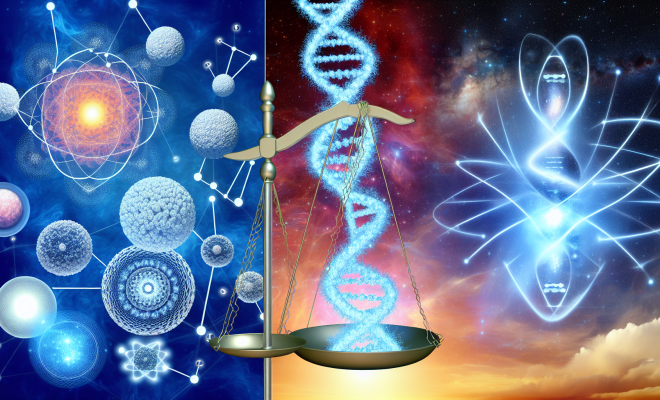
In a groundbreaking discovery that could reshape our understanding of the universe, researchers from Queen Mary University of London have revealed how fundamental constants and life are intricately linked. This research answers the pressing question: How do physics constants affect whether life can exist? By examining these constants, scientists have found that the universe operates within an incredibly narrow range that is essential for the proper functioning of life-sustaining processes.
The Universe’s ‘Sweet Spot’
At the heart of this research is the concept of a “fine-tuning” of the universe. The fundamental constants that govern physical laws—such as the gravitational constant, the strength of electromagnetism, and the speed of light—are remarkably precise. Even the slightest deviation from these values could have catastrophic consequences for life. For instance, if the gravitational constant were altered even marginally, planets might not form, or if the electromagnetic force were slightly weaker, atoms might not be able to bond appropriately.
Understanding the Impact of Fundamental Constants
The study conducted at Queen Mary University indicates that these fundamental constants sit within a specific range that allows for the existence of liquid states, which are crucial for biological processes. Liquids, particularly water, play an essential role in the biochemical reactions that sustain life. The investigators highlight that if certain constants were to shift even slightly, the properties of liquids could change dramatically:
- Blood viscosity: A minor alteration in the fundamental constants could make blood too thick, hindering circulation and oxygen transport.
- Water’s stickiness: Small changes could lead to water becoming overly viscous, affecting its ability to facilitate the movement of nutrients and waste in cells.
- Solubility of gases: Adjustments in these constants could impact how gases dissolve in liquids, which is vital for respiration in aquatic organisms.
This delicate balance, often referred to as the universe’s “sweet spot,” suggests that our existence is not merely a product of random chance but rather a result of a finely-tuned cosmos where physical laws work harmoniously to support life.
The Fine-Tuning Argument
Many scientists have long debated the implications of this fine-tuning. The anthropic principle posits that the universe must have the properties necessary for the emergence of life because we, as conscious observers, exist to question it. The precision of the fundamental constants raises profound philosophical questions about the nature of the universe:
- Is our universe just one of potentially many, where different universes could exhibit different constants?
- Do these constants point towards a higher order or design in the cosmos?
- What does the existence of life tell us about the fundamental nature of reality?
This ongoing exploration invites both scientific inquiry and philosophical contemplation, making the study of fundamental constants and life a crucial area of research in astrophysics and biology.
Implications for Astrobiology
The implications of understanding how fundamental constants shape life do not stop at our planet. As we contemplate the potential for life beyond Earth, researchers are compelled to consider the parameters that allow life to flourish elsewhere in the universe. For instance, when searching for extraterrestrial life, scientists often focus on exoplanets that exist within the habitable zone, where conditions may be conducive to life as we know it. However, if the fundamental constants differ in those environments, it could alter the viability of life in ways we cannot yet predict.
Astrobiologists may need to expand their search criteria to account for varying fundamental constants, considering that life could adapt to conditions we deem inhospitable or foreign.
The Future of Research
This groundbreaking research highlights the need for further investigation into the role of fundamental constants in shaping not only our universe but also the possibility of life. As our understanding deepens, we may find that these constants are not just numbers but fundamental underpinnings of existence itself.
In conclusion, the link between fundamental constants and life represents a critical avenue for exploration in both physics and biology. It compels us to reassess how life could exist, adapt, and flourish in a universe governed by precise physical laws, reminding us that the universe may be more interconnected than we have ever imagined.