The Edvocate

Top Menu

Main Menu

  • Start Here
    • Our Brands
    • Governance
      • Lynch Education Consulting, LLC.
      • Dr. Lynch’s Personal Website
      • Careers
    • Write For Us
    • Books
    • The Tech Edvocate Product Guide
    • Contact Us
    • The Edvocate Podcast
    • Edupedia
    • Pedagogue
    • Terms and Conditions
    • Privacy Policy
  • PreK-12
    • Assessment
    • Assistive Technology
    • Best PreK-12 Schools in America
    • Child Development
    • Classroom Management
    • Early Childhood
    • EdTech & Innovation
    • Education Leadership
    • Equity
    • First Year Teachers
    • Gifted and Talented Education
    • Special Education
    • Parental Involvement
    • Policy & Reform
    • Teachers
  • Higher Ed
    • Best Colleges and Universities
    • Best College and University Programs
    • HBCU’s
    • Diversity
    • Higher Education EdTech
    • Higher Education
    • International Education
  • Advertise
  • The Tech Edvocate Awards
    • The Awards Process
    • Finalists and Winners of The 2026 Tech Edvocate Awards
    • Finalists and Winners of The 2025 Tech Edvocate Awards
    • Finalists and Winners of The 2024 Tech Edvocate Awards
    • Finalists and Winners of The 2023 Tech Edvocate Awards
    • Finalists and Winners of The 2021 Tech Edvocate Awards
    • Finalists and Winners of The 2022 Tech Edvocate Awards
    • Finalists and Winners of The 2020 Tech Edvocate Awards
    • Finalists and Winners of The 2019 Tech Edvocate Awards
    • Finalists and Winners of The 2018 Tech Edvocate Awards
    • Finalists and Winners of The 2017 Tech Edvocate Awards
    • Award Seals
  • Apps
    • GPA Calculator for College
    • GPA Calculator for High School
    • Cumulative GPA Calculator
    • Grade Calculator
    • Weighted Grade Calculator
    • Final Grade Calculator
  • The Tech Edvocate
  • Post a Job
  • AI Powered Personal Tutor

logo

The Edvocate

  • Start Here
    • Our Brands
    • Governance
      • Lynch Education Consulting, LLC.
      • Dr. Lynch’s Personal Website
        • My Speaking Page
      • Careers
    • Write For Us
    • Books
    • The Tech Edvocate Product Guide
    • Contact Us
    • The Edvocate Podcast
    • Edupedia
    • Pedagogue
    • Terms and Conditions
    • Privacy Policy
  • PreK-12
    • Assessment
    • Assistive Technology
    • Best PreK-12 Schools in America
    • Child Development
    • Classroom Management
    • Early Childhood
    • EdTech & Innovation
    • Education Leadership
    • Equity
    • First Year Teachers
    • Gifted and Talented Education
    • Special Education
    • Parental Involvement
    • Policy & Reform
    • Teachers
  • Higher Ed
    • Best Colleges and Universities
    • Best College and University Programs
    • HBCU’s
    • Diversity
    • Higher Education EdTech
    • Higher Education
    • International Education
  • Advertise
  • The Tech Edvocate Awards
    • The Awards Process
    • Finalists and Winners of The 2026 Tech Edvocate Awards
    • Finalists and Winners of The 2025 Tech Edvocate Awards
    • Finalists and Winners of The 2024 Tech Edvocate Awards
    • Finalists and Winners of The 2023 Tech Edvocate Awards
    • Finalists and Winners of The 2021 Tech Edvocate Awards
    • Finalists and Winners of The 2022 Tech Edvocate Awards
    • Finalists and Winners of The 2020 Tech Edvocate Awards
    • Finalists and Winners of The 2019 Tech Edvocate Awards
    • Finalists and Winners of The 2018 Tech Edvocate Awards
    • Finalists and Winners of The 2017 Tech Edvocate Awards
    • Award Seals
  • Apps
    • GPA Calculator for College
    • GPA Calculator for High School
    • Cumulative GPA Calculator
    • Grade Calculator
    • Weighted Grade Calculator
    • Final Grade Calculator
  • The Tech Edvocate
  • Post a Job
  • AI Powered Personal Tutor
  • Alarming: Viral Video Exposes Chilling School Safety Concerns — What Every Parent Needs to Know Now

  • Disturbing: Parents Allege Texas Daycare Ran ‘Child Fight Club’ — See the Horrifying Details

  • Devastating New US Teens Education Report: AI Blamed as Reading Plummets 14 Points

  • This Teacher’s Radical Idea Could Reshape Education For Millions – And Sparked a Furious Viral Social Media Education Debate

  • Catastrophic: The True Cost of Layoffs at University Jobs is Far Worse Than You Think

  • 7 Critical Online Courses for Upskilling After Layoffs — Don’t Get Left Behind!

  • The Brutal Reality of University Layoffs: 8 Ways to Rebound After Losing Your Job

  • Catastrophic: University of Maine’s $19M Shortfall Spells Disaster for Faculty

  • Explosive Court Ruling: Your Guide to Securing Teacher Preparation Grants Now

  • Staggering Victory: How Reinstated Funding Will Transform Teacher Prep & Your Career

Uncategorized
Home›Uncategorized›Milky Way’s True Edge Revealed: A Stellar Geography Breakthrough

Milky Way’s True Edge Revealed: A Stellar Geography Breakthrough
By Matthew Lynch
April 29, 2026
0
Spread the love

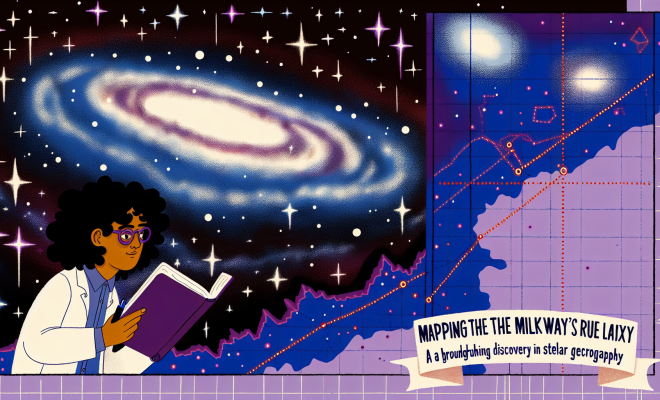
The Milky Way galaxy, a vast and intricate structure comprising billions of stars, has long fascinated astronomers and stargazers alike. Recent research has unveiled a groundbreaking revelation about the galaxy’s true boundaries, providing a clearer understanding of its structure and evolution. According to new findings, the Milky Way’s edge extends between 35,000 to 40,000 light-years from its center, a distance defined not by the formation of new stars, but rather by a population of older stars that drift beyond this boundary.

Understanding the Galactic Structure

The Milky Way is not just a collection of stars; it is a dynamic system that has been evolving for billions of years. The galaxy is shaped by various processes, including star formation, interactions with other galaxies, and the gravitational forces that govern celestial bodies. Understanding the structure of the Milky Way, especially its outer regions, is crucial for astrophysicists who aim to comprehend the formation and evolution of galaxies in the universe.

The Role of Stellar Age Mapping

Central to this recent discovery is the technique of stellar age mapping. This method involves analyzing the ages of stars to discern patterns that reveal information about their formation and movement. By studying the ages and distributions of stars, astronomers can identify where star formation has occurred and where it has ceased. This technique has allowed researchers to determine that beyond the Milky Way’s conventional edge, there exists a region characterized by a significant decline in star formation activity.

Defining the True Edge of the Milky Way

At approximately 35,000 to 40,000 light-years from the galactic center, astronomers have identified a stark transition in the Milky Way’s structure. Within this boundary, star formation is vibrant, with young stars actively being born from the galaxy’s dense molecular clouds. However, as one moves outward, the situation changes dramatically. The new findings indicate that beyond this delineation, the region is populated primarily by older stars that have drifted outward from the galaxy’s core, forming a distinct U-shaped pattern.

Implications of the Discovery

This discovery has profound implications for our understanding of the Milky Way’s structure and its stellar nursery. The identification of the true edge helps resolve long-standing questions about where star formation is actively taking place and where it has effectively ceased. This boundary marks the limit of the Milky Way’s stellar nursery, the region where conditions are favorable for star birth.

Connections to Galactic Evolution

Understanding the true edge of the Milky Way also sheds light on the galaxy’s evolution over time. As stars are born and evolve, they contribute to the chemical enrichment of the galaxy and influence the formation of subsequent generations of stars. The presence of older stars beyond the new boundary indicates a history of stellar migration and the gravitational forces that have shaped the galaxy’s evolution.

Research Methods and Findings

The researchers utilized a combination of observational data and sophisticated modeling techniques to arrive at their conclusions. By analyzing data from various observatories and space missions, they were able to construct a detailed map of stellar ages and distributions within the Milky Way. This process involved extensive data collection and analysis, including:

  • Cataloging Stars: Gathering data on the ages, distances, and compositions of stars throughout the Milky Way.
  • Mapping Stellar Ages: Using advanced algorithms to analyze the ages of stars and create a comprehensive map of the galaxy’s stellar population.
  • Modeling Galactic Dynamics: Employing simulations to understand how stars move within the galaxy and how they interact with one another.

Challenges in Stellar Age Determination

Determining the age of stars is a complex task that poses several challenges. Factors such as stellar evolution, chemical composition, and distance from Earth can complicate age estimates. However, advancements in technology and techniques have improved the accuracy of these measurements, allowing astronomers to construct a more reliable picture of the Milky Way’s stellar population.

Conclusion: A New Perspective on the Milky Way

The identification of the Milky Way’s true edge at 35,000 to 40,000 light-years from the center marks a significant milestone in our understanding of galactic structure. This research not only clarifies the extent of the galaxy’s stellar nursery but also enhances our comprehension of the dynamics that govern the formation and evolution of stars.

As astronomers continue to explore the cosmos, each new discovery adds a layer of complexity and excitement to our understanding of the universe. This revelation about the Milky Way’s boundaries serves as a reminder of the vastness of space and the intricate processes that shape the galaxies around us. With further exploration and research, the mysteries of the Milky Way and beyond will continue to unfold, inviting future generations to look up at the stars with wonder and curiosity.

Previous Article

Asteroid Flybys 2026: Close Encounters, No Threat

Next Article

China’s Social Media Trends: Environment & Tech ...

Matthew Lynch

Related articles More from author

  • Uncategorized

    20 First-Day-of-School Traditions Your Students Will Love

    January 2, 2025
    By Matthew Lynch
  • Uncategorized

    Orbán Declares Victory at Contentious 2026 EU Summit

    March 21, 2026
    By Matthew Lynch
  • Uncategorized

    Boston College Launches 2-Year Degrees for First-Gen Students in 2024

    January 2, 2025
    By Matthew Lynch
  • Uncategorized

    Michigan Higher Ed Enrollment Surges: A Bright Future Ahead

    January 2, 2025
    By Matthew Lynch
  • Uncategorized

    Tailor Teaching: Boost Student Growth & Engagement

    June 22, 2026
    By Matthew Lynch
  • Uncategorized

    Andy Burnham Becomes UK Prime Minister in 2026: What’s Next?

    July 21, 2026
    By Matthew Lynch

Search

Registration and Login

  • Log in
  • Entries feed
  • Comments feed
  • WordPress.org

Newsletter

Signup for The Edvocate Newsletter and have the latest in P-20 education news and opinion delivered to your email address!

RSS feed: Matthew on Education Week Matthew on Education Week

  • Au Revoir from Education Futures November 20, 2018 Matthew Lynch
  • 6 Steps to Data-Driven Literacy Instruction October 17, 2018 Matthew Lynch
  • Four Keys to a Modern IT Approach in K-12 Schools October 2, 2018 Matthew Lynch
  • What's the Difference Between Burnout and Demoralization, and What Can Teachers Do About It? September 27, 2018 Matthew Lynch
  • Revisiting Using Edtech for Bullying and Suicide Prevention September 10, 2018 Matthew Lynch

About Us

The Edvocate was created in 2014 to argue for shifts in education policy and organization in order to enhance the quality of education and the opportunities for learning afforded to P-20 students in America. What we envisage may not be the most straightforward or the most conventional ideas. We call for a relatively radical and certainly quite comprehensive reorganization of America’s P-20 system.

That reorganization, though, and the underlying effort, will have much to do with reviving the American education system, and reviving a national love of learning.  The Edvocate plans to be one of key architects of this revival, as it continues to advocate for education reform, equity, and innovation.

Newsletter

Signup for The Edvocate Newsletter and have the latest in P-20 education news and opinion delivered to your email address!

Contact

The Edvocate
910 Goddin Street
Richmond, VA 23230
(601) 630-5238
[email protected]
  • situs togel online
  • dentoto
  • situs toto 4d
  • situs toto slot
  • toto slot 4d
Copyright (c) 2026 Matthew Lynch. All rights reserved.