NASA Confirms Two Airplane-Sized Asteroids to Approach Earth in 2026
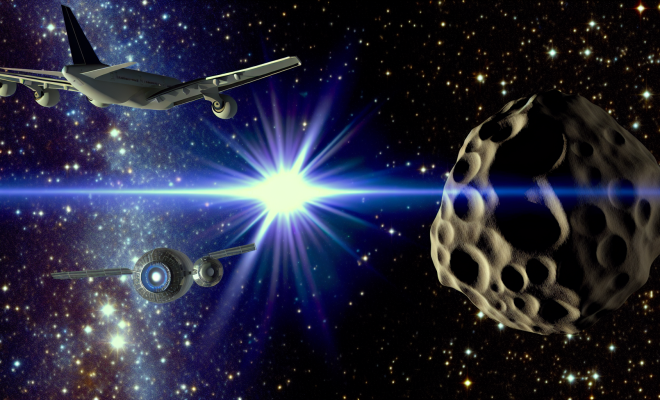
In an exciting announcement that has captured the attention of astronomers and space enthusiasts alike, NASA has confirmed that two sizable asteroids will be making a close approach to Earth on April 27, 2026. Designated as 2026 HJ3 and 2026 HR, these near-Earth objects (NEOs) are comparable in size to commercial airplanes, raising both curiosity and concern about their trajectory.
Understanding Near-Earth Objects
Near-Earth objects are comets and asteroids that have been nudged by the gravitational attraction of nearby planets into orbits that allow them to enter the Earth’s neighborhood. The monitoring of these objects is crucial as it helps scientists assess potential risks and impacts on our planet.
The two asteroids in question will pass at a safe distance, estimated to be millions of miles away from Earth. NASA’s preliminary orbital estimates indicate that there is no risk of collision, which is reassuring news for those concerned about the safety of our planet.
Asteroid 2026 HJ3 and 2026 HR
Both asteroids are classified as Apollo-type asteroids, a group characterized by their orbits that cross Earth’s orbit. Their sizes are comparable to that of a commercial airliner, making them significant enough to warrant attention from space agencies.
- Asteroid 2026 HJ3: This asteroid measures approximately the length of a Boeing 737, making it a noteworthy object for tracking.
- Asteroid 2026 HR: Similar in size, this asteroid also poses no threat during its close encounter with Earth.
The Significance of Tracking NEOs
The monitoring of NEOs is a task taken seriously by NASA and other space agencies worldwide. The potential for these objects to impact Earth makes it imperative to keep a close eye on their trajectories. NASA’s Near-Earth Object Observations (NEOO) program is dedicated to finding, tracking, and characterizing these celestial bodies.
As technology improves, the ability to detect and predict the paths of NEOs has become more sophisticated. This proactive approach aims to identify any potential threats long before they reach our planet.
Ongoing Monitoring Efforts
NASA’s efforts to track NEOs are part of a larger initiative to safeguard Earth from potential asteroid impacts. The agency employs a variety of telescopes and observation methods to identify and track these objects. In recent years, the number of known NEOs has increased significantly, showcasing the effectiveness of these monitoring efforts.
In addition to NASA, numerous international organizations and observatories collaborate to create a comprehensive database of NEOs. This collective approach enhances the understanding of the dynamics of these asteroids and their potential risks.
Public Engagement and Education
The impending close approach of 2026 HJ3 and 2026 HR offers an opportunity for public engagement and education regarding asteroids and space science. NASA and other organizations often conduct outreach programs to inform the public about the significance of monitoring NEOs and the science behind it.
Educational initiatives aim to inspire the next generation of scientists and engineers, emphasizing the importance of space exploration and planetary defense. Such programs create awareness about the role of space agencies in protecting Earth and the ongoing efforts to advance our understanding of the universe.
The Future of Asteroid Research
As we look ahead to April 27, 2026, the close approach of these two asteroids reminds us of the dynamic nature of our solar system. The study of asteroids has implications beyond planetary defense; it also provides insights into the early solar system’s formation and the materials that constitute celestial bodies.
Researchers are continually exploring the potential of asteroids for future space missions, including resource extraction and even colonization efforts. As technology advances, the possibilities for interacting with these objects expand, paving the way for exciting developments in space exploration.
Conclusion
The confirmation of the close approach of asteroids 2026 HJ3 and 2026 HR serves as a significant reminder of the importance of monitoring near-Earth objects. While there is currently no risk of impact, the event underscores the ongoing efforts of NASA and other space agencies to watch over our planet.
As we move closer to the date, anticipation builds, not only for the scientific community but for the public as well. The opportunity to observe these celestial visitors will likely spark interest in planetary science and foster a deeper understanding of our universe’s complexities.
In a world where space exploration continues to push boundaries, the monitoring of near-Earth objects ensures that we remain informed and prepared, safeguarding our planet for generations to come.