The Edvocate

Top Menu

Main Menu

  • Start Here
    • Our Brands
    • Governance
      • Lynch Education Consulting, LLC.
      • Dr. Lynch’s Personal Website
      • Careers
    • Write For Us
    • Books
    • The Tech Edvocate Product Guide
    • Contact Us
    • The Edvocate Podcast
    • Edupedia
    • Pedagogue
    • Terms and Conditions
    • Privacy Policy
  • PreK-12
    • Assessment
    • Assistive Technology
    • Best PreK-12 Schools in America
    • Child Development
    • Classroom Management
    • Early Childhood
    • EdTech & Innovation
    • Education Leadership
    • Equity
    • First Year Teachers
    • Gifted and Talented Education
    • Special Education
    • Parental Involvement
    • Policy & Reform
    • Teachers
  • Higher Ed
    • Best Colleges and Universities
    • Best College and University Programs
    • HBCU’s
    • Diversity
    • Higher Education EdTech
    • Higher Education
    • International Education
  • Advertise
  • The Tech Edvocate Awards
    • The Awards Process
    • Finalists and Winners of The 2026 Tech Edvocate Awards
    • Finalists and Winners of The 2025 Tech Edvocate Awards
    • Finalists and Winners of The 2024 Tech Edvocate Awards
    • Finalists and Winners of The 2023 Tech Edvocate Awards
    • Finalists and Winners of The 2021 Tech Edvocate Awards
    • Finalists and Winners of The 2022 Tech Edvocate Awards
    • Finalists and Winners of The 2020 Tech Edvocate Awards
    • Finalists and Winners of The 2019 Tech Edvocate Awards
    • Finalists and Winners of The 2018 Tech Edvocate Awards
    • Finalists and Winners of The 2017 Tech Edvocate Awards
    • Award Seals
  • Apps
    • GPA Calculator for College
    • GPA Calculator for High School
    • Cumulative GPA Calculator
    • Grade Calculator
    • Weighted Grade Calculator
    • Final Grade Calculator
  • The Tech Edvocate
  • Post a Job
  • AI Powered Personal Tutor

logo

The Edvocate

  • Start Here
    • Our Brands
    • Governance
      • Lynch Education Consulting, LLC.
      • Dr. Lynch’s Personal Website
        • My Speaking Page
      • Careers
    • Write For Us
    • Books
    • The Tech Edvocate Product Guide
    • Contact Us
    • The Edvocate Podcast
    • Edupedia
    • Pedagogue
    • Terms and Conditions
    • Privacy Policy
  • PreK-12
    • Assessment
    • Assistive Technology
    • Best PreK-12 Schools in America
    • Child Development
    • Classroom Management
    • Early Childhood
    • EdTech & Innovation
    • Education Leadership
    • Equity
    • First Year Teachers
    • Gifted and Talented Education
    • Special Education
    • Parental Involvement
    • Policy & Reform
    • Teachers
  • Higher Ed
    • Best Colleges and Universities
    • Best College and University Programs
    • HBCU’s
    • Diversity
    • Higher Education EdTech
    • Higher Education
    • International Education
  • Advertise
  • The Tech Edvocate Awards
    • The Awards Process
    • Finalists and Winners of The 2026 Tech Edvocate Awards
    • Finalists and Winners of The 2025 Tech Edvocate Awards
    • Finalists and Winners of The 2024 Tech Edvocate Awards
    • Finalists and Winners of The 2023 Tech Edvocate Awards
    • Finalists and Winners of The 2021 Tech Edvocate Awards
    • Finalists and Winners of The 2022 Tech Edvocate Awards
    • Finalists and Winners of The 2020 Tech Edvocate Awards
    • Finalists and Winners of The 2019 Tech Edvocate Awards
    • Finalists and Winners of The 2018 Tech Edvocate Awards
    • Finalists and Winners of The 2017 Tech Edvocate Awards
    • Award Seals
  • Apps
    • GPA Calculator for College
    • GPA Calculator for High School
    • Cumulative GPA Calculator
    • Grade Calculator
    • Weighted Grade Calculator
    • Final Grade Calculator
  • The Tech Edvocate
  • Post a Job
  • AI Powered Personal Tutor
  • Apply to Get a Free Kinsa Smart Thermometer for Every Family at Your School

  • California’s Game-Changing Move: Can New Laws Finally Protect Kids from Big Tech’s Grasp?

  • This Bill Could Devastate Vulnerable Kids, Warns Veteran Lawman

  • Revealed: The Untold 9/11 Health Crisis Quietly Affecting a New Generation

  • Unprecedented AI Restrictions in Schools: Why Millions of Students Are Losing Access

  • The Future of Instructional Design Careers: Skills Needed for Success with AI Tools like ezSuite™

  • The AI Revolution: Is This New Tool the Ultimate Game-Changer for Instructional Designers?

  • The AI Revolution in EdTech: 8 Ways ezSuite Will Change How You Create Content

  • The AI Content Revolution: Why Publishers Are Scrambling to Adapt

  • The Looming Crisis: How Ghana’s Faculty Recruitment Wars Threaten Academic Freedom

Uncategorized
Home›Uncategorized›NASA Confirms Two Airplane-Sized Asteroids to Safely Pass Earth in 2026

NASA Confirms Two Airplane-Sized Asteroids to Safely Pass Earth in 2026

By Matthew Lynch
April 27, 2026
0
Spread the love

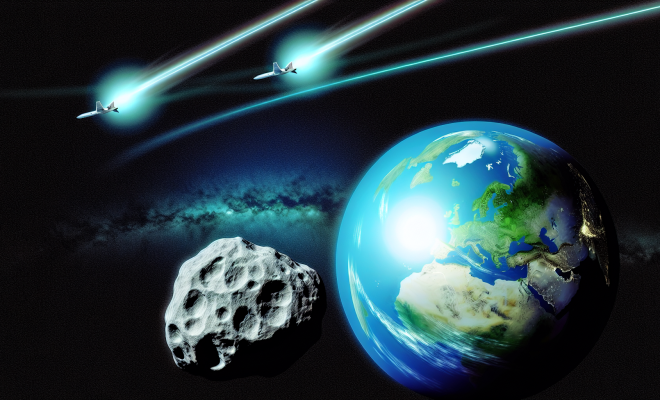
In a recent announcement, NASA confirmed that two near-Earth asteroids, designated as 2026 HJ3 and 2026 HR, will make a close approach to our planet on April 27, 2026. While the size of these celestial bodies is comparable to that of an airplane, scientists assure that there is no risk of impact. These findings highlight the ongoing efforts to monitor near-Earth objects (NEOs) and the advancements in planetary defense technologies.

Understanding Near-Earth Objects

Near-Earth objects are defined as asteroids or comets that come within 1.3 astronomical units (AU) from the Sun, which is approximately 93 million miles away from Earth. Among these, some have orbits that bring them dangerously close to our planet, potentially posing a threat. NASA’s Planetary Defense Coordination Office actively tracks these objects to assess their trajectories and determine any potential risks they may pose.

The Asteroids: 2026 HJ3 and 2026 HR

Both asteroids, 2026 HJ3 and 2026 HR, have been identified as being approximately the size of commercial airplanes. Specifically:

  • 2026 HJ3: Estimated to be about 100 feet in diameter.
  • 2026 HR: Slightly larger, measuring approximately 120 feet across.

Despite their significant size, NASA has confirmed that both will pass safely millions of miles away from Earth, ensuring no risk of collision. This close approach presents an excellent opportunity for astronomers and scientists to study the composition and behavior of these asteroids.

The Importance of Monitoring Asteroids

The routine monitoring of near-Earth objects is crucial for several reasons:

  • Risk Assessment: Identifying potential threats allows scientists to develop strategies to mitigate risks.
  • Trajectory Refinement: Continuous observation helps refine models of an asteroid’s path.
  • Scientific Research: Studying asteroids enhances our understanding of the solar system and the building blocks of planets.

NASA employs a variety of telescopes and satellites to detect and track these objects. Notable technology includes the Pan-STARRS telescopes in Hawaii and the NEOWISE mission, which is focused on finding and characterizing NEOs.

Planetary Defense Initiatives

NASA’s efforts to defend Earth from potential asteroid impacts have gained momentum over the past few decades. The agency has invested in various initiatives aimed at improving detection and developing possible deflection strategies. Key initiatives include:

  • Double Asteroid Redirection Test (DART): A mission aimed at testing the feasibility of altering an asteroid’s trajectory through kinetic impact.
  • Asteroid Terrestrial-impact Last Alert System (ATLAS): A system designed to provide early warnings of incoming asteroids.
  • International Collaborations: Working with global partners to enhance asteroid detection capabilities.

Such initiatives are essential as they prepare humanity for any unforeseen asteroid threats in the future.

Public Engagement and Awareness

As NASA continues to monitor near-Earth asteroids, public awareness and engagement in planetary defense efforts remain vital. Educational programs and outreach initiatives help the general public understand the significance of these celestial objects and the ongoing efforts to protect Earth.

For instance, NASA’s Asteroid Day events encourage communities to learn more about asteroids and the science behind tracking them. Engaging the public fosters a sense of responsibility and awareness about our planet’s safety.

Conclusion: A Safe Approach

As we approach April 27, 2026, the close approach of asteroids 2026 HJ3 and 2026 HR serves as a reminder of the importance of continued vigilance in monitoring near-Earth objects. While these asteroids present no threat, they offer a unique opportunity for scientists to study their characteristics and behaviors. NASA’s commitment to tracking NEOs underlines the necessity of planetary defense, ensuring that we are prepared for any potential future threats.

In the grand scheme of our solar system, asteroids like 2026 HJ3 and 2026 HR are but fleeting visitors. However, with the right tools, knowledge, and international collaboration, we can safeguard our planet from the unknown, ensuring that Earth remains a safe harbor in the vastness of space.


Previous Article

Zacks’ Strong Sell Stocks: Navigate Market Risks ...

Next Article

NASA’s MoonFall Drones to Scout Lunar South ...

Matthew Lynch

Related articles More from author

  • Uncategorized

    Federal Reserve’s Surprise Rate Cut 2026: What It Means for You

    May 3, 2026
    By Matthew Lynch
  • Uncategorized

    NASA’s Roman Telescope: Launching August 2026 to Explore Dark Energy

    June 19, 2026
    By Matthew Lynch
  • Uncategorized

    Microsoft’s Free Cloud Gaming with Ads: A 2026 Game Changer?

    July 25, 2026
    By Matthew Lynch
  • Uncategorized

    35 Classic Party Games for Teens

    January 6, 2026
    By Matthew Lynch
  • Uncategorized

    Our Favorite Lunar New Year Books and Activities

    January 2, 2025
    By Matthew Lynch
  • Uncategorized

    20 Best Educational Shows on Amazon Prime in 2024

    June 27, 2026
    By Matthew Lynch

Search

Registration and Login

  • Log in
  • Entries feed
  • Comments feed
  • WordPress.org

Newsletter

Signup for The Edvocate Newsletter and have the latest in P-20 education news and opinion delivered to your email address!

RSS feed: Matthew on Education Week Matthew on Education Week

  • Au Revoir from Education Futures November 20, 2018 Matthew Lynch
  • 6 Steps to Data-Driven Literacy Instruction October 17, 2018 Matthew Lynch
  • Four Keys to a Modern IT Approach in K-12 Schools October 2, 2018 Matthew Lynch
  • What's the Difference Between Burnout and Demoralization, and What Can Teachers Do About It? September 27, 2018 Matthew Lynch
  • Revisiting Using Edtech for Bullying and Suicide Prevention September 10, 2018 Matthew Lynch

About Us

The Edvocate was created in 2014 to argue for shifts in education policy and organization in order to enhance the quality of education and the opportunities for learning afforded to P-20 students in America. What we envisage may not be the most straightforward or the most conventional ideas. We call for a relatively radical and certainly quite comprehensive reorganization of America’s P-20 system.

That reorganization, though, and the underlying effort, will have much to do with reviving the American education system, and reviving a national love of learning.  The Edvocate plans to be one of key architects of this revival, as it continues to advocate for education reform, equity, and innovation.

Newsletter

Signup for The Edvocate Newsletter and have the latest in P-20 education news and opinion delivered to your email address!

Contact

The Edvocate
910 Goddin Street
Richmond, VA 23230
(601) 630-5238
[email protected]
  • situs togel online
  • dentoto
  • situs toto 4d
  • situs toto slot
  • toto slot 4d
Copyright (c) 2026 Matthew Lynch. All rights reserved.