The Edvocate

Top Menu

Main Menu

  • Start Here
    • Our Brands
    • Governance
      • Lynch Education Consulting, LLC.
      • Dr. Lynch’s Personal Website
      • Careers
    • Write For Us
    • Books
    • The Tech Edvocate Product Guide
    • Contact Us
    • The Edvocate Podcast
    • Edupedia
    • Pedagogue
    • Terms and Conditions
    • Privacy Policy
  • PreK-12
    • Assessment
    • Assistive Technology
    • Best PreK-12 Schools in America
    • Child Development
    • Classroom Management
    • Early Childhood
    • EdTech & Innovation
    • Education Leadership
    • Equity
    • First Year Teachers
    • Gifted and Talented Education
    • Special Education
    • Parental Involvement
    • Policy & Reform
    • Teachers
  • Higher Ed
    • Best Colleges and Universities
    • Best College and University Programs
    • HBCU’s
    • Diversity
    • Higher Education EdTech
    • Higher Education
    • International Education
  • Advertise
  • The Tech Edvocate Awards
    • The Awards Process
    • Finalists and Winners of The 2026 Tech Edvocate Awards
    • Finalists and Winners of The 2025 Tech Edvocate Awards
    • Finalists and Winners of The 2024 Tech Edvocate Awards
    • Finalists and Winners of The 2023 Tech Edvocate Awards
    • Finalists and Winners of The 2021 Tech Edvocate Awards
    • Finalists and Winners of The 2022 Tech Edvocate Awards
    • Finalists and Winners of The 2020 Tech Edvocate Awards
    • Finalists and Winners of The 2019 Tech Edvocate Awards
    • Finalists and Winners of The 2018 Tech Edvocate Awards
    • Finalists and Winners of The 2017 Tech Edvocate Awards
    • Award Seals
  • Apps
    • GPA Calculator for College
    • GPA Calculator for High School
    • Cumulative GPA Calculator
    • Grade Calculator
    • Weighted Grade Calculator
    • Final Grade Calculator
  • The Tech Edvocate
  • Post a Job
  • AI Powered Personal Tutor

logo

The Edvocate

  • Start Here
    • Our Brands
    • Governance
      • Lynch Education Consulting, LLC.
      • Dr. Lynch’s Personal Website
        • My Speaking Page
      • Careers
    • Write For Us
    • Books
    • The Tech Edvocate Product Guide
    • Contact Us
    • The Edvocate Podcast
    • Edupedia
    • Pedagogue
    • Terms and Conditions
    • Privacy Policy
  • PreK-12
    • Assessment
    • Assistive Technology
    • Best PreK-12 Schools in America
    • Child Development
    • Classroom Management
    • Early Childhood
    • EdTech & Innovation
    • Education Leadership
    • Equity
    • First Year Teachers
    • Gifted and Talented Education
    • Special Education
    • Parental Involvement
    • Policy & Reform
    • Teachers
  • Higher Ed
    • Best Colleges and Universities
    • Best College and University Programs
    • HBCU’s
    • Diversity
    • Higher Education EdTech
    • Higher Education
    • International Education
  • Advertise
  • The Tech Edvocate Awards
    • The Awards Process
    • Finalists and Winners of The 2026 Tech Edvocate Awards
    • Finalists and Winners of The 2025 Tech Edvocate Awards
    • Finalists and Winners of The 2024 Tech Edvocate Awards
    • Finalists and Winners of The 2023 Tech Edvocate Awards
    • Finalists and Winners of The 2021 Tech Edvocate Awards
    • Finalists and Winners of The 2022 Tech Edvocate Awards
    • Finalists and Winners of The 2020 Tech Edvocate Awards
    • Finalists and Winners of The 2019 Tech Edvocate Awards
    • Finalists and Winners of The 2018 Tech Edvocate Awards
    • Finalists and Winners of The 2017 Tech Edvocate Awards
    • Award Seals
  • Apps
    • GPA Calculator for College
    • GPA Calculator for High School
    • Cumulative GPA Calculator
    • Grade Calculator
    • Weighted Grade Calculator
    • Final Grade Calculator
  • The Tech Edvocate
  • Post a Job
  • AI Powered Personal Tutor
  • These Fractured Fairy Tales Help Students Understand Setting

  • Mind-Blowing: Google’s AI Ultimatum Could Decimate Academic Freedom in Schools

  • Explosive Student Loan Class Action Lawsuit: Public Servants Allege Forgiveness ‘Scam’

  • The Microsoft AFT School AI Standard: What It Means for Your Kids’ Data

  • 8 Disturbing Ways Student AI Use Could Be Harming Kids’ Minds

  • The AI Revolution on Campus: Your Urgent Blueprint for University Success

  • 900 Jobs at Risk: The Kent School District Levy’s Urgent Deadline

  • The Unseen Force Behind Affordable AI MBAs: You Won’t Believe the Price Tag!

  • Win Everything You Need to Start a Classroom Garden

  • 7 Astonishing MBA Market Trends 2026: What You Need to Know Now

Uncategorized
Home›Uncategorized›Brain-Inspired AI Chip Cuts Energy Use by 70% in 2026

Brain-Inspired AI Chip Cuts Energy Use by 70% in 2026
By Matthew Lynch
April 23, 2026
0
Spread the love

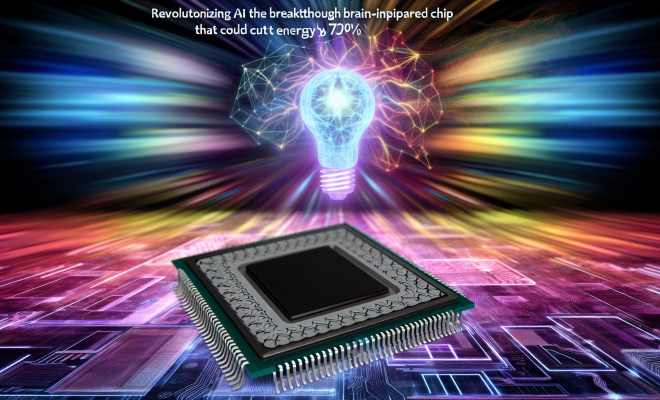
In an era where artificial intelligence (AI) is becoming increasingly integral to various industries, the need for efficient computing solutions has never been more pressing. Traditional AI systems, reliant on separate memory and processing units, consume vast amounts of energy, leading to environmental concerns and operational costs. However, a groundbreaking development from researchers at the University of [insert university name], reported on April 23, 2026, offers a promising solution: a tiny, brain-inspired nanoelectronic chip that has the potential to reduce energy consumption in AI systems by up to 70%.

The Concept of Neuromorphic Computing

At the core of this innovation lies the principle of neuromorphic computing, which seeks to emulate the architecture and functioning of the human brain. Unlike conventional chips that rely on a rigid separation between memory and processing, neuromorphic chips integrate these functions, allowing for simultaneous information processing and storage. This unique approach mirrors how neurons operate in the brain, making it possible for machines to learn and adapt more naturally. This builds on energy efficiency breakthrough.

What Makes the New Chip Different?

The newly developed chip utilizes a modified form of hafnium oxide, a material that has shown promising properties for mimicking the behavior of biological neurons. By leveraging the characteristics of hafnium oxide, the researchers have created a system that not only processes information but also retains it, significantly enhancing efficiency.

Energy Efficiency: A Critical Concern

Current AI systems are notorious for their energy inefficiency. According to estimates, data centers, which house the servers powering AI applications, account for about 1-2% of the global electricity consumption. As AI applications continue to expand, this figure is projected to rise, exacerbating an already critical issue.

The development of the brain-like chip is particularly timely, as it addresses these energy concerns head-on. By enabling a reduction in energy use by as much as 70%, this innovation paves the way for more sustainable AI technologies. The implications are significant, not just for the tech industry but for the environment as a whole.

How the Technology Works

The chip operates through a process called “memristance,” which refers to a non-volatile memory that retains information even when power is off. This feature allows the chip to behave like a biological synapse, where connections between neurons strengthen or weaken based on activity. This adaptability is crucial for machine learning applications, where the ability to learn from new data is essential.

  • Simultaneous Processing and Storage: Unlike traditional chips, which handle processing and storage separately, this chip integrates both functions, offering faster and more efficient operations.
  • Lower Power Consumption: By mimicking the energy-efficient processes of the human brain, the chip greatly reduces the power needed for AI computations.
  • Adaptability: The chip’s ability to learn and adapt makes it suitable for a variety of applications, from robotics to medical diagnostics.

Applications of the Neuromorphic Chip

The potential applications for this innovative chip are vast and varied. Here are some areas where its impact could be transformative:

1. Autonomous Vehicles

Autonomous vehicles rely heavily on AI to process vast amounts of data from sensors in real-time. The efficiency of the brain-inspired chip could enhance the performance of these vehicles, allowing for faster decision-making and reducing energy consumption, which is critical for battery-powered electric vehicles.

2. Healthcare

In healthcare, AI systems analyze medical images, predict patient outcomes, and assist in diagnostics. The new chip’s energy efficiency could lead to more accessible AI-driven healthcare solutions, reducing costs while improving the speed and accuracy of medical assessments.

3. Robotics

Robots that learn and adapt to their environments can perform tasks more effectively. By utilizing the new chip, robotic systems could become more energy-efficient while enhancing their learning capabilities, making them more practical for various applications in manufacturing and service industries.

The Research Team’s Vision

The research team, led by [insert lead researcher’s name], envisions a future where AI systems powered by this brain-like chip will not only be more efficient but also more intelligent. “Our goal is to create machines that think and learn like humans, with a fraction of the energy consumption,” they stated in a recent interview.

Challenges Ahead

While the development of this neuromorphic chip is a significant milestone, there are challenges that lie ahead. Scaling the technology for mass production, ensuring compatibility with existing systems, and overcoming material limitations are just a few hurdles that researchers must navigate.

1. Scalability

One of the primary challenges is scaling the production of the chip to meet the demands of the market. Researchers are exploring various manufacturing techniques to ensure that the chip can be produced efficiently and cost-effectively.

2. Integration with Existing AI Systems

Integrating neuromorphic chips with existing AI infrastructure poses another challenge. Developers will need to create software that can take advantage of the chip’s unique capabilities while ensuring compatibility with current systems.

3. Long-term Reliability

Ensuring the long-term reliability of the chip is crucial for its adoption in critical applications such as healthcare and autonomous vehicles. Researchers are conducting extensive tests to understand the durability and performance of the chip under various conditions.

The Future of AI with Neuromorphic Computing

The advent of brain-inspired chips heralds a new era in artificial intelligence and computing. As we march toward an increasingly AI-driven world, the emphasis on energy efficiency and adaptability will become paramount. This breakthrough not only makes AI more sustainable but also propels us closer to creating machines that can learn and think like humans.

Conclusion

In conclusion, the new brain-like chip developed by researchers at the University of [insert university name] represents a significant leap forward in AI technology. By drastically reducing energy consumption and emulating the neural processes of the human brain, this innovation has the potential to revolutionize how machines learn and operate. As researchers continue to refine this technology and address the challenges ahead, the dream of more intelligent and sustainable AI systems may soon become a reality.



Previous Article

Japan’s 2026 Social Media Age Limits: Protecting ...

Next Article

Depression: Brain Cells Identified as Key to ...

Matthew Lynch

Related articles More from author

  • Uncategorized

    EU Targets TikTok & Instagram’s Addictive Design for Kids

    May 18, 2026
    By Matthew Lynch
  • Uncategorized

    7 Shocking AI Developments Reshaping Search in 2026

    May 2, 2026
    By Matthew Lynch
  • Uncategorized

    Top 8 Kids Bath Bombs: Make Bath Time Fun & Soothing!

    July 5, 2026
    By Matthew Lynch
  • Uncategorized

    UAE’s AI Revolution: Boosting Cybersecurity Vigilance

    July 1, 2026
    By Matthew Lynch
  • Uncategorized

    A ten-point plan for fixing the UK university funding crisis

    January 2, 2025
    By Matthew Lynch
  • Uncategorized

    The Looming Threat: How New Tax Rules Could Cripple Private Colleges and DEI

    September 4, 2026
    By Matthew Lynch

Search

Registration and Login

  • Log in
  • Entries feed
  • Comments feed
  • WordPress.org

Newsletter

Signup for The Edvocate Newsletter and have the latest in P-20 education news and opinion delivered to your email address!

RSS feed: Matthew on Education Week Matthew on Education Week

  • Au Revoir from Education Futures November 20, 2018 Matthew Lynch
  • 6 Steps to Data-Driven Literacy Instruction October 17, 2018 Matthew Lynch
  • Four Keys to a Modern IT Approach in K-12 Schools October 2, 2018 Matthew Lynch
  • What's the Difference Between Burnout and Demoralization, and What Can Teachers Do About It? September 27, 2018 Matthew Lynch
  • Revisiting Using Edtech for Bullying and Suicide Prevention September 10, 2018 Matthew Lynch

About Us

The Edvocate was created in 2014 to argue for shifts in education policy and organization in order to enhance the quality of education and the opportunities for learning afforded to P-20 students in America. What we envisage may not be the most straightforward or the most conventional ideas. We call for a relatively radical and certainly quite comprehensive reorganization of America’s P-20 system.

That reorganization, though, and the underlying effort, will have much to do with reviving the American education system, and reviving a national love of learning.  The Edvocate plans to be one of key architects of this revival, as it continues to advocate for education reform, equity, and innovation.

Newsletter

Signup for The Edvocate Newsletter and have the latest in P-20 education news and opinion delivered to your email address!

Contact

The Edvocate
910 Goddin Street
Richmond, VA 23230
(601) 630-5238
[email protected]
  • situs togel online
  • dentoto
  • situs toto 4d
  • situs toto slot
  • toto slot 4d
Copyright (c) 2026 Matthew Lynch. All rights reserved.