Honor Humanoid Robot Shatters Half-Marathon Record in 2026
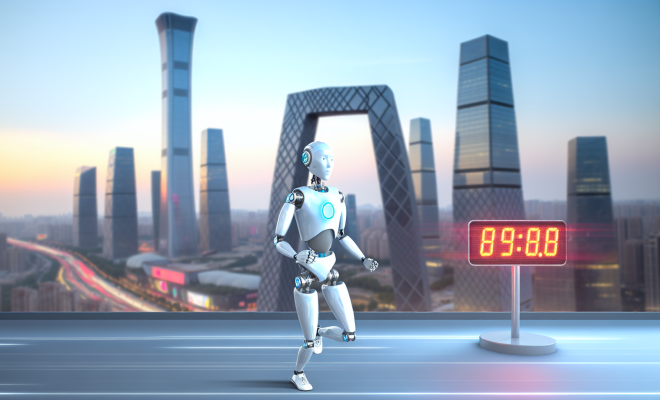
On April 19, 2026, a remarkable event unfolded in Beijing that marked a significant milestone in the field of robotics and artificial intelligence. A humanoid robot developed by the Chinese smartphone manufacturer Honor not only participated in a half-marathon but also emerged victorious, completing the 21-kilometer course in an astonishing time of 50 minutes and 26 seconds. This achievement has set a new benchmark, surpassing the previous human world record of 57 minutes established by Uganda’s Jacob Kiplimo.
The Race and Its Significance
The half-marathon event in Beijing was not just another race; it was a demonstration of the rapid advancements in robotics technology, particularly in autonomous movement and endurance. The humanoid robot’s performance has set a new standard for what is possible in the realm of artificial intelligence, showcasing the capabilities of machines to compete with human athletes in strenuous physical activities.
Breaking Down the Record
The record-breaking run of the Honor humanoid robot was not only a victory for technology but also a stark contrast to the performance of last year’s winner, who completed the race in a time of 2 hours, 40 minutes, and 42 seconds. This drastic improvement highlights the strides being made in robotic performance, with the latest designs integrating advanced algorithms, high-performance sensors, and state-of-the-art motors that allow for rapid and efficient movement.
Technological Advancements Behind the Achievement
The humanoid robot’s success can be attributed to a combination of innovative engineering and cutting-edge technology. Honor’s team of engineers and software developers has worked tirelessly to enhance the robot’s capabilities. The following factors contributed to the robot’s remarkable performance:
- Advanced Locomotion Systems: The robot is equipped with sophisticated locomotion systems that enable it to run swiftly while maintaining balance and stability.
- AI-Driven Decision Making: Utilizing machine learning algorithms, the robot can adapt its running style and pace based on real-time feedback from its surroundings.
- High-Performance Actuators: The integration of high-torque motors allows the robot to replicate human-like running mechanics, drastically improving speed and efficiency.
- Real-Time Data Processing: The robot processes data from its sensors in real-time, enabling it to make quick adjustments to its running strategy, which is crucial in a competitive environment.
Comparison with Human Athletes
To put the robot’s achievement into perspective, it is essential to consider the context of human performance in long-distance running. The half-marathon distance of 21 kilometers is a significant test of endurance, requiring not only speed but also the ability to maintain a consistent pace over an extended period. The fact that this robot could outperform a human world record by nearly seven minutes is a testament to the advancements made in robotics.
In comparison, Jacob Kiplimo’s record of 57 minutes is a remarkable achievement in the world of athletics, demonstrating the peak of human capability. The Honor robot’s victory raises intriguing questions about the future of athletic competition and the potential roles that robots may play in sports.
The Role of Remote-Controlled Robots
While the autonomous humanoid robot stole the headlines, another remotely-controlled robot from Honor also participated in the race, completing the course in an even faster time of 48 minutes and 19 seconds. However, under the event’s scoring rules, which favored autonomous machines, the humanoid robot was declared the champion.
This distinction highlights a critical aspect of the competition: the emphasis on autonomy in robotic design and performance. As technologies evolve, the ability of robots to operate independently will likely become a crucial factor in both competitive and practical applications.
Implications for the Future of Robotics
The success of the humanoid robot in Beijing raises several implications for the future of robotics and artificial intelligence:
- Enhanced Autonomy: The development of robots that can perform tasks autonomously will open up new possibilities in various fields, from athletics to logistics and beyond.
- Redefining Competition: As robots become more capable, the nature of competition in sports and other arenas may evolve, leading to new categories and events specifically for robots.
- Collaboration with Humans: Future advancements in robotics may lead to enhanced collaboration between humans and machines, where robots could assist in training and performance analysis.
- Public Perception and Acceptance: As robots continue to achieve remarkable feats, public perception of their capabilities may shift, leading to greater acceptance of robotic technologies in everyday life.
China’s Robotics Revolution
The success of the humanoid robot at the Beijing half-marathon is emblematic of China’s growing prominence in the field of robotics and artificial intelligence. The country has made significant investments in research and development, fostering an environment where innovative technologies can thrive. This achievement is the result of years of dedication and effort by scientists, engineers, and researchers who are pushing the boundaries of what is possible.
China’s ambition to become a global leader in AI and robotics is evident in numerous initiatives and projects aimed at advancing technology across various sectors. The implications of this race extend beyond athletics, as advancements in robotics are likely to influence industries such as manufacturing, healthcare, and transportation.
Global Reactions and Future Perspectives
Reactions to the humanoid robot’s victory have been mixed, evoking excitement among technology enthusiasts while also raising concerns among traditionalists in the sports community. Some advocates argue that this achievement showcases the potential for robots to take on more significant roles in society, while others fear it may undermine human athleticism and the spirit of competition.
As we move forward, it is crucial to strike a balance between embracing technological advancements and preserving the essence of human competition. The conversation surrounding the role of robots in sports is likely to continue, prompting discussions about regulations, ethics, and the future of athletic events.
Conclusion
The humanoid robot’s victory in the Beijing half-marathon is a landmark achievement that highlights the significant advancements in robotics and artificial intelligence. As machines increasingly demonstrate capabilities that were once thought to be the exclusive domain of humans, society must grapple with the implications of these developments.
As we look to the future, it is clear that the intersection of technology and athletics will continue to evolve, prompting new challenges and opportunities. The remarkable performance of the Honor humanoid robot serves as a reminder of the incredible potential of AI and robotics, and it will be fascinating to see how these technologies will shape our world in the years to come.