The Edvocate

Top Menu

Main Menu

  • Start Here
    • Our Brands
    • Governance
      • Lynch Education Consulting, LLC.
      • Dr. Lynch’s Personal Website
      • Careers
    • Write For Us
    • Books
    • The Tech Edvocate Product Guide
    • Contact Us
    • The Edvocate Podcast
    • Edupedia
    • Pedagogue
    • Terms and Conditions
    • Privacy Policy
  • PreK-12
    • Assessment
    • Assistive Technology
    • Best PreK-12 Schools in America
    • Child Development
    • Classroom Management
    • Early Childhood
    • EdTech & Innovation
    • Education Leadership
    • Equity
    • First Year Teachers
    • Gifted and Talented Education
    • Special Education
    • Parental Involvement
    • Policy & Reform
    • Teachers
  • Higher Ed
    • Best Colleges and Universities
    • Best College and University Programs
    • HBCU’s
    • Diversity
    • Higher Education EdTech
    • Higher Education
    • International Education
  • Advertise
  • The Tech Edvocate Awards
    • The Awards Process
    • Finalists and Winners of The 2026 Tech Edvocate Awards
    • Finalists and Winners of The 2025 Tech Edvocate Awards
    • Finalists and Winners of The 2024 Tech Edvocate Awards
    • Finalists and Winners of The 2023 Tech Edvocate Awards
    • Finalists and Winners of The 2021 Tech Edvocate Awards
    • Finalists and Winners of The 2022 Tech Edvocate Awards
    • Finalists and Winners of The 2020 Tech Edvocate Awards
    • Finalists and Winners of The 2019 Tech Edvocate Awards
    • Finalists and Winners of The 2018 Tech Edvocate Awards
    • Finalists and Winners of The 2017 Tech Edvocate Awards
    • Award Seals
  • Apps
    • GPA Calculator for College
    • GPA Calculator for High School
    • Cumulative GPA Calculator
    • Grade Calculator
    • Weighted Grade Calculator
    • Final Grade Calculator
  • The Tech Edvocate
  • Post a Job
  • AI Powered Personal Tutor

logo

The Edvocate

  • Start Here
    • Our Brands
    • Governance
      • Lynch Education Consulting, LLC.
      • Dr. Lynch’s Personal Website
        • My Speaking Page
      • Careers
    • Write For Us
    • Books
    • The Tech Edvocate Product Guide
    • Contact Us
    • The Edvocate Podcast
    • Edupedia
    • Pedagogue
    • Terms and Conditions
    • Privacy Policy
  • PreK-12
    • Assessment
    • Assistive Technology
    • Best PreK-12 Schools in America
    • Child Development
    • Classroom Management
    • Early Childhood
    • EdTech & Innovation
    • Education Leadership
    • Equity
    • First Year Teachers
    • Gifted and Talented Education
    • Special Education
    • Parental Involvement
    • Policy & Reform
    • Teachers
  • Higher Ed
    • Best Colleges and Universities
    • Best College and University Programs
    • HBCU’s
    • Diversity
    • Higher Education EdTech
    • Higher Education
    • International Education
  • Advertise
  • The Tech Edvocate Awards
    • The Awards Process
    • Finalists and Winners of The 2026 Tech Edvocate Awards
    • Finalists and Winners of The 2025 Tech Edvocate Awards
    • Finalists and Winners of The 2024 Tech Edvocate Awards
    • Finalists and Winners of The 2023 Tech Edvocate Awards
    • Finalists and Winners of The 2021 Tech Edvocate Awards
    • Finalists and Winners of The 2022 Tech Edvocate Awards
    • Finalists and Winners of The 2020 Tech Edvocate Awards
    • Finalists and Winners of The 2019 Tech Edvocate Awards
    • Finalists and Winners of The 2018 Tech Edvocate Awards
    • Finalists and Winners of The 2017 Tech Edvocate Awards
    • Award Seals
  • Apps
    • GPA Calculator for College
    • GPA Calculator for High School
    • Cumulative GPA Calculator
    • Grade Calculator
    • Weighted Grade Calculator
    • Final Grade Calculator
  • The Tech Edvocate
  • Post a Job
  • AI Powered Personal Tutor
  • Baffling New Studies Reveal the TRUTH About Screen Time Effects on Children

  • The Astonishing Reason CXOs Are Rushing to Master AI Now

  • This Game-Changing AI Nanny Software Will Transform Parenting — But At What Cost?

  • The Alarming Truth About AI and Your Job: What the WEF Really Says

  • This Looming Crisis Will Drastically Reshape Your Family’s Future

  • The Brutal Reality: 10 Harsh Truths About Life as a Single Mother No One Talks About

  • The AI Revolution in Education: 10 Astonishing Ways It’s Changing Everything (For Better or Worse)

  • Unprecedented Student Loan Forgiveness Crackdown: What You MUST Know Before 2026

  • Announcing the Winners of the 2026 Tech Edvocate Awards

  • Mind-Blowing: Meta Just Paid $16.68 Billion to Settle Social Media Addiction Claims

Uncategorized
Home›Uncategorized›USC Engineers Unveil Heat-Proof AI Chip: A Game Changer

USC Engineers Unveil Heat-Proof AI Chip: A Game Changer
By Matthew Lynch
April 7, 2026
0
Spread the love

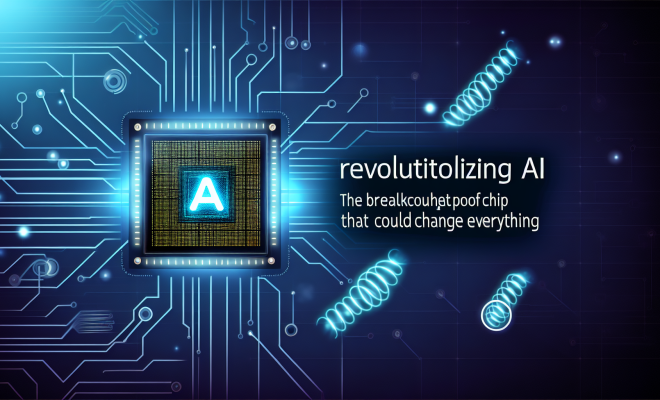
In a groundbreaking advancement for artificial intelligence and extreme computing, engineers at the University of Southern California have unveiled a heat-proof memory device that operates efficiently at temperatures reaching 700°C (1300°F). This pioneering chip is set to redefine the boundaries of conventional electronics, opening new avenues for applications in fields like space exploration and high-performance AI computing.

The Challenge of Heat in Electronics

Traditional electronic devices are limited by their ability to withstand heat. As temperatures rise, electronic components often face degradation, leading to failures and inefficiencies. This limitation has posed significant challenges for industries that require reliable technology in extreme environments, such as aerospace and deep-sea exploration. The new chip developed by USC engineers addresses these challenges head-on, providing a robust solution that can endure and operate under conditions previously thought impossible.

Innovative Materials and Mechanisms

The revolutionary chip is constructed from ultra-durable materials that not only survive extreme temperatures but also maintain their functionality. Researchers discovered a unique atomic-level mechanism that prevents heat-induced failure, a finding that came about partly by accident during experiments. This mechanism is critical to the chip’s ability to store data and perform computations without succumbing to the detrimental effects of heat.

Key Features of the Heat-Proof Chip

  • Temperature Resilience: Operates reliably at temperatures up to 700°C (1300°F).
  • Enhanced Data Storage: Maintains data integrity even in extreme conditions.
  • Efficient Computation: Capable of performing complex calculations essential for AI applications.
  • Energy Efficiency: Promises significant reductions in energy consumption compared to existing technologies.

Implications for AI and Computational Speed

The implications of this technology for artificial intelligence are profound. In AI systems, particularly those based on deep learning, matrix multiplications account for over 92% of the computational workload. The heat-proof chip is expected to deliver orders-of-magnitude improvements in both speed and energy efficiency for these critical operations. This leap forward could accelerate the development of more sophisticated AI models, enabling them to process information faster and more efficiently than ever before.

Potential Applications Beyond AI

While the immediate focus of this technology is on enhancing AI capabilities, its potential applications extend far beyond. Some of the most promising areas include:

  • Space Exploration: The chip could be utilized in satellites and spacecraft, where extreme temperatures are a constant challenge.
  • Automotive Industry: High-performance vehicles, particularly those utilizing advanced driver-assistance systems, could benefit from more reliable electronic components.
  • Industrial Applications: Manufacturing processes that involve high-temperature environments could see enhanced performance and durability.

A Step Toward the Future of Computing

The development of this heat-proof memory device represents a significant milestone in the evolution of computing technology. As industries increasingly rely on AI for decision-making and automation, the demand for faster, more efficient processing capabilities becomes paramount. The ability to operate at such high temperatures not only enhances current capabilities but also paves the way for innovations that were previously deemed impractical.

Looking Ahead

With this new chip, the landscape of artificial intelligence and beyond is on the verge of transformation. Researchers and engineers will continue to explore the full potential of this technology, aiming to push the limits of what is possible in extreme computing environments. As we look to the future, the integration of heat-resistant components could lead to smarter, faster, and more resilient systems across various sectors.

In conclusion, the heat-proof chip developed at the University of Southern California is not just a remarkable engineering achievement; it is a harbinger of a new era in computing that could reshape the very foundations of artificial intelligence and its applications in the real world.


Previous Article

China & Iran Forge AI Warfare Alliance: ...

Next Article

Idaho’s Mental Health Cuts: A Tragic 2020 ...

Matthew Lynch

Related articles More from author

  • Uncategorized

    Germany Warns Citizens: Exercise Caution When Traveling to the U.S.

    March 29, 2026
    By Matthew Lynch
  • Uncategorized

    12 Best STEAM Apps for Students in the Classroom and at Home

    June 28, 2026
    By Matthew Lynch
  • Uncategorized

    How to Set Up and Share an Amazon Classroom Wish List

    January 2, 2025
    By Matthew Lynch
  • Uncategorized

    Culturally Responsive Teaching for English Language Learners

    June 15, 2026
    By Matthew Lynch
  • Uncategorized

    Google Marketing Live 2026: AI & New Ad Tools Revolutionize Advertising

    May 28, 2026
    By Matthew Lynch
  • Uncategorized

    Abolish Peer Assessment in U.S. News College Rankings

    January 2, 2025
    By Matthew Lynch

Search

Registration and Login

  • Log in
  • Entries feed
  • Comments feed
  • WordPress.org

Newsletter

Signup for The Edvocate Newsletter and have the latest in P-20 education news and opinion delivered to your email address!

RSS feed: Matthew on Education Week Matthew on Education Week

  • Au Revoir from Education Futures November 20, 2018 Matthew Lynch
  • 6 Steps to Data-Driven Literacy Instruction October 17, 2018 Matthew Lynch
  • Four Keys to a Modern IT Approach in K-12 Schools October 2, 2018 Matthew Lynch
  • What's the Difference Between Burnout and Demoralization, and What Can Teachers Do About It? September 27, 2018 Matthew Lynch
  • Revisiting Using Edtech for Bullying and Suicide Prevention September 10, 2018 Matthew Lynch

About Us

The Edvocate was created in 2014 to argue for shifts in education policy and organization in order to enhance the quality of education and the opportunities for learning afforded to P-20 students in America. What we envisage may not be the most straightforward or the most conventional ideas. We call for a relatively radical and certainly quite comprehensive reorganization of America’s P-20 system.

That reorganization, though, and the underlying effort, will have much to do with reviving the American education system, and reviving a national love of learning.  The Edvocate plans to be one of key architects of this revival, as it continues to advocate for education reform, equity, and innovation.

Newsletter

Signup for The Edvocate Newsletter and have the latest in P-20 education news and opinion delivered to your email address!

Contact

The Edvocate
910 Goddin Street
Richmond, VA 23230
(601) 630-5238
[email protected]
  • situs togel online
  • dentoto
  • situs toto 4d
  • situs toto slot
  • toto slot 4d
Copyright (c) 2026 Matthew Lynch. All rights reserved.