Get Ready for Cosmic Chaos: Four Solar Storms Poised to Strike Earth
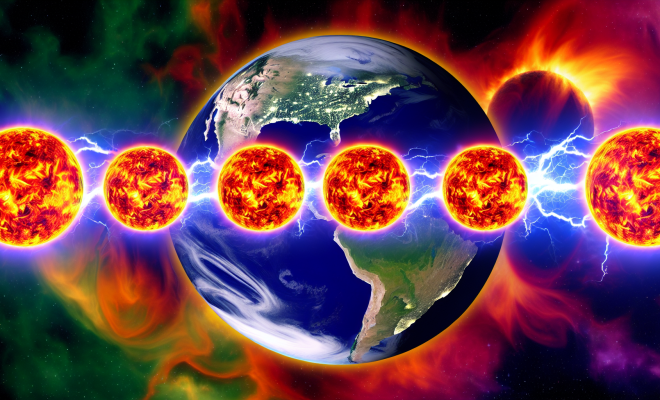
As we approach the end of March 2026, Earth is set to experience an unprecedented cosmic event. Geophysicist Stefan Burns has issued a warning about the impending impact of four solar storms originating from powerful sunspot group 4892. These storms are expected to collide with our planet around March 21-22, 2026, coinciding with significant astronomical phenomena, including a coronal hole high-speed stream that is likely to form a co-rotating interaction region of high-density plasma.
The Nature of Solar Storms
Solar storms, often referred to as solar flares or coronal mass ejections (CMEs), are eruptions on the sun’s surface that release vast amounts of energy and charged particles into space. When these particles reach Earth, they can interact with our planet’s magnetic field, leading to a range of effects on our atmosphere and technology.
What to Expect from the Upcoming Solar Storms
The convergence of these four solar storms is anticipated to create a tumultuous interaction with Earth’s magnetic field. As Burns explains, there are several potential impacts to be aware of:
- Geophysical Effects: The storms could induce fluctuations in Earth’s magnetic field, leading to geomagnetic storms that might disrupt satellite communications and navigation systems.
- Increased Seismic Activity: There is a possibility that the energy released by these solar events could amplify tectonic activity, potentially triggering more earthquakes and volcanic eruptions.
- Weather Volatility: The interaction between solar particles and Earth’s atmosphere may lead to unpredictable weather patterns, including enhanced storm activity.
- Bioelectric Effects: Living organisms, including humans, may experience heightened sensitivity to electromagnetic changes, which could lead to various physiological effects.
The Timing of the Events
The timing of these solar storms is particularly noteworthy. The storms are expected to arrive shortly after the New Moon and just before the March Equinox. This period is already known for its fluctuations in natural phenomena, and the additional solar activity could exacerbate these changes.
Moreover, solar storms can sometimes result in beautiful displays of auroras, known as the Northern and Southern Lights. While these natural light shows are often a welcome sight, the potential disruptions to technology and the environment must not be overlooked.
Upcoming Astronomical Events
In addition to the solar storms, sky-watchers should be on the lookout for a sun-grazing comet that is set to pass close to the Sun on April 4, 2026. This event could provide a spectacular sight for observers. Furthermore, planetary alignments through late April may add to the cosmic drama, making this a particularly exciting time for astronomy enthusiasts.
Precautionary Measures
Given the potential impacts of these solar storms, individuals and organizations are encouraged to take precautionary measures. Here are a few recommendations:
- Stay Informed: Keep updated with information from reliable sources, such as the NASA or NOAA, regarding solar activity and its potential impacts.
- Prepare for Disruptions: Have contingency plans in place for communication and navigation systems that may be affected by geomagnetic storms.
- Protect Technology: Consider using surge protectors and backing up important data to safeguard against potential power surges caused by solar activity.
- Monitor Health Effects: Be mindful of any unusual physical symptoms or changes in mood, as heightened electromagnetic activity may affect individuals differently.
Conclusion
As we stand on the brink of this cosmic event, the convergence of solar storms and other astronomical phenomena presents both challenges and opportunities. While the potential for disruptions to technology and natural systems is serious, the beauty of the cosmos remains an awe-inspiring aspect of these events. By staying informed and prepared, we can navigate the challenges posed by these solar storms and appreciate the incredible forces at play in our universe.