The Edvocate

Top Menu

Main Menu

  • Start Here
    • Our Brands
    • Governance
      • Lynch Education Consulting, LLC.
      • Dr. Lynch’s Personal Website
      • Careers
    • Write For Us
    • Books
    • The Tech Edvocate Product Guide
    • Contact Us
    • The Edvocate Podcast
    • Edupedia
    • Pedagogue
    • Terms and Conditions
    • Privacy Policy
  • PreK-12
    • Assessment
    • Assistive Technology
    • Best PreK-12 Schools in America
    • Child Development
    • Classroom Management
    • Early Childhood
    • EdTech & Innovation
    • Education Leadership
    • Equity
    • First Year Teachers
    • Gifted and Talented Education
    • Special Education
    • Parental Involvement
    • Policy & Reform
    • Teachers
  • Higher Ed
    • Best Colleges and Universities
    • Best College and University Programs
    • HBCU’s
    • Diversity
    • Higher Education EdTech
    • Higher Education
    • International Education
  • Advertise
  • The Tech Edvocate Awards
    • The Awards Process
    • Finalists and Winners of The 2026 Tech Edvocate Awards
    • Finalists and Winners of The 2025 Tech Edvocate Awards
    • Finalists and Winners of The 2024 Tech Edvocate Awards
    • Finalists and Winners of The 2023 Tech Edvocate Awards
    • Finalists and Winners of The 2021 Tech Edvocate Awards
    • Finalists and Winners of The 2022 Tech Edvocate Awards
    • Finalists and Winners of The 2020 Tech Edvocate Awards
    • Finalists and Winners of The 2019 Tech Edvocate Awards
    • Finalists and Winners of The 2018 Tech Edvocate Awards
    • Finalists and Winners of The 2017 Tech Edvocate Awards
    • Award Seals
  • Apps
    • GPA Calculator for College
    • GPA Calculator for High School
    • Cumulative GPA Calculator
    • Grade Calculator
    • Weighted Grade Calculator
    • Final Grade Calculator
  • The Tech Edvocate
  • Post a Job
  • AI Powered Personal Tutor

logo

The Edvocate

  • Start Here
    • Our Brands
    • Governance
      • Lynch Education Consulting, LLC.
      • Dr. Lynch’s Personal Website
        • My Speaking Page
      • Careers
    • Write For Us
    • Books
    • The Tech Edvocate Product Guide
    • Contact Us
    • The Edvocate Podcast
    • Edupedia
    • Pedagogue
    • Terms and Conditions
    • Privacy Policy
  • PreK-12
    • Assessment
    • Assistive Technology
    • Best PreK-12 Schools in America
    • Child Development
    • Classroom Management
    • Early Childhood
    • EdTech & Innovation
    • Education Leadership
    • Equity
    • First Year Teachers
    • Gifted and Talented Education
    • Special Education
    • Parental Involvement
    • Policy & Reform
    • Teachers
  • Higher Ed
    • Best Colleges and Universities
    • Best College and University Programs
    • HBCU’s
    • Diversity
    • Higher Education EdTech
    • Higher Education
    • International Education
  • Advertise
  • The Tech Edvocate Awards
    • The Awards Process
    • Finalists and Winners of The 2026 Tech Edvocate Awards
    • Finalists and Winners of The 2025 Tech Edvocate Awards
    • Finalists and Winners of The 2024 Tech Edvocate Awards
    • Finalists and Winners of The 2023 Tech Edvocate Awards
    • Finalists and Winners of The 2021 Tech Edvocate Awards
    • Finalists and Winners of The 2022 Tech Edvocate Awards
    • Finalists and Winners of The 2020 Tech Edvocate Awards
    • Finalists and Winners of The 2019 Tech Edvocate Awards
    • Finalists and Winners of The 2018 Tech Edvocate Awards
    • Finalists and Winners of The 2017 Tech Edvocate Awards
    • Award Seals
  • Apps
    • GPA Calculator for College
    • GPA Calculator for High School
    • Cumulative GPA Calculator
    • Grade Calculator
    • Weighted Grade Calculator
    • Final Grade Calculator
  • The Tech Edvocate
  • Post a Job
  • AI Powered Personal Tutor
  • The Brutal Truth: AI Is Stealing Entry-Level Jobs – Here’s How High Schools Can Fight Back

  • Baffling Truth: AI’s Hidden Impact on Entry-Level Jobs Is Worse Than You Think

  • Game-Changing AI Tools Just Designed Living Viruses — Here’s How They Did It

  • Game-Changing: AI-Designed Viruses Just Blew the Lid Off Antibiotic Resistance

  • Unveiling the Future: AI-Designed Viruses Set to CRUSH Antibiotic Resistance

  • Explosive Court Battles Over Parental Rights Could Redefine Education

  • Unprecedented: AI Just Designed Living Viruses, Igniting a Bioweapon Debate

  • This One Simple Warning Could Dramatically Improve Your Teen’s Mental Health

  • The Brutal Truth About Choosing the Best Luxury Travel Destination for Vacation

  • NYC’s Radical Generative AI Ban: The Untold Reason Why It’s Happening

Uncategorized
Home›Uncategorized›NVIDIA GTC 2026: Vera Rubin Chip Revolutionizes AI Inference

NVIDIA GTC 2026: Vera Rubin Chip Revolutionizes AI Inference
By Matthew Lynch
March 16, 2026
0
Spread the love

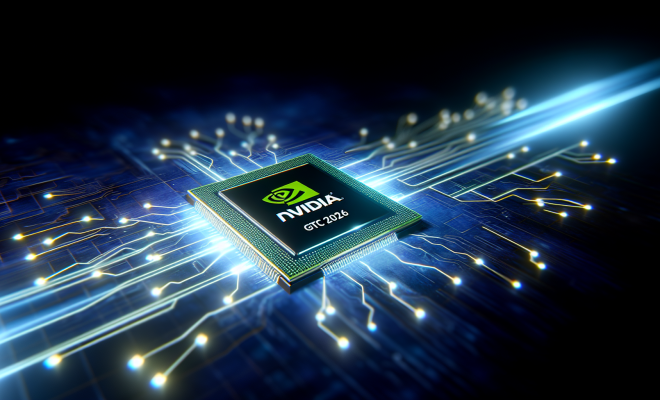
NVIDIA’s annual developer conference, GTC 2026, commenced on March 16 in San Jose, California, and runs through March 19, 2026. This year’s event is a significant milestone as it showcases cutting-edge advancements in AI infrastructure, particularly with the launch of high-performance GPUs and CPUs designed to enhance AI inference capabilities.

Unveiling the Next-Generation AI Accelerator: Vera Rubin

At the forefront of the announcements is the introduction of NVIDIA’s next-generation AI accelerator, dubbed Vera Rubin. This innovative chip is engineered to deliver enhanced inference capabilities, enabling faster and more power-efficient processing of user queries. With AI applications proliferating across various sectors, the demand for improved inference performance is more pertinent than ever.

Shifting Focus from AI Training to Inference

Traditionally, a significant portion of AI development has centered around training models, requiring substantial computational resources. However, the narrative is shifting towards AI inference, where trained models are deployed to make predictions or decisions based on new data. This shift underscores a growing need for hardware capable of efficiently processing these tasks, and NVIDIA’s Vera Rubin is poised to meet this demand.

Dion Harris, NVIDIA’s head of AI infrastructure, emphasized during the conference that the current bottleneck in AI tasks is often found in the CPUs. As AI agents become more prevalent, the efficiency of the underlying hardware architecture is critical. Harris noted that the market growth for CPUs could potentially outpace that of GPUs by 2028, highlighting a significant trend in the industry.

Implications for Industries and AI Applications

The advancements presented at GTC 2026 are expected to have far-reaching implications across various industries, particularly in fields such as robotics, where AI applications are increasingly becoming integral to operational efficiency. The physical implementation of AI agents requires robust inference capabilities to function effectively in real-world environments.

  • Robotics: Enhanced inference allows robots to make quicker decisions in dynamic environments.
  • Healthcare: AI models can analyze patient data more efficiently, leading to improved outcomes.
  • Finance: Faster processing of queries can enhance decision-making in trading and risk assessment.

NVIDIA’s Strategic Partnerships

In a move that underscores its commitment to AI infrastructure, NVIDIA has previously announced supplying CPUs to Meta’s data centers. This partnership reflects a growing trend where major tech companies are investing heavily in AI capabilities, necessitating advanced hardware solutions to support their ambitions.

The collaboration with Meta is indicative of the broader industry shift towards adopting powerful computational resources to handle the increasing complexity of AI applications. As AI continues to evolve, the demand for high-performance chips, like those introduced at GTC 2026, will likely increase.

The Future of AI Hardware: Predictions and Trends

Looking ahead, the landscape of AI hardware is poised for significant changes. The transition from AI training to inference will drive innovations in chip design and architecture, with companies like NVIDIA leading the charge. The potential for CPU market growth to surpass that of GPUs represents a pivotal moment in the tech industry.

As we move closer to 2028, companies will need to adapt to these changes, prioritizing investments in infrastructure that can support the next generation of AI capabilities. With the introduction of the Vera Rubin and other advanced chips, NVIDIA is positioning itself at the forefront of this evolution.

Conclusion

NVIDIA GTC 2026 has set the stage for a new era in AI technology, marked by a decisive shift towards inference capabilities, underscored by the unveiling of the Vera Rubin AI accelerator. As industries increasingly rely on AI to drive innovation and efficiency, the demand for high-performance CPUs and GPUs will continue to grow. With strategic partnerships and forward-thinking designs, NVIDIA is not just responding to the current market needs but is actively shaping the future of AI infrastructure.

Previous Article

Oscars 2026: Glamour, Historic Wins & Unforgettable ...

Next Article

AI’s Impact on Semiconductor Data Management by ...

Matthew Lynch

Related articles More from author

  • Uncategorized

    CME Crypto Index Futures Launch 2026: A Trading Game-Changer

    June 10, 2026
    By Matthew Lynch
  • Uncategorized

    CISA Flags Critical SharePoint & Zimbra Flaws Amid Ransomware Threats

    March 19, 2026
    By Matthew Lynch
  • Uncategorized

    Canada Boosts First Responder Mental Health Support in 2026

    April 1, 2026
    By Matthew Lynch
  • Uncategorized

    Tufts Lacrosse Injuries: Navy SEAL Workout Under Scrutiny

    January 2, 2025
    By Matthew Lynch
  • Uncategorized

    Best College Towns In California’s Sierra Nevada

    July 4, 2026
    By Matthew Lynch
  • Uncategorized

    7 Proven Strategies to Help Kids Overcome Playground Exclusion

    May 10, 2026
    By Matthew Lynch

Search

Registration and Login

  • Log in
  • Entries feed
  • Comments feed
  • WordPress.org

Newsletter

Signup for The Edvocate Newsletter and have the latest in P-20 education news and opinion delivered to your email address!

RSS feed: Matthew on Education Week Matthew on Education Week

  • Au Revoir from Education Futures November 20, 2018 Matthew Lynch
  • 6 Steps to Data-Driven Literacy Instruction October 17, 2018 Matthew Lynch
  • Four Keys to a Modern IT Approach in K-12 Schools October 2, 2018 Matthew Lynch
  • What's the Difference Between Burnout and Demoralization, and What Can Teachers Do About It? September 27, 2018 Matthew Lynch
  • Revisiting Using Edtech for Bullying and Suicide Prevention September 10, 2018 Matthew Lynch

About Us

The Edvocate was created in 2014 to argue for shifts in education policy and organization in order to enhance the quality of education and the opportunities for learning afforded to P-20 students in America. What we envisage may not be the most straightforward or the most conventional ideas. We call for a relatively radical and certainly quite comprehensive reorganization of America’s P-20 system.

That reorganization, though, and the underlying effort, will have much to do with reviving the American education system, and reviving a national love of learning.  The Edvocate plans to be one of key architects of this revival, as it continues to advocate for education reform, equity, and innovation.

Newsletter

Signup for The Edvocate Newsletter and have the latest in P-20 education news and opinion delivered to your email address!

Contact

The Edvocate
910 Goddin Street
Richmond, VA 23230
(601) 630-5238
[email protected]
  • situs togel online
  • dentoto
  • situs toto 4d
  • situs toto slot
  • toto slot 4d
Copyright (c) 2026 Matthew Lynch. All rights reserved.