Education in Crisis: The Impact of War on Millions of Children in the Middle East
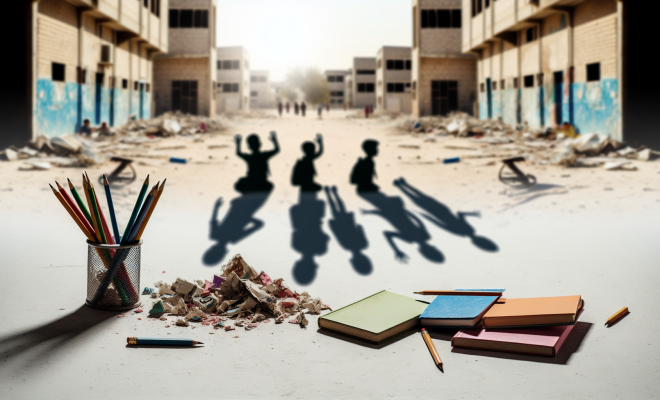
The ongoing conflict in the Middle East has plunged the region into a humanitarian crisis, severely disrupting the education of approximately 52 million children aged 5 to 17. This alarming statistic was highlighted in a recent report by Save the Children and echoed by the Vatican newspaper L’Osservatore Romano on March 13, 2026. The war’s far-reaching consequences are not just limited to physical safety but extend deeply into the vital aspect of children’s education, threatening their future and the potential for peace in the region.
The Scale of Disruption
As the conflict escalates, the educational systems in various countries are being overwhelmed. In Lebanon, the situation has become dire, with over 770,000 people forced to flee their homes, including approximately 300,000 children who have been directly affected by the violence. This displacement has resulted in a significant number of public schools being repurposed as shelters. A staggering 73% of the total schools in Lebanon are currently accommodating displaced persons, thus severely limiting the availability of educational services for those children who have not been displaced.
Impact on Infrastructure and Learning
The destruction of educational infrastructure has been catastrophic. According to the Iranian Red Crescent, the conflict has led to the devastation of at least 65 schools in Iran alone due to airstrikes. This destruction not only impacts the physical buildings where learning occurs but also disrupts the educational process itself. Children are left without access to safe learning environments, and teachers are often unable to fulfill their roles due to the ongoing violence and instability.
Educational Rights Under Siege
The right to education is a fundamental human right, yet in war-torn regions, this right is increasingly under siege. The United Nations Convention on the Rights of the Child emphasizes the importance of education for every child. However, the reality faced by millions in conflict zones starkly contrasts this ideal. The disruption of education not only affects children’s immediate learning experiences but also has long-term implications on their development and future opportunities.
Responses from Humanitarian Organizations
In light of this crisis, organizations like Save the Children are working tirelessly to provide assistance and support to affected families and children. Their efforts include:
- Establishing temporary learning spaces to ensure that children can continue their education.
- Providing psychological support to help children cope with the trauma of war.
- Distributing educational materials to facilitate learning in makeshift environments.
Despite these efforts, the scale of the crisis poses significant challenges. The need for safe and stable environments is urgent, as children cannot learn effectively amidst chaos and fear.
The Path Forward
Addressing the educational crisis in conflict zones requires a multifaceted approach. International collaboration and commitment are crucial to restoring educational access to millions of children. Some potential strategies include:
- Increased Funding: Nations and organizations must allocate more resources to support education in conflict-affected areas.
- Policy Advocacy: Advocating for policies that prioritize education in humanitarian responses is essential to secure funding and resources.
- Community Engagement: Involving local communities in rebuilding educational infrastructures can foster resilience and ensure that the needs of the children are met.
While the immediate focus may be on humanitarian aid, the long-term solution lies in rebuilding educational systems that can withstand the shocks of conflict.
A Call to Action
The plight of 52 million children deprived of their right to education due to war demands urgent attention from the global community. As the conflict in the Middle East continues to unfold, it is crucial for governments, NGOs, and international organizations to prioritize educational initiatives as part of their humanitarian response.
Education is not merely a privilege; it is a necessity for the development of individuals and societies. As we reflect on the ongoing crisis, let us remember that investing in education is investing in a peaceful future. The children affected by these conflicts are not just statistics; they are the future leaders, innovators, and peacemakers of tomorrow. Ensuring their right to education is not just an ethical imperative but a strategic necessity for building lasting peace in the region.