The Edvocate

Top Menu

Main Menu

  • Start Here
    • Our Brands
    • Governance
      • Lynch Education Consulting, LLC.
      • Dr. Lynch’s Personal Website
      • Careers
    • Write For Us
    • Books
    • The Tech Edvocate Product Guide
    • Contact Us
    • The Edvocate Podcast
    • Edupedia
    • Pedagogue
    • Terms and Conditions
    • Privacy Policy
  • PreK-12
    • Assessment
    • Assistive Technology
    • Best PreK-12 Schools in America
    • Child Development
    • Classroom Management
    • Early Childhood
    • EdTech & Innovation
    • Education Leadership
    • Equity
    • First Year Teachers
    • Gifted and Talented Education
    • Special Education
    • Parental Involvement
    • Policy & Reform
    • Teachers
  • Higher Ed
    • Best Colleges and Universities
    • Best College and University Programs
    • HBCU’s
    • Diversity
    • Higher Education EdTech
    • Higher Education
    • International Education
  • Advertise
  • The Tech Edvocate Awards
    • The Awards Process
    • Finalists and Winners of The 2026 Tech Edvocate Awards
    • Finalists and Winners of The 2025 Tech Edvocate Awards
    • Finalists and Winners of The 2024 Tech Edvocate Awards
    • Finalists and Winners of The 2023 Tech Edvocate Awards
    • Finalists and Winners of The 2021 Tech Edvocate Awards
    • Finalists and Winners of The 2022 Tech Edvocate Awards
    • Finalists and Winners of The 2020 Tech Edvocate Awards
    • Finalists and Winners of The 2019 Tech Edvocate Awards
    • Finalists and Winners of The 2018 Tech Edvocate Awards
    • Finalists and Winners of The 2017 Tech Edvocate Awards
    • Award Seals
  • Apps
    • GPA Calculator for College
    • GPA Calculator for High School
    • Cumulative GPA Calculator
    • Grade Calculator
    • Weighted Grade Calculator
    • Final Grade Calculator
  • The Tech Edvocate
  • Post a Job
  • AI Powered Personal Tutor

logo

The Edvocate

  • Start Here
    • Our Brands
    • Governance
      • Lynch Education Consulting, LLC.
      • Dr. Lynch’s Personal Website
        • My Speaking Page
      • Careers
    • Write For Us
    • Books
    • The Tech Edvocate Product Guide
    • Contact Us
    • The Edvocate Podcast
    • Edupedia
    • Pedagogue
    • Terms and Conditions
    • Privacy Policy
  • PreK-12
    • Assessment
    • Assistive Technology
    • Best PreK-12 Schools in America
    • Child Development
    • Classroom Management
    • Early Childhood
    • EdTech & Innovation
    • Education Leadership
    • Equity
    • First Year Teachers
    • Gifted and Talented Education
    • Special Education
    • Parental Involvement
    • Policy & Reform
    • Teachers
  • Higher Ed
    • Best Colleges and Universities
    • Best College and University Programs
    • HBCU’s
    • Diversity
    • Higher Education EdTech
    • Higher Education
    • International Education
  • Advertise
  • The Tech Edvocate Awards
    • The Awards Process
    • Finalists and Winners of The 2026 Tech Edvocate Awards
    • Finalists and Winners of The 2025 Tech Edvocate Awards
    • Finalists and Winners of The 2024 Tech Edvocate Awards
    • Finalists and Winners of The 2023 Tech Edvocate Awards
    • Finalists and Winners of The 2021 Tech Edvocate Awards
    • Finalists and Winners of The 2022 Tech Edvocate Awards
    • Finalists and Winners of The 2020 Tech Edvocate Awards
    • Finalists and Winners of The 2019 Tech Edvocate Awards
    • Finalists and Winners of The 2018 Tech Edvocate Awards
    • Finalists and Winners of The 2017 Tech Edvocate Awards
    • Award Seals
  • Apps
    • GPA Calculator for College
    • GPA Calculator for High School
    • Cumulative GPA Calculator
    • Grade Calculator
    • Weighted Grade Calculator
    • Final Grade Calculator
  • The Tech Edvocate
  • Post a Job
  • AI Powered Personal Tutor
  • Urgent Warning: Cyberattacks on Online Learning Are Far Worse Than You Think

  • 5 Marketing Strategies for Schools in the Age of School Choice

  • Biden Administration Unveils Sweeping New Student Loan Forgiveness Expansion, Impacting Millions

  • The Scary Truth About School Supplies That Every Teacher Understands

  • This Game-Changing Move Will Secure Your Kid’s Future Home — Parents Are Rushing To Do It Now

  • We Need to Make Science Learning Visible. Here’s Why

  • 7 Unprecedented Reasons Why College Is More Vital Than Ever in the Age of AI

  • These Fractured Fairy Tales Help Students Understand Setting

  • Mind-Blowing: Google’s AI Ultimatum Could Decimate Academic Freedom in Schools

  • Explosive Student Loan Class Action Lawsuit: Public Servants Allege Forgiveness ‘Scam’

Uncategorized
Home›Uncategorized›Cambridge Scientists Pioneer Green Drug Modification with Light

Cambridge Scientists Pioneer Green Drug Modification with Light
By Matthew Lynch
March 12, 2026
0
Spread the love

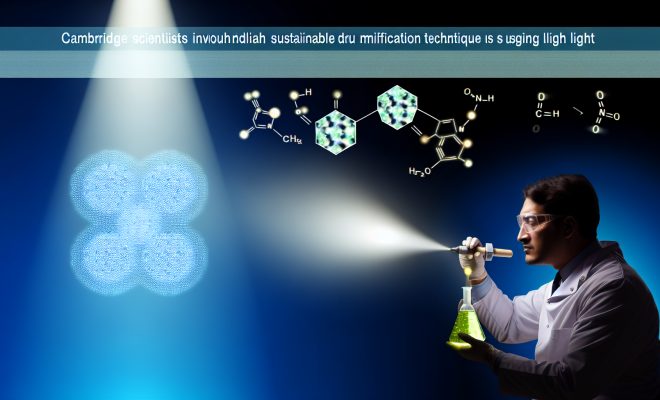
In a remarkable turn of events, researchers at the University of Cambridge have achieved a significant breakthrough in drug development, led by a failed experiment that has now paved the way for a novel approach to medicinal chemistry. Published in the esteemed journal Nature Synthesis, the team introduced a new method known as the ‘anti-Friedel–Crafts’ reaction, which utilizes light instead of the traditionally employed toxic chemicals. This innovative technique allows for precise late-stage modifications to complex drug molecules, offering a sustainable and efficient pathway for drug design and discovery.

The Significance of the Breakthrough

At the heart of this advancement is the ability to form fundamental carbon-carbon bonds, which are crucial in the construction of a myriad of organic compounds, including pharmaceuticals. Lead researcher Professor Erwin Reisner expressed excitement over the potential of this new method to transform how chemists approach drug synthesis. “The anti-Friedel–Crafts reaction marks a significant step towards greener chemistry, allowing for modifications under mild conditions, which is often a limitation in conventional methodologies,” he stated.

The traditional Friedel–Crafts reaction, which has been a staple in organic chemistry for over a century, often relies on harsh conditions and toxic reagents. This not only poses risks for environmental sustainability but also complicates the drug development process. The introduction of light in the new reaction addresses these challenges, enabling chemists to make small yet essential changes to drug molecules more efficiently.

How It Works

The anti-Friedel–Crafts reaction leverages photochemistry to activate chemical reactions. By using light, the researchers can induce specific chemical transformations that were previously difficult or impossible to achieve without harmful substances. This method enhances the precision of drug modifications, allowing medicinal chemists to explore a wider range of drug variations and potentially discover new therapeutic agents.

Implications for Drug Discovery

The implications of this breakthrough extend beyond mere efficiency. In an era where the pharmaceutical industry is under pressure to reduce its environmental footprint, the sustainable approach offered by this new reaction aligns with global efforts to promote greener practices. Researcher Vahey emphasized the tool’s value for medicinal chemists, stating, “This method provides a new avenue for exploring drug diversity, which is crucial for developing effective treatments against a variety of diseases.”

  • Efficiency: The light-driven reaction allows for rapid modifications without the need for toxic reagents.
  • Sustainability: By minimizing harmful waste and using milder conditions, the process contributes to greener chemistry.
  • Diversity: Chemists can explore a broader range of drug variations, enhancing the potential for new therapeutic discoveries.

Challenges and Future Directions

While the initial results are promising, the team acknowledges that there are challenges ahead in optimizing the method for larger-scale applications. Scaling up laboratory techniques for commercial use often presents hurdles, and further research will be necessary to refine the process and ensure its viability in industrial settings.

Moreover, the ongoing exploration of this reaction could lead to the discovery of additional applications and further advancements in the field of synthetic organic chemistry. The Cambridge team plans to continue their investigations into the underlying mechanisms of the anti-Friedel–Crafts reaction, aiming to unlock its full potential.

A New Era for Medicinal Chemistry

The development of the anti-Friedel–Crafts reaction represents a paradigm shift in the way chemists approach drug synthesis. By marrying the principles of photochemistry with traditional organic reactions, researchers are not only advancing scientific knowledge but also responding to pressing environmental concerns.

This breakthrough exemplifies the innovative spirit within the scientific community, where even unexpected outcomes can lead to transformative advancements. As the research progresses, it holds the promise of not only accelerating drug design and discovery but also fostering a more sustainable future for pharmaceutical manufacturing.

In conclusion, the University of Cambridge’s recent findings highlight the potential for light to revolutionize drug development, offering a fresh perspective that prioritizes both efficiency and environmental responsibility. As this field evolves, the commitment to sustainable practices will be essential in shaping the future of medicinal chemistry.


Previous Article

Macao 2026: Your Unique East-Meets-West City Break ...

Next Article

Asteroid 2026 EG1: A Close Encounter with ...

Matthew Lynch

Related articles More from author

  • Uncategorized

    “This Great Hemisphere”: A Play Confronting Racism & Classism

    January 2, 2025
    By Matthew Lynch
  • Uncategorized

    Unbelievable: Student Loan Delays Are Wreaking Havoc — Here’s How to Survive

    September 4, 2026
    By Matthew Lynch
  • Uncategorized

    AI in Healthcare 2026: A Revolution Beyond Imagination

    July 25, 2026
    By Matthew Lynch
  • Uncategorized

    Mastering Social Learning: Attention, Retention, Reproduction, Motivation

    June 23, 2026
    By Matthew Lynch
  • Uncategorized

    Asian Markets Tumble Amid Trump’s Iran Threat

    April 2, 2026
    By Matthew Lynch
  • Uncategorized

    Best Digital Voice Recorders for Lectures

    July 8, 2026
    By Matthew Lynch

Search

Registration and Login

  • Log in
  • Entries feed
  • Comments feed
  • WordPress.org

Newsletter

Signup for The Edvocate Newsletter and have the latest in P-20 education news and opinion delivered to your email address!

RSS feed: Matthew on Education Week Matthew on Education Week

  • Au Revoir from Education Futures November 20, 2018 Matthew Lynch
  • 6 Steps to Data-Driven Literacy Instruction October 17, 2018 Matthew Lynch
  • Four Keys to a Modern IT Approach in K-12 Schools October 2, 2018 Matthew Lynch
  • What's the Difference Between Burnout and Demoralization, and What Can Teachers Do About It? September 27, 2018 Matthew Lynch
  • Revisiting Using Edtech for Bullying and Suicide Prevention September 10, 2018 Matthew Lynch

About Us

The Edvocate was created in 2014 to argue for shifts in education policy and organization in order to enhance the quality of education and the opportunities for learning afforded to P-20 students in America. What we envisage may not be the most straightforward or the most conventional ideas. We call for a relatively radical and certainly quite comprehensive reorganization of America’s P-20 system.

That reorganization, though, and the underlying effort, will have much to do with reviving the American education system, and reviving a national love of learning.  The Edvocate plans to be one of key architects of this revival, as it continues to advocate for education reform, equity, and innovation.

Newsletter

Signup for The Edvocate Newsletter and have the latest in P-20 education news and opinion delivered to your email address!

Contact

The Edvocate
910 Goddin Street
Richmond, VA 23230
(601) 630-5238
[email protected]
  • situs togel online
  • dentoto
  • situs toto 4d
  • situs toto slot
  • toto slot 4d
Copyright (c) 2026 Matthew Lynch. All rights reserved.