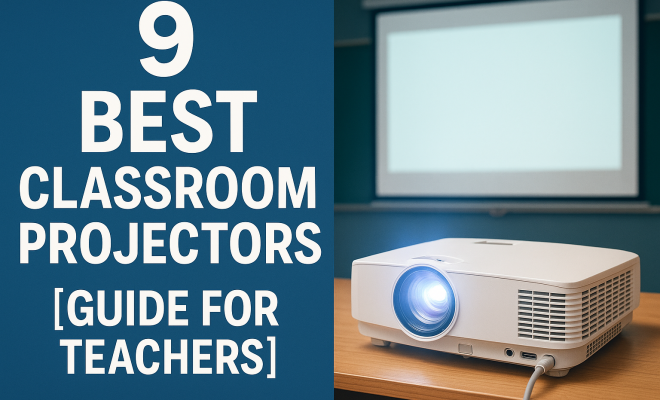
9 Best Classroom Projectors [Guide for Teachers]
“`html
In today’s educational landscape, visual aids play a pivotal role in enhancing the learning experience. One of the most effective tools for this purpose is a projector. Whether you’re displaying a presentation, streaming videos, or sharing educational resources, having the right classroom projector can make all the difference. In this guide, we’ll explore the 9 best classroom projectors that can elevate teaching and learning in any classroom environment.
1. Epson PowerLite 1781W: The Portable Powerhouse
The Epson PowerLite 1781W stands out as a remarkably portable and versatile projector. Weighing just 3.5 pounds, it’s easy to transport between classrooms or even to different schools. With a brightness of 3,200 lumens, this projector is perfect for both well-lit environments and darkened rooms. Notably, it offers a native resolution of 1280 x 800 pixels, ensuring that images maintain clarity and sharpness.
One of the standout features of the PowerLite 1781W is its wireless connectivity options. Teachers can easily connect their laptops, tablets, or smartphones without the clutter of cables. Additionally, the long-lasting lamp can deliver up to 10,000 hours of use in eco mode, making it a cost-effective choice for budget-conscious schools. Overall, the PowerLite 1781W is a strong contender for the best classroom projectors list.
2. BenQ MW535A: The Color Accuracy Champion
When it comes to color accuracy and performance, the BenQ MW535A is a leader in the classroom projector market. This projector utilizes DLP technology and boasts a brightness of 3,600 lumens, making it ideal for various lighting conditions. Its native resolution of 1280 x 800 ensures that visuals are crisp, while the 15,000:1 contrast ratio enhances the clarity of images.
Teachers often appreciate the projector’s easy setup and straightforward interface. The MW535A also features a range of connectivity options, including HDMI and VGA ports, ensuring compatibility with most devices. Plus, with a lamp life of up to 15,000 hours, it offers excellent longevity, making it a reliable choice for daily classroom use. Its vibrant colors and ease of use make it a favorite among educators.
3. ViewSonic PA503S: Budget-Friendly and Efficient
The ViewSonic PA503S is an excellent option for schools looking for quality without breaking the bank. Priced competitively, this projector offers a brightness of 3,600 lumens and a native resolution of 800 x 600, which is sufficient for basic presentations and educational materials. The PA503S also features a 22,000:1 contrast ratio, providing decent image clarity for the price.
One of the most compelling aspects of the PA503S is its low total cost of ownership. The lamp can last up to 15,000 hours in Eco Mode, which significantly reduces maintenance costs over time. Additionally, teachers can benefit from the various input options, including HDMI and VGA, making it compatible with many devices. For budget-conscious educators, the ViewSonic PA503S remains one of the best classroom projectors available.
4. LG PF50KA: The Smart Projector
If you’re looking for versatility combined with smart technology, the LG PF50KA is a standout option. This projector integrates Android TV, allowing teachers to stream content directly without needing an additional device. With a compact design and a weight of just 1.1 pounds, it’s extremely portable.
In terms of performance, the PF50KA delivers a brightness of 600 ANSI lumens and a Full HD resolution of 1920 x 1080. While it may not be the brightest projector on the list, its LED lamp has a lifespan of about 30,000 hours, ensuring long-term usability. The built-in battery allows for up to 2.5 hours of wireless operation, making it great for outdoor lessons or portable use. This projector is perfect for tech-savvy educators wanting to engage students in a modern classroom setting.
5. ViewSonic XG2405: The Gaming Classroom Projector
While primarily designed for gaming, the ViewSonic XG2405 also serves as a fantastic classroom projector, especially for interactive learning. Featuring a 24-inch full HD display, it offers a refresh rate of 144Hz, ensuring smooth visuals during presentations. With a brightness of 2500 lumens, it may require dimming in brighter rooms, but it compensates with vibrant colors. (See: U.S. Department of Education.)
The XG2405 includes HDMI and DisplayPort connections, making it easy to connect various devices. Its low input lag is a huge plus for educators who incorporate real-time interactive activities in their lessons. Although it may be an unconventional choice, the XG2405 is perfect for classrooms focused on technology and active learning.
6. NEC NP-ME401W: The Professional Choice
The NEC NP-ME401W is designed for a more professional educational environment, making it suitable for larger classrooms or auditoriums. With a brightness of 4,000 lumens and a native resolution of 1280 x 800, it delivers outstanding performance even in well-lit rooms. The projector also features NEC’s unique technology for color and brightness, ensuring that presentations remain vibrant and lively. Related reading: ultimate guide for educators.
Connectivity won’t be a problem with this model, as it includes multiple HDMI and VGA ports, as well as LAN capabilities. The NP-ME401W is also compatible with various software applications, allowing for a seamless integration into existing classroom technology. Its impressive lamp life of 10,000 hours in Eco Mode also adds to its overall value, making it a wise investment for schools prioritizing quality and reliability.
7. Anker Nebula Capsule: The Mini Projector
For teachers who want a truly portable option, the Anker Nebula Capsule is a mini projector that packs a punch. Roughly the size of a soda can, this projector is ultra-portable and features a resolution of 854 x 480. While it may not compete with larger projectors in terms of brightness (with a maximum of 100 ANSI lumens), it’s perfect for small, intimate classroom settings or outdoor lessons.
The Nebula Capsule runs on Android and includes built-in Wi-Fi and Bluetooth, enabling teachers to stream directly from their devices. The battery lasts around 4 hours, allowing for extended use without a power source. While it may not replace larger projectors, it’s an excellent supplementary tool for educators who require flexibility in their teaching methods.
8. Sony VPLPHZ10: The Laser Projector
The Sony VPLPHZ10 is a premium choice, representing the latest in laser projector technology. With a brightness of 5,000 lumens and a resolution of 1920 x 1200, this projector offers incredible clarity and color accuracy. It’s designed for larger classrooms and auditoriums, making it suitable for presentations that require detail and precision.
One of the most significant advantages of the VPLPHZ10 is its laser light source, which extends the lifespan of the projector to about 20,000 hours, significantly reducing maintenance needs. The projector also comes equipped with advanced features such as a wide lens shift and digital zoom, allowing for flexible installation options. While it comes with a higher price tag, the VPLPHZ10 is a worthy investment for educational institutions looking to provide top-tier visual experiences.
9. Samsung The Freestyle: The Innovative Choice
Finally, Samsung’s The Freestyle projector is an innovative device that combines portability with smart features. It offers Full HD resolution and a brightness of up to 550 ANSI lumens, making it suitable for various settings. What sets it apart is its unique design, allowing it to be tilted and rotated for the perfect viewing angle.
This projector supports all major streaming services and includes smart technology for effortless connectivity. With a built-in battery and the ability to project onto surfaces up to 100 inches, it’s perfect for classrooms that value flexibility and modern solutions. Its sleek design and advanced features make it a great addition to the best classroom projectors list, especially for forward-thinking educators.
The Importance of Choosing the Right Classroom Projector
Choosing the right classroom projector is not just about specifications; it’s about understanding your teaching style, your classroom environment, and the needs of your students. A high-quality projector can enhance visual learning, foster engagement, and improve information retention among students. Research indicates that students retain 65% of information when it is presented visually, compared to only 10% when it’s communicated through text alone. Thus, the right projector can significantly impact learning outcomes.
When considering a projector, think about your primary use cases. Will you be showing videos, conducting presentations, or using interactive software? Each of these uses may require different specifications in a projector. Additionally, consider the space available—larger rooms may require projectors with higher brightness and resolution to ensure that images remain clear from the back of the room. (See: New York Times Education Section.)
Features to Look for in Classroom Projectors
When searching for the best classroom projectors, several key features should be on your radar:
- Brightness: Measured in lumens, brightness is crucial especially in well-lit rooms. Aim for at least 3,000 lumens for clear images in daylight.
- Resolution: Higher resolution provides better detail. Full HD (1920 x 1080) is ideal for detailed presentations and videos.
- Portability: If you need to move the projector between classrooms, consider its weight and size.
- Connectivity Options: Ensure the projector can connect with various devices (HDMI, USB, Wi-Fi).
- Lifespan of the Lamp: A longer lamp life reduces maintenance costs and downtime.
Comparative Analysis of Projector Types
Projectors come in various types, and each has its unique benefits and drawbacks. Here’s a quick comparison:
| Type | Advantages | Disadvantages |
|---|---|---|
| DLP | High brightness, good color accuracy, compact size | Rainbow effect can occur, may require frequent maintenance |
| LCD | Excellent color reproduction, no rainbow effect | Less bright than DLP, can be bulkier |
| Laser | Long lifespan, vibrant colors, low maintenance | Higher initial cost |
Expert Perspectives on Classroom Technology
Educators and technology experts agree on the importance of integrating technology like projectors in classrooms. Dr. Emily Carter, a professor of Educational Technology, states, “Using projectors in the classroom not only aids in delivering content but also enhances student engagement. When students see information presented visually, they are more likely to participate and contribute to discussions.”
Similarly, tech consultant Mark Johnson emphasizes the need for smart projectors. “In an age where technology is ever-evolving, classrooms need to adapt quickly. Smart projectors that connect to the internet allow for easier access to resources, ensuring that lessons are current and relevant,” he notes.
Frequently Asked Questions (FAQ)
What is the best brightness level for a classroom projector?
A brightness level of at least 3,000 lumens is recommended for classrooms, especially those with natural light. Higher lumens are preferable for larger rooms or spaces with bright overhead lights.
Can I use a projector for outdoor teaching?
Yes, but you will need a projector with high brightness (at least 3,000 lumens) and a suitable surface to project onto. Some projectors offer outdoor-friendly features, like battery power and portability.
How long do projector lamps typically last?
Generally, projector lamps last between 2,000 to 30,000 hours, depending on the model and usage conditions. LED and laser projectors usually have longer lifespans compared to traditional lamps.
What features are essential for interactive presentations?
For interactive presentations, look for projectors that support touch interaction, have low input lag, and offer wireless connectivity. Many modern projectors now support touchscreen technology or can connect with interactive whiteboards.
Are there projectors specifically designed for STEM education?
Yes, many projectors are tailored for STEM education, with features like high brightness, interactive capabilities, and compatibility with STEM software applications. These projectors help facilitate hands-on learning and collaborative projects. (See: ScienceDirect on Educational Technology.)
Trends in Classroom Projection Technology
The landscape of classroom projectors is continually evolving. Recent trends indicate a significant shift towards smart projectors that integrate seamlessly with educational technology tools. For instance, projectors that support wireless mirroring allow teachers to share content directly from their devices without the hassle of cables. This feature not only saves time but also enhances the fluidity of presentations.
In addition to smart capabilities, many projectors are now incorporating features such as built-in speakers, which eliminate the need for additional audio equipment. This integration is particularly advantageous in classrooms, where space and resources may be limited. With advancements in audio technology, projectors are now capable of delivering clear sound, further enriching the learning environment.
The Future of Projectors in Education
As technology continues to advance, the future of projectors in education looks promising. One emerging trend is the integration of augmented reality (AR) and virtual reality (VR) into projection technology. For example, a projector capable of displaying AR content can transform a conventional lesson into an interactive experience, allowing students to visualize complex concepts. Imagine a science class where students can see a 3D model of the solar system projected in the classroom, enhancing their understanding of planetary movements.
Additionally, projector manufacturers are investing in eco-friendly technologies, aiming to reduce energy consumption and environmental impact. This trend aligns with broader educational initiatives focused on sustainability, providing schools with options that not only meet their needs but also contribute to a greener planet.
Choosing the Right Projector for Different Subjects
When selecting a projector, it’s essential to consider the subject matter being taught, as different subjects may benefit from specific features. For example, in art classes, a projector with excellent color accuracy can help students see true-to-life representations of their work. The BenQ MW535A, with its outstanding color performance, would be an ideal choice here.
In science or math classes, where data visualization is crucial, a projector with high resolution is essential. The Sony VPLPHZ10, with its superior clarity, would enhance the presentation of complex graphs and equations. Engaging students with visually appealing content can significantly improve their understanding and retention of the material.
Conclusion
In summary, selecting the right projector can significantly enhance your teaching methods and engage your students more effectively. Each of the options discussed has its unique strengths, catering to various classroom environments, budgets, and teaching styles. Whether you’re looking for portability, advanced technology, or budget-friendly options, the best classroom projectors detailed in this guide will help you create a more interactive and visually exciting learning experience. We covered must-have OER apps in more detail.
“`
Trending Now
Frequently Asked Questions
What are the best classroom projectors for teachers?
The best classroom projectors for teachers include the Epson PowerLite 1781W for its portability and wireless connectivity, and the BenQ MW535A for its superior color accuracy and brightness. These projectors enhance the learning experience with features tailored for educational environments.
How do I choose a projector for my classroom?
When choosing a projector for your classroom, consider factors such as brightness (measured in lumens), resolution, portability, connectivity options, and lamp longevity. A projector with at least 3,000 lumens is ideal for well-lit classrooms, while wireless connectivity can simplify setup.
What features should I look for in a classroom projector?
Look for features such as high brightness (3,000 lumens or more), good resolution (at least 1280 x 800 pixels), multiple connectivity options (like HDMI and VGA), and long lamp life. Portability is also important for teachers who move between classrooms.
Are projectors better than smart boards for teaching?
Projectors and smart boards serve different purposes. Projectors are excellent for displaying visual content and can be more portable, while smart boards offer interactive capabilities. The choice depends on teaching style and classroom needs.
How long do projector lamps last in a classroom setting?
Projector lamps can last anywhere from 3,000 to 10,000 hours, depending on the model and usage mode. For example, the Epson PowerLite 1781W can last up to 10,000 hours in eco mode, making it a cost-effective option for classrooms.
What did we miss? Let us know in the comments and join the conversation.