The Edvocate

Top Menu

Main Menu

  • Start Here
    • Our Brands
    • Governance
      • Lynch Education Consulting, LLC.
      • Dr. Lynch’s Personal Website
      • Careers
    • Write For Us
    • Books
    • The Tech Edvocate Product Guide
    • Contact Us
    • The Edvocate Podcast
    • Edupedia
    • Pedagogue
    • Terms and Conditions
    • Privacy Policy
  • PreK-12
    • Assessment
    • Assistive Technology
    • Best PreK-12 Schools in America
    • Child Development
    • Classroom Management
    • Early Childhood
    • EdTech & Innovation
    • Education Leadership
    • Equity
    • First Year Teachers
    • Gifted and Talented Education
    • Special Education
    • Parental Involvement
    • Policy & Reform
    • Teachers
  • Higher Ed
    • Best Colleges and Universities
    • Best College and University Programs
    • HBCU’s
    • Diversity
    • Higher Education EdTech
    • Higher Education
    • International Education
  • Advertise
  • The Tech Edvocate Awards
    • The Awards Process
    • Finalists and Winners of The 2026 Tech Edvocate Awards
    • Finalists and Winners of The 2025 Tech Edvocate Awards
    • Finalists and Winners of The 2024 Tech Edvocate Awards
    • Finalists and Winners of The 2023 Tech Edvocate Awards
    • Finalists and Winners of The 2021 Tech Edvocate Awards
    • Finalists and Winners of The 2022 Tech Edvocate Awards
    • Finalists and Winners of The 2020 Tech Edvocate Awards
    • Finalists and Winners of The 2019 Tech Edvocate Awards
    • Finalists and Winners of The 2018 Tech Edvocate Awards
    • Finalists and Winners of The 2017 Tech Edvocate Awards
    • Award Seals
  • Apps
    • GPA Calculator for College
    • GPA Calculator for High School
    • Cumulative GPA Calculator
    • Grade Calculator
    • Weighted Grade Calculator
    • Final Grade Calculator
  • The Tech Edvocate
  • Post a Job
  • AI Powered Personal Tutor

logo

The Edvocate

  • Start Here
    • Our Brands
    • Governance
      • Lynch Education Consulting, LLC.
      • Dr. Lynch’s Personal Website
        • My Speaking Page
      • Careers
    • Write For Us
    • Books
    • The Tech Edvocate Product Guide
    • Contact Us
    • The Edvocate Podcast
    • Edupedia
    • Pedagogue
    • Terms and Conditions
    • Privacy Policy
  • PreK-12
    • Assessment
    • Assistive Technology
    • Best PreK-12 Schools in America
    • Child Development
    • Classroom Management
    • Early Childhood
    • EdTech & Innovation
    • Education Leadership
    • Equity
    • First Year Teachers
    • Gifted and Talented Education
    • Special Education
    • Parental Involvement
    • Policy & Reform
    • Teachers
  • Higher Ed
    • Best Colleges and Universities
    • Best College and University Programs
    • HBCU’s
    • Diversity
    • Higher Education EdTech
    • Higher Education
    • International Education
  • Advertise
  • The Tech Edvocate Awards
    • The Awards Process
    • Finalists and Winners of The 2026 Tech Edvocate Awards
    • Finalists and Winners of The 2025 Tech Edvocate Awards
    • Finalists and Winners of The 2024 Tech Edvocate Awards
    • Finalists and Winners of The 2023 Tech Edvocate Awards
    • Finalists and Winners of The 2021 Tech Edvocate Awards
    • Finalists and Winners of The 2022 Tech Edvocate Awards
    • Finalists and Winners of The 2020 Tech Edvocate Awards
    • Finalists and Winners of The 2019 Tech Edvocate Awards
    • Finalists and Winners of The 2018 Tech Edvocate Awards
    • Finalists and Winners of The 2017 Tech Edvocate Awards
    • Award Seals
  • Apps
    • GPA Calculator for College
    • GPA Calculator for High School
    • Cumulative GPA Calculator
    • Grade Calculator
    • Weighted Grade Calculator
    • Final Grade Calculator
  • The Tech Edvocate
  • Post a Job
  • AI Powered Personal Tutor
  • The Quiet Revolution: How AI Prompt Engineering is Reshaping Edtech Careers

  • 8 Crucial Skills Separating AI Prompt Engineers from Traditional Educators

  • 7 Courses That Could Catapult Your Edtech Career into AI Prompt Engineering

  • This One Role Is Quietly Revolutionizing EdTech — And You Won’t Believe the Salary

  • The Brutal Truth: Why Your AI Master’s Degree Is Worth Millions – And How to Get It

  • The AI Professor Salary Comparison 2026: Why These Roles Are Outpacing All Others

  • The Unseen Force Behind AI’s Salary Boom: What You Need to Know

  • This Crucial Factor Is Redefining the AI Master’s Degree Salary Landscape

  • San Francisco’s Housing Nightmare: 10 Ways Essential Workers Can Survive

  • 8 Cities Where Skyrocketing Housing Costs Are Crushing Essential Workers

Uncategorized
Home›Uncategorized›AI Hiring Freeze: 36% of Companies Halt Entry-Level Hiring by 2026

AI Hiring Freeze: 36% of Companies Halt Entry-Level Hiring by 2026
By Matthew Lynch
May 8, 2026
0
Spread the love

Understanding the AI Hiring Freeze

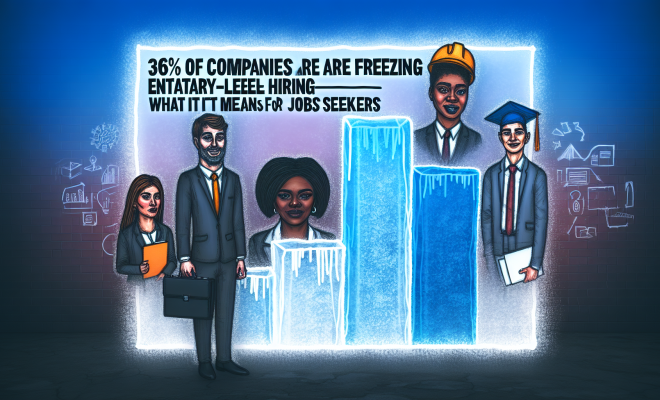
The term AI hiring freeze has recently gained traction in discussions about the evolving job landscape. A survey involving 1,000 U.S. business leaders has unveiled a concerning trend: by the end of 2026, 36% of companies plan to halt their entry-level recruitment efforts. This move is primarily a response to the increasing capabilities of artificial intelligence to take over tasks traditionally assigned to junior employees. As AI continues to grow more sophisticated, its ability to perform an array of functions raises critical questions about the future of work, particularly for younger professionals and recent graduates.

The Implications for Entry-Level Job Seekers

The findings from the survey have sent shockwaves through the job market, especially for Gen-Z and younger millennials who are trying to carve out their careers. As companies lean towards automation, the entry-level positions that have long served as stepping stones into various industries are being systematically eliminated. This shift not only affects individual job seekers but also has broader implications for the economy and workplace culture.

Automation vs. Opportunity

With AI capable of performing routine tasks such as data entry, customer service, and even preliminary data analysis, companies are finding it increasingly efficient to rely on technology rather than human labor. This shift raises the question: what happens to the opportunities that entry-level roles provide?

  • Career Development: Entry-level positions typically offer essential learning experiences and networking opportunities. The AI hiring freeze threatens to eliminate these pathways, leaving young professionals without the chance to acquire valuable skills.
  • Economic Disparity: As these roles disappear, the gap between those who have access to advanced education and training and those who do not may widen, exacerbating existing economic inequalities.
  • Job Market Saturation: With fewer entry-level roles available, competition for the remaining positions will intensify, making it even more challenging for new entrants to secure employment.

Why Are Companies Embracing AI?

Understanding the rationale behind the trend toward automation is crucial for contextualizing the AI hiring freeze. Businesses are motivated by several factors:

  • Cost Efficiency: Implementing AI solutions can significantly reduce labor costs, allowing companies to allocate resources more effectively.
  • Improved Accuracy: AI systems minimize human error, leading to better decision-making and thus enhancing overall efficiency.
  • Scalability: AI allows businesses to scale operations rapidly without the need for proportional increases in staff.
  • Focus on Core Activities: By automating routine tasks, companies can refocus their human resources on more strategic initiatives.

The Rising Anxiety Among Job Seekers

For many young professionals, the AI hiring freeze has sparked feelings of anxiety and uncertainty. The elimination of entry-level positions has created a ripple effect of concern about job security and career prospects. This anxiety is compounded by the fact that many of these individuals are entering a workforce that increasingly prioritizes technological proficiency over traditional qualifications.

Generational Inequality and Job Displacement

As automation continues to reshape the job market, the fear of job displacement is palpable among younger generations. The idea that machines could take over roles that were once seen as secure and foundational is alarming. This not only threatens individual career paths but also raises broader societal questions about equity and access to opportunity.

  • Job Security: The fear of being replaced by AI creates a sense of instability among younger workers.
  • Access to Training: Many young professionals may not have the resources to upskill or transition into more advanced roles, which could further entrench economic divides.
  • Changing Career Pathways: With traditional entry-level roles disappearing, young professionals may need to seek alternative pathways, resulting in increased time to achieve career goals.

Strategies for Navigating the AI Hiring Freeze

In light of the AI hiring freeze, job seekers must adapt to the changing landscape. Here are some strategies to help navigate the transition:

  1. Upgrading Skills: Investing in skills that complement AI technology, such as data analysis, critical thinking, and emotional intelligence, can make candidates more appealing to employers.
  2. Networking: Building connections within industries of interest can open doors to opportunities that may not be readily advertised.
  3. Flexibility: Being open to roles that may not fit traditional definitions of a career path can lead to valuable experience and unexpected opportunities.
  4. Continuous Learning: Embracing lifelong learning through online courses, workshops, or certifications can keep job seekers competitive in a rapidly evolving job market.

Corporate Responsibility and Ethical Considerations

As companies adopt AI technologies, there is a pressing need for corporate responsibility concerning the workforce. Employers must consider the implications of their hiring practices and strive to create an inclusive environment that promotes human and AI collaboration.

  • Investing in Training: Companies can mitigate the effects of the AI hiring freeze by investing in training programs to help existing employees transition into more complex roles.
  • Creating New Opportunities: Businesses should explore new models of employment that integrate AI while still providing meaningful work for humans.
  • Transparency: Maintaining open communication about changes in hiring practices can help alleviate anxiety among employees and job seekers.

The Future of Work in an AI-Driven Economy

As we look ahead, it is clear that the AI hiring freeze is merely a symptom of a larger transformation in the workforce. The rise of automation will undoubtedly change the nature of work, requiring both companies and employees to adapt. Understanding these shifts and preparing for them is essential for navigating the challenges and opportunities that lie ahead.

Conclusion: Adapting to Change

In conclusion, the data surrounding the AI hiring freeze reflects a significant shift in the job market that poses challenges for young professionals. While the trend may evoke fears regarding job security, it also presents an opportunity for innovation and growth. By focusing on skill development, networking, and embracing new pathways, job seekers can position themselves effectively for the future. Ultimately, as companies and employees find common ground in the evolving landscape, the future of work can be shaped into one that benefits all stakeholders involved.


Previous Article

Gerrymandering Explained: The 2026 Supreme Court Ruling

Next Article

Gen Z Chooses Mental Health Careers Over ...

Matthew Lynch

Related articles More from author

  • Uncategorized

    Google’s AI in Education: Are We Ready for Gemini’s Impact?

    May 27, 2026
    By Matthew Lynch
  • Uncategorized

    Crypto Market Outlook: Bitcoin & Ethereum in April 2026

    April 3, 2026
    By Matthew Lynch
  • Uncategorized

    Rubin Observatory Discovers 11,000+ New Asteroids, Boosts Solar System Explorati

    April 4, 2026
    By Matthew Lynch
  • Uncategorized

    Marymount University Admissions: Your Guide to Applying

    September 13, 2020
    By Matthew Lynch
  • Uncategorized

    Boost K-12 Success: The Power of Emotional Intelligence in Education

    June 12, 2026
    By Matthew Lynch
  • Uncategorized

    15 Fun Activities & Websites to Teach Kids Historical Timelines

    December 22, 2025
    By Matthew Lynch

Search

Registration and Login

  • Log in
  • Entries feed
  • Comments feed
  • WordPress.org

Newsletter

Signup for The Edvocate Newsletter and have the latest in P-20 education news and opinion delivered to your email address!

RSS feed: Matthew on Education Week Matthew on Education Week

  • Au Revoir from Education Futures November 20, 2018 Matthew Lynch
  • 6 Steps to Data-Driven Literacy Instruction October 17, 2018 Matthew Lynch
  • Four Keys to a Modern IT Approach in K-12 Schools October 2, 2018 Matthew Lynch
  • What's the Difference Between Burnout and Demoralization, and What Can Teachers Do About It? September 27, 2018 Matthew Lynch
  • Revisiting Using Edtech for Bullying and Suicide Prevention September 10, 2018 Matthew Lynch

About Us

The Edvocate was created in 2014 to argue for shifts in education policy and organization in order to enhance the quality of education and the opportunities for learning afforded to P-20 students in America. What we envisage may not be the most straightforward or the most conventional ideas. We call for a relatively radical and certainly quite comprehensive reorganization of America’s P-20 system.

That reorganization, though, and the underlying effort, will have much to do with reviving the American education system, and reviving a national love of learning.  The Edvocate plans to be one of key architects of this revival, as it continues to advocate for education reform, equity, and innovation.

Newsletter

Signup for The Edvocate Newsletter and have the latest in P-20 education news and opinion delivered to your email address!

Contact

The Edvocate
910 Goddin Street
Richmond, VA 23230
(601) 630-5238
[email protected]
  • situs togel online
  • dentoto
  • situs toto 4d
  • situs toto slot
  • toto slot 4d
Copyright (c) 2026 Matthew Lynch. All rights reserved.