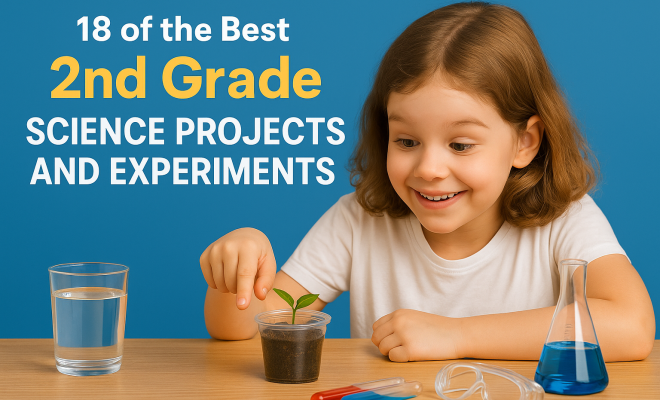
18 of the Best 2nd Grade Science Projects and Experiments
“`html
Science is all around us, and introducing it at a young age can spark a lifelong love of inquiry and discovery. For 2nd graders, engaging in hands-on science projects not only solidifies their understanding of scientific concepts but also nurtures their critical thinking and problem-solving skills. Here’s a curated list of 18 fantastic 2nd grade science projects that are perfect for young learners, each designed to capture their curiosity and teach valuable lessons.
1. Homemade Volcano: A Classic Experiment
Creating a homemade volcano is a staple in science education. It combines the excitement of a mini-eruption with fundamental concepts in geology and chemistry. To make this project, you’ll need baking soda, vinegar, food coloring, and a container to serve as the volcano.
Start by mixing baking soda with food coloring in your container. When you’re ready for the eruption, pour in the vinegar. This reaction creates carbon dioxide gas, which bubbles up and overflows, mimicking a volcanic eruption. This project teaches students about chemical reactions and the natural processes that shape our planet.
2. Plant Growth Experiment: Understanding Photosynthesis
This project investigates how different factors affect plant growth. Students can grow plants under various conditions, such as differing light exposure, water amounts, or soil types. Use seeds like beans or peas for quick results.
Throughout the experiment, students should keep a journal documenting growth and changes, allowing them to analyze the data and draw conclusions about how each factor impacts photosynthesis and plant health. This project introduces them to the scientific method and basic botanical concepts.
3. Simple Circuit: Exploring Electricity
With just a battery, some wires, and a light bulb, students can create a simple circuit to explore the fundamentals of electricity. This project is an excellent way for them to understand how circuits work and the concept of energy flow.
Begin by connecting the battery to the light bulb using wires. When they complete the circuit, the light will illuminate, demonstrating the flow of energy. This experiment allows kids to engage with basic electrical principles and understand the importance of circuits in everyday life.
4. Magnet Exploration: Discovering Magnetic Fields
Using magnets in various ways can help students learn about magnetic forces. Have them experiment with different materials to see what is magnetic and what isn’t. You can provide a variety of objects, like paperclips, coins, and plastic toys.
Encourage them to create a chart to record their findings. This project not only teaches about magnetism but also encourages observation and categorization skills. Kids will marvel at the invisible forces at play!
5. Water Cycle in a Bag: Observing Nature’s Processes
This project provides a visual representation of the water cycle. Using a resealable plastic bag, students can create their mini water cycle by adding a small amount of water and some blue food coloring, then taping it to a sunny window.
As the water heats up and evaporates, it will condense on the sides of the bag, demonstrating how clouds form and eventually lead to precipitation. It’s a great way to teach the cyclical nature of water in our environment in a hands-on way. Related reading: simple science experiments.
6. Density Tower: Understanding Density
This visually appealing project illustrates the concept of density. By layering various liquids such as honey, corn syrup, dish soap, water, and vegetable oil, students can see how different densities cause the liquids to separate.
Encourage kids to predict which liquids will float or sink and why. This experiment not only teaches density but also encourages critical thinking as they formulate hypotheses and observe the results.
7. Weather Station: Tracking Weather Patterns
Creating a simple weather station is an engaging way for 2nd graders to learn about meteorology. Provide them with tools to measure temperature, rainfall, and wind direction. A homemade rain gauge can be made from a plastic bottle, while a thermometer can be bought for this project. (See: scientific insights on photosynthesis.)
Students can track daily weather conditions over a month, learning to identify patterns and changes. They can even present their findings to the class, which fosters communication skills and reinforces their understanding of weather phenomena.
8. Shadow Experiment: Exploring Light and Shadows
The shadow experiment brings together light, observation, and fun. Using a flashlight, students can explore how shadows change throughout the day. By positioning objects at different distances from a light source, they can observe the variations in shadow size and shape.
This project is an effective way to discuss light sources, angles, and the concept of blocking light. Kids will love playing with light and seeing science in action!
9. Egg in a Bottle: Air Pressure Demonstration
The egg in a bottle experiment is a classic demonstration of air pressure. You’ll need a hard-boiled egg, a glass bottle with a neck slightly smaller than the egg, and some matches or a lighter. Start by lighting a small piece of paper and dropping it into the bottle, then quickly place the egg on the opening.
The heat from the burning paper will cause the air inside the bottle to expand. When the flame goes out, the cooled air creates lower pressure inside the bottle, causing the egg to be sucked in. This project not only captivates but teaches essential scientific principles related to air pressure and temperature.
10. Balloon Rockets: Principles of Motion
Balloon rockets are a fun way to demonstrate Newton’s third law of motion: for every action, there is an equal and opposite reaction. Simply tape a balloon to a straw threaded onto a string, then blow up the balloon without tying it off.
When you release the balloon, the air escaping propels it along the string. This hands-on activity is exciting and encourages students to think about forces and motion in a tangible way.
11. Homemade Compass: Navigating with Nature
Creating a homemade compass is a simple yet effective project that teaches students about the Earth’s magnetic field. For this project, you’ll need a needle, a magnet, and a small piece of cork or foam.
Magnetize the needle by rubbing it with a magnet, then place it on the cork floating in water. The needle will align itself with the Earth’s magnetic field, pointing towards magnetic north. This project introduces students to navigation and the science of magnetism.
12. Invisible Ink: Chemistry Fun
Kids love secrets, and invisible ink fits the bill! Using lemon juice and a cotton swab, students can write messages that are only visible when heated. This project demonstrates oxidation, as the lemon juice turns brown when exposed to heat.
Encourage students to share their secret messages with friends and family, sparking interest in chemistry and communication. This project encourages creativity while teaching scientific principles.
13. Floating Egg: Understanding Buoyancy
This project explores the concept of buoyancy through a simple experiment. Fill a glass with water and gently place an egg in it. The egg will sink. Next, add salt to the water gradually, stirring until it dissolves.
As the salt increases the water’s density, the egg will eventually float. This experiment not only captivates students but also teaches them about density, buoyancy, and solutions in a fun and engaging way.
14. Simple Machines: Building a Pulley
Creating a simple pulley system can help students grasp the concept of simple machines. Using a small wheel, string, and a weight, kids can build their own pulley and see how it makes lifting easier.
This project offers a hands-on learning experience, allowing them to explore mechanical advantage and the principles of physics in a fun way. Encourage students to think of other simple machines in everyday life!
15. Crystal Growing: Exploring Chemistry and Patience
Growing crystals is a mesmerizing project that teaches students about crystallization. Using sugar or salt, they can create their own crystals. Dissolve the substance in hot water, pour it into a jar, and place a string in the solution. Over time, they’ll observe crystals forming on the string. (See: plant growth and development.)
This project requires patience but rewards students with beautiful results while teaching them about chemical processes and the importance of patience in scientific endeavors.
16. Rocket Launch: Exploring Forces and Motion
Using a simple baking soda and vinegar rocket is a thrilling way to demonstrate chemical reactions and propulsion. Fill a small plastic film canister with vinegar and add baking soda wrapped in tissue paper.
Seal the canister and place it on the ground. As the reaction generates gas, the pressure will build until it launches into the air. This project combines excitement with fundamental scientific principles, making it a favorite among young scientists.
17. Sink or Float: Investigating Density
This simple experiment can help students explore the concept of density and buoyancy. Gather various objects, such as a toy, a stone, and a piece of wood, and predict whether each will sink or float in water. For more on this, see volcano kits and experiments.
As they test each object, they’ll learn about the properties that affect buoyancy and develop their observational skills. This project is straightforward yet effective, making it an excellent choice for a 2nd-grade science project.
18. Sound Experiments: Exploring Vibrations
Sound travels through vibrations, and this project allows students to create their own musical instruments. Using materials like rubber bands, boxes, and straws, they can design instruments that demonstrate how sound is produced and transmitted.
Students can experiment with different materials to see which produce the best sound, helping them understand the science of sound waves and vibrations. This project is an enjoyable way to integrate art and science, making learning fun!
19. Building an Ant Farm: Observing Social Insects
Constructing an ant farm provides students with a unique chance to observe the behaviors of one of nature’s most fascinating social insects. You can create a simple ant farm using a clear plastic container filled with soil or sand, allowing the children to watch how ants dig tunnels and create chambers.
Before starting, discuss different types of ants and their roles within the colony. Students can keep a log of their observations, noting changes in behavior and structure over time. This project offers a fabulous opportunity for learning about ecosystems, biology, and responsibility, as students will need to take care of the ants.
20. Solar Oven: Harnessing the Sun’s Energy
Making a solar oven is a fun way to explore renewable energy and thermodynamics. Using a pizza box, aluminum foil, plastic wrap, and some black construction paper, students can create their solar oven. They can then use it to cook s’mores or heat chocolate chips.
This project teaches kids about solar energy, the greenhouse effect, and the importance of sustainable practices. After cooking, they can discuss how the sun’s energy is harnessed and its relevance to our everyday life. This hands-on project merges science with real-world applications, showing students how they can use science to solve practical problems.
21. Exploring Static Electricity: Fun with Balloons
Static electricity can be a fun and visually engaging topic for 2nd graders. For this project, you can use balloons, a wool sweater, and various small paper pieces. After rubbing the balloon against the sweater, students can hold it near the paper pieces and watch them jump up to the balloon due to static charge.
This experiment introduces concepts like electric charges and forces while providing a fun interactive experience. Students can explore different materials to see which ones create the strongest static charge.
22. Nature Scavenger Hunt: Exploring Biodiversity
Taking learning outdoors, a nature scavenger hunt encourages students to explore their environment while learning about local flora and fauna. Create a list of items for students to find, such as specific leaves, flowers, insects, or rocks.
As students check off items on their list, they can take notes or sketch what they find. This project promotes observational skills and helps students learn about ecosystems, habitats, and biodiversity in a relaxed and engaging way.
23. FAQ About 2nd Grade Science Projects
What are some benefits of hands-on science projects for 2nd graders?
Hands-on science projects facilitate active learning, allowing students to engage with scientific concepts in a tangible way. They enhance critical thinking, improve problem-solving skills, and help children retain information better than traditional learning methods.
How can I choose the right science project for my 2nd grader?
Consider your child’s interests and the materials you have available. Projects that align with their curiosity will keep them engaged. Also, ensure that the complexity of the project is appropriate for their age to promote a positive learning experience.
Are there safety concerns I should be aware of?
Always supervise your child during experiments, especially those involving heat, chemicals, or sharp objects. Read through project instructions and ensure you have all necessary safety equipment, such as goggles or gloves, if required. Safety should be the top priority!
What supplies do I need for these science projects?
Most projects require common household items, such as baking soda, vinegar, food coloring, balloons, and basic craft supplies. Before starting, check your home for any needed supplies and consider visiting a local store or online shop for any additional items.
Can these projects be adapted for different learning styles?
Absolutely! Many of these projects can be modified to suit various learning styles. For visual learners, encourage them to document their findings through drawings or videos. Auditory learners can explain their process to family members, while kinesthetic learners will thrive in the hands-on aspects of the activities.
What should I do if my child loses interest in a project?
If your child seems to lose interest, try to pivot the project towards a related topic that excites them. Ask questions that spark curiosity or incorporate a fun twist, like adding a storytelling element to their findings or connecting their experiment to a real-world application. This can reignite their enthusiasm and make learning more enjoyable.
How can I encourage teamwork during science projects?
Involve siblings or friends in the projects to foster collaboration. Assign specific roles, such as researcher, recorder, or builder, to give each child a sense of responsibility. Group discussions about predicted outcomes and results can also facilitate teamwork and enhance their learning experience.
Can these projects be used for other grade levels too?
Many of these projects can easily be adapted for different age groups by adjusting the complexity of the concepts or the depth of the investigation. For older students, encourage more detailed data collection and analysis, while younger ones can focus on simpler observations and conclusions.
These 23 2nd grade science projects are not just educational; they’re designed to inspire curiosity, creativity, and a love for science. By engaging in these hands-on activities, students not only learn key scientific concepts but also develop problem-solving skills and critical thinking abilities that will serve them well in their educational journey. So gather your materials, and let the exploration begin!
“`
Trending Now
Frequently Asked Questions
What are some easy science projects for 2nd graders?
Some easy science projects for 2nd graders include making a homemade volcano, conducting a plant growth experiment, and creating a simple electric circuit. These projects are hands-on and help reinforce basic scientific concepts while keeping young learners engaged.
How do you make a homemade volcano for kids?
To make a homemade volcano, mix baking soda with food coloring in a container, then pour vinegar over it. The reaction creates carbon dioxide gas, resulting in a fun eruption. This project teaches kids about chemical reactions and geology in an exciting way.
What is a simple plant growth experiment for children?
A simple plant growth experiment involves growing seeds like beans or peas under different conditions, such as varying light or water. Students can document the growth process in a journal, helping them learn about photosynthesis and the scientific method.
What science concepts can 2nd graders learn from projects?
2nd graders can learn various science concepts from projects, including chemical reactions, plant biology, and basic electricity. Engaging in hands-on experiments helps solidify their understanding and fosters critical thinking and problem-solving skills.
Why are science projects important for young learners?
Science projects are crucial for young learners as they spark curiosity and a love for inquiry. They provide hands-on experiences that reinforce scientific concepts, enhance critical thinking, and encourage exploration and discovery in a fun and engaging manner.
Agree or disagree? Drop a comment and tell us what you think.