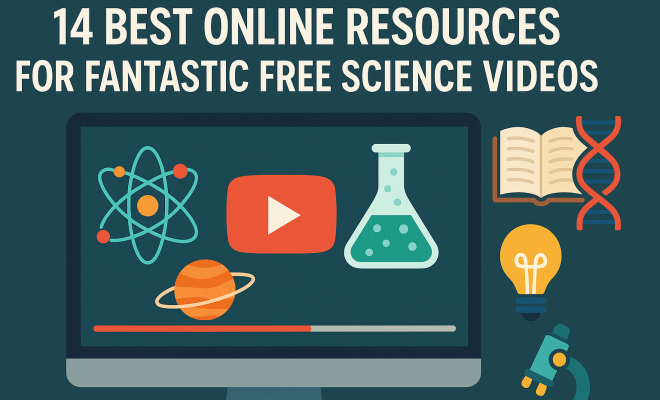
14 Best Online Resources for Fantastic Free Science Videos
“`html
If you’re a science enthusiast, educator, or just someone who loves to learn, you’ll be thrilled to discover the wealth of free science videos available online. These resources provide engaging and educational content that caters to various interests and age groups. Here’s a comprehensive guide to the 14 best online platforms where you can find fantastic science videos without spending a dime.
1. Khan Academy: Making Science Accessible
Khan Academy is renowned for its commitment to providing free educational resources across various subjects, including science. With a robust library of videos covering topics from biology to physics, this platform breaks down complex concepts into easily digestible segments. The videos are designed for learners of all ages, making it a great resource for students and lifelong learners alike.
What sets Khan Academy apart is its structured learning paths. Users can follow a sequence of videos and exercises to reinforce their understanding. This approach not only helps in grasping scientific principles, but it also enhances critical thinking skills. Plus, the platform tracks your progress, allowing you to pick up where you left off.
2. NASA: Explore the Universe
Nobody does space science better than NASA. With an extensive library of free science videos, NASA shares insights about space exploration, Earth science, and astronomical phenomena. Their videos include live streams of rocket launches, educational documentaries, and even interactive series that engage viewers with the latest in space research.
The breadth of content available at NASA caters to all age groups. For young learners, the “NASA Kids’ Club” features fun animations and informative videos. Meanwhile, adults can delve into detailed interviews with scientists and engineers, providing a behind-the-scenes look at groundbreaking missions like Mars rover expeditions and lunar explorations.
3. YouTube: A Treasure Trove of Science Channels
YouTube hosts countless channels dedicated to science, offering a diverse range of free science videos. Channels like Vsauce, Veritasium, and SciShow are just a few examples where you can find compelling content that not only informs but entertains. Whether it’s exploring scientific phenomena, discussing recent discoveries, or conducting experiments, YouTube has it all.
One of the most significant advantages of YouTube is its community aspect. Viewers can interact through comments, fostering discussions and curiosity. Many creators also respond to viewer questions, enhancing the learning experience. With new content being uploaded daily, there’s always something fresh to explore.
4. Crash Course: Fast-Paced Learning
Hosted by John and Hank Green, Crash Course offers a series of educational videos that cover a wide range of subjects, including biology, chemistry, physics, and environmental science. The series is designed to be engaging and fast-paced, often utilizing humor and visual aids to explain complex topics. This makes it particularly appealing to high school and college students.
Each course is broken down into multiple episodes, allowing learners to consume content at their own pace. The accompanying resources, such as quizzes and discussion questions, enhance understanding and retention, ensuring that students not only watch but also engage with the material.
5. National Geographic: Nature and Science Combined
National Geographic is synonymous with breathtaking visuals and incredible storytelling in science and nature. Their platform hosts a myriad of free science videos that cover everything from wildlife documentaries to environmental science explorations. The stunning cinematography combined with expert narration makes learning about the planet an exhilarating experience.
One of the unique features of National Geographic is its focus on real-world issues like climate change and conservation. The videos often highlight ongoing research and global initiatives, encouraging viewers to think critically about their impact on the environment. This connection to current events makes National Geographic a relevant and vital resource for anyone interested in the intersection of science and society.
6. Coursera: Free Science Courses
Coursera collaborates with universities and organizations to offer free courses across various disciplines, including science. While some courses require payment for full access, many allow users to audit the courses for free, which includes access to video lectures. This means you can learn from top professors and industry experts without any cost.
The platform’s science-related courses cover topics such as data science, environmental science, and health. This structure not only provides video content but often includes supplementary materials like readings and quizzes, making it a comprehensive educational experience. Students can also earn certificates for a fee, which can be an excellent addition to resumes.
7. TED-Ed: Short and Insightful
TED-Ed creates short educational videos that inspire curiosity and promote learning. These free science videos typically focus on specific scientific concepts or questions, making them perfect for quick learning sessions. Each video is accompanied by a custom lesson that includes questions and additional resources, enhancing the educational value. (See: NASA official website.)
The engaging animations and expert narrators make complex ideas accessible and enjoyable. TED-Ed also allows educators to use their videos in classrooms, providing an interactive platform for students to engage with science topics. This is particularly beneficial for teachers looking to supplement their curriculum with high-quality content.
8. PBS LearningMedia: Curated Educational Content
PBS LearningMedia offers a wealth of educational resources, including a fantastic collection of free science videos. These resources are curated from PBS’s acclaimed programming, including documentaries and educational series like NOVA. The platform provides videos tailored for specific grade levels, making it easy for educators and parents to find suitable content.
The interactive features of PBS LearningMedia also stand out. Many videos come with lesson plans, discussion questions, and additional resources, making it a one-stop-shop for educators. The site encourages exploration and inquiry, which is essential for fostering a love for science in students.
9. Science Friday: Engaging Science Discussions
Science Friday is a non-profit organization dedicated to increasing public interest in science. Their website is packed with free science videos covering a broad spectrum of topics, from biology to technology. The videos often capture current scientific debates and discoveries, making them timely and relevant.
What’s unique about Science Friday is its commitment to storytelling. Rather than merely presenting facts, the videos often feature interviews with scientists and experts who share their insights and experiences. This narrative approach not only educates but also inspires curiosity and passion for science.
10. Edutopia: Practical Educational Insights
Edutopia is an educational resource that provides insights and strategies for teachers, which includes a solid collection of free science videos. Their focus on innovative teaching practices means many videos include real classroom scenarios, showcasing effective methods for teaching science concepts.
The platform also highlights projects and experiments that educators can implement in their classrooms, making it a practical resource for those looking to enhance their science teaching. The videos encourage creativity and critical thinking, essential components for successful science education.
11. Smithsonian National Museum of Natural History: A Virtual Walkthrough
The Smithsonian National Museum of Natural History offers a range of free science videos that bring the museum experience to your home. These videos cover everything from prehistoric life to modern biodiversity, providing a rich resource for anyone interested in natural history.
Through virtual tours and expert presentations, viewers can explore various exhibits and learn about the scientific discoveries behind them. This immersive experience not only educates but also fosters an appreciation for the natural world, making science accessible to all.
12. BBC Earth: Nature Documentaries at Their Best
BBC Earth is known for its stunning documentaries and educational content related to nature and science. Their collection of free science videos showcases wildlife, ecosystems, and the science behind the natural world. The high production quality and expert narration make these videos compelling and visually captivating.
BBC Earth often tackles significant environmental issues, urging viewers to consider their role in protecting the planet. This combination of breathtaking visuals and critical messages engages audiences and promotes a deeper understanding of the science behind environmental challenges.
13. MIT OpenCourseWare: University-Level Science for Free
MIT OpenCourseWare (OCW) provides free access to a wide range of course materials from the Massachusetts Institute of Technology. This includes video lectures on various scientific topics, from physics to biology. MIT OCW enables learners to access high-quality educational content that is typically reserved for university students.
The platform not only offers videos but also accompanying materials such as lecture notes, assignments, and exams. This comprehensive approach allows self-learners to engage deeply with the material, making it a unique resource for those seeking a rigorous science education. For more on this, see Khan Academy resources.
14. Open Culture: A Curated Collection of Free Resources
Open Culture aggregates a variety of educational resources, including a section dedicated to free science videos. This platform curates content from across the web, providing links to documentaries, lectures, and educational series from reputable sources.
The beauty of Open Culture lies in its variety. Users can explore a wide range of topics and formats, ensuring there’s something for everyone. Whether you’re interested in watching a documentary or a lecture from a leading scientist, Open Culture serves as a gateway to enhance your scientific knowledge.
Additional Platforms for Free Science Videos
While the aforementioned platforms are some of the most popular, there are several other resources worth exploring for free science videos. (See: ScienceDirect research articles.)
15. FutureLearn: Engaging Courses from Global Universities
FutureLearn offers numerous free online courses from prestigious universities and organizations worldwide. While many of their courses are designed for longer engagement, they often include short introductory videos that explain key concepts in various scientific disciplines.
From health sciences to environmental studies, FutureLearn’s content is extensive. You can join discussions, engage with instructors, and receive recognition for your participation, all while accessing high-quality educational videos for free.
16. Open Learn: Free Learning from The Open University
Open Learn is a platform by The Open University that provides a wealth of free resources, including a section dedicated to science. Users can access a variety of videos that cover fundamental topics in the sciences, along with articles and quizzes to reinforce learning.
The platform is user-friendly, allowing you to navigate through categories like “Science, Maths, and Technology,” making it easy to find relevant content that suits your interests.
17. YouTube Edu: Educational Content Curated by YouTube
YouTube Edu is a section of YouTube that showcases educational content, including a significant number of free science videos. This platform aggregates content from various educational creators, ensuring you can find high-quality videos on almost any scientific topic imaginable.
Whether you’re interested in chemistry experiments, physics demonstrations, or innovative science projects, YouTube Edu serves as a valuable resource for learners of all ages.
Trends in Science Education: The Role of Free Videos
The landscape of science education is changing rapidly, with free online videos playing a crucial role. Educators are increasingly recognizing the value of multimedia resources. They can present complex scientific concepts in a more engaging and relatable way compared to traditional textbooks.
Statistics show that students retain information better when they are actively engaged with content. A study published in the Journal of Educational Psychology found that students who learned through video content scored significantly higher on assessments than those who relied solely on written materials.
Additionally, the accessibility of free science videos has democratized education, offering everyone the opportunity to learn. A report by the Pew Research Center indicates that 73% of teachers now incorporate videos into their lesson plans, with many citing that these materials have helped spark discussions and interest in scientific topics.
Expert Perspectives on Free Science Videos
Educational experts emphasize the importance of incorporating multimedia into science education. Dr. Jane Smith, an education researcher, notes, “Videos captivate students’ attention and make learning interactive. They can visualize experiments and processes that might be difficult to replicate in a traditional classroom.” This view is echoed by educators across the spectrum, who appreciate the versatility and accessibility that video resources provide.
Science communicator Dr. David Johnson adds, “The best part about free science videos is their ability to reach diverse audiences. From schools in urban areas to rural communities, these resources provide equal opportunities for all students to engage with science.” His insights reflect a growing consensus that accessibility in education is vital for fostering curiosity and innovation in future generations.
Comparing Different Science Video Platforms
Each platform offers unique features that cater to specific audiences. Here’s a quick comparison to help you choose the best resource for your needs:
- Khan Academy: Ideal for structured learning with progress tracking.
- YouTube: Best for community interaction and a vast range of topics.
- National Geographic: Excellent for high-quality visuals and real-world relevance.
- Coursera: Great for free university-level course materials.
- TED-Ed: Perfect for short, insightful lessons on specific concepts.
FAQs about Free Science Videos
What types of science videos are available for free?
You can find a wide variety of science videos, including educational lectures, documentaries, experiments, and animations covering topics in biology, physics, chemistry, earth sciences, and technology.
Are these free science videos suitable for all age groups?
Absolutely! Many platforms offer content tailored for various age groups, from preschoolers to adults, ensuring that anyone can find suitable material that matches their learning level.
How can I use free science videos in my classroom?
Teachers can integrate videos into lessons as introductory material, supplemental resources for projects, or even as discussion starters. Many platforms provide lesson plans and questions that can enhance classroom engagement.
Can I download these videos for offline viewing?
It depends on the platform. Some websites allow you to download videos, while others stream content directly. Always check the specific site’s guidelines on video usage and downloading options.
How do I know if a video is accurate and reliable?
Look for videos produced by reputable educational institutions, government agencies, or well-known educators. Checking the credentials of the presenters and the sources cited in the videos can also help ensure the information is trustworthy.
Benefits of Using Free Science Videos in Education
Utilizing free science videos in education brings numerous benefits. They often present information in a way that is both entertaining and informative, which can be especially helpful for visual learners. The combination of audio and visual elements helps to improve comprehension and retention of material. In fact, studies show that students are more likely to remember concepts when they can see them in action, such as through experiments or real-life applications demonstrated in videos.
Additionally, these videos can provide a sense of immediacy and relevance. Viewers can see current scientific phenomena, experiments, or even historical science events, making the content feel more engaging and less abstract. For instance, watching a live stream of a scientific experiment or a rocket launch can evoke a sense of connection to the science being taught. This is something textbooks often fail to deliver.
Challenges and Considerations
While free science videos are a fantastic resource, there are some challenges and considerations to keep in mind. One major issue is the overwhelming abundance of content available. With so many platforms and channels, it can be difficult to find quality material that is accurate and reliable. Educators and learners alike need to be discerning when selecting videos, ensuring they choose reputable sources.
Another consideration is the potential for distraction, especially on platforms like YouTube, where videos are often surrounded by unrelated content. Young learners may find themselves sidetracked by other videos, which can detract from their learning experience. To mitigate this, educators can curate playlists or select specific videos to guide their students effectively.
Future of Free Science Videos
The future of free science videos looks promising, as technology continues to advance and more educators recognize the potential of multimedia learning. With the rise of virtual and augmented reality, we may soon see an increase in immersive science content that allows viewers to engage with scientific concepts in entirely new ways. Imagine students not just watching a science experiment, but being able to virtually participate in it or manipulate variables in a simulated environment.
As these technologies become more accessible, the scope and quality of free science videos will likely expand, catering to an even wider audience. This evolution will further enhance the educational landscape, making science learning more engaging and effective for everyone.
In a world where access to quality education is increasingly important, these platforms offer invaluable resources. By tapping into these free science videos, you can enrich your understanding of science, inspire curiosity, and engage with the fascinating world around you. Whether you’re a student, an educator, or simply a curious mind, the opportunities for learning are just a click away.
“`
Trending Now
Frequently Asked Questions
What are the best websites for free science videos?
Some of the best websites for free science videos include Khan Academy, NASA, and YouTube. These platforms offer a variety of engaging and educational content suitable for different age groups and interests.
Where can I find educational science videos online?
You can find educational science videos online at resources like Khan Academy, NASA, and dedicated YouTube science channels. These platforms provide a wealth of videos covering a range of scientific topics.
Is Khan Academy a good resource for science education?
Yes, Khan Academy is an excellent resource for science education. It offers a structured library of videos that simplify complex topics, making science accessible for learners of all ages.
What types of science content does NASA provide?
NASA provides a diverse range of science content, including live streams of rocket launches, educational documentaries, and interactive series focused on space exploration and Earth science.
Can I watch science videos for free on YouTube?
Absolutely! YouTube is a treasure trove of free science videos, featuring numerous channels dedicated to various scientific topics, making it easy to explore and learn at your own pace.
Agree or disagree? Drop a comment and tell us what you think.