Mars-Uranus Conjunction 2026: A Rare Celestial Event
“`html
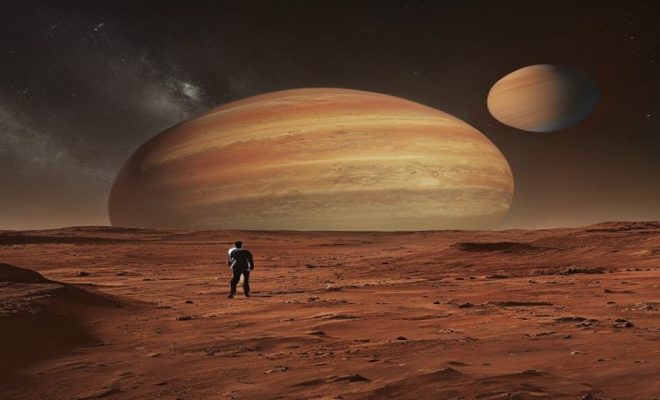
Skywatchers, mark your calendars for July 4, 2026! On this day, a rare celestial event—the Mars Uranus conjunction July 4—will be taking place, promising an extraordinary sight for astronomy enthusiasts and casual stargazers alike. This remarkable conjunction will see the red planet, Mars, and the distant icy giant, Uranus, aligning in the constellation Taurus, just a mere 0.1 degrees apart. This alignment offers a unique opportunity to observe both planets without the need for telescopes or binoculars, making it a must-see event.
Understanding Conjunctions: What to Expect
In astronomical terms, a conjunction occurs when two celestial bodies appear to be very close together in the sky as observed from Earth. This phenomenon is not only visually stunning but can also be an intriguing moment for those interested in the dynamics of our solar system. During the Mars Uranus conjunction July 4, Mars will shine brightly at magnitude 1.3, appearing as a vivid reddish-orange light. Just to the northwest, Uranus, at a fainter magnitude of 5.8, will look like a tiny bluish-green disk. The proximity of these two planets will create a breathtaking spectacle worth observing.
The Celestial Dance: Mars and Uranus
Mars, known as the “Red Planet,” has captivated humanity for centuries with its distinct hue and dynamic surface features. Contrarily, Uranus, often overlooked, is a gas giant known for its unusual rotation and unique bluish color due to the presence of methane in its atmosphere. On July 4, 2026, these two worlds will engage in a celestial dance, creating a stunning visual representation of the beauty of our solar system.
This alignment is remarkable not only because of the visual spectacle but also due to its rarity. While conjunctions occur regularly in the night sky, having two planets so close together is a special occurrence. The last conjunction of Mars and Uranus was years ago, making this a once-in-a-lifetime viewing opportunity for many.
Best Viewing Conditions for the Mars Uranus Conjunction
To catch this stunning conjunction, skywatchers should start looking just before dawn. The event will reach its peak at 1 A.M. EDT, but the planets will still be visible in the hours leading up to sunrise. To find the best viewing conditions, consider the following:
- Choose a location away from city lights to reduce light pollution.
- Look towards the constellation Taurus, where the conjunction will occur.
- Check the weather forecast to ensure a clear sky on the night of the event.
- Bring binoculars for a closer look, even though the planets will be visible to the naked eye.
Those using binoculars will have the added benefit of seeing the tiny disk of Uranus alongside the vibrant glow of Mars, amplifying the experience.
Why This Conjunction is Trending
The Mars Uranus conjunction July 4 has been generating buzz on social media and drawing attention in Google Trends for several reasons. First, the rarity of the event makes it an appealing topic for both seasoned astronomers and casual observers. Additionally, the fact that Uranus is actually brighter than nearby field stars, despite its lower magnitude, adds to the intrigue. This counterintuitive finding has sparked curiosity and discussions among enthusiasts, fueling a viral response online.
As people share their experiences and photos, the excitement surrounding this celestial event has only grown. The conjunction represents a chance to witness something extraordinary, which tends to resonate deeply with people across various platforms.
Photographic Opportunities
For photography enthusiasts, this event presents a unique opportunity to capture stunning images of the conjunction. Here are some tips for photographing this celestial alignment: battle against light pollution offers useful background here.
- Use a tripod to stabilize your camera and reduce motion blur.
- Experiment with long-exposure settings to capture more light from the planets.
- Consider using a camera with a good zoom lens to get details of the planetary disks.
- Take multiple shots to ensure you capture the best image as conditions change.
Sharing photos from the event will not only document your experience but contribute to the collective excitement surrounding this rare celestial occurrence.
Historical Context and Significance
The conjunction of Mars and Uranus holds historical significance as well. Astronomy has been a source of fascination for civilizations throughout history, with planetary alignments often seen as omens or significant events. Celebrations, rituals, and various cultural interpretations have surrounded celestial events. Understanding the historical context can deepen your appreciation for this rare conjunction. (See: Understanding astronomical conjunctions.)
For instance, Mars has been associated with war and aggression in various cultures, while Uranus embodies change and innovation. Observing their alignment may evoke thoughts about how humanity interprets cosmic events and their influences on our lives.
The Science Behind the Conjunction
From a scientific perspective, conjunctions are valuable for understanding planetary motion and the gravitational forces at play in our solar system. The positions of planets are not static; they are influenced by complex gravitational interactions. Understanding how Mars and Uranus interact during a conjunction can provide insights into their individual orbits and behaviors.
For example, Mars, being closer to the sun than Uranus, travels faster in its orbit. Observations of conjunctions can help astronomers refine their models of planetary motion, enriching our understanding of the solar system as a whole.
Preparing for the Event
If you’re planning to observe the Mars Uranus conjunction July 4, preparation is key. Familiarize yourself with the night sky ahead of time, using stargazing apps or charts to identify the constellation Taurus and pinpoint the location of Mars and Uranus. Engage with local astronomy clubs or online communities, where like-minded enthusiasts can share tips and coordinate viewing parties.
Engaging with others can enhance the experience, as collective awe often amplifies the joy of witnessing such events. Whether you’re a novice or an experienced stargazer, this conjunction promises to be memorable.
Final Thoughts: Don’t Miss This Unforgettable Event
The Mars Uranus conjunction July 4 is not just a rare astronomical event; it’s an opportunity to connect with the cosmos and marvel at the wonders of our solar system. This unique alignment will offer an unforgettable experience for all who take the time to witness it. Be sure to share your experiences and photos, allowing the excitement of this celestial dance to spread far and wide.
So this July 4, as you celebrate independence, take a moment to look up and revel in the beauty and mystery of the night sky. Who knows what other celestial surprises lie ahead, waiting for us to discover?
What Makes Conjunctions Special?
Conjunctions like the Mars Uranus conjunction July 4 hold a unique place in the hearts of astronomers and casual stargazers alike. They’re more than just a pretty sight; they symbolize the dynamic nature of our solar system. Each conjunction offers a glimpse into the intricate dance of heavenly bodies governed by gravity and orbital mechanics.
When two planets align, it allows for special observational opportunities. For example, planetary conjunctions can be used to study the atmospheres of these distant worlds. Instruments like spectroscopy can analyze light from stars and planets, providing insights into chemical compositions, atmospheric conditions, and even potential habitability.
Notable Previous Conjunctions
In recent history, certain conjunctions have captured public attention and sparked scientific inquiry. For example, the Great Conjunction of Jupiter and Saturn in December 2020 was dubbed the “Christmas Star.” This event saw these two gas giants come within just 0.1 degrees of each other, the closest they’d been since 1623. Such events not only dazzle observers but also have historical significance, influencing calendars and navigation throughout history.
Similarly, the conjunction of Venus and Jupiter is often highlighted for its beauty and visibility. On clear nights, these two bright planets can be seen twinkling in close proximity, providing a stunning display that inspires wonder.
Astrological Perspectives on the Conjunction
Beyond the realm of science, conjunctions often spark interest in astrology. This particular alignment of Mars and Uranus is viewed by astrologers as a potent time for transformation and innovation. Mars, representing action, energy, and assertiveness, paired with Uranus, the planet of change and rebellion, may signal a period of breaking free from conventional constraints.
Astrologers believe that individuals may feel inspired to pursue new ideas, challenge the status quo, or embrace unconventional paths. While astrology and science offer different interpretations of celestial events, both perspectives enrich our understanding of the cosmos and its perceived influences on human life. (See: NASA's Mars exploration program.)
FAQs About the Mars Uranus Conjunction
-
What is a conjunction in astronomy?
A conjunction occurs when two celestial bodies appear very close together in the sky as seen from Earth. This event allows for unique observational opportunities and can be visually striking.
-
When will the Mars Uranus conjunction occur?
The conjunction will take place on July 4, 2026, reaching its peak visibility at around 1 A.M. EDT.
-
Can I see this conjunction with the naked eye?
Yes, both Mars and Uranus will be visible to the naked eye, though binoculars will enhance the viewing experience, allowing you to see the disk of Uranus more clearly.
-
Where in the sky should I look to see the conjunction?
The conjunction will be located in the constellation Taurus. Familiarizing yourself with this constellation ahead of time will make it easier to spot the planets.
-
Is this a rare event?
While conjunctions occur frequently, the close alignment of Mars and Uranus is rare and represents a special event for observers. The last conjunction of these two planets was several years ago, making this a notable occasion.
-
What equipment do I need to observe this event?
You can observe the conjunction with the naked eye, but using binoculars or a telescope will provide a more detailed view. A camera with a good zoom lens can also capture stunning images.
-
What should I do if the weather is cloudy?
If the weather is not cooperative, don’t be discouraged! You can still follow online updates from astronomy enthusiasts and observatories who may be broadcasting the event live or sharing images.
Community Engagement: Join the Conversation
As the Mars Uranus conjunction July 4 approaches, engaging with local astronomy clubs or online forums can enhance your experience. Many organizations host viewing parties or discussions about the event, offering a chance to meet fellow enthusiasts and share knowledge.
Social media platforms are also buzzing with excitement. Consider posting your own observations and photographs, using hashtags like #MarsUranusConjunction to connect with others. Sharing your experience not only enriches your own understanding but also helps build a community around this celestial event.
Scientific Implications of the Conjunction
The upcoming Mars Uranus conjunction July 4 is not just an event for stargazers; it also holds scientific significance. Astronomers can use this opportunity to study both planets’ characteristics and their positions relative to Earth. For instance, such conjunctions allow scientists to observe how light interacts with the atmospheres of these planets, which can lead to discoveries about their composition and weather patterns. (See: Impact of celestial events on health.)
Moreover, the gravitational influences between Mars and Uranus during their close alignment can provide insights into their orbits and the stability of their paths over time. This can also inform our understanding of exoplanetary systems, particularly those that may host planets in similar orbits.
The Role of Technology in Observing the Conjunction
Modern technology has greatly enhanced our ability to observe celestial events like the Mars Uranus conjunction July 4. Telescopes equipped with advanced imaging technology can capture high-resolution images of planetary surfaces and atmospheres. Additionally, software tools can simulate the conjunction, helping both amateur and professional astronomers plan their observations more effectively.
Mobile apps are also available that can guide you in real-time through the night sky, highlighting not only the conjunction but also other significant celestial bodies. This technology democratizes astronomy, making it accessible to a broader audience than ever before.
How to Get Involved in Astronomy
If the Mars Uranus conjunction July 4 ignites your passion for astronomy, there are numerous pathways to explore further. Local astronomy clubs often host events, workshops, and star parties that provide opportunities for hands-on learning and networking with other enthusiasts.
Online platforms and forums are also invaluable for sharing experiences, asking questions, and learning from established astronomers. Websites dedicated to astronomy often feature articles, videos, and tutorials that can enhance your understanding and appreciation for the cosmos.
Upcoming Astronomical Events to Watch For
While the Mars Uranus conjunction July 4 is a highlight in the astronomical calendar, it’s just one of many fascinating events to look forward to. Keep an eye on meteor showers, such as the Perseids in August or the Geminids in December. These events offer spectacular displays as meteoroids enter Earth’s atmosphere and burn up, creating shooting stars.
Additionally, look out for lunar eclipses, solar eclipses, and other planetary conjunctions. Each event brings its own unique beauty and scientific importance, allowing you to engage with the night sky throughout the year.
Final Reflection on the Conjunction
The Mars Uranus conjunction July 4 is a remarkable opportunity to appreciate the wonders of our universe and foster a deeper connection to the cosmos. Whether you’re observing through a telescope, taking photographs, or simply enjoying the view, this celestial event is a reminder of the beauty and complexity of our solar system. As this date approaches, let’s embrace the excitement and mystery that comes with watching the dance of planets overhead.
“`
Trending Now For more on this, see favorite astronomy apps.
Frequently Asked Questions
When is the Mars Uranus conjunction in 2026?
The Mars Uranus conjunction will take place on July 4, 2026. This rare celestial event will allow observers to see Mars and Uranus aligned in the constellation Taurus, just 0.1 degrees apart.
What can I expect to see during the Mars Uranus conjunction?
During the Mars Uranus conjunction, viewers will see Mars shining brightly as a reddish-orange light and Uranus appearing as a tiny bluish-green disk. This spectacular alignment can be observed without telescopes or binoculars.
What is a conjunction in astronomy?
In astronomy, a conjunction occurs when two celestial bodies appear very close together in the sky from Earth's perspective. The Mars Uranus conjunction is a notable example of this phenomenon.
Why is the Mars Uranus conjunction significant?
The Mars Uranus conjunction is significant due to its rarity and the stunning visual display it offers. This event provides a unique opportunity to observe two planets so closely aligned, making it a must-see for astronomy enthusiasts.
How often do Mars and Uranus align?
Conjunctions occur regularly, but the specific alignment of Mars and Uranus is a rare event. The last conjunction was years ago, making the July 4, 2026 event a once-in-a-lifetime opportunity for many skywatchers.
Agree or disagree? Drop a comment and tell us what you think.