AI-Generated Supplement Scams: Are You Being Deceived?
“`html
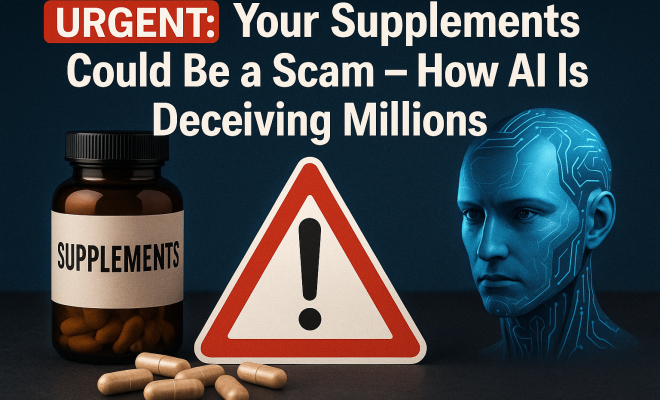
Ever scrolled through your social media feed and seen a seemingly reputable doctor or a glowing influencer rave about a new supplement? You know, the one promising miraculous weight loss, boundless energy, or flawless skin? What if I told you that ‘doctor’ might not be a doctor at all, and that ‘influencer’ might not even be a real person? This isn’t science fiction; it’s the alarming reality of AI supplement ads, and it’s happening right now.
The Council for Responsible Nutrition (CRN), a leading trade association for the dietary supplement industry, isn’t just concerned; they’re demanding action. They’ve put out a clear call for a serious crackdown on misleading advertisements, especially those leveraging artificial intelligence to create fake health experts and entirely fabricated influencers. Why the urgency? Because these AI supplement ads aren’t just annoying; they’re eroding consumer trust at a rapid pace and, more importantly, they could be putting your health at risk.
This isn’t some niche issue; it’s gone viral, propelled by a recent New York Times investigation that pulled back the curtain on these deceptive practices. The public is rightly concerned about the explosion of health misinformation, the insidious use of AI to create believable fakes, and the very real potential for harm. You’re probably wondering how to spot these fakes, what’s being done about it, and what it means for your next supplement purchase. We’re going to break down exactly what’s happening and what you need to know.
1. The Rise of AI-Generated ‘Experts’: When Doctors Aren’t Doctors
Imagine scrolling past an ad for a weight-loss supplement. The person in the video looks professional, speaks confidently, and perhaps even wears a white lab coat. They might have a name like ‘Dr. Emily Roberts’ and talk about scientific studies or clinical trials. The problem? ‘Dr. Emily Roberts’ might be a sophisticated AI construct, a perfectly rendered digital persona designed to look and sound utterly convincing. This is the heart of the CRN’s concern regarding AI supplement ads.
These AI-generated ‘experts’ are a particularly insidious form of deception because they exploit our inherent trust in authority figures, especially those in the medical field. We’re conditioned to believe people who present themselves as doctors, assuming they have the education, experience, and ethical obligations that come with the title. When an AI-generated figure mimics this authority to push products with unproven claims, it’s not just unethical; it’s a profound betrayal of that trust, making it incredibly difficult for the average consumer to discern truth from sophisticated fiction.
2. Fake Influencers, Real Deception: The Illusion of Peer Endorsement
Beyond the fake doctors, there’s another growing trend: AI-generated influencers. You know the type – seemingly perfect individuals with aspirational lifestyles, often sharing their ‘personal journeys’ with a specific product. They might tout how a certain supplement transformed their body, boosted their mood, or cleared their skin. These AI supplement ads leverage the power of social proof, making you feel like your peers, or at least people you admire, are genuinely benefiting from these products.
The issue here is the complete lack of genuine experience or endorsement. A real influencer, even one paid for their content, at least physically tries the product and offers some form of human perspective, however biased. An AI-generated influencer, however, has no actual experience, no real body, no genuine results. They are merely a digital puppet, programmed to mimic human emotion and endorsement, creating a powerful but utterly hollow illusion that tricks consumers into thinking they’re seeing authentic testimonials.
3. The New York Times Investigation: Pulling Back the Curtain
This isn’t just industry chatter; it’s a problem that’s hit the mainstream thanks to a bombshell investigation by The New York Times. Their reporting laid bare the shocking extent to which marketers are employing AI to create these fictitious health experts. The article didn’t just speculate; it provided concrete examples, showing how these digital creations are built, deployed, and used to peddle supplements with little to no scientific backing.
The Times’ work was crucial because it brought a hidden, technical problem into the public consciousness. It exposed the sophisticated tools being used to generate these convincing fakes, from deepfake technology for faces to AI-powered voice generation and scriptwriting. This kind of investigative journalism is vital for holding these deceptive practices accountable and educating the public on the subtle, yet powerful, ways they are being manipulated by AI supplement ads.
4. Eroding Consumer Trust: The Long-Term Damage
The immediate concern with AI supplement ads is the potential for financial loss and health risks. But the long-term damage is far more insidious: the erosion of consumer trust. When people realize they’ve been duped by a fake doctor or an AI influencer, it doesn’t just make them wary of that specific brand; it makes them skeptical of the entire supplement industry, and even legitimate health information. (See: New York Times investigation on supplements.)
Think about it: if you can’t trust what a ‘doctor’ says in an ad, or what an ‘influencer’ recommends, who can you trust? This widespread skepticism can lead consumers to avoid beneficial products out of fear, or conversely, make them more vulnerable to the next, even more sophisticated scam. The CRN understands that maintaining consumer trust is paramount for the health and legitimacy of the entire dietary supplement market, and these AI tactics are a direct threat to that foundation. Chulalongkorn University's innovations offers useful background here.
5. The Viral Nature of Misinformation: Why It Spreads So Fast
The internet, for all its wonders, is a superhighway for misinformation. AI supplement ads, especially those featuring compelling narratives from fake experts or influencers, are perfectly designed to go viral. Social media algorithms often favor engaging content, and what’s more engaging than a compelling story of transformation, especially when delivered by a seemingly trustworthy source?
People share these ads with friends and family, often with the best intentions, believing they’ve found a breakthrough product. This organic sharing amplifies the reach of the misinformation exponentially, far beyond what any paid advertising campaign could achieve on its own. The speed and scale at which these deceptive messages can spread make them particularly dangerous, creating a ripple effect of misleading information across countless feeds and conversations.
6. Potential Harm to Consumers: Beyond Just Losing Money
While losing money on an ineffective product is certainly frustrating, the potential harm from AI supplement ads goes far beyond your wallet. Many supplements make bold health claims – everything from curing chronic diseases to preventing serious illnesses. If a consumer, influenced by a fake AI expert, believes these claims and uses an ineffective supplement in place of legitimate medical treatment, the consequences can be dire.
Consider someone with a serious condition who foregoes prescribed medication for a supplement promoted by an AI ‘doctor.’ Or someone who takes a supplement that interacts negatively with their existing medications, unaware of the risks because the AI ad certainly won’t warn them. The lack of genuine scientific rigor, the absence of proper dosage information, and the potential for undisclosed ingredients all contribute to a very real public health concern. This isn’t just about false advertising; it’s about potentially endangering lives.
7. CRN’s Call to Action: Demanding Accountability
The Council for Responsible Nutrition isn’t just wringing its hands; they’re actively calling for a robust crackdown. This isn’t a vague plea; it’s a demand for concrete regulatory and enforcement action. They want to see platforms held accountable, marketers penalized, and a clear message sent that using AI to deceive consumers about health products will not be tolerated.
What does a ‘crackdown’ look like? It could involve more aggressive monitoring by social media platforms to identify and remove AI-generated deceptive content. It might mean stricter advertising standards and clearer disclosure requirements. And it certainly means stronger enforcement actions from regulatory bodies like the FDA and FTC, with real consequences for companies that engage in these practices. The CRN understands that self-regulation alone isn’t enough when AI can generate convincing fakes at scale.
8. What Brands and Influencers Need to Know: Ethical Marketing in the AI Era
For legitimate brands and influencers, the rise of deceptive AI supplement ads presents both a challenge and an opportunity. The challenge is standing out amidst a sea of fakes and maintaining consumer trust in an increasingly skeptical environment. The opportunity lies in doubling down on ethical marketing, transparency, and genuine, evidence-based communication.
Brands need to ensure their marketing teams are fully aware of these issues and committed to avoiding any practices that could be perceived as deceptive, especially concerning AI. Influencers, too, must be hyper-vigilant about the products they promote, conducting thorough due diligence and always disclosing sponsored content. The ethical guidelines for influencer marketing, already important, become absolutely critical now. Honesty and transparency aren’t just good practices; they’re essential for survival in a market flooded with AI-generated falsehoods.
9. Legal and Regulatory Landscape: Catching Up to AI
The legal and regulatory frameworks governing advertising and health claims often struggle to keep pace with rapid technological advancements. AI supplement ads are a perfect example. Existing laws on false advertising, deceptive practices, and health claims are certainly applicable, but the sheer volume and sophistication of AI-generated content create new enforcement challenges.
Regulators like the Federal Trade Commission (FTC) and the Food and Drug Administration (FDA) need to adapt. This could mean developing new guidelines specifically addressing AI-generated content, increasing their capacity to detect such fakes, and collaborating more closely with platforms. Legal action against companies using AI to create misleading ads will also send a powerful deterrent message, but it requires a proactive and informed approach from enforcement bodies to tackle this evolving threat effectively. (See: CDC guidelines on health misinformation.)
10. Protecting Yourself: How to Spot a Deceptive AI Supplement Ad
In this landscape of sophisticated AI supplement ads, it’s more important than ever for you, the consumer, to be your own first line of defense. So, how can you spot these fakes and protect yourself from being misled? Here are some crucial tips:
- Scrutinize the Source: Who is promoting the product? If it’s an ‘expert,’ do a quick search of their name and credentials. Is there a real academic profile, a clinic, or published research associated with them? Be wary of generic-sounding names or profiles with very little history.
- Look for Inconsistencies: AI-generated faces and voices can sometimes have subtle glitches. Are there odd movements, unusual eye blinks, or a slightly robotic cadence to their speech? Do their lips perfectly sync with the audio? These can be red flags.
- Examine the Claims: Does the supplement promise a ‘miracle cure’ for a complex health issue? Does it claim to have ‘zero side effects’ or offer results that seem too good to be true? Extreme claims without verifiable scientific backing are almost always a scam.
- Check for Disclosure: For influencers, is there a clear #ad or #sponsored tag? While AI influencers won’t disclose, real ones are legally obligated to. Lack of disclosure is a red flag regardless.
- Verify Information Independently: Don’t just take the ad’s word for it. Search for independent reviews, look for scientific studies on reputable databases (like PubMed, not just the brand’s website), and consult with your actual doctor before starting any new supplement.
- Be Wary of Urgency Tactics: Ads that push you to buy ‘now’ before a ‘limited-time offer’ expires, especially for health products, often prey on impulse decisions and prevent you from doing proper research.
11. The Deepfake Dilemma: Beyond Still Images
When we talk about AI-generated experts, it’s not just about a static image with a voiceover. The technology has advanced significantly, making deepfakes a real and growing concern in AI supplement ads. Deepfake technology allows for the creation of incredibly realistic videos where a person’s face and voice are digitally manipulated to say or do things they never did. This means an AI ‘doctor’ isn’t just a picture; it’s a moving, talking, seemingly articulate individual delivering a persuasive pitch.
The danger here is immense. A deepfake can convincingly mimic a real medical professional, even a well-known one, making it nearly impossible for the average viewer to differentiate between authentic content and sophisticated fakery. Imagine seeing a video of a famous cardiologist endorsing a heart health supplement they’ve never actually seen. The implications for health misinformation are staggering, as the visual and auditory cues that typically signal authenticity are now being precisely replicated by AI, making these AI supplement ads exceptionally deceptive.
12. Psychological Hooks: How AI Ads Exploit Our Biases
AI supplement ads aren’t just technically sophisticated; they’re often psychologically manipulative. They tap into various cognitive biases that make us vulnerable to persuasion. For instance, the “halo effect” makes us attribute positive traits (like trustworthiness) to attractive people, which AI influencers are designed to be. The “authority bias” makes us more likely to believe someone presented as an expert, even a fake one.
There’s also the “bandwagon effect,” where we’re more likely to adopt a belief or buy a product if many others seem to be doing it – a perception AI influencers can easily create with fabricated engagement metrics. These ads often play on our desire for quick fixes, fear of missing out, and our inherent need for solutions to health problems. The AI isn’t just generating faces; it’s often optimizing ad copy, timing, and targeting to hit these psychological pressure points with maximum efficacy, making the deception even harder to resist.
13. The Platform’s Responsibility: A Balancing Act
Social media platforms and search engines play a crucial, yet complex, role in this issue. On one hand, they profit from the advertising revenue generated by these AI supplement ads. On the other, they face increasing pressure to combat misinformation and protect their users. It’s a tricky balancing act. While platforms have invested in AI detection tools and content moderation teams, the sheer volume of content uploaded daily, combined with the rapid evolution of AI deception, makes it a constant game of catch-up.
Many argue that platforms need to be held more accountable. This could mean implementing stricter policies regarding AI-generated content, especially in sensitive areas like health. It might involve greater transparency about who is funding political and health-related ads, regardless of whether they use AI. Ultimately, without proactive and robust action from the platforms themselves – not just reacting after public outcry – the spread of deceptive AI supplement ads will continue unchecked.
14. The Role of AI in Content Creation: A Double-Edged Sword
It’s important to remember that AI itself isn’t inherently evil. In fact, AI tools can be incredibly beneficial for legitimate content creation, research, and even health education. The problem arises when these powerful tools are used for malicious purposes, like generating deceptive AI supplement ads. AI can help legitimate brands analyze market trends, personalize marketing messages responsibly, and even create engaging content that informs consumers.
The challenge for the industry and regulators is to differentiate between ethical and unethical uses of AI in marketing. How can we leverage AI’s capabilities for good – to create accurate, engaging health content – while simultaneously building robust defenses against its misuse? This requires a nuanced understanding of the technology and a commitment to developing ethical AI guidelines that transcend mere technical capabilities and focus on consumer protection.
Frequently Asked Questions about AI Supplement Ads
Q1: What exactly are AI supplement ads?
AI supplement ads are advertisements for dietary supplements that use artificial intelligence to create deceptive content. This often involves generating fake personas, such as AI ‘doctors’ or ‘influencers,’ who appear to endorse or recommend products. These AI-generated figures are designed to look and sound real, using advanced technology like deepfakes and AI voice generation to create convincing but entirely fabricated testimonials and expert opinions.
Q2: Why are AI supplement ads a problem?
They pose several significant problems:
- Erosion of Trust: They make it harder for consumers to trust genuine health information and legitimate brands.
- Health Risks: They can lead consumers to purchase ineffective or harmful products, potentially causing them to delay or abandon real medical treatment, or experience adverse health effects from unregulated ingredients.
- Financial Loss: Consumers spend money on products that don’t deliver on their exaggerated claims.
- Spread of Misinformation: They contribute to the overall spread of health misinformation online, which can have broad public health consequences.
Q3: How can I tell if an ad features an AI-generated person?
Look for red flags like:
- Subtle Visual Glitches: Unnatural blinks, slightly distorted facial features, odd movements, or a waxy texture to the skin.
- Inconsistent Voice/Lip Sync: The voice might sound slightly robotic or the lip movements don’t perfectly match the audio.
- Generic Profiles: The ‘expert’ or ‘influencer’ has a very limited online presence beyond the ad, with no verifiable professional history or personal life details.
- Claims that are Too Good to Be True: Any supplement promising miraculous cures, rapid weight loss without effort, or complete reversal of serious conditions is highly suspect.
- Lack of Disclosure: Real influencers are legally required to disclose sponsored content (e.g., #ad). AI influencers won’t, but the absence of disclosure on a clearly promotional post is a warning sign.
Q4: Are these ads legal? What are regulators doing?
Using AI to create deceptive advertising is illegal under existing false advertising and consumer protection laws (e.g., those enforced by the FTC). However, the challenge for regulators like the FTC and FDA is keeping pace with the rapid advancements in AI technology and the sheer scale of these ads. They are working to develop new guidelines, increase monitoring, and take enforcement actions against companies found to be using AI to mislead consumers. The CRN is actively advocating for stronger regulatory action.
Q5: What should I do if I see a deceptive AI supplement ad?
You can:
- Report It: Use the reporting features on the social media platform where you saw the ad.
- Block the Advertiser: Block the account to prevent seeing more content from them.
- Inform Others: Gently warn friends or family if you see them sharing such content.
- Verify Independently: If you’re curious about a supplement, always research it from reputable, independent sources and consult your doctor.
Q6: Does this mean all online health information is untrustworthy?
Not at all! There’s a vast amount of legitimate, evidence-based health information online. The key is to be discerning. Always prioritize information from reputable medical institutions, government health organizations (like the NIH or CDC), peer-reviewed scientific journals, and qualified healthcare professionals. Be skeptical of anonymous sources, sensational claims, and content that lacks scientific citations. Related reading: exploring AI policies.
The fight against deceptive AI supplement ads is ongoing, and it requires vigilance from all sides – regulators, platforms, brands, and especially you. By being informed and skeptical, you can make smarter, safer choices for your health and help push back against this new wave of digital deception.
“`
Trending Now
- Stake Casino India में exclusive bonuses पाएं। 200% welcome bonus, daily promotions और free spins की पूरी जानकारी हिंदी में। अभी claim करें!
- our breakdown of stake casino india में exclusive bonuses पाएं। 200% welcome bonus, daily promotions और free spins की पूरी जानकारी हिंदी में। अभी claim करें!
- read the full story
- this guide on unmasking the dark web’s dirty money: how feds just seized $25m in crypto scams
- Unbelievable: Justin Sun’s Allegations Against Trump Spark Crypto Fraud Firestorm
Frequently Asked Questions
How can I tell if a supplement ad is fake?
To spot fake supplement ads, look for signs such as overly polished videos, vague credentials, and lack of verifiable information. Research the individuals promoting the products and check for legitimate sources or clinical studies. If the claims seem too good to be true, they likely are.
What are the dangers of AI-generated health ads?
AI-generated health ads can mislead consumers by presenting fake experts and fabricated testimonials. This can lead to poor health decisions, wasted money on ineffective products, and erosion of trust in legitimate health information. Always verify claims through credible sources.
Why are AI supplement ads a growing concern?
AI supplement ads are concerning because they exploit consumer trust by presenting artificial personas as credible health experts. This trend has been accelerated by social media, leading to widespread misinformation and potential health risks for consumers who may not realize they're being deceived.
What is the Council for Responsible Nutrition doing about misleading ads?
The Council for Responsible Nutrition (CRN) is advocating for stricter regulations on misleading advertisements, especially those that utilize AI to create fake health experts. They aim to protect consumers and restore trust in the dietary supplement industry.
Are influencers promoting supplements always trustworthy?
Not necessarily. Many influencers may promote supplements without proper knowledge or research, and some may be AI-generated personas. It's crucial to evaluate the credibility of the influencer and seek independent verification before trusting their recommendations.
What did we miss? Let us know in the comments and join the conversation.