This Unprecedented AI Copyright Ruling Just Blew Up the Music World
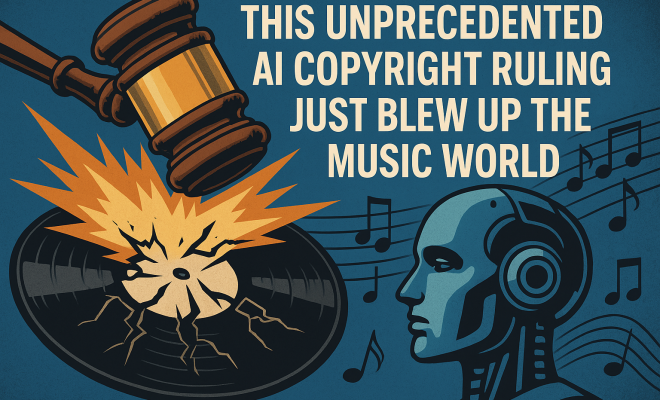
You’ve probably heard the buzz, or perhaps you’re already feeling the tremors. The legal landscape surrounding Artificial Intelligence just got a seismic jolt, and the aftershocks are going to ripple through industries far beyond just music. On July 31, 2026, the Munich Regional Court handed down a decision in the case of GEMA v. Suno AI that has fundamentally reshaped our understanding of AI copyright infringement.
It’s a ruling that’s not just a win for artists and rights holders; it’s a direct challenge to the very foundation upon which many AI models have been built. The court found Suno AI, a US-based music generation platform, liable for copyright infringement. And here’s the kicker: this liability extends even to the model training that occurred entirely within the United States. This isn’t just about what an AI *produces*; it’s about how it *learns*. It’s a game-changer, plain and simple, and it’s going to spark countless debates about fair compensation, the ethics of AI training, and the future of intellectual property law. If you’re an artist, a developer, or just someone trying to make sense of the rapidly evolving AI world, you need to pay attention to this. For more on this, see Gusto review and pricing.
The GEMA v. Suno AI Verdict: A Global Precedent for AI Copyright Infringement
Let’s cut right to the chase: the Munich Regional Court’s decision isn’t just another legal footnote; it’s a declaration. By ruling against Suno AI, the court explicitly stated that the act of training an AI model on copyrighted material, even if that training happens thousands of miles away in another jurisdiction, can constitute copyright infringement under German law. This isn’t just about territoriality; it’s about the fundamental nature of copyright in a digitally interconnected world.
GEMA, the German collecting society for musical works, brought the suit, arguing that Suno’s AI models were trained on their members’ copyrighted music without permission or proper licensing. The court agreed, delivering a verdict that has sent a clear message: the ‘Wild West’ days of unbridled AI data scraping might be coming to an end. This ruling effectively establishes liability across the entire AI deployment chain, from the initial data ingestion to the final generated output. It also emphatically rejected the application of US fair use doctrine in this context, drawing a bright line between different legal philosophies on intellectual property.
Understanding the ‘Memorization’ Bombshell: Fixation and Reproduction in the AI Era
One of the most controversial and, frankly, fascinating aspects of the GEMA v. Suno AI ruling centers on the concept of ‘memorization.’ The Munich court found that when an AI model ‘memorizes’ protected elements from copyrighted works during its training process, this constitutes a ‘permanent fixation’ and ‘reproduction’ of those works. Now, think about that for a second. We’re not talking about a human mind remembering a melody; we’re talking about an algorithm. This redefines what ‘copying’ can mean in the digital age.
Traditionally, copyright infringement required a tangible copy or a performance. But here, the court is saying that the internal state of an AI model, the learned parameters and weights that allow it to generate new content, can, in itself, be a form of reproduction if it sufficiently ‘remembers’ the original. This is a profound shift. It suggests that merely embedding protected material within the architecture of an AI, even if it’s not directly spat out in its original form, could be an infringing act. This interpretation of ‘fixation’ is a legal earthquake, challenging long-held assumptions about how intellectual property rights apply to complex algorithmic systems. Related reading: critical essay topics.
The Extraterritorial Reach: Why a US-Based Company Was Held Liable in Germany
Perhaps the most jaw-dropping element of the Munich court’s decision is its extraterritorial reach. Suno AI is a US-based company, and much of its model training presumably occurred on servers located within the United States. Yet, the German court didn’t hesitate to assert jurisdiction and find Suno liable. This move has significant implications for global AI development and deployment.
It signals that companies cannot simply rely on the copyright laws of their home country if their AI models are trained on content that originates from, or outputs content consumed in, other jurisdictions. If your AI model is trained on German music, and the output is accessible in Germany, then German law might apply, regardless of where your servers are humming. This creates a complex web of compliance challenges, forcing AI developers to consider the copyright regimes of every nation where their training data originates or where their services are offered. It’s a stark reminder that the internet may be borderless, but legal systems certainly are not.
The Injunction: Halting Training and Addressing Existing Models
The court’s ruling wasn’t just a declaration of liability; it came with teeth. The injunction explicitly ordered Suno AI to stop copying works for training purposes, even those conducted in the US. This isn’t a mere slap on the wrist; it’s a direct operational impediment. Imagine being told you can no longer use your primary method of development for a core product.
Furthermore, while the immediate focus is on stopping future infringing training, the logical extension of this ruling raises serious questions about existing AI models. If a model was trained on infringing material, does it need to be retrained? Does the ‘memorized’ data need to be purged? These are not trivial questions. Retraining a large language or music model can be astronomically expensive and time-consuming, potentially setting back development for months or even years. The injunction, therefore, isn’t just about future conduct; it casts a long shadow over every AI model currently operating that might have been trained on uncleared copyrighted data, regardless of its origin. (See: U.S. Copyright Office.)
Rejecting Fair Use: A Clash of Legal Philosophies
A crucial aspect of the Munich court’s decision was its outright rejection of the US fair use doctrine as a defense. For those unfamiliar, fair use in the US allows for limited use of copyrighted material without permission for purposes such as criticism, commentary, news reporting, teaching, scholarship, or research. It’s a flexible doctrine that balances copyright holders’ rights with the public interest in creative and intellectual discourse.
However, many European legal systems, including Germany’s, operate under a stricter ‘three-step test’ for exceptions and limitations to copyright, which is generally less permissive than US fair use. The German court, in essence, said, ‘Your US fair use arguments don’t apply here.’ This highlights a fundamental divergence in legal philosophies between the two major economic blocs. The US tends to favor transformative use and innovation, while Europe often prioritizes the rights of the original creator. This clash of doctrines means that AI developers operating globally can no longer assume a ‘one-size-fits-all’ approach to copyright compliance. What’s permissible in Silicon Valley might land you in court in Munich.
What This Means for Artists and Creators: A Renewed Hope?
For years, artists, musicians, writers, and other creators have watched with growing apprehension as AI models seemingly consumed their life’s work without permission or compensation. The GEMA v. Suno AI ruling offers a significant glimmer of hope. It validates their concerns and provides a powerful legal tool to protect their intellectual property in the age of generative AI.
This decision could usher in an era where AI developers are compelled to license training data, leading to new revenue streams for creators. Imagine a future where every time an AI company wants to train its model on a collection of songs, paintings, or novels, it has to negotiate with rights holders or their collecting societies. This could fundamentally alter the economic model for creative industries, shifting power back towards the originators of content. It’s a vindication for those who felt their work was being exploited, and it sets a precedent that could empower countless other lawsuits across different creative domains.
The AI Industry’s Dilemma: Innovation vs. Compliance
On the flip side, this ruling presents a significant dilemma for the AI industry. Many leading AI models, particularly large language models and generative art/music models, were trained on vast, indiscriminately scraped datasets from the internet. The sheer scale of data required for modern AI makes it incredibly challenging, if not impossible, to clear every single piece of copyrighted material.
The GEMA v. Suno AI decision forces AI companies to confront a difficult choice: continue with current training practices and risk massive legal liability, or fundamentally alter their approach to data acquisition. This could involve investing heavily in licensing agreements, developing models that can be trained on smaller, cleared datasets, or exploring entirely new architectures that are less reliant on ‘memorizing’ copyrighted works. It might also slow down the pace of AI innovation, as legal compliance becomes a more significant bottleneck. The industry will likely argue that such rulings stifle progress, but creators will counter that innovation should not come at the expense of fair compensation and intellectual property rights. It’s a classic tension, now playing out on an unprecedented scale.
Beyond Music: Potential Ripple Effects Across Creative Industries
While the GEMA v. Suno AI case specifically involved music, its implications extend far beyond the auditory realm. This precedent could easily be applied to other forms of creative output that AI models are trained on, including text, images, video, and even code. Consider:
- Generative Art: If an AI art generator is trained on millions of copyrighted images, does its internal ‘memorization’ of artistic styles or specific elements constitute infringement?
- Large Language Models (LLMs): These models are trained on colossal amounts of text, much of which is copyrighted. Could the ‘memorization’ of specific literary styles, plot devices, or factual information derived from copyrighted books or articles be deemed infringing?
- Video and Film: AI models that generate video, synthesize voices, or create special effects often learn from existing film and video libraries. The same principles of ‘fixation’ and ‘reproduction’ could apply here.
The ruling effectively creates a blueprint for other collecting societies and individual creators in various fields to pursue similar claims. It’s not just a music industry problem anymore; it’s an AI copyright infringement problem for every creative sector.
The Path Forward: Licensing, Litigation, and Legislative Action
So, what’s next? The GEMA v. Suno AI ruling has opened up several potential avenues for the future of AI and copyright:
- Increased Licensing Demands: We’re likely to see a surge in demand for licensing agreements for training data. Collecting societies and rights holders will be emboldened to negotiate, and AI companies will face pressure to comply. New business models might emerge specifically for AI training data licensing.
- More Litigation: This decision will undoubtedly inspire similar lawsuits in Germany and potentially other European countries. Courts worldwide will be watching to see if this precedent is adopted or challenged. Expect a flurry of legal activity around AI copyright infringement.
- Legislative Intervention: The complexity and global nature of this issue might necessitate legislative action. Governments could step in to create clearer frameworks for AI training data, potentially establishing compulsory licensing schemes or specific exceptions. The EU’s AI Act, while focusing more on safety and ethics, might see amendments or complementary legislation addressing copyright more directly.
- Technological Solutions: AI developers might explore new techniques for training models that are less reliant on direct ‘memorization’ or that can effectively filter out copyrighted material. This could involve ‘synthetic data’ generation or models trained with explicit consent.
The GEMA v. Suno AI ruling is far from the final word on AI copyright. It’s a critical inflection point, forcing everyone involved to reconsider the foundations of intellectual property in an age where machines can generate ‘original’ works based on the accumulated creativity of humanity. The debates will continue, the lawsuits will multiply, and the landscape will keep shifting. But one thing is clear: the era of unrestrained data scraping for AI training is unequivocally over, at least in Germany, and perhaps soon, everywhere else.
Expert Perspectives on AI Copyright Infringement: A Divided Table
To truly grasp the magnitude of the GEMA v. Suno AI decision, it helps to consider the varied reactions from legal scholars, technology ethicists, and industry leaders. It’s safe to say there’s no universal consensus, which just underscores the complexity of AI copyright infringement. (See: New York Times coverage on AI.) (business exposure to AI lawsuits)
On one side, many intellectual property lawyers specializing in music and creative arts have lauded the decision as a crucial step towards protecting creators. “This isn’t just about compensation; it’s about control,” explained Dr. Anya Sharma, a prominent IP attorney from London. “For too long, artists have felt powerless as their work was ingested without a second thought. This ruling finally gives them leverage, acknowledging that the act of training an AI isn’t some ethereal, non-infringing process. It has real-world consequences.” She emphasizes that the ‘memorization’ aspect is key, suggesting it moves the infringement point further upstream in the AI development cycle.
Conversely, some technology policy experts and AI developers express concern about the ruling’s potential chilling effect on innovation. “While we absolutely respect creator rights, rulings like this, particularly the extraterritorial aspect, could create a regulatory nightmare,” argued Mark Chen, CEO of a generative AI startup in San Francisco. “The sheer volume of data needed for advanced models means that clearing every single piece of content from every jurisdiction is practically impossible. It could force smaller AI companies out of the market and concentrate power in the hands of giants who can afford the legal battles and licensing costs.” Chen suggests that a more nuanced approach, perhaps focusing on the *output* of AI and whether it’s substantially similar to copyrighted works, would be more conducive to innovation.
Academics are also weighing in, often highlighting the philosophical implications. Professor Lena Schmidt, a scholar of AI ethics at the University of Berlin, points out, “The court’s interpretation of ‘fixation’ and ‘reproduction’ challenges our very definitions of these terms. If an algorithm’s internal state can be a ‘copy,’ then we need to rethink how we apply traditional legal concepts to non-human intelligence. It’s a fascinating, if unsettling, development.” She believes this case will force a deeper conversation about the nature of creativity itself in an AI-powered world.
The Global Landscape: Comparisons with Other Jurisdictions
The GEMA v. Suno AI ruling didn’t happen in a vacuum. It’s part of a growing global discourse on AI and copyright, but Germany’s stance is notably firm. Let’s briefly compare how other major jurisdictions are grappling with this issue:
United States: Fair Use Still a Strong Contender
As we touched on, the US legal framework, heavily reliant on fair use, offers a different perspective. Several ongoing lawsuits against AI companies in the US (e.g., cases involving OpenAI, Stability AI, and Microsoft) often center on whether the training of AI models constitutes fair use, particularly if the models are deemed “transformative.” The argument often is that consuming copyrighted works to train an AI model is analogous to a human reading books to learn, and the output is a new, transformative work. The US courts have yet to deliver a definitive ruling on AI training as fair use, but the prevailing sentiment, at least among AI developers, is that it should be protected under the doctrine. The GEMA v. Suno AI decision directly contradicts this lenient approach, creating a significant legal divergence.
United Kingdom: Text and Data Mining Exceptions
The UK has taken a somewhat middle-ground approach, at least initially. Their copyright law includes exceptions for text and data mining (TDM) for non-commercial research purposes. However, the government has explored extending TDM exceptions for commercial purposes, which has met with strong opposition from creators. The current legal status is a bit of a moving target, but it generally indicates a willingness to consider specific statutory exceptions for AI training, rather than relying solely on the broader concept of fair use or a strict interpretation of reproduction.
European Union: A Patchwork of Approaches, but Growing Consensus
While the GEMA v. Suno AI decision comes from a German court, the broader EU framework is also evolving. The EU Copyright Directive (Directive 2019/790) includes specific provisions for text and data mining, allowing it for research and cultural heritage institutions without permission. For commercial TDM, however, rights holders can opt out. This “opt-out” mechanism is crucial and differs significantly from a blanket “opt-in” requirement. The GEMA ruling, by interpreting ‘memorization’ as reproduction, arguably makes it harder for AI companies to rely solely on the TDM exception, especially if the original work isn’t fully transformed or if the model effectively stores copies. The EU’s upcoming AI Act focuses more on safety and transparency but might indirectly influence how copyright is handled by requiring more transparency around training data.
Best Practices for AI Developers Post-GEMA v. Suno AI
Given the shifting legal sands, AI developers can’t afford to ignore this ruling. Here are some best practices to consider:
- Audit Your Training Data: This is step one. Understand exactly what data your models were trained on. Where did it come from? Is it licensed? Is it public domain? This audit needs to be meticulous.
- Prioritize Licensed Data: Moving forward, make a concerted effort to acquire training data through explicit licensing agreements. This might mean partnering with stock image providers, music libraries, or content aggregators that have rights to license their collections for AI training.
- Implement “Opt-Out” Mechanisms: If you’re scraping public web data, ensure you respect robots.txt protocols and any explicit “opt-out” notices from websites or content creators regarding AI training. While this might not fully shield you in all jurisdictions, it demonstrates good faith.
- Explore Synthetic Data: Investigate generating synthetic data that mimics real-world data but is entirely artificial and free of copyright issues. This is a complex area but offers a path to cleaner datasets.
- Develop ‘Copyright-Aware’ Models: Research and develop AI architectures that are less prone to ‘memorization’ or can filter out copyrighted elements more effectively. This might involve techniques that emphasize learning abstract patterns over direct copying.
- Geographical Considerations: If your AI service operates globally, be acutely aware of the copyright laws in each jurisdiction where your training data originates and where your AI’s outputs are consumed. Legal counsel with international IP expertise is no longer optional.
- Transparency: Be transparent about your data sources and training methodologies where possible. This can build trust with creators and potentially mitigate legal risks.
Frequently Asked Questions About AI Copyright Infringement
The GEMA v. Suno AI ruling has sparked many questions. Here are some common ones:
Q1: Does this mean all AI models trained on copyrighted data are illegal?
A: Not necessarily “illegal” in every jurisdiction, but it significantly raises the risk of legal challenges, especially in countries with stricter copyright laws like Germany. The GEMA ruling specifically addresses the act of ‘memorization’ during training as a form of reproduction. Other jurisdictions might interpret this differently, but the precedent is now set in a major European court.
Q2: What if an AI generates something similar to copyrighted work by chance?
A: This is a tricky area. In traditional copyright law, “independent creation” is a defense. If two artists independently create similar works without copying, neither infringes. With AI, proving independent creation is complex. The GEMA ruling suggests that if the AI’s internal state reflects ‘memorization’ of copyrighted material, even if the output is not an exact copy, infringement may have occurred during the training phase. If the output itself is substantially similar to a specific copyrighted work, that’s a separate, more straightforward infringement claim.
Q3: Will this ruling stop AI innovation?
A: It’s unlikely to stop innovation entirely, but it will certainly reshape it. AI developers will need to be more deliberate and compliant with their data acquisition strategies. This might lead to slower development cycles, increased costs due to licensing, and a shift towards more ethically sourced or synthetically generated data. Some argue this fosters more responsible innovation.
Q4: Does this apply to open-source AI models?
A: Yes, the principles of copyright infringement apply regardless of whether the model is open-source or proprietary. If an open-source model was trained on uncleared copyrighted data, the developers and potentially even users of that model could face liability. See also unseen costs of AI training.
Q5: What’s the difference between “fair use” (US) and “three-step test” (EU)?
A: Fair use in the US is a flexible, case-by-case doctrine that considers factors like the purpose and character of the use (especially if transformative), the nature of the copyrighted work, the amount and substantiality of the portion used, and the effect of the use upon the potential market. The EU’s “three-step test” (from the Berne Convention) requires that exceptions to copyright be limited to certain special cases, not conflict with a normal exploitation of the work, and not unreasonably prejudice the legitimate interests of the rights holder. The EU approach is generally much narrower and less forgiving for broad uses like AI training without explicit permission.
Q6: As a creator, how can I protect my work from AI copyright infringement?
A: Register your copyrights where possible. Stay informed about collecting societies in your field (like GEMA for music) and consider joining them, as they often take collective action. Look for platforms or tools that allow you to explicitly “opt-out” your work from AI training. Advocate for stronger legislative protections for creators in the AI era.
Q7: Could AI companies just move their training operations to countries with laxer copyright laws?
A: While theoretically possible, the GEMA v. Suno AI ruling demonstrates that courts can assert extraterritorial jurisdiction if the AI’s outputs are consumed or its training data originates from their territory. This makes simply moving servers insufficient to escape liability if your AI service is globally accessible. It creates a complex legal minefield for companies hoping to exploit jurisdictional differences.
Trending Now
- Alarming: Court Slams Meta as ‘Public…
- this guide on shocking: judge declares meta a ‘public nuisance’ – what it means for your kids’ mental health
- read the full story
- Graduate PLUS Loans vs. Parent PLUS Loans: What the Changes Mean for You
- this guide on revealed: the shocking truth about your new student loan repayment plan
Frequently Asked Questions
What was the ruling in the GEMA v. Suno AI case?
The Munich Regional Court ruled against Suno AI, finding it liable for copyright infringement due to its training of AI models on copyrighted music without permission. This decision emphasizes that training AI on copyrighted material, even from another jurisdiction, can constitute infringement under German law.
How does the GEMA v. Suno AI ruling affect AI copyright laws?
The ruling significantly reshapes AI copyright laws by establishing that training AI models on copyrighted content, regardless of where the training occurs, can be considered infringement. This sets a global precedent that could impact how AI developers approach training data and copyright compliance.
What implications does this ruling have for artists and AI developers?
The ruling has major implications for artists, as it reinforces their rights over copyrighted material and may lead to better compensation. For AI developers, it raises critical questions about the ethics of data usage and the need for proper licensing when training AI models.
Why is the GEMA v. Suno AI decision considered a game-changer?
This decision is considered a game-changer because it challenges the foundational principles of AI training and copyright. It signals that the legal landscape is evolving in response to AI technologies, potentially altering how AI models are developed and deployed in the creative industries.
What does the GEMA v. Suno AI case mean for the future of AI and copyright?
The case indicates a shift towards stricter regulations on AI training practices, suggesting that AI developers will need to navigate more complex copyright laws. This could lead to increased scrutiny and the need for transparency in how AI models are trained and what data is used.
What did we miss? Let us know in the comments and join the conversation.