Teacher Pay Raises: A Cruel Joke Amidst Soaring Inflation (2024)
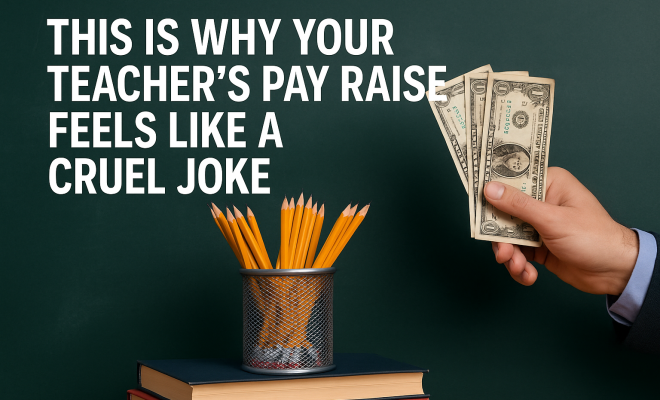
You might have heard the news: average public school teacher salaries in the U.S. ticked up to $74,495 in the last school year. On the surface, that sounds like a win, right? A step in the right direction for the dedicated folks shaping our children’s futures. But dig a little deeper, and you’ll find a far more troubling reality. A recent report from the National Education Association (NEA) pulls back the curtain on a truth that’s frankly infuriating: those supposed gains are being systematically devoured by a ravenous beast we all know too well – inflation. When you adjust for the relentless rise in the cost of living, teachers’ real earnings have actually plummeted by nearly 5% since 2017. It’s not just a statistic; it’s a gut punch to the financial stability of countless educators, making genuine teacher pay raises inflation-adjusted a distant dream for many.
This isn’t some abstract economic theory playing out in a spreadsheet. This is real life for people like Rebecca Mikkelson, an educator who, like so many others, finds herself working multiple jobs just to keep her head above water, affording basic necessities in a world where everything seems to get more expensive by the day. It’s a stark illustration of what the NEA terms the ‘teacher pay penalty,’ an ever-widening chasm between what teachers earn and what other college-educated professionals take home. This penalty has hit a record high, and it’s not just affecting individual teachers’ wallets; it’s casting a long shadow over the entire education system, from student learning to the very quality of our schools.
The Illusion of Progress: When Raises Don’t Keep Pace with Reality
Let’s talk about that average salary figure for a moment. $74,495. For many outside the profession, that might sound like a decent wage, perhaps even comfortable. But averages can be deceiving. They often mask significant disparities based on geography, experience, and the specific cost of living in a given area. What truly matters isn’t just the nominal dollar amount, but its purchasing power. And that’s where inflation has truly wreaked havoc on teacher pay raises.
Imagine getting a 3% raise, feeling a momentary surge of optimism, only to realize that the price of groceries, gas, and housing has jumped by 5% in the same period. You’re not just treading water; you’re actively sinking. That’s precisely the experience for many educators across the country. The NEA’s analysis isn’t just about stagnant wages; it’s about a systematic erosion of financial well-being. Since 2017, the cumulative effect of inflation has chipped away at every dollar teachers earn, making their ‘raises’ feel more like a cruel joke than a genuine reward for their hard work and dedication. It’s a phenomenon that leaves many feeling undervalued and underappreciated, struggling to reconcile their professional commitment with their personal financial realities.
The Deepening ‘Teacher Pay Penalty’: A Record High Disparity
The ‘teacher pay penalty’ isn’t a new concept, but its current severity is deeply concerning. This term refers to the difference between what teachers earn and what other professionals with similar educational backgrounds (a bachelor’s degree or higher) earn. Historically, teachers have always earned a bit less, reflecting, perhaps, a societal expectation of public service. But the gap has never been this wide. The NEA report indicates that this penalty has reached a record high, meaning teachers are now further behind their college-educated peers than ever before.
Consider a new graduate entering a corporate role with a similar degree. They might start at a higher salary, and crucially, their salary growth trajectory is often steeper. Teachers, by contrast, often face rigid pay scales that offer incremental increases over many years, with significant jumps only tied to advanced degrees or decades of service. When you factor in the rising cost of living, especially in urban and suburban areas where housing prices are soaring, this disparity becomes not just unfair, but unsustainable. It forces talented individuals to reconsider teaching as a viable long-term career, contributing to shortages and a brain drain from the profession.
The Human Cost: More Than Just Numbers
Behind every statistic is a human story. Rebecca Mikkelson’s experience is a powerful testament to the emotional and practical toll this economic pressure takes. Working multiple jobs isn’t a choice for many teachers; it’s a necessity. Imagine spending your day educating 25-30 children, managing diverse needs, planning engaging lessons, and then heading to a second or even third job – tutoring, working retail, driving for a ride-share service – just to cover rent, groceries, or childcare. How much energy is left for grading papers, preparing for the next day, or simply recharging? This builds on the education system's shortcomings.
This isn’t just about personal inconvenience; it’s about exhaustion, burnout, and stress that inevitably spill over into the classroom. An overtired teacher, stretched thin by financial worries, simply cannot bring their best self to their students every single day. The mental load of constantly worrying about bills, coupled with the emotional demands of teaching, creates a perfect storm for professional dissatisfaction and, ultimately, attrition from a profession that desperately needs more dedicated individuals, not fewer. The lack of meaningful teacher pay raises inflation-adjusted truly impacts the day-to-day lives and long-term well-being of these essential professionals.
A Global Echo: Teacher Strikes and Widespread Discontent
This isn’t just an American problem. The frustration over stagnant wages and increasing workloads is resonating globally. Look at Victoria, Australia, where educators have recently engaged in strikes. Their protests aren’t solely about wages, though that’s a significant component. They’re also protesting growing workloads, inadequate classroom conditions, and a general lack of respect for the profession. This global solidarity underscores the universal nature of the challenges facing educators. (See: 2022-2023 teacher salary data.)
When teachers feel unheard and undervalued, strikes become a powerful, albeit disruptive, last resort. These actions highlight the deep emotional charge of the issue. Teachers don’t strike lightly; they do so when they feel their voices aren’t being heard through conventional channels, and when their ability to provide a quality education is fundamentally compromised by their own financial precarity and overwhelming demands. It’s a cry for help, a demand for recognition that their vital work deserves fair compensation and reasonable working conditions.
Impact on Student Learning and Educational Quality
It might seem obvious, but it bears repeating: when teachers are struggling, students suffer. High teacher turnover, driven by financial pressures and burnout, leads to instability in schools. Consistently new faces in the classroom mean less institutional knowledge, weaker relationships with students and families, and a potential dip in academic continuity. Experienced teachers, those who have refined their craft over years, are often the ones who are driven away, taking their invaluable expertise with them.
Furthermore, the ‘teacher pay penalty’ discourages bright, ambitious college students from even considering teaching as a career path. Why choose a profession that demands so much and offers so little financial reward, especially when student loan debt looms large? This limits the pool of talent entering the profession, potentially diminishing the overall quality of instruction. Ultimately, the erosion of teacher purchasing power isn’t just a teacher problem; it’s a societal problem, impacting the very foundation of our future through the education of our children. Investing in genuine teacher pay raises inflation-proof is investing in the next generation.
Addressing the Crisis: Solutions Beyond the Status Quo
So, what can be done? The solutions are complex and require a multifaceted approach. First and foremost, simply raising nominal salaries isn’t enough. Policymakers and school districts must commit to genuine teacher pay raises inflation-adjusted, ensuring that any increase in salary truly translates to increased purchasing power for educators. This means tying salary increases to economic indicators like the Consumer Price Index (CPI) or implementing cost-of-living adjustments (COLAs) that accurately reflect local economic realities.
Beyond direct salary, we need to explore other avenues for financial support. This could include expanding and simplifying loan forgiveness programs for teachers, particularly those in high-need subjects or underserved communities. Housing assistance programs, whether through subsidies, grants, or partnerships with local developers, could also significantly alleviate the financial burden in high-cost areas. Furthermore, revisiting the structure of teacher pay scales to allow for more rapid advancement and recognizing additional responsibilities with fair compensation could make a substantial difference. It’s not just about more money; it’s about smarter, more equitable compensation structures.
Personal Finance Strategies for Educators: Navigating the Gap
While we advocate for systemic change, many teachers are looking for immediate ways to cope. This is why the issue of teacher pay raises inflation has sparked significant interest in personal finance strategies tailored for educators. Budgeting tips for teachers often focus on maximizing every dollar, identifying areas for savings, and creating a robust financial plan, even on a challenging salary. This might involve strategies like the ‘envelope system,’ utilizing budgeting apps, or meticulously tracking expenses to find inefficiencies. NEA overview offers useful background here.
Side hustles for educators are also incredibly popular. From tutoring (which leverages their core skills) to freelance writing, online course creation, or even direct sales, teachers are finding creative ways to supplement their income. The gig economy, while sometimes criticized, offers flexible options that can fit around the demanding schedule of a full-time teacher. For instance, many teachers leverage their expertise to create and sell educational resources on platforms like Teachers Pay Teachers, generating passive income from materials they’ve already developed for their own classrooms. We covered a deeper look at education issues in more detail.
Leveraging Financial Tools: Loans, Forgiveness, and Housing
The financial challenges facing teachers also drive a demand for specific financial products and information. Teacher loan forgiveness programs, like the Public Service Loan Forgiveness (PSLF) program, are critical for those burdened with student debt. However, these programs often have complex requirements and can be difficult to navigate, leading to frustration and often, denial. Streamlining these processes and increasing awareness is crucial.
Student loan refinancing for teachers is another area of interest, where educators look for lower interest rates or more manageable payment plans to ease their monthly burden. On the real estate front, affordable housing for teachers near me is a common search query, highlighting the struggle to live in the communities where they teach. Some progressive districts are even exploring initiatives like building affordable housing units specifically for teachers, recognizing that proximity to school and a reasonable cost of living are vital for recruitment and retention. These targeted solutions can provide a lifeline while the larger battle for equitable teacher pay raises inflation-adjusted continues.
The Broader Economic and Societal Implications
The ongoing struggle with teacher pay isn’t just an education issue; it’s an economic one. When a significant segment of the workforce, particularly one so critical to human capital development, is consistently underpaid, it has ripple effects across the economy. Teachers are consumers; they buy homes, cars, groceries, and services. When their purchasing power diminishes, local economies feel the pinch. Furthermore, the erosion of their financial stability contributes to broader income inequality and can exacerbate social challenges.
From a societal perspective, what message are we sending when we consistently undervalue the people we entrust with our children’s intellectual and emotional development? It suggests that education, despite all our rhetoric, isn’t truly a top priority. Reversing this trend requires a collective re-evaluation of our priorities and a commitment from all levels of government and communities to ensure that our educators receive fair, competitive, and inflation-proof compensation. Only then can we truly build a resilient, high-quality education system for everyone. (See: Bureau of Labor Statistics report.)
Expert Perspectives: What Economists and Policy Makers Say
Economists have weighed in on teacher compensation for decades, often pointing to the unique market dynamics of public education. Dr. Matthew Chingos from the Urban Institute, for example, frequently highlights the need for more flexible pay structures that reward effectiveness and address specific subject shortages, rather than relying solely on seniority and advanced degrees. He argues that a more performance-based approach, coupled with competitive base salaries, could attract and retain top talent.
Policy makers, on the other hand, face the challenge of balancing budget constraints with the undeniable need for better teacher pay. Governors and state legislatures often grapple with funding formulas that are outdated or simply insufficient to meet current demands. Many states are exploring innovative funding mechanisms, like dedicated education lottery funds or adjusting property tax allocations, to create sustainable pathways for increasing teacher salaries. However, these efforts often face political hurdles and public resistance, underscoring the complex interplay between economic theory and political reality when it comes to funding education. See also continuing failures in education.
Case Studies in Action: States Making Strides (and Those Lagging)
While the overall national picture is bleak, some states are actively trying to tackle the teacher pay raises inflation problem. Take New Mexico, for instance, which recently enacted significant pay increases, aiming to boost starting teacher salaries to $50,000 and provide substantial raises across all experience levels. This was a direct legislative action, a clear commitment to valuing educators.
Similarly, states like Arkansas have also made headlines with efforts to raise minimum teacher salaries. These actions, while commendable, often come after years of advocacy and sometimes, intense public pressure. On the flip side, states with historically low teacher pay, often in the South, continue to struggle, with some educators barely making above the poverty line. These disparities highlight that while there’s a national problem, local political will and economic conditions play a huge role in how the crisis is addressed, or ignored.
The Role of Teacher Unions and Advocacy Groups
Teacher unions, like the NEA and the American Federation of Teachers (AFT), are at the forefront of this battle. Their reports, like the one from the NEA, are crucial for bringing these issues to light and providing data-driven arguments for change. They organize advocacy campaigns, lobby lawmakers, and, when necessary, authorize strikes and protests to demand fair compensation and better working conditions. These unions serve as collective voices for educators, negotiating contracts that often include provisions for cost-of-living adjustments or salary schedule improvements.
Beyond unions, numerous grassroots organizations and parent-teacher associations (PTAs) are also actively advocating for increased school funding and teacher pay. They help educate the public on the long-term consequences of underpaying educators and mobilize community support for ballot initiatives and legislative changes. The collective power of these groups is essential in pushing for systemic reforms that go beyond incremental adjustments and truly address the purchasing power crisis. This builds on failings of U.S. education.
Looking Ahead: The Future of Teacher Compensation
The conversation around teacher pay is evolving. There’s a growing recognition that a one-size-fits-all approach no longer works. Future compensation models might incorporate elements like regional cost-of-living differentials, performance incentives for highly effective teachers, and specialized pay for educators in high-demand subjects like STEM or special education. The goal is to create systems that are not only competitive but also equitable and sustainable.
Additionally, the focus isn’t just on base salary. Comprehensive benefits packages, including robust health insurance, retirement plans, and paid professional development opportunities, are increasingly seen as integral components of competitive compensation. As the workforce continues to change, districts will need to think creatively about how to attract and retain the best educators, moving beyond traditional salary structures to offer a more holistic and appealing career proposition. The ultimate aim is to ensure that the teaching profession is viewed as a financially viable and respected career path, capable of drawing in the brightest minds to educate future generations.
Frequently Asked Questions About Teacher Pay Raises and Inflation
What does “inflation-adjusted teacher pay” mean?
Inflation-adjusted teacher pay refers to a teacher’s salary after accounting for the increase in the cost of living over time. If a teacher gets a 2% raise but inflation is 3%, their “real” or inflation-adjusted pay has actually decreased by 1%. It’s about how much buying power their salary truly has, not just the dollar amount on their paycheck. (See: teacher pay penalty research.)
Why are teacher salaries often not keeping pace with inflation?
Several factors contribute to this. Public education funding often relies on fluctuating state and local budgets, which can be slow to react to economic changes. Rigid pay scales might not include automatic cost-of-living adjustments (COLAs). Additionally, political priorities and competing demands for public funds can mean that teacher salaries aren’t always prioritized for significant, inflation-matching increases.
How does the “teacher pay penalty” relate to inflation?
The teacher pay penalty is the gap between what teachers earn and what other college-educated professionals earn. When inflation erodes teacher salaries, this penalty often widens. Even if other professions see nominal raises that keep pace with inflation, if teacher raises don’t, the income disparity grows, making teaching less attractive compared to other fields. For more on this, see lack of trust in schools.
What are some practical solutions for teachers facing financial strain due to inflation?
While systemic change is needed, individual teachers often use strategies like meticulous budgeting, seeking out side hustles (tutoring, online course creation), exploring loan forgiveness programs (like PSLF), or looking into affordable housing initiatives offered by some districts. Some also leverage platforms like Teachers Pay Teachers to sell educational resources they’ve created.
Are there specific states or regions where teacher pay is better adjusted for inflation?
Yes, there are significant regional differences. States that have recently made legislative pushes for substantial teacher pay increases, or those with strong union representation and more robust education funding, tend to fare better. However, even in these states, high costs of living in urban centers can still offset some of the gains, making local cost-of-living adjustments critical.
What impact does low teacher pay (when adjusted for inflation) have on students and schools?
It has a profound impact. It leads to high teacher turnover, as experienced educators leave for better-paying jobs. This creates instability in classrooms and schools. It also discourages talented individuals from entering the profession, potentially lowering the overall quality of instruction. Ultimately, students receive a less consistent and potentially lower-quality education when their teachers are financially stressed and undervalued.
The NEA’s report isn’t just a collection of numbers; it’s a loud, clear call to action. The decline in real teacher earnings, exacerbated by inflation, is a crisis that demands our immediate attention. We cannot afford to have our dedicated educators working multiple jobs just to survive, nor can we allow the ‘teacher pay penalty’ to continue to widen. Our teachers deserve better, and more importantly, our children deserve teachers who are financially secure, respected, and able to bring their full energy and passion to the classroom. It’s time to stop the illusion and deliver real, inflation-adjusted teacher pay raises that truly honor their invaluable contribution to society.
Trending Now
- our breakdown of stake casino india में exclusive bonuses पाएं। 200% welcome bonus, daily promotions और free spins की पूरी जानकारी हिंदी में। अभी claim करें!
- Stake Casino India में exclusive bonuses…
- our breakdown of the astonishing truth: 66% of americans use ai for money — are you safe?
- the complete explanation
- Unbelievable: Justin Sun’s Allegations Against Trump Spark Crypto Fraud Firestorm
Frequently Asked Questions
Why do teacher pay raises feel inadequate?
Teacher pay raises often feel inadequate because, despite average salaries rising to $74,495, inflation has eroded real earnings by nearly 5% since 2017. This means that the cost of living increases outpace salary gains, leading to financial strain for many educators.
What is the teacher pay penalty?
The teacher pay penalty refers to the significant gap between teachers' salaries and those of other college-educated professionals. This chasm has reached a record high, impacting not just individual teachers but also the overall quality of education.
How does inflation affect teacher salaries?
Inflation negatively impacts teacher salaries by increasing the cost of living, which diminishes the purchasing power of salary increases. Teachers may receive nominal raises, but when adjusted for inflation, their real earnings can decrease, making it harder to afford basic necessities.
What are the average salaries for public school teachers?
As of the last school year, the average public school teacher salary in the U.S. is $74,495. However, this figure can be misleading, as it does not account for regional disparities, experience levels, and varying costs of living.
Why do teachers often work multiple jobs?
Many teachers work multiple jobs due to financial pressures stemming from stagnant wages and the teacher pay penalty. With real earnings declining and the cost of living rising, educators often struggle to make ends meet, prompting them to seek additional sources of income.
What did we miss? Let us know in the comments and join the conversation.