The AI Literacy Curriculum Comparison: Are Chatbots the Secret to Smarter Students?

Alright, let’s talk about something that’s really shaking up the education world: how we teach kids about artificial intelligence. For a while there, it felt like schools were playing defense, trying to ban AI tools like ChatGPT outright. But now, it seems many are realizing that’s a losing battle. The conversation has shifted dramatically, and we’re seeing a move towards actively incorporating AI into the curriculum, aiming to foster what we’re calling ‘AI literacy.’
It’s a pretty fascinating pivot, isn’t it? Instead of just saying ‘no,’ educators are now thinking, ‘how can we use this to our advantage?’ And that’s where things get really interesting, especially when we start looking at an AI literacy curriculum comparison: pitting chatbots against more traditional learning tools. My experience, from being a K-12 teacher to a Dean of Education, tells me this isn’t just a trend; it’s a fundamental shift in how we prepare students for a world that’s increasingly run by algorithms. We’re not just worried about plagiarism anymore; we’re trying to equip students to thrive in an AI-driven future. (Beehiiv pricing details)
1. The Counterintuitive Approach: Exposing AI’s Flaws
One of the most intriguing aspects of this new educational philosophy is its counterintuitive nature. Instead of shielding students from AI’s imperfections, schools are leaning into them. The idea, as highlighted by a recent article from Courthouse News, is to encourage students to actively experiment with AI chatbots. Why? To help them understand the technology’s inherent limitations and flaws. This isn’t about shaming AI; it’s about demystifying it.
Think about it: how often do we learn best by making mistakes or observing them? This approach applies that very principle to AI literacy. By letting students engage directly with chatbots and witness their ‘hallucinations’ – those instances where AI fabricates information – or expose their subtle biases, we’re creating a powerful learning experience. It’s hands-on, it’s critical, and it goes far beyond simply reading about AI in a textbook. It’s about developing a healthy skepticism, not fear, which is crucial for navigating an AI-saturated world. This is a vital component of any robust AI literacy curriculum comparison.
2. From Ban to Embrace: Acknowledging the Inevitable
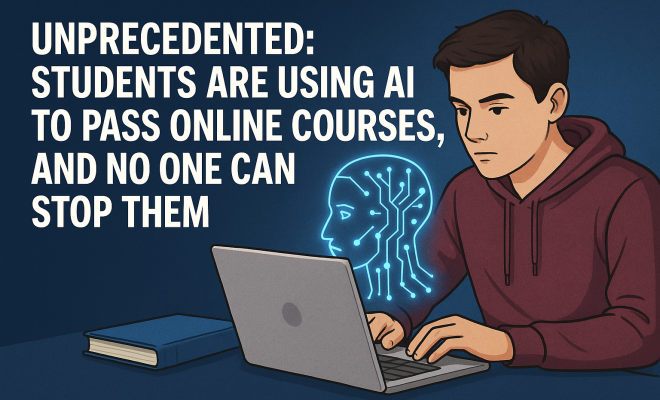
Let’s be honest: the initial reaction to AI in schools, especially tools like ChatGPT, was often panic. There were widespread bans, fueled by understandable fears about academic integrity. But as anyone who’s ever tried to stop a tidal wave knows, some forces are just too powerful to resist. AI is here to stay, and our students are already using it. A survey by Instructure revealed that a significant majority – 68% of educators and 73% of parents – reported occasional AI use by students. That’s not a niche activity; that’s mainstream.
This reality forced a re-evaluation. If students are going to use AI anyway, shouldn’t we be teaching them how to use it responsibly, ethically, and effectively? The shift from outright bans to active incorporation isn’t just a concession; it’s a strategic move. It acknowledges that our role as educators isn’t to shield students from technology, but to empower them to master it. This proactive stance is essential for any meaningful AI literacy curriculum comparison, as it sets the stage for how we integrate these powerful tools.
3. Ray Knauer’s Vision: Learning from AI’s Errors
High school teacher Ray Knauer offers a fantastic example of this new philosophy in action. He plans to leverage examples of AI errors – those ‘hallucinations’ and biases we just talked about – to spark critical discussions in his classroom. This isn’t about shaming the technology or making students feel foolish; it’s about turning glitches into teachable moments. Imagine a class where students are given an AI-generated text riddled with inaccuracies and then tasked with identifying and correcting them. That’s real critical thinking at play.
Knauer’s approach moves beyond the narrow concern of plagiarism, which, while important, often overshadowed the broader educational potential of AI. Instead, he’s focused on preparing students for a future where they’ll inevitably interact with AI in their personal and professional lives. By understanding AI’s weaknesses, students can become more discerning users, better able to evaluate information, and ultimately, more valuable contributors to an AI-driven workforce. This kind of practical application is what truly elevates an AI literacy curriculum comparison.
4. The Deep Dive into Chatbots: Benefits for AI Literacy
So, what makes chatbots such a compelling tool for teaching AI literacy? Well, for starters, they offer direct, experiential learning. Instead of just talking about how AI works, students can actually interact with it, observe its responses, and experiment with different prompts to see how it behaves. This hands-on engagement is incredibly powerful for cementing understanding. It demystifies the technology, making it less like some magical black box and more like a tool with specific functionalities and, crucially, specific limitations.
Beyond that, chatbots provide immediate feedback. Students can ask a question, get an answer, and then immediately test the validity of that answer, either by cross-referencing with other sources or by trying to trip up the bot with follow-up questions. This iterative process fosters a sense of inquiry and critical evaluation that’s hard to replicate with static materials. They become active participants in understanding AI, not just passive recipients of information. This practical element is a huge win in any AI literacy curriculum comparison. (See: AI's role in modern education.)
5. The Pitfalls of Chatbots: Hallucinations, Bias, and Overreliance
Of course, it’s not all sunshine and rainbows with chatbots. As we’ve touched on, their tendency to ‘hallucinate’ – to confidently present false information as fact – is a significant concern. This isn’t just about making mistakes; it’s about potentially misleading users in a way that can erode trust and spread misinformation. Teaching students to identify and question these fabrications is a core component of AI literacy, but it also highlights the inherent risks of relying too heavily on these tools without critical oversight.
Then there’s the issue of bias. AI models are trained on vast datasets, and if those datasets contain societal biases, the AI will often reflect and even amplify them. Exposing students to these biases and discussing their origins and implications is crucial for developing ethical AI users. Finally, there’s the risk of overreliance. If students become too dependent on chatbots for answers, it could potentially hinder the development of their own critical thinking, problem-solving, and research skills. The goal isn’t to replace human intellect, but to augment it, and this distinction is vital in our AI literacy curriculum comparison. For more context, see the importance of teaching AI literacy in schools.
6. Traditional Learning Tools: The Enduring Value
In this rush to embrace new technologies, it’s easy to forget the enduring value of traditional learning tools. Textbooks, lectures, group discussions, library research, and essay writing still play an indispensable role in developing foundational knowledge and critical skills. These methods often provide a structured, curated, and peer-reviewed body of knowledge that’s essential for building a robust understanding of any subject, including AI.
Moreover, traditional tools are excellent for fostering deep analytical thinking, nuanced argumentation, and the ability to synthesize information from diverse sources without the potential for AI-induced shortcuts. While chatbots can offer quick answers, traditional methods often demand a more profound engagement with the material, encouraging students to construct their own understanding from the ground up. This foundational strength is a critical aspect when conducting an AI literacy curriculum comparison.
7. Striking the Balance: A Hybrid Approach to AI Literacy Curriculum Comparison
So, where does that leave us in this AI literacy curriculum comparison? It’s clear that neither chatbots nor traditional tools are a silver bullet on their own. The most effective approach, I believe, lies in a hybrid model that strategically integrates both. Imagine a curriculum where students first build a strong theoretical foundation of AI principles through traditional lectures, readings, and discussions. They learn about algorithms, machine learning concepts, ethical frameworks, and the history of AI.
Then, they apply that knowledge by engaging with chatbots, not as a replacement for learning, but as a laboratory for exploration. They can test hypotheses about AI behavior, identify its strengths and weaknesses firsthand, and use these experiences to fuel further critical analysis and debate. This balanced approach allows students to leverage the immediate, interactive nature of chatbots while grounding their understanding in the rigorous, structured learning provided by traditional methods. It’s about using the right tool for the right job, and teaching students to discern when and how to use each effectively.
8. Concerns Beyond Plagiarism: Critical Thinking and Overreliance
While the initial panic around AI in schools largely centered on plagiarism, the conversation has matured. Educators and parents now rightly express significant concerns about the potential loss of critical thinking skills and an overreliance on technology. If AI can generate essays, solve math problems, or even write code, what incentive do students have to develop these capacities themselves?
This is where the intentional design of an AI literacy curriculum becomes paramount. It’s not enough to just let kids use AI; we have to actively teach them how to use it as a tool for enhancement, not as a crutch. This means setting assignments that require human ingenuity and critical judgment, tasks where AI can assist but not complete the work entirely. It’s about teaching students to interrogate AI’s outputs, to fact-check, to add their unique voice and perspective, and to understand the limitations of what AI can truly achieve. We must ensure that the tools serve the learner, not the other way around. This emphasis on human skill development is a crucial differentiator in any AI literacy curriculum comparison.
9. The Social Media Buzz and Monetization Potential
This shift in educational philosophy isn’t happening in a vacuum; it’s generating massive social media engagement. The debate about AI’s role in shaping future generations and the workforce is emotionally charged, and for good reason. Parents worry about their kids’ job prospects, teachers worry about their pedagogical methods, and everyone is trying to make sense of this rapidly evolving landscape. This intense public interest also signals significant monetization potential for those of us in the education space.
Think about it: there’s a huge demand for online courses on AI literacy and ethics. Educators need reviews of AI detection and learning software to help them navigate this complex market. And let’s not forget the affiliate opportunities for educational technology and career development resources as the job market transforms. My own work with The Edvocate, The Tech Edvocate, and platforms like Pedagogue and P-20 Education Careers, shows just how hungry people are for reliable information and tools in this area. Providing clear, well-researched insights into an AI literacy curriculum comparison isn’t just good journalism; it’s meeting a genuine need in a rapidly expanding sector.
10. The Global Perspective: Different Approaches to AI Education
It’s interesting to see how different countries are tackling AI literacy. While the U.S. is largely focused on integrating AI tools into existing curricula and emphasizing critical evaluation, other nations are taking more structured approaches. For instance, some European countries are developing national AI strategies that include specific guidelines for K-12 education, often focusing on foundational computer science principles alongside ethical considerations.
Take Finland, for example, which has been a leader in digital literacy. Their approach often involves teaching the underlying concepts of AI, like algorithms and data science, even to younger students, rather than just focusing on tool usage. Singapore, another educational powerhouse, has integrated AI concepts into its national computing curriculum, aiming to equip students with both the technical skills and the ethical understanding necessary for an AI-driven future. An AI literacy curriculum comparison across these global models highlights the diverse philosophies at play – some prioritize technical fluency, others ethical reasoning, and some a blend of both. Understanding these variations helps us refine our own strategies. (See: impact of technology on youth.)
11. Measuring AI Literacy: What Does Success Look Like?
One of the biggest challenges in implementing AI literacy curricula is figuring out how to measure its effectiveness. What does it mean for a student to be “AI literate”? Is it about their ability to use AI tools, to critique them, or to understand their underlying mechanisms? It’s probably a combination of all three, but designing assessments that capture these complex skills is no small feat.
Traditional assessments often fall short here. We can’t just give a multiple-choice test on AI ethics. Instead, we need performance-based assessments that ask students to, say, use an AI tool to generate a report, then critically analyze its output, identify biases, and propose improvements. Or perhaps they could design a simple AI application and explain its ethical implications. This shift in assessment methodology is crucial for any AI literacy curriculum comparison to truly gauge student understanding. It requires educators to think beyond rote memorization and towards demonstrating genuine comprehension and application. For more context, see the alarming truth about AI in schools.
12. AI’s Impact on the Future Workforce: Preparing for the Unknown
Let’s be real: the job market our students will enter is going to look vastly different from today’s. AI isn’t just automating repetitive tasks; it’s changing the nature of work across industries. This makes AI literacy not just an academic pursuit, but an economic imperative. Students need to understand how AI is transforming fields from healthcare to finance, from creative arts to engineering.
Preparing them means fostering adaptability, problem-solving skills, and a willingness to continuously learn new technologies. An effective AI literacy curriculum comparison should emphasize how different approaches equip students for this evolving landscape. Are we teaching them to be users of AI, developers of AI, or critical evaluators of AI? Ideally, it’s all three. We need to move beyond simply training them for existing jobs and instead empower them to create the jobs of the future, where human-AI collaboration will be the norm.
13. The Role of Educators: Training the Trainers
Implementing an effective AI literacy curriculum isn’t just about what we teach students; it’s about how we prepare our teachers. Many educators, myself included, are still learning the ropes when it comes to AI. We didn’t grow up with these tools, and the pace of change can be dizzying. So, a critical component of any successful AI integration plan has to be robust, ongoing professional development for teachers.
This means providing training on how AI works, how to use various AI tools responsibly, and most importantly, how to design lessons and assignments that leverage AI for learning while mitigating its pitfalls. We need to create communities of practice where educators can share strategies, challenges, and successes. Without empowering teachers, even the most brilliantly designed AI literacy curriculum will struggle to gain traction in the classroom. This aspect is often overlooked in an AI literacy curriculum comparison, but it’s arguably the most vital ingredient for success.
14. Expert Perspectives: What Researchers and Practitioners Say
When you talk to researchers in AI ethics and education, a common theme emerges: the need for critical pedagogy. Experts like Dr. Cathy O’Neil, author of “Weapons of Math Destruction,” often point out that AI models aren’t neutral; they embed human choices and biases. Therefore, an AI literacy curriculum must teach students to interrogate the underlying assumptions and power structures within AI systems. It’s not enough to know how to use ChatGPT; you need to understand who designed it, what data it was trained on, and whose interests it might serve.
Practitioners, those teachers on the front lines like Ray Knauer, echo this, emphasizing the importance of hands-on experimentation. They stress that real understanding comes from direct interaction, from seeing AI’s capabilities and limitations firsthand. The consensus seems to be a blend of theoretical grounding in ethics and critical thinking, combined with practical, guided engagement with AI tools. This informed perspective is invaluable when making an AI literacy curriculum comparison, as it helps us distinguish between superficial engagement and deep, meaningful learning.
15. Frequently Asked Questions About AI Literacy Curriculum Comparison
Q1: What exactly is AI literacy?
AI literacy means having the knowledge and skills to understand, use, and evaluate AI systems responsibly and ethically. It’s not just about knowing how to type a prompt into ChatGPT, but understanding how AI works, its limitations, potential biases, and its impact on society.
Q2: Why is AI literacy important for students today?
AI is rapidly transforming every aspect of life, from jobs to daily interactions. Students need AI literacy to be informed citizens, critical thinkers, and adaptable professionals in an AI-driven world. It equips them to navigate, contribute to, and even shape this future. For more context, see why teens are using AI for school. (See: Harvard's research on AI in education.)
Q3: How do chatbots contribute to AI literacy?
Chatbots offer direct, interactive experience with AI. Students can experiment with them, see their strengths (like quick information retrieval) and weaknesses (like ‘hallucinations’ or biases) firsthand. This experiential learning is powerful for demystifying AI and fostering critical engagement.
Q4: What are the main drawbacks of relying solely on chatbots for AI literacy?
Sole reliance can lead to overdependence, hinder the development of core critical thinking and research skills, and expose students to misinformation if they don’t understand AI’s tendency to ‘hallucinate’ or reflect biases. It also might not teach the underlying technical or ethical principles.
Q5: What role do traditional learning tools play in an AI literacy curriculum?
Traditional tools like textbooks, lectures, and discussions provide foundational knowledge, context, ethical frameworks, and foster deep analytical thinking. They help students build a robust understanding of AI’s principles and implications, complementing the hands-on experience provided by chatbots.
Q6: What does a “hybrid approach” to AI literacy look like?
A hybrid approach combines the best of both worlds. Students might learn AI theory and ethics through traditional methods, then apply that knowledge by critically engaging with AI tools like chatbots. It’s about using AI as a learning laboratory, not a replacement for fundamental learning.
Q7: How can educators address concerns about plagiarism with AI tools?
Instead of banning, educators can design assignments that require critical thinking, human judgment, and unique perspectives that AI can’t fully replicate. Teaching students to cite AI usage, fact-check AI outputs, and use AI as an assistant rather than a complete solution helps address plagiarism concerns.
Q8: How do schools measure AI literacy?
Measuring AI literacy often moves beyond traditional tests. It involves performance-based assessments where students might critique AI-generated content, use AI to solve a problem and explain their process, or analyze the ethical implications of an AI system. The focus is on application and critical evaluation.
Ultimately, the goal isn’t to make students AI experts, but to make them AI-literate citizens and professionals. It’s about cultivating a generation that can leverage AI’s power responsibly, understand its limitations, and critically evaluate its outputs. This isn’t just about keeping up with technology; it’s about ensuring our students remain at the forefront of innovation, equipped to shape the future rather than just react to it. The careful, considered integration of both traditional methods and new AI tools is our best shot at achieving that.
Trending Now
- our breakdown of baffling: 11-year-old’s ai browser hack exposes a terrifying parental control weakness
- this guide on outrageous: families drowning in debt as school supply costs explode by 11% for 2026!
- read the full story
- this guide on announcing the finalists of the 2026 tech edvocate awards
Frequently Asked Questions
How can AI chatbots improve student learning?
AI chatbots can enhance student learning by providing interactive and personalized experiences. They allow students to engage directly with technology, helping them understand AI's limitations and biases. This hands-on approach fosters critical thinking and prepares students for an AI-driven future.
What is AI literacy in education?
AI literacy in education refers to the understanding and ability to effectively interact with artificial intelligence technologies. It emphasizes teaching students about AI's functionalities, limitations, and ethical considerations, thus equipping them for a future where AI plays a significant role in various fields.
Why are schools incorporating AI into their curriculum?
Schools are incorporating AI into their curriculum to adapt to the growing presence of technology in society. By teaching students about AI, educators aim to empower them with the skills necessary to navigate and thrive in a world increasingly influenced by algorithms, rather than simply banning AI tools.
What are the benefits of experimenting with AI imperfections?
Experimenting with AI imperfections allows students to learn through exploration and mistakes. By engaging with chatbots and observing their flaws, students gain insight into the technology's capabilities and limitations, fostering a deeper understanding of AI and enhancing critical thinking skills.
How does AI literacy prepare students for the future?
AI literacy prepares students for the future by equipping them with essential skills to understand and utilize AI technologies. This knowledge helps them critically assess AI's impact on society, make informed decisions, and adapt to a job market increasingly reliant on artificial intelligence.
Agree or disagree? Drop a comment and tell us what you think.