Supreme Court’s 2026 Campaign Finance Ruling: Impact on Voters
“`html
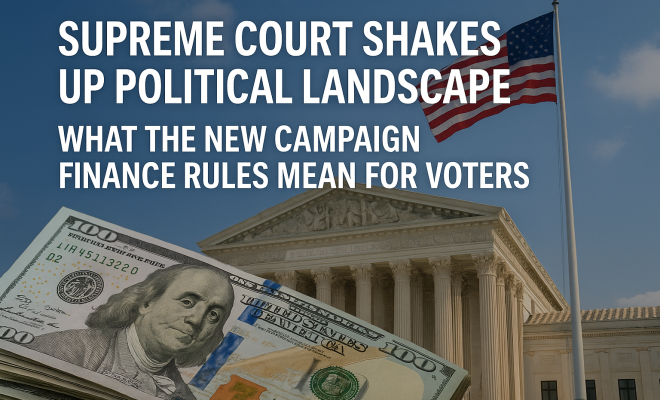
The Supreme Court’s recent decision to lift limits on how much political parties can spend on advertising and other election activities has sent shockwaves through the political landscape, especially as we gear up for the 2026 elections. This ruling, driven by the Court’s conservative majority, not only alters the rules governing campaign finance but raises significant questions about the influence of money in politics and the voices of ordinary voters.
Understanding the Supreme Court’s Decision
At the heart of the Supreme Court’s ruling is a fundamental shift in campaign finance laws that had been in place for decades. Prior to this decision, there were strict limits on how much political parties could contribute to their own campaigns, aiming to mitigate the overwhelming influence of wealthy donors and corporations in elections. With this new ruling, however, those limits are effectively erased.
The Court’s majority opinion has opened the floodgates for political parties to spend unlimited amounts on media campaigns, grassroots organizing, and other election-related activities. This change not only benefits large parties but also favors candidates who can align themselves with wealthier donors, creating a system where financial resources equate to electoral success.
The Immediate Impact on the 2026 Political Landscape
As we look toward the 2026 elections, the implications of this ruling are profound. Political parties are now poised to pour unprecedented funds into their campaigns, leading to a surge in advertising and outreach efforts. Experts predict that this will not only amplify the voices of party affiliates but also enhance polarization in our political discourse. With more money flowing into campaigns, the risk is that the narrative will skew toward the interests of those who can afford to contribute significantly.
This creates a vicious cycle where wealth becomes the primary determinant of political success, thereby alienating average voters who may feel their interests are being sidelined. The implications for democratic engagement are serious; if campaigns are dominated by corporate interests, ordinary citizens may feel increasingly powerless.
Public Reaction: Outrage and Alarm
In the wake of the Supreme Court’s ruling, social media erupted with outrage. Users took to platforms like Twitter and Facebook to voice their concerns, sharing alarming statistics about projected spending increases that could eclipse previous electoral cycles. Many fear that this financial arms race will drown out the voices of regular voters, leading to a democracy that increasingly resembles an oligarchy.
Activists and advocacy groups have quickly mobilized to push back against this ruling, demanding immediate legislative actions to protect voting rights and ensure equitable access to political discourse. The overwhelming sentiment among many is that while the Court may have granted political parties the right to spend more, it has simultaneously stripped ordinary citizens of their ability to influence the political landscape.
Campaign Finance Reform: A Growing Necessity
This ruling has reignited discussions about the necessity of campaign finance reform. The fundamental question arises: how can democracy thrive if the voices of the wealthy drown out the voices of the average voter? Many experts argue that the current trajectory necessitates an urgent reevaluation of campaign finance laws, advocating for stricter regulations that limit the influence of money in politics.
Reforming campaign finance could include re-instituting limits on party spending, enhancing transparency in donations, or even implementing public financing for campaigns. These measures could help ensure that all voices are heard in the political arena, fostering a more equitable democratic process.
The Role of Wealthy Donors in Politics
The lifting of campaign spending limits is particularly troubling given the increasing role of wealthy donors in politics. This trend is not new; over the past few decades, we’ve witnessed a gradual shift toward a system where a small number of individuals can exert disproportionate influence over elections and legislative processes. With this ruling, the potential for wealthy donors to shape political outcomes expands significantly. (See: impact of money in politics.)
Consider the impact of Super PACs, which have already played a major role in recent elections. With unlimited financial backing, these organizations have the power to saturate the airwaves with messaging that can sway public opinion and impact voter turnout. This raises ethical concerns about accountability and representation in our political system.
Historical Context: The Evolution of Campaign Finance Laws
To fully grasp the significance of the Supreme Court’s decision, it’s essential to understand the historical context of campaign finance laws in the United States. The Federal Election Commission (FEC) was established in 1975 to regulate campaign finance, a response to concerns about corruption and the influence of money in politics following the Watergate scandal.
Over the years, key rulings, such as Citizens United v. FEC in 2010, have progressively dismantled restrictions on campaign funding, culminating in the current ruling. Each decision has intensified the debate about the role of money in politics and the implications for democratic governance.
Polarization and the Future of Political Discourse
One of the most pressing concerns regarding the Supreme Court’s ruling is its potential to exacerbate political polarization. As parties invest heavily in campaign advertising, the message and narrative are likely to become increasingly partisan, leaving little room for compromise or bipartisanship. This environment fosters echo chambers where voters are only exposed to messages that align with their beliefs, further deepening the divide in American politics.
Already, we’ve seen how the media landscape is fragmented, and this ruling could lead to a situation where political discourse is dominated by partisan messaging, drowning out more moderate voices. The risk is that as parties compete for attention and funding, they may resort to tactics that stoke division rather than unity, making it even harder to bridge the gap between differing viewpoints.
What Comes Next: Legislative Responses and Activism
In light of this seismic shift in campaign finance rules, there’s mounting pressure for lawmakers to explore legislative responses aimed at mitigating the impact of the Supreme Court’s ruling. Advocacy groups and grassroots movements are rallying around the cause of campaign finance reform, urging Congress to take action to level the playing field.
Potential legislative measures could include the introduction of a constitutional amendment aimed at curbing the influence of money in politics, enhanced disclosure requirements for campaign donations, or a renewed push for public financing of elections. These reforms could help restore faith in the democratic process and ensure that all citizens, regardless of their financial means, have a voice in shaping their government.
The Role of Citizens in a New Political Era
As we grapple with the implications of the Supreme Court’s ruling, ordinary citizens play a crucial role in the future of our democracy. Advocacy and activism are more important than ever, as individuals can push back against the influence of money in politics through grassroots organizing, voter registration drives, and engagement with elected representatives.
Public awareness is key. Engaging in discussions about campaign finance reform, supporting candidates who prioritize transparency, and holding elected officials accountable are all steps citizens can take to ensure their voices are not overshadowed by corporate interests. In this new political landscape, it’s essential for voters to remain informed and active, advocating for changes that protect democratic integrity.
Campaign Finance Reform Around the World
Looking beyond the United States, campaign finance reform is a global issue that many democracies wrestle with. Countries like Canada and Germany have implemented strict limits on campaign contributions and expenditures, providing a stark contrast to the American model. In Canada, for instance, political parties are restricted in how much they can spend during an election period, and donations are capped, with transparency requirements that mandate public disclosure of contributions over a certain amount.
These international examples illustrate that there are various methods to mitigate the influence of money in politics. Many countries also provide public funding for campaigns, which can help level the playing field for candidates who may not have access to wealthy donors. The success of these systems raises questions about whether the U.S. could benefit from similar reforms.
Statistics on Campaign Spending
The financial landscape of political campaigns has shifted dramatically in recent elections. According to the Center for Responsive Politics, total spending in the 2020 election cycle was more than $14 billion, a record high. Estimates for the upcoming 2026 elections suggest that spending could surpass $20 billion, especially with the removal of party spending limits. Such figures raise concerns about the role of money in elections and the potential for disproportionate influence from a handful of affluent donors. (See: Supreme Court campaign finance ruling.)
Furthermore, studies show that candidates who outspend their opponents typically have a higher chance of winning. A report by the Brennan Center for Justice found that candidates who raised more than their opponents were victorious 90% of the time in recent federal elections. This trend underscores the urgency for campaign finance reform if we hope to create a more equitable electoral process.
Expert Perspectives on the Future of Campaign Finance
Political scientists and economists have weighed in on the implications of the Supreme Court’s ruling and the future of campaign finance. Dr. Sarah Johnson, a political economist, argues that without reform, the gap between the wealthy and average voters will only widen. “The ability for money to dictate political outcomes diminishes the democratic principle of equal representation,” she says. “It’s crucial that we find ways to amplify the voices of all citizens, rather than just the wealthy few.” For more on this, see deepfake concerns in elections.
Similarly, Professor Mark Ramirez from the University of California emphasizes the need for reform to preserve the integrity of the electoral process. “Campaign finance reform is about more than just limiting spending; it’s also about restoring public trust in government. When voters believe that their voices matter, they are more likely to engage with the political process,” he notes.
Frequently Asked Questions (FAQ)
1. What is campaign finance reform?
Campaign finance reform refers to the efforts to regulate the amount of money spent on political campaigns and the sources of that funding. The goal is to create a more equitable electoral process where all candidates have a fair chance to compete, regardless of their financial backing.
2. Why is campaign finance reform important?
Campaign finance reform is crucial because it aims to reduce the influence of money in politics, ensuring that all citizens have an equal voice in the democratic process. When wealthy individuals or corporations can exert disproportionate influence through financial contributions, it undermines the principles of democracy and representation. shifting voter priorities offers useful background here.
3. What are some proposed reforms?
Some proposed reforms include instituting limits on individual and corporate contributions, enhancing transparency and disclosure requirements for donors, and exploring public financing options for candidates. These measures can help level the playing field and reduce the overall influence of money in politics.
4. How can citizens get involved in advocating for campaign finance reform?
Citizens can get involved by educating themselves about campaign finance issues, supporting advocacy groups that push for reform, participating in grassroots organizing efforts, and contacting their elected representatives to voice their concerns. Public engagement is a vital aspect of pushing for meaningful change.
5. What has been the impact of recent Supreme Court rulings on campaign finance?
Recent Supreme Court rulings, particularly Citizens United v. FEC, have significantly weakened restrictions on campaign spending, allowing for unlimited contributions from corporations and individuals. This has led to an increase in spending and raised concerns about the influence of money in elections, prompting renewed calls for reform.
The Consequences of Inaction
While the call for campaign finance reform becomes louder, the consequences of inaction cannot be overstated. As political spending continues to escalate, the disparity in influence between average voters and wealthy donors widens. For instance, a report from the Institute for Policy Studies found that just 100 families contributed more than $500 million to federal campaigns in 2020. This concentration of wealth raises questions about whose interests are truly represented in political discussions.
If reforms are not implemented, we may see a future where policy outcomes heavily favor the interests of the wealthiest individuals and corporations, leading to a government that does not reflect the needs of the general populace. In this environment, issues like healthcare, education reform, and climate change might suffer as they are overshadowed by the priorities of affluent donors. (See: political landscape changes.)
The Grassroots Movement for Change
Grassroots movements have historically played a critical role in pushing for meaningful change in the political landscape. Organizations such as MoveOn.org and Common Cause have been at the forefront of the campaign finance reform movement, mobilizing citizens across the country to advocate for transparency and accountability in political funding.
These groups emphasize the importance of collective action, urging voters to contact their representatives, participate in town halls, and engage in public demonstrations. They often provide resources to help citizens understand the intricacies of campaign finance laws and the importance of reforming them. It’s through these grassroots efforts that the conversation around campaign finance continues to grow, challenging the status quo and advocating for a more representative democracy.
The Role of Technology in Campaign Finance
Technology has transformed the way campaigns are financed and conducted. Online fundraising platforms have made it easier for candidates to raise money from small donors, democratizing access to campaign contributions. For example, platforms like ActBlue have enabled progressive candidates to tap into grassroots funding, allowing for more diverse voices in the political arena.
However, technology also presents challenges. The rise of digital advertising and micro-targeting allows campaigns to influence specific voter segments with tailored messages, often amplifying misinformation and deepening political divides. This duality underscores the need for thoughtful regulation that not only embraces the benefits of technological advancements but also safeguards against potential abuses.
Looking Ahead: Building a Better Future for Democracy
As we navigate the implications of the Supreme Court ruling and the broader conversation about campaign finance reform, it’s crucial to focus on building a future that prioritizes democratic integrity. Advocates argue for a multi-faceted approach that includes not only regulatory changes but also cultural shifts in how we view political engagement.
Education plays a vital role in this process. Increasing public awareness about the ramifications of unregulated campaign finance is critical to inspiring civic participation. Community workshops, informative campaigns, and collaboration with educational institutions can help cultivate a more informed electorate ready to advocate for their interests.
Conclusion: The Need for Vigilance
The Supreme Court’s recent decision to lift limits on party spending is a watershed moment that highlights the ongoing struggle over the influence of money in politics. As we approach the 2026 elections, the stakes are higher than ever, and it is imperative that we remain vigilant in advocating for campaign finance reform. The future of our democracy depends on it.
“`
Trending Now
Frequently Asked Questions
What did the Supreme Court decide about campaign finance?
The Supreme Court recently lifted limits on how much political parties can spend on advertising and election activities, allowing for unlimited financial contributions. This decision fundamentally alters campaign finance laws that had been in place for decades, raising concerns about the influence of money in politics.
How does the Supreme Court ruling affect the 2026 elections?
The ruling is expected to lead to unprecedented funding for political parties in the 2026 elections, resulting in increased advertising and outreach. Experts warn this could amplify party voices and deepen political polarization, favoring candidates who align with wealthier donors.
What are the implications of unlimited campaign spending?
Unlimited campaign spending can skew political narratives towards the interests of wealthy donors, creating a system where financial resources determine electoral success. This trend risks alienating average voters and undermining the democratic process.
Who benefits from the new campaign finance rules?
The new campaign finance rules primarily benefit larger political parties and candidates who can secure backing from wealthy donors. This shift creates an uneven playing field, where financial capability significantly influences election outcomes.
What concerns are raised by the Supreme Court's decision?
The decision raises significant concerns about the growing influence of money in politics, potentially marginalizing ordinary voters. Critics argue that it could lead to an electoral system where wealth, rather than public support, dictates political success.
Agree or disagree? Drop a comment and tell us what you think.