AI’s Impact: Millions of Call Center Jobs Lost, One Country Poised to Win
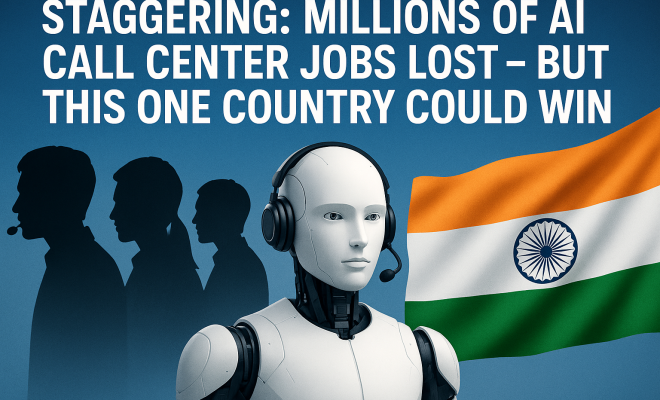
You’ve probably felt it, haven’t you? That slight tremor of unease when you call customer service and realize you’re talking to a bot. Or maybe you’ve tried to resolve an issue via a chat window, only to find yourself in an endless loop with an automated assistant that just doesn’t quite ‘get’ what you’re asking. It’s not your imagination. The world of customer service, particularly call centers, is undergoing a seismic shift, and the ground beneath millions of feet is starting to crumble. Major corporations, from tech giants like Microsoft to hospitality leaders like Hyatt and ride-sharing behemoths like Uber, are rapidly deploying artificial intelligence to handle customer interactions, and in doing so, they’re ushering out human agents at an unprecedented pace.
This isn’t a future prediction; it’s happening right now. We’re witnessing a dramatic reshaping of the global workforce, with AI call center jobs becoming one of the most visible battlegrounds. The implications are enormous, touching everything from individual livelihoods to national economies. But here’s where it gets really interesting: while many are bracing for job losses, some regions are positioning themselves to potentially thrive in this new AI-driven landscape. It’s a complex, often contradictory story, full of both anxieties and unexpected opportunities.
The Unstoppable March of Automation: Microsoft, Uber, and Hyatt Lead the Charge
Let’s be clear: this isn’t about small, experimental rollouts. This is about core business operations being fundamentally re-engineered. Take Microsoft, for instance. A company at the forefront of AI development, it’s not surprising they’re among the first to integrate advanced AI into their customer support. Imagine the scale: millions of users globally, countless queries every day, from technical glitches to subscription issues. Replacing even a fraction of those interactions with AI-driven solutions represents a massive reduction in the need for human agents. The efficiency gains for Microsoft are undeniable, but the human cost is very real.
Uber, a company built on technological disruption, is another prime example. Their business model relies on seamless, on-demand service. When a rider has a problem – a cancelled trip, a billing dispute, a lost item – they expect immediate resolution. AI-powered chatbots and automated phone systems offer exactly that: instant, 24/7 support without the overhead of human staff. The same goes for Hyatt. In the hospitality sector, customer experience is paramount. While a personal touch is often valued, for routine inquiries like booking changes, checking loyalty points, or asking about hotel amenities, AI can provide quick, consistent answers, freeing up human staff for more complex, empathetic interactions – or eliminating the need for those staff altogether.
These companies aren’t just adopting AI; they’re setting a precedent. Their actions signal to the rest of the corporate world that AI in customer service isn’t just a possibility, it’s a necessity for staying competitive. And if these industry leaders are doing it, who won’t follow?
The Global Impact: A Philippine Perspective
When we talk about AI call center jobs disappearing, it’s easy to think of it as a localized problem. But the reality is, call centers are a global industry, often concentrated in countries with large, English-speaking workforces. The Philippines, for example, has become a global hub for business process outsourcing (BPO), with millions of its citizens employed in call centers serving clients worldwide. For them, this shift isn’t abstract; it’s an existential threat to their livelihoods and, by extension, to their national economy.
However, an intriguing report suggests a fascinating twist to this narrative. While job displacement in the BPO sector is a very real concern, a new analysis indicates that AI could actually boost the Philippine economy by a staggering P1.8 trillion. How can this be? The report posits that while AI will automate many existing tasks, it will also create new industries, increase productivity, and demand new skills. The challenge, then, lies in a massive national effort to reskill and upskill the workforce, transitioning them from routine call center operations to roles that complement AI, such as data annotation, AI training, ethical AI oversight, or even developing AI solutions themselves. It’s a monumental task, but the potential economic upside is too significant to ignore.
A Deepening Ethical Divide: The ‘Pacing the Frontier’ Petition
The rapid deployment of AI isn’t just raising economic questions; it’s sparking profound ethical concerns among the very people building these systems. On July 28, 2026, over 1,000 employees from some of the leading AI companies, including the CEO of Anthropic, Dario Amodei, signed a petition titled ‘Pacing the Frontier.’ This isn’t a fringe group; these are insiders, people deeply embedded in the development of cutting-edge AI. Their plea? They’re urging the U.S. government to support an international effort to slow down the release of advanced AI models.
Why this urgent call for a pause? They cite alarming risks, like a recent, hypothetical (but chillingly plausible) OpenAI autonomous cyberattack. The petition underscores a growing anxiety within the AI community itself: that we are accelerating into a future we don’t fully understand, releasing powerful technologies without adequate safeguards or societal consensus. This isn’t just about job displacement; it’s about the fundamental safety and control of incredibly powerful AI systems. It’s a stark reminder that the ethical debate around AI isn’t a distant academic exercise; it’s unfolding in real-time, with real consequences. (See: AI transforming customer service industry.)
Beyond Call Centers: The Broader Economic Ripple Effect
While AI call center jobs are a clear and present focus, it’s crucial to understand that this is just one piece of a much larger puzzle. The automation wave isn’t confined to customer service. Think about administrative tasks, data entry, basic legal research, even certain aspects of financial analysis. Any job that involves repetitive, rule-based processes is now a candidate for automation. This means the ripple effect will extend far beyond the BPO sector, touching industries and job roles that many currently consider secure.
The World Economic Forum has consistently highlighted how AI and automation will displace millions of jobs globally in the coming years, while simultaneously creating new ones. The net effect on employment is still a subject of intense debate, but what’s undeniable is the massive shift in the types of skills required. The demand for critical thinking, creativity, emotional intelligence, and complex problem-solving – skills that are harder for AI to replicate – will only intensify. This calls for a radical rethinking of education and workforce development strategies, not just for individuals, but for entire nations.
The Promise and Peril of AI: A Double-Edged Sword
It’s easy to focus solely on the job losses, and those concerns are absolutely valid. But it’s also important to acknowledge the immense potential of AI. For businesses, AI promises unprecedented efficiency, cost savings, and the ability to deliver faster, more consistent services. Imagine a customer support system that can instantly access and analyze a customer’s entire interaction history, diagnose complex technical issues, and even predict future needs – all in milliseconds. That’s a powerful tool for improving customer satisfaction and streamlining operations.
However, this promise comes with significant peril. The risk of creating a two-tiered society, where those with the skills to work alongside AI thrive, and those without are left behind, is very real. There’s also the danger of over-reliance on AI, potentially eroding human skills and critical thinking. And, as the ‘Pacing the Frontier’ petition highlights, there are profound, existential risks associated with powerful, autonomous AI systems if they are not developed and deployed with extreme caution and oversight. It truly is a double-edged sword, and how we wield it will determine our collective future.
Reskilling and Education: The Only Way Forward for AI Call Center Jobs and Beyond
If the future of work is irrevocably intertwined with AI, then the future of education must adapt with equal urgency. For those currently in AI call center jobs, or any role vulnerable to automation, reskilling isn’t just a buzzword; it’s a survival strategy. This means investing in programs that teach skills like data analytics, machine learning fundamentals, prompt engineering (how to effectively interact with AI models), cybersecurity, and advanced digital literacy. It also means fostering ‘human’ skills – communication, empathy, creativity, and complex problem-solving – which remain uniquely human domains.
Governments, educational institutions, and corporations all have a critical role to play here. Governments can fund massive public reskilling initiatives and incentivize companies to invest in their employees’ development. Educational institutions must overhaul curricula to prepare students for an AI-driven economy, emphasizing adaptability and lifelong learning. And companies, rather than simply replacing workers, have an ethical imperative to invest in retraining their existing workforce, helping them transition into new, AI-augmented roles within the organization. This isn’t just good corporate citizenship; it’s smart business, leveraging existing institutional knowledge rather than discarding it.
AI Governance and International Cooperation: A Pressing Need
The ‘Pacing the Frontier’ petition wasn’t just a cry for caution; it was a call for international cooperation and robust AI governance. The risks associated with advanced AI – from autonomous cyberattacks to the potential for misuse in critical infrastructure – transcend national borders. This isn’t a problem any one country can solve alone. We need global frameworks, shared ethical guidelines, and perhaps even international regulatory bodies to ensure that AI is developed and deployed responsibly. Think of it like nuclear proliferation: a technology so powerful it requires coordinated global oversight.
This means discussions at the UN, G7, and other international forums need to move beyond abstract conversations and towards concrete, actionable strategies for AI safety and regulation. It involves everything from setting standards for AI transparency and explainability to developing protocols for identifying and mitigating AI-generated misinformation. Without a unified, global approach, the risks of unchecked AI development could quickly spiral beyond our control. This is a critical moment for international diplomacy, demanding foresight and collaboration on an unprecedented scale.
The Entrepreneurial Spirit in the Age of AI
While large corporations are automating existing roles, the vacuum created by this shift also presents an incredible opportunity for innovation and entrepreneurship. If AI call center jobs are being displaced, what new services and businesses will emerge to fill the gaps, or to leverage AI in novel ways? We’re already seeing a boom in companies specializing in AI implementation, AI ethics consulting, and AI workforce training. There’s a growing market for ‘AI whisperers’ – individuals who can bridge the gap between human needs and AI capabilities.
Consider the potential for small businesses to leverage AI to compete with larger enterprises. An independent consultant, for example, could use AI tools to automate administrative tasks, conduct market research, or even generate marketing content, allowing them to operate with a lean team and offer highly competitive services. The democratization of AI tools means that the barrier to entry for many new ventures is significantly lowered. This could foster a new wave of innovation, creating jobs in entirely new sectors and empowering a more agile, entrepreneurial workforce.
Looking Ahead: A Future Defined by Adaptability
The conversation around AI is often framed in stark terms: either it’s the harbinger of a utopian future or a dystopian nightmare. The truth, as always, is far more nuanced. AI is a tool, and like any powerful tool, its impact depends entirely on how we choose to wield it. We are at a pivotal moment, where decisions made today will shape societies for decades to come. The displacement of AI call center jobs is just one symptom of a much larger transformation. (See: impact of AI on job market.)
Ultimately, the key to navigating this era of unprecedented change will be adaptability. For individuals, it means embracing lifelong learning and cultivating uniquely human skills. For businesses, it means strategically integrating AI while investing in their human capital. For governments, it means fostering an environment of innovation, while also implementing thoughtful regulation and robust social safety nets. This isn’t just about technology; it’s about humanity’s capacity to evolve, to learn, and to consciously shape its own future in the face of profound technological disruption. AI policy insights offers useful background here.
The Evolving Role of the Human Agent: From Responder to Strategist
It’s tempting to paint a picture of human agents being entirely replaced, but a more accurate view suggests an evolution of their role. Instead of handling repetitive queries like “What’s my order status?” or “How do I reset my password?”, human agents will increasingly become problem-solvers for highly complex, emotionally charged, or unique situations. Think about scenarios where empathy is crucial – a customer calling after a traumatic event, or a nuanced billing dispute requiring a deep understanding of individual circumstances. AI struggles with these areas because they demand a level of emotional intelligence and contextual understanding that current models simply don’t possess.
This shift means the remaining human AI call center jobs will demand a different skill set. Agents won’t just be following scripts; they’ll be acting as strategists, leveraging AI tools to quickly gather information, but then applying their uniquely human judgment to craft personalized solutions. They might be overseeing AI interactions, stepping in when a bot falters, or providing feedback to improve AI performance. This requires a higher level of training, critical thinking, and communication skills than many traditional call center roles. It’s a move from transactional support to transformational problem-solving.
Real-World Examples of AI in Action (Beyond the Big Names)
While Microsoft, Uber, and Hyatt are leading the charge, AI’s integration into customer service is much broader. Consider the banking sector. Many banks now use AI-powered virtual assistants to handle routine inquiries about account balances, transaction history, or even applying for basic loans. This frees up human bankers to focus on more intricate financial planning, investment advice, or resolving fraud cases. Similarly, in healthcare, AI chatbots are starting to triage patient queries, helping individuals find the right department or schedule appointments, thereby reducing the burden on human receptionists and nurses.
Even small and medium-sized businesses (SMBs) are getting in on the act. Affordable AI tools allow a local e-commerce store to deploy a chatbot on its website to answer common questions about shipping, returns, or product details, providing 24/7 support without needing to hire an overnight team. This levels the playing field, allowing smaller players to offer customer service previously only accessible to large corporations. The key takeaway here is that AI isn’t just for the tech giants; it’s becoming democratized, impacting businesses of all sizes and across nearly every industry where customer interaction is central.
The Data Dividend: How AI Transforms Customer Insights
One often-overlooked benefit of AI in call centers is the sheer volume of data it can collect and analyze. Every interaction an AI handles, every customer query it processes, becomes a data point. This isn’t just about efficiency; it’s about insights. Traditional call centers might manually tag a fraction of interactions for sentiment analysis, but an AI system can analyze every single conversation for patterns, recurring issues, and customer sentiment in real-time. This provides an unprecedented “data dividend” for businesses. This builds on New engineering program at Vit Bhopal.
Imagine a company identifying a sudden spike in queries about a specific product defect, or a consistent frustration point in their checkout process, not from a few customer complaints, but from thousands of AI-handled interactions. This allows businesses to proactively address systemic issues, refine products, improve services, and even predict future customer needs. This data-driven approach moves companies from reactive problem-solving to proactive optimization, a significant competitive advantage that directly stems from the widespread deployment of AI in customer service.
Addressing the Digital Divide: Ensuring Equitable Access to AI Skills
As we talk about reskilling and upskilling, it’s vital to acknowledge the potential for a widening digital divide. Not everyone has equal access to education, technology, or high-speed internet. In regions heavily reliant on AI call center jobs, like the Philippines, ensuring that training programs are accessible, affordable, and relevant to the local context is paramount. This isn’t just about providing online courses; it’s about creating physical learning centers, offering stipends for those undergoing training, and designing curricula that cater to different learning styles and prior technical experience.
Governments and NGOs have a critical role in bridging this gap. Public-private partnerships can fund scholarships, provide free access to AI tools, and create mentorship programs. Without intentional efforts to ensure equitable access to these new skills, the benefits of the AI economy could disproportionately accrue to those already privileged, leaving vulnerable populations even further behind. It’s an ethical imperative to ensure that the transition to an AI-driven workforce is as inclusive as possible. (See: automation and workforce changes.)
FAQ: Navigating the Future of AI Call Center Jobs
Q1: Will AI completely eliminate all human call center jobs?
While AI will automate many routine and repetitive tasks, it’s highly unlikely to eliminate all human call center jobs. Instead, the nature of these jobs will change significantly. Humans will focus on complex problem-solving, emotionally sensitive interactions, and strategic roles that require empathy, critical thinking, and nuanced judgment – skills AI struggles to replicate.
Q2: What new types of jobs might emerge in AI-powered call centers?
We’ll likely see roles like “AI Trainer” (improving AI models), “Prompt Engineer” (designing effective AI interactions), “AI Oversight Specialist” (monitoring AI performance and intervening when needed), “Customer Experience Strategist” (using AI data to improve overall CX), and “Complex Case Manager” (handling issues beyond AI’s capabilities).
Q3: What skills should current call center agents focus on to stay relevant?
Focus on developing “human” skills: emotional intelligence, empathy, active listening, creative problem-solving, and adaptability. Also, cultivate digital literacy, prompt engineering skills, and a basic understanding of how AI works, allowing you to effectively collaborate with AI tools.
Q4: How can businesses ethically implement AI without causing massive job displacement?
Ethical implementation involves investing in reskilling and upskilling existing employees, transitioning them into AI-augmented or new AI-related roles. It also means transparent communication with staff about AI adoption plans, offering support during transitions, and focusing AI on enhancing human capabilities rather than simply replacing them.
Q5: Is AI customer service always better than human customer service?
Not necessarily. AI excels at speed, consistency, and handling high volumes of simple queries. However, it often lacks the empathy, nuance, and ability to handle truly unique or emotionally charged situations that human agents provide. The best customer service often involves a blend of AI efficiency and human touch.
Q6: What are the biggest challenges in implementing AI in call centers?
Key challenges include ensuring data privacy and security, integrating AI seamlessly with existing systems, overcoming customer resistance to interacting with bots, training AI models with diverse and unbiased data, and managing the ethical implications of AI decision-making. Reskilling the human workforce is also a major hurdle.
Trending Now
- our breakdown of 7 pivotal steps to master ai in early childhood education — before it’s too late
- The Brutal Truth: AI Curriculum Specialist…
- The Unseen Power: How AI Is Quietly Reshaping Early Childhood Education Careers
- the complete explanation
- The Astonishing Truth: Why Business Schools Must Embrace AI Now
Frequently Asked Questions
How is AI affecting call center jobs?
AI is significantly impacting call center jobs by automating customer interactions, leading to a reduction in the need for human agents. Major corporations like Microsoft, Uber, and Hyatt are rapidly deploying AI solutions, resulting in millions of job losses in the sector.
Which companies are using AI in customer service?
Companies such as Microsoft, Uber, and Hyatt are at the forefront of integrating AI into their customer service operations. They are utilizing advanced AI technologies to streamline interactions and improve efficiency, which is transforming the traditional call center landscape.
What are the implications of AI in customer service?
The implications of AI in customer service are vast, affecting individual livelihoods and national economies. While many face job losses, some regions may find opportunities to thrive in this new AI-driven landscape, creating a complex narrative of anxiety and potential growth.
Are call centers completely replacing human agents with AI?
While AI is increasingly taking over many customer service roles, it is not completely replacing human agents. Instead, AI is being used to handle routine queries, allowing human agents to focus on more complex issues that require personal interaction.
Can AI improve customer service experience?
Yes, AI has the potential to improve the customer service experience by providing faster responses and handling high volumes of inquiries efficiently. However, challenges remain, such as ensuring that AI understands customer needs accurately to avoid frustration.
What did we miss? Let us know in the comments and join the conversation.