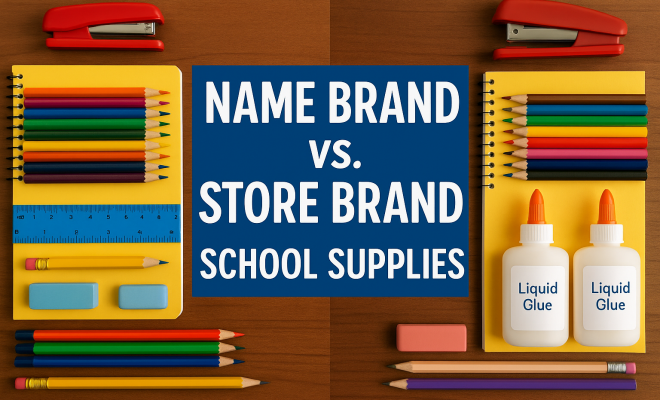
Name Brand vs. Store Brand School Supplies
“`html
As the back-to-school season approaches, parents and students alike face the perennial question: should you opt for name brand or store brand school supplies? With rising prices and a push for budget-conscious shopping, understanding the differences between these two categories is more important than ever. In this article, we’ll explore the pros and cons of name brand vs store brand school supplies, providing tips and insights to help you make informed choices.
1. The Basics: What Are Name Brand and Store Brand Supplies?
To kick things off, let’s clarify what we mean by name brand and store brand supplies. Name brands, like Crayola for crayons or Elmer’s for glue, have established reputations and are often marketed heavily. These products are known for their quality, reliability, and performance, making them a go-to for many consumers.
On the other hand, store brands—often produced under a supermarket’s or retailer’s label—are typically less expensive alternatives. Stores like Walmart or Target have their own lines, such as Great Value and Up & Up, which aim to provide similar quality at a fraction of the price. The question is whether these alternatives can match the quality of well-known brands or if they fall short, especially when it comes to essential school supplies.
2. Price Points: The Financial Factor
One of the most significant differences between name brand and store brand school supplies is the price. Name brand products can sometimes carry a hefty price tag, but they also promise quality and performance. For example, a pack of Crayola markers might cost $5, while a store brand equivalent could be found for $2. That’s a 60% savings, which can add up quickly if you’re shopping for multiple items.
When comparing costs, consider not only the initial purchase price but also the longevity and durability of the products. If a store brand folder tears after a few uses, the savings may not be worth it. However, if a name brand notebook lasts the entire school year, it might justify the higher cost. Evaluating this trade-off can help parents make smarter purchasing decisions. We covered Baltimore truck initiative in more detail.
3. Quality Concerns: How Do They Compare?
Quality is often cited as the primary reason consumers choose name brand products. Many parents believe that established brands have invested in research and development to ensure their products perform better. For instance, Crayola crayons are known for their vibrant colors and smooth application, making them a favorite among teachers and parents alike.
In contrast, store brands can have variable quality. While some store brand products may exceed expectations, others may not meet the standards set by their name brand counterparts. Therefore, it’s essential to read reviews and perhaps test products when possible. Personal experiences shared by other parents can offer valuable insights into quality comparisons.
4. Availability: Finding What You Need
Availability can also play a significant role in the name brand vs store brand school supplies debate. Name brand products are often widely available at various retailers, both online and in-store. However, during back-to-school sales, they can quickly sell out, causing frustration for parents trying to stock up.
Store brands, while generally available at their respective retailers, may not always offer the same variety. Depending on the store, certain supplies might be limited to what’s in stock. This can create a challenge for parents trying to acquire specific items. Therefore, it’s wise to plan ahead and check multiple retailers to ensure you get everything on your list.
5. Environmental Considerations: The Eco-Friendly Debate
In today’s increasingly eco-conscious society, many parents are also considering the environmental impact of their purchases. Name brand companies, such as Crayola and Faber-Castell, have made strides in incorporating sustainable practices in their production processes, using non-toxic materials and recycled packaging. (See: Understanding food labels and brands.)
On the other hand, store brands may not always prioritize sustainability. While some retailers are beginning to offer eco-friendly options, the overall commitment to environmental responsibility can vary widely. When shopping for school supplies, consider checking if the products are made from recycled materials or if they are certified non-toxic to help make greener choices.
6. Brand Loyalty: Is It Worth It?
Brand loyalty often affects purchasing decisions. Many parents have their favorite brands based on childhood experiences or recommendations from friends and educators. This loyalty can lead to a preference for name brand products, regardless of the price difference.
However, consumers today are becoming more open to experimenting with store brands, especially as quality improves and prices remain lower. It’s not uncommon for parents to mix and match, opting for name brand items for certain supplies—like markers or pencils—while choosing store brands for items like paper or binders. Finding the right balance can lead to significant savings without sacrificing quality.
7. Expert Opinions: What Educators Are Saying
Educators often weigh in on the name brand vs store brand debate. Many teachers have noticed that while brand loyalty exists, the performance of store brand supplies has improved over the years. Some educators advocate for store brands, particularly for items like notebooks and folders, arguing that as long as they function correctly, the brand name may not be as relevant.
Others maintain that for certain products, particularly those used in creative pursuits like art, the quality of name brand supplies matters significantly. For example, art teachers often prefer high-quality paints and brushes to ensure the best results for their students’ projects. It’s essential for parents to consider their child’s specific needs and the recommendations made by their teachers.
8. Consumer Experiences: Real Feedback from Parents
Nothing beats firsthand experiences when it comes to making informed choices. Many parents have shared their experiences with both name brand and store brand school supplies online, providing insights into what worked and what didn’t. For instance, some parents reported that store brand notebooks held up just fine for their middle schoolers, while others found that name brand markers were essential for their younger children.
Social media platforms and parenting forums can be excellent resources for gathering this kind of feedback. Many parents are willing to share their trials and tribulations, helping others navigate the often overwhelming back-to-school shopping experience.
9. Comparing Specific Products: A Closer Look
Let’s take a deeper dive into specific school supplies, comparing popular items from both name brands and store brands. This can help clarify where it’s often worth spending a bit more, and where it’s okay to opt for the budget-friendly option.
Crayons vs. Generic Crayons
Crayola crayons are often hailed for their rich pigmentation and smooth application, but how do they stack up against generic brands? While Crayola may cost around $3 for a box of 24, many store brands offer similar-sized boxes for half the price. Parents have reported that while store brand crayons may not be as vibrant, they often perform adequately for everyday school projects. In general, younger children who use crayons primarily for coloring may not notice much of a difference, making store brands a viable option.
Glue: Elmer’s vs. Store Brand Glue
Elmer’s Glue is a staple in classrooms, known for its strong adhesive qualities. However, store brands often claim to have similar properties. A bottle of Elmer’s Glue can run about $2, while store brand alternatives can be found for under a dollar. Many teachers suggest sticking with Elmer’s for projects that require strong bonding, such as art projects, but for basic tasks, store brand glue can suffice. It’s crucial to consider the specific use case; for major projects that need to last, investing in a name brand might be the smart choice. (See: The rise of store brands in retail.)
Notebooks: Five-Star vs. Store Brand Notebooks
When it comes to notebooks, Five-Star products are often associated with durability and quality. A Five-Star notebook can cost around $3-$5, while many store brands offer similar products for as low as $1.50. Feedback from students suggests that while store brand notebooks may be adequate for light note-taking, those who write heavily or use their notebooks frequently may prefer the sturdiness and longevity of a name brand. If you’re looking to save, consider buying a few name brand notebooks for core classes while using store brands for less critical subjects.
10. Statistics on Brand Preferences
Understanding consumer behavior can help you navigate the name brand vs store brand school supplies debate. A recent survey showed that approximately 65% of parents prefer name brand products for school supplies due to perceived quality. However, about 52% of those surveyed admitted they have tried store brand products and felt they were satisfactory for most items. This indicates a growing acceptance of store brands in recent years.
Additionally, according to research conducted by a leading consumer magazine, nearly 40% of participants found that store brand products were often rated similarly in performance to name brands when evaluated blind. This suggests that while name brands hold a strong reputation, many store brand options offer comparable quality.
11. Frequently Asked Questions (FAQ)
Q: Are store brand school supplies safe for children?
A: Yes, most store brand school supplies are safe for children, but it’s always a good idea to check for certifications such as non-toxic labels or any safety standards. Many retailers ensure their products meet safety regulations.
Q: How can I determine which brand to choose?
A: Review product specifications, read consumer reviews, and consider what is most important for each item—whether it’s durability, performance, or price.
Q: Do name brand school supplies perform better than store brands?
A: Not always. While name brands often have a reputation for higher quality, many store brands have improved significantly. It often depends on the specific product and its intended use.
Q: Is it worth trying store brand school supplies?
A: Absolutely! Many parents find that store brands meet their needs without the high costs associated with name brands. It’s worth experimenting to see what works best for your family.
Q: How can I save more when buying school supplies?
A: Look for sales, use coupons, and consider buying in bulk for non-perishable items. Mixing and matching name and store brands can also help you maximize your savings while maintaining quality.
12. Consumer Trends: The Shift in Preferences
Over the past few years, there’s been a noticeable shift in consumer preferences. Thanks to the rise of budget-conscious shopping and increased competition among retailers, store brands are no longer viewed as lower quality options. Many consumers have started to realize that they can obtain quality products without the hefty price tag. According to a recent Nielsen report, 70% of shoppers indicated that they would consider purchasing store brand products if they were marked as high quality. (See: Consumer behavior towards brand loyalty.)
This trend is particularly prevalent among millennials and Gen Z shoppers, who are more inclined to try store brands as they prioritize value and sustainability. Retailers are also responding to this demand by improving their store brand offerings, ensuring they meet or exceed the standards set by name brands.
13. Product Testing and Reviews: What to Look For
When deciding between name brand and store brand school supplies, consider seeking out product tests and reviews. Websites like Consumer Reports and various parenting blogs frequently conduct evaluations comparing different brands in terms of quality, durability, and overall satisfaction. These resources can provide valuable insights into how specific products stack up.
Additionally, before making a purchase, look for online reviews from fellow parents. Platforms like Amazon and Walmart allow consumers to leave detailed feedback on products, which can give you a better understanding of how well an item performs in real-life scenarios.
14. The Long-Term Investment: Cost vs. Value
While the initial cost of school supplies is important, considering the long-term value is equally significant. Investing in name brand items might seem pricey upfront, but if those items last longer and perform better, they can save you money in the long run. For example, a sturdy backpack that withstands the wear and tear of a school year may be worth the initial higher price compared to a cheaper alternative that may need replacing before the year ends.
On the flip side, if store brand items consistently meet your needs and hold up well, opting for them can lead to substantial savings. It’s essential to evaluate each type of supply and consider how often it will be used and its significance in your child’s educational experience.
15. Final Thoughts: Making the Best Choice
Ultimately, the decision between name brand vs store brand school supplies comes down to individual preferences, budget, and specific needs. While name brands typically promise reliability and quality, many store brands have proven to be adequate substitutes at a lower price.
To make the best choice, consider experimenting with different products. Purchase a few items from each category and observe how they perform throughout the school year. This way, you can find the right balance that works for your family, ensuring that your kids have the supplies they need to succeed without breaking the bank. Remember, it’s not always about the name on the label; it’s about finding what works best for you and your child.
“`
Trending Now
Frequently Asked Questions
What is the difference between name brand and store brand school supplies?
Name brand school supplies, like Crayola or Elmer’s, are well-known for their quality and reliability, often backed by heavy marketing. Store brand supplies, such as Great Value or Up & Up, are typically produced by retailers and offer a more budget-friendly option, aiming to provide similar quality at a lower price.
Are store brand school supplies as good as name brands?
Store brand school supplies can vary in quality compared to name brands. While some store brands may offer comparable performance, others might not meet the same standards. It's important to consider reviews and personal experiences when deciding between the two.
How much cheaper are store brand school supplies?
Store brand school supplies can be significantly cheaper than name brands, often offering savings of 30% to 60%. For instance, a pack of Crayola markers may cost around $5, while a store brand equivalent could be as low as $2, leading to substantial savings for back-to-school shopping.
Should I buy name brand school supplies for durability?
While name brand school supplies often promise higher durability and performance, it's essential to weigh the cost against their longevity. If a store brand product proves to be durable and meets your needs, it may be a better value, but for critical items, name brands may be worth the investment.
What factors should I consider when choosing school supplies?
When choosing school supplies, consider factors like price, quality, durability, and brand reputation. Assess whether the savings from store brands justify any potential quality trade-offs, especially for essential items that may require more reliability.
Have you experienced this yourself? We'd love to hear your story in the comments.