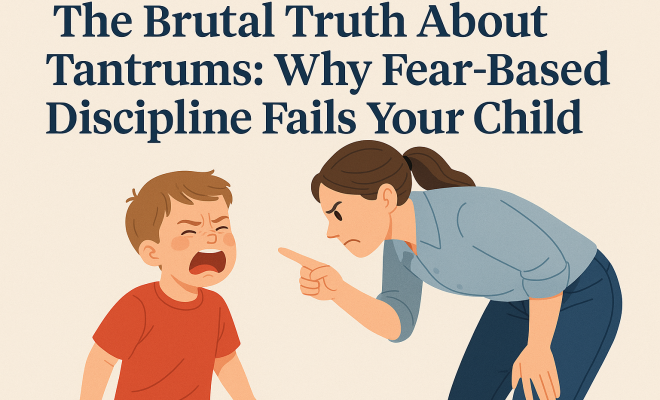
The Brutal Truth About Tantrums: Why Fear-Based Discipline Fails Your Child
You’ve probably seen the videos circulating online, perhaps even shared them with a giggle or a gasp. Clips from a Korean folk village show costumed ‘ghosts’ appearing to terrified children, often at the behest of their own parents. The idea? To scare little ones into better behavior, whether it’s eating their vegetables, stopping a tantrum, or just generally being more obedient. It’s been dubbed ‘ghost discipline,’ and while some parents swear by its immediate effectiveness, claiming their children’s behavior did a sudden 180, it sparks a crucial debate: Is fear ever a legitimate tool in our parenting arsenal?
As an educator and someone deeply invested in child development, I find these trends, while perhaps amusing to some, deeply troubling. The viral nature of ‘ghost discipline’ highlights a fundamental misunderstanding of children’s emotional needs and how true behavioral change actually happens. We’re looking for the best parenting strategies for tantrums, not quick fixes that could leave lasting psychological scars. Let’s be honest, seeing a child genuinely terrified, even if it momentarily stops a tantrum, should give us pause. Our goal as parents isn’t just to stop undesirable behavior; it’s to foster resilient, emotionally intelligent humans. And that, my friends, requires a much more thoughtful approach than summoning a specter.
1. Understanding the Roots of Tantrums: It’s Not Always Defiance
Before we can even talk about the best parenting strategies for tantrums, we have to understand what a tantrum actually is. It’s rarely pure defiance. For young children, especially toddlers and preschoolers, tantrums are often a cry for help, a sign of overwhelm, or a direct result of underdeveloped emotional regulation skills. Imagine yourself as an adult, feeling utterly frustrated, exhausted, or misunderstood, but lacking the words or the cognitive capacity to articulate those feelings effectively. You’d probably lash out too, right? That’s precisely what’s happening with our little ones.
Children might throw a tantrum because they’re hungry, tired, overstimulated, or simply trying to assert a burgeoning sense of independence in a world where they have very little control. They don’t have the sophisticated frontal lobe development to pause, consider consequences, and rationally explain their feelings. So, when we see a child on the floor, kicking and screaming, it’s not usually a calculated act of rebellion. It’s a genuine expression of distress, and approaching it with fear only compounds that distress rather than resolving its underlying cause.
The Developmental Perspective: Why Toddlers are Tantrum Magnets
It’s crucial to remember that a child’s brain is still very much under construction. The prefrontal cortex, responsible for executive functions like decision-making, impulse control, and emotional regulation, isn’t fully developed until well into their twenties. For a two or three-year-old, this part of the brain is barely online. They’re operating primarily from their limbic system, the emotional center, making them highly reactive and less capable of logical thought when upset.
This developmental stage, often called the “terrible twos,” isn’t about children being deliberately difficult. It’s about their emerging autonomy clashing with their limited communication skills and undeveloped self-control. They want to do things themselves, but they can’t always articulate those desires or cope when things don’t go their way. Understanding this neurological reality helps us shift our perspective from viewing tantrums as willful disobedience to seeing them as a natural, albeit challenging, part of development.
2. The Damage of Fear-Based Discipline: Beyond the Immediate Ceasefire
The immediate cessation of a tantrum through fear might feel like a win to a stressed-out parent. The child stops crying, they comply with the request, and peace is momentarily restored. But what’s really happening beneath the surface? When a child is disciplined through fear – whether it’s a ‘ghost’ or an angry shout – their brain goes into ‘fight, flight, or freeze’ mode. Cortisol, the stress hormone, floods their system. They aren’t learning a lesson about appropriate behavior; they’re learning to suppress their emotions out of terror.
This kind of discipline, while seemingly effective in the short term, can have significant long-term consequences. It teaches children that their feelings are dangerous or unacceptable, leading them to hide their emotions rather than learning to manage them. It can erode trust between parent and child, foster anxiety, and even contribute to aggression or withdrawal later on. We’re not just trying to stop a tantrum; we’re trying to build a secure attachment and teach healthy emotional processing. Fear actively works against both of those crucial goals, making it a poor choice among the best parenting strategies for tantrums.
The Psychological Toll: Long-Term Repercussions of Fear
Research consistently shows that fear-based tactics can lead to a range of negative outcomes. Children exposed to chronic fear or harsh discipline may develop a heightened stress response, making them more susceptible to anxiety disorders and depression as they grow up. They learn to obey out of fear of punishment, not because they understand the reasoning behind the rules or have developed an internal moral compass. This external locus of control can hinder their ability to make ethical choices independently.
Moreover, a child’s sense of security is built on trust with their primary caregivers. When parents use fear, that trust is compromised. Children may become less likely to confide in their parents about problems, fearing judgment or further punishment. This can create emotional distance and make it harder for parents to guide their children through future challenges, making effective communication a cornerstone of the best parenting strategies for tantrums.
3. Proactive Strategies: Setting the Stage for Success
One of the most effective, yet often overlooked, best parenting strategies for tantrums is prevention. Many tantrums are predictable, especially once you start to recognize your child’s triggers. Is it always around snack time? Before a nap? When they’re overwhelmed by too many choices or too much stimulation?
Proactive parenting means creating an environment and a routine that minimizes these triggers. This could involve ensuring regular meals and naps, giving warnings before transitions (e.g., “Five more minutes until we leave the park!”), offering limited choices to foster a sense of control (e.g., “Do you want to wear the blue shirt or the red shirt?”), and teaching simple emotion words. When children can say “I’m mad!” or “I’m sad!” they’re less likely to resort to a full-blown meltdown. Think of it as building a strong foundation so the house doesn’t collapse during a storm. (See: Children's behavioral issues and development.)
The Power of Routine and Predictability
Children thrive on routine. It provides a sense of security and helps them anticipate what’s coming next, reducing anxiety and the likelihood of unexpected meltdowns. A consistent daily schedule for meals, naps, playtime, and bedtime can significantly reduce tantrum frequency. When children know what to expect, they feel more in control of their environment, even if they can’t control every single aspect of it.
Consider creating visual schedules for younger children, using pictures to represent different activities throughout the day. This can be incredibly helpful for non-verbal children or those who are still developing language skills. When a child can “see” their day, it reduces uncertainty and empowers them, lessening the need for outbursts to communicate their confusion or frustration. This proactive approach is a cornerstone of the best parenting strategies for tantrums.
4. Connect Before You Correct: Empathy as a Powerful Tool
When a tantrum does strike, especially if it’s a big one, our first instinct might be to shut it down. But the best parenting strategies for tantrums often involve a different approach: connection. This doesn’t mean giving in to every demand, but rather acknowledging and validating your child’s feelings, even if you don’t agree with their behavior. For more context, see Why Social Media Is Bad for Kids.
Try getting down to their eye level, using a calm voice, and saying something like, “I see you’re really frustrated that you can’t have another cookie right now. It’s hard when you want something and you can’t have it.” This simple act of empathy can often de-escalate the situation. It lets your child know they’re seen and heard, which is incredibly powerful. Once they feel understood, they’re often more receptive to guidance or limits. This isn’t about condoning the behavior; it’s about connecting with the emotion first.
The Science of Empathy in Action
When you validate a child’s feelings, you’re not just being nice; you’re helping their brain integrate their emotional and logical centers. Dr. Daniel Siegel calls this “name it to tame it.” When a child is upset, their emotional brain is in overdrive. By acknowledging their feelings (“You’re really mad right now”), you help them move out of that raw emotional state and start to engage their prefrontal cortex. This allows them to begin processing what’s happening and eventually learn from the experience.
This empathetic connection also strengthens the parent-child bond, building a secure attachment. A child with a secure attachment feels safe to express their emotions, knowing their parent will be a reliable source of comfort and guidance, not judgment or fear. This foundation of trust is invaluable as they grow and face increasingly complex emotional challenges.
5. Teaching Emotional Regulation: The Skill They Truly Need
Children aren’t born knowing how to regulate their emotions. It’s a skill we teach them, much like tying their shoes or riding a bike. The best parenting strategies for tantrums focus on this teaching. During calm moments, talk about feelings. Read books about emotions. Practice calming techniques together, like taking deep breaths (“smell the flower, blow out the candle”) or counting to ten.
When a tantrum occurs, once you’ve connected, you can gently guide them toward these tools. “It looks like you’re feeling really angry. Can we take three big breaths together?” Or, “Let’s squeeze this pillow until some of that mad feeling comes out.” It takes consistency and patience, but over time, your child will internalize these strategies and begin to use them independently. This is far more empowering than simply scaring an emotion away.
Building an Emotional Toolbox
Think of teaching emotional regulation as helping your child build their own “emotional toolbox.” This toolbox should contain various strategies they can use when big feelings arise. Beyond deep breathing and counting, consider introducing:
- Squeezing a stress ball: A physical outlet for pent-up energy.
- Drawing or scribbling: Art can be a powerful way to express emotions when words fail.
- Listening to calming music: Creating a soothing auditory environment.
- Sensory bottles: Bottles filled with glitter and water can be mesmerizing and calming to watch.
- Movement breaks: Sometimes, just wiggling, jumping, or running for a few minutes can help release tension.
Practice these tools during calm times so they become familiar and accessible when a tantrum threatens. The goal is to give children a repertoire of healthy coping mechanisms they can use throughout their lives, making this a central tenet of the best parenting strategies for tantrums.
6. Setting Clear, Consistent Boundaries: Structure Brings Security
While empathy is crucial, it doesn’t mean abandoning boundaries. In fact, clear and consistent boundaries are one of the most important best parenting strategies for tantrums. Children thrive on predictability and knowing what’s expected of them. When limits are wishy-washy or constantly changing, it creates confusion and can actually increase tantrum frequency.
Communicate rules simply and clearly. Follow through on consequences consistently. If you say, “If you throw the toy again, we’ll put it away for the rest of the day,” then you must do it. This isn’t about punishment; it’s about teaching cause and effect and helping children understand the natural consequences of their actions. Consistency provides a sense of security and helps children learn self-control within a safe framework.
The Difference Between Punishment and Consequences
It’s important to distinguish between punishment and natural or logical consequences. Punishment is often punitive, arbitrary, and aimed at inflicting pain or discomfort to stop behavior. Consequences, on the other hand, are directly related to the action and help children understand the impact of their choices. If a child refuses to put on their coat, a logical consequence isn’t a spanking; it’s feeling chilly outside. If they throw their food, a natural consequence is no more food on their plate. You’re not punishing, you’re allowing them to experience the outcome of their actions.
This distinction is vital for fostering internal discipline. When children understand the link between their actions and the outcomes, they’re more likely to make responsible choices in the future, not just to avoid arbitrary punishment. This thoughtful approach to discipline is a key component of the best parenting strategies for tantrums. (See: National Institute of Child Health on tantrums.)
7. Using Positive Reinforcement: Catch Them Being Good
We often focus on what children are doing wrong, especially during a tantrum. But one of the most effective best parenting strategies for tantrums and promoting good behavior is positive reinforcement. This means actively noticing and praising desired behaviors, no matter how small. Did your child manage to use their words instead of screaming? “Wow, you used your words to tell me you were frustrated! That was a great job.” Did they pick up a toy without being asked? “Thank you for helping clean up! That was so helpful.”
Positive reinforcement builds self-esteem and encourages children to repeat those good behaviors. It shifts the focus from what’s going wrong to what’s going right, creating a more positive and cooperative atmosphere. Acknowledging their efforts and successes, even if they’re not perfect, goes a long way in fostering a child’s intrinsic motivation to behave well.
Specific Praise Over General Praise
When using positive reinforcement, be specific. Instead of just saying “Good job!” try “Good job sharing your truck with your friend!” This helps the child understand exactly what behavior you’re acknowledging and makes them more likely to repeat it. Specific praise also feels more genuine and impactful than generic compliments. For more context, see The AI Parenting Revolution: Are We Trading Connection For Convenience?.
You can also use non-verbal positive reinforcement, like a high-five, a thumbs-up, or a warm smile. The goal is to make positive behaviors visible and celebrated, creating a motivating environment where children feel seen and valued for their efforts. This positive feedback loop is essential for developing self-esteem and reducing the frequency of negative behaviors, making it one of the best parenting strategies for tantrums.
8. Modeling Calmness: Be the Regulation You Want to See
It’s incredibly challenging to remain calm when your child is in the throes of a full-blown meltdown. Our own emotions can get triggered, and it’s easy to raise our voices or get frustrated. However, one of the most powerful and often overlooked best parenting strategies for tantrums is to model the behavior we want to see. Children are constantly watching and learning from us.
If we react to their big emotions with anger or fear, we’re inadvertently teaching them that this is how one handles difficult feelings. Instead, try to take a deep breath yourself. Use a calm, steady voice. Show them what it looks like to be in control of your own emotions, even when things are chaotic. This doesn’t mean you can’t feel frustrated, but it means managing that frustration in a way that teaches rather than frightens. Your calm presence can be a powerful anchor for a child adrift in a sea of strong emotions.
Self-Care for Parents: You Can’t Pour From an Empty Cup
Modeling calmness is hard when you’re stressed, exhausted, or overwhelmed. This is why parent self-care isn’t a luxury; it’s a necessity for effective parenting. Taking even five minutes to breathe deeply, step away for a moment (if safe to do so), or engage in a calming activity can significantly impact your ability to respond thoughtfully rather than react impulsively. Remember, your child’s behavior isn’t happening in a vacuum; it often reflects the emotional climate of the home. A regulated parent is better equipped to regulate their child, making self-care an indirect but essential component of the best parenting strategies for tantrums.
9. Time-In, Not Time-Out: Repairing and Reconnecting
When a child needs to calm down, the traditional ‘time-out’ often feels like a punishment or isolation. While a brief period of separation can be useful for both child and parent to de-escalate, the intention matters. Instead of a punitive time-out, consider a ‘time-in.’ This involves staying with your child, offering a calm presence, and helping them regulate their emotions until they’re ready to reconnect.
A time-in might mean sitting quietly beside them, offering a hug if they’re receptive, or simply being present while they work through their feelings. The goal isn’t to punish them for having big emotions, but to teach them how to navigate those emotions and return to a regulated state. Once they’re calm, you can talk about what happened, what they could do differently next time, and most importantly, repair any rupture in your connection. This approach fosters emotional intelligence and strengthens your bond, making it a truly effective strategy among the best parenting strategies for tantrums.
Creating a Calm-Down Corner
A “calm-down corner” or “cozy spot” can be an invaluable tool for implementing time-ins. This is a designated, comfortable space in your home where your child can go to self-regulate when feeling overwhelmed. It might include soft pillows, blankets, books, sensory toys (like a squishy ball or a fidget spinner), or a picture of calming activities. The key is that it’s a positive, inviting space, not a punitive one.
Teach your child about the calm-down corner during a calm moment. Explain that it’s a place they can go to feel better, not a place they’re sent when they’re “bad.” You can even practice using it together. This empowers children to take ownership of their emotional regulation and gives them a safe haven when feelings become too big to handle, reinforcing the effectiveness of the best parenting strategies for tantrums.
10. Seek Support When Needed: You’re Not Alone
Parenting is hard, and tantrums can be incredibly draining, both emotionally and physically. Sometimes, despite our best efforts and utilizing all the best parenting strategies for tantrums, we still feel overwhelmed. If you find yourself consistently struggling to manage your child’s behavior, or if your child’s tantrums are unusually frequent, intense, or prolonged, don’t hesitate to seek professional support.
Pediatricians, child psychologists, and parenting coaches can offer invaluable guidance, tools, and strategies tailored to your specific situation. There’s no shame in asking for help; in fact, it’s a sign of strength and a commitment to your child’s well-being. Organizations like the American Academy of Pediatrics or local mental health services can be great starting points. Remember, you don’t have to navigate these challenges alone.
When to Consider Professional Help
While all children have tantrums, certain signs might indicate it’s time to consult with a professional. These could include:
- Tantrums that last longer than 15-20 minutes consistently.
- Tantrums that occur daily or multiple times a day.
- Self-injurious behavior during tantrums (e.g., head-banging, scratching).
- Aggression towards others (hitting, kicking, biting) that seems uncontrollable.
- Tantrums that don’t improve with consistent positive parenting strategies.
- Your child is older than four or five and still having frequent, intense tantrums.
- Tantrums that significantly disrupt family life or impact your child’s ability to participate in daily activities.
A professional can help rule out underlying developmental issues, provide tailored strategies, and offer support to both you and your child. Early intervention is often key to addressing behavioral challenges effectively.
Frequently Asked Questions About Tantrums and Parenting Strategies
Q1: Are tantrums a sign of bad parenting?
Absolutely not! Tantrums are a normal, developmental stage for most young children, especially between the ages of 1 and 4. They’re a sign that your child is developing independence and learning to communicate, even if they’re not doing it effectively yet. Every parent, no matter how skilled, will experience their child having tantrums. It’s how you respond to them that truly matters, and that’s where the best parenting strategies for tantrums come into play.
Q2: Should I ignore a tantrum?
Ignoring a tantrum can sometimes be effective, especially if the tantrum is clearly for attention. However, it’s important to differentiate between ignoring the behavior and ignoring the child’s feelings. You can ignore the dramatic screaming and flopping, but still offer a calm, empathetic presence nearby. Let your child know you’re there when they’re ready to talk or accept comfort. Completely ignoring a child who is genuinely distressed can make them feel abandoned and intensify their feelings of overwhelm. A balance of setting a boundary (not giving in to demands) and offering support (being present) is usually the most effective approach.
Q3: What’s the best way to handle a tantrum in public?
Public tantrums are challenging because of the added pressure of onlookers. The best approach is to remain as calm as possible and prioritize your child’s needs over external judgment. If possible, move to a quieter, less stimulating area. Get down to your child’s eye level, acknowledge their feelings, and offer comfort. If the tantrum is too intense, you may need to calmly remove your child from the situation entirely and return home or to a calmer environment. Remember, the goal isn’t to stop the tantrum immediately for others’ benefit, but to help your child regulate their emotions effectively, which is a core principle of the best parenting strategies for tantrums.
Q4: My child’s tantrums seem to be getting worse, not better. What could be happening?
If tantrums are escalating despite consistent efforts, several factors could be at play. It might be a developmental leap where new frustrations are emerging, or perhaps there’s an underlying trigger you haven’t identified, like sleep regression, dietary sensitivities, or increased stress in the family. Sometimes, an underlying medical or developmental condition (like sensory processing disorder or ADHD) can make emotional regulation particularly difficult for a child. If you’re concerned, it’s always wise to consult your pediatrician or a child development specialist. They can offer insights and tailored guidance.
Q5: How long should I expect tantrums to last developmentally?
Tantrums typically peak between 18 months and 3 years of age, often coinciding with significant language development and the assertion of independence. They usually become less frequent and less intense as children’s communication skills improve and their ability to regulate emotions develops. By age 4 or 5, while occasional outbursts can still happen (especially when tired or overwhelmed), full-blown, floor-kicking tantrums generally become much rarer. If they persist intensely beyond this age, seeking professional advice is a good idea to ensure your child has all the tools they need.
Ultimately, the goal of parenting isn’t just to stop bad behavior. It’s to raise children who are secure, resilient, and capable of understanding and managing their own emotions. While the quick fix of ‘ghost discipline’ might offer a momentary respite, it comes at a potentially steep cost to a child’s psychological health and their trust in you. By choosing empathy, consistency, and proactive teaching, we can equip our children with the tools they truly need to navigate their big feelings, long after the ghosts have faded away.
Trending Now
Frequently Asked Questions
Why do children have tantrums?
Tantrums in young children are often a cry for help rather than pure defiance. They can be a result of feeling overwhelmed or struggling with emotional regulation skills. Understanding the root causes can help parents respond more effectively to their child's needs.
Is fear-based discipline effective?
While fear-based discipline, like 'ghost discipline,' may yield immediate compliance, it can lead to lasting psychological harm. Effective discipline should focus on fostering emotional intelligence and resilience in children, rather than using fear as a tool.
What are better strategies for managing tantrums?
Instead of resorting to fear-based methods, parents should use strategies that promote emotional understanding and communication. Techniques such as validating feelings, providing choices, and teaching emotional regulation can lead to more sustainable behavioral changes.
What is 'ghost discipline'?
'Ghost discipline' refers to a controversial parenting trend where parents use fear, often through costumes or scary figures, to control children's behavior. While it may seem effective in the short term, it raises concerns about the emotional impact on children.
How can parents foster emotional intelligence in children?
Parents can foster emotional intelligence by teaching children to identify and express their feelings, modeling appropriate emotional responses, and encouraging problem-solving skills. Creating a supportive environment where children feel safe to express themselves is crucial.
Agree or disagree? Drop a comment and tell us what you think.