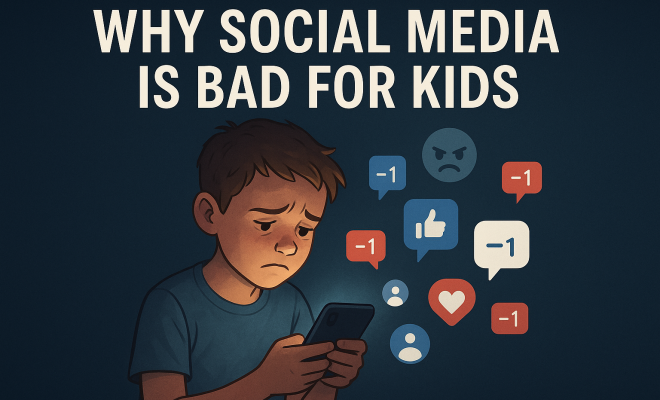
Why Social Media Is Bad for Kids
“`json
{
“title”: “This Troubling Trend Among Kids Is Quietly Fueling a Mental Health Crisis”,
“content”: “
It’s an almost universal scene in modern households: a child, head bowed, fingers flying across a smartphone or tablet screen, utterly absorbed in the digital world. For many parents, this sight is a daily reality, often met with a mix of resignation, relief, and perhaps, a nagging sense of unease. We know, instinctively, that something isn’t quite right with the sheer volume of screen time our kids are clocking. But do we truly grasp the profound, often insidious, social media effects on kids?
\n\n
A landmark study, recently published in the prestigious Journal of Adolescent Health, pulls back the curtain on this growing concern, revealing a picture far more disturbing than many of us might have imagined. The research isn’t just hypothesizing; it’s presenting concrete data that links extensive social media use to a significant spike in mental health issues among teenagers. Specifically, the study found that adolescents who spend more than three hours a day on these platforms are markedly more susceptible to developing symptoms of depression and anxiety. This isn’t just about feeling a bit down or stressed; it’s about a quantifiable increase in serious psychological distress, a trend that should give every parent pause.
\n\n
The implications of this research are, frankly, sobering. It’s not just about the platforms themselves, but the intricate web of algorithms, social pressures, and digital interactions that conspire to shape our children’s developing minds. For years, we’ve heard anecdotal evidence, seen our kids struggle, and felt a quiet dread about the unknowns of this digital frontier. Now, we have powerful scientific backing that validates those fears and demands a deeper look into the specific mechanisms at play.
\n\n
The Three-Hour Tipping Point: A Critical Threshold
\n\n
Let’s zoom in on that critical finding: the three-hour daily threshold. It’s a number that feels both surprisingly low and terrifyingly achievable for many young people. Think about it: three hours isn’t an all-day binge. It’s an hour before school, another during lunch and breaks, and an hour after homework. Or maybe it’s just a couple of longer sessions in the evening. For a generation that has grown up with screens in their hands, hitting this mark is effortless.
\n\n
The Journal of Adolescent Health study didn’t just pluck this number out of thin air; it emerged from rigorous analysis of data correlating self-reported social media usage with mental health assessments. What this suggests is a kind of dose-response relationship: the more time spent, the higher the risk. This isn’t to say that any social media use is inherently bad – clearly, there are benefits to connection and information access. But there’s a point, a tipping point, beyond which the potential harms begin to outweigh any perceived advantages. It’s like anything else: a little bit of sugar is fine, but too much leads to health problems. For social media, that line appears to be drawn at roughly three hours a day for teenagers.
\n\n
This threshold demands that we, as parents and educators, become far more intentional about monitoring and guiding our children’s screen time. It’s no longer enough to just say, “Don’t spend all day on your phone.” We need concrete strategies and clear boundaries, understanding that exceeding this three-hour mark isn’t just a casual habit; it’s a measurable risk factor for their mental well-being. This is where the conversation shifts from general concern to specific, actionable intervention.
\n\n
Algorithms: The Unseen Architects of Distress
\n\n
One of the most insidious aspects highlighted by the study isn’t just the sheer volume of time spent, but what children are actually encountering during that time. The research points a firm finger at the algorithms that power these platforms. These aren’t neutral codes; they are sophisticated systems designed to maximize engagement, which often translates into amplifying content that triggers strong emotional responses – and unfortunately, those responses are frequently negative.
\n\n
Consider how an algorithm works: it learns what you click on, what you watch, what you react to. If a child, perhaps feeling a bit insecure, lingers on posts comparing body types, or reads comments about social exclusion, the algorithm takes note. It then dutifully serves up more of that content, creating a feedback loop. This isn’t about malicious intent from the platform creators, necessarily, but an inherent design flaw where engagement, not well-being, is the primary metric. The result? A digital echo chamber that can amplify anxieties, feed insecurities, and reinforce negative self-perceptions, all without the child even realizing they’re being subtly manipulated. (See: Journal of Adolescent Health study.)
\n\n
These algorithms are relentless. They don’t take breaks, they don’t get tired, and they don’t have empathy. They are constantly learning and adapting, becoming ever more effective at keeping our children hooked and, in doing so, often exposing them to a steady diet of content that can be detrimental to their developing psyches. Understanding this mechanic is crucial for parents, as it helps us explain why our kids might feel worse after being online, even if they can’t articulate it themselves. It’s not just what they seek out; it’s what the platform serves up.
\n\n
The Relentless Scourge of Cyberbullying
\n\n
If algorithms are the unseen architects, cyberbullying is the overt and often brutal assault on a child’s self-worth. The Journal of Adolescent Health study rightly identifies the prevalence of cyberbullying as a major contributor to psychological distress among young users. Unlike traditional bullying, which often ends when school lets out, cyberbullying is 24/7. It invades personal spaces, follows children home, and can proliferate with terrifying speed, reaching a vast audience instantly. For more context, see alarming truth about toddler screen time.
\n\n
The nature of online interaction often emboldens bullies. Anonymity, or at least perceived anonymity, can lead to a lack of empathy and a willingness to say things that would never be uttered face-to-face. A cruel comment, a humiliating photo, a false rumor – once posted, it can be incredibly difficult to erase. The emotional fallout for the victim can be devastating, leading to feelings of shame, isolation, fear, and a profound sense of helplessness. Imagine being a teenager, already navigating the turbulent waters of identity and social acceptance, only to find yourself the target of a relentless online campaign. The constant threat, the public humiliation, and the feeling of having no escape can profoundly impact mental health, driving up rates of anxiety, depression, and even suicidal ideation.
\n\n
Parents often feel powerless against cyberbullying because it happens in a realm they don’t fully understand or control. It demands a proactive approach: open communication with children, setting clear expectations about online behavior, and understanding how to report and block abuse. But even with these measures, the sheer volume and speed of online interactions make it a perpetual challenge, contributing significantly to the negative social media effects on kids.
\n\n
Distorted Reflections: Impact on Self-Perception
\n\n
Perhaps one of the most insidious social media effects on kids is the way these platforms warp their self-perception. The study points to this as a key factor in psychological distress, and it’s easy to see why. Social media often presents a curated, idealized version of reality. Every feed is a highlight reel: perfect bodies, lavish vacations, thriving social lives, effortless successes. For a developing adolescent mind, still figuring out who they are and where they fit in, this constant barrage of perfection can be incredibly damaging.
\n\n
Children are constantly comparing themselves to these often-unrealistic images and narratives. They see their peers (or even strangers) seemingly living flawless lives, and then they look at their own, imperfect reality. This can breed intense feelings of inadequacy, jealousy, and self-doubt. Girls might obsess over their appearance, comparing themselves to heavily filtered and edited images, leading to body image issues and disordered eating. Boys might feel pressure to project an image of effortless cool or athletic prowess, leading to anxiety and a sense of not being “man enough.”
\n\n
It’s a relentless game of comparison that no one can win. The pursuit of likes, followers, and validation becomes a proxy for self-worth, and when those metrics fall short, the psychological toll can be immense. This constant striving for an unattainable ideal erodes authentic self-esteem and replaces it with a fragile, externally validated identity. It’s a fundamental challenge to healthy identity formation, making it harder for kids to appreciate their unique qualities and accept their imperfections.
\n\n
The Erosion of Real-World Connection
\n\n
While social media promises connection, it often delivers a shallower, more superficial version, ironically eroding the very real-world connections that are vital for healthy development. When kids spend hours scrolling through feeds, they’re not engaging in face-to-face conversations, participating in group activities, or developing critical social skills that come from direct interaction. The study, while not explicitly detailing this, implicitly supports this idea by linking high social media use to increased anxiety and depression – conditions often exacerbated by isolation and a lack of genuine support.
\n\n
Real-world interactions teach empathy, conflict resolution, and nuanced communication. They build resilience and provide a sense of belonging that digital ‘likes’ simply cannot replicate. When these vital experiences are replaced by online interactions, children can struggle to form deep, meaningful friendships. They might become adept at crafting online personas but lack the confidence or skills to navigate the complexities of real human relationships. This can lead to feelings of loneliness even while being ‘connected’ to hundreds of online friends. The paradox is that in a hyper-connected world, many young people feel more isolated than ever, a powerful example of the negative social media effects on kids. (See: CDC Youth Risk Behavior Survey.)
\n\n
Furthermore, the fear of missing out (FOMO) perpetuated by social media can make kids feel anxious about not being invited to events they see online, or about not having a social life as vibrant as their peers’. This constant comparison and the perceived lack of inclusion can be deeply distressing, pushing them further into a cycle of anxiety and withdrawal, even as they cling to the very platforms causing their distress.
\n\n
Disrupted Sleep and Cognitive Impact
\n\n
Beyond the direct psychological impacts, social media often acts as a significant disruptor of fundamental biological processes essential for adolescent health: sleep. The blue light emitted by screens, particularly when used close to bedtime, interferes with the production of melatonin, the hormone that regulates sleep cycles. This isn’t just about feeling tired; chronic sleep deprivation in adolescents has profound effects on mood regulation, cognitive function, academic performance, and overall mental resilience. For more context, see kids in crisis face more emergency holds.
\n\n
The allure of social media also means that many teenagers are staying up late, scrolling through feeds, responding to messages, or feeling compelled to check for updates. This ‘always-on’ culture means their brains never truly switch off and prepare for rest. The result is a generation of sleep-deprived young people who are then more vulnerable to anxiety and depression, less able to concentrate in school, and more prone to emotional outbursts. The constant stimulation and the fear of missing out contribute to a cycle where sleep is sacrificed for digital engagement, creating a detrimental feedback loop that negatively impacts both physical and mental health.
\n\n
Moreover, the constant context-switching inherent in social media use – jumping from one notification to another, one app to the next – can affect attention spans and deep concentration. While research is ongoing, there’s growing concern that this ‘snackable’ content consumption might be rewiring young brains, making it harder for them to engage with longer, more complex tasks requiring sustained focus. This cognitive impact further compounds the challenges faced by children in an already demanding academic and social environment.
\n\n
Parental Controls and Digital Literacy: Tools for Mitigation
\n\n
Understanding the severe social media effects on kids is one thing; doing something about it is another. This is where practical solutions come into play, offering a glimmer of hope amidst the troubling data. Parental control apps, for instance, are evolving rapidly, offering sophisticated tools that allow parents to monitor screen time, block certain apps, filter content, and even schedule ‘downtime’ for devices. Tools like Qustodio, Bark, or OurPact aren’t about spying, but about setting healthy boundaries and protecting children from harmful content and excessive use. They provide data and insights that can help parents understand their child’s digital habits and intervene constructively.
\n\n
However, technology alone isn’t a silver bullet. Digital literacy is equally, if not more, crucial. This involves actively teaching children how to navigate the online world responsibly. It’s about empowering them to critically evaluate content, understand the permanence of their digital footprint, recognize the signs of cyberbullying, and cultivate a healthy skepticism towards idealized online personas. Schools and parents both have a role to play in fostering these skills, moving beyond simply restricting access to teaching thoughtful engagement.
\n\n
This means having ongoing, open conversations with kids about their online experiences, asking about what they see and how it makes them feel, and encouraging them to come to you with any concerns. It’s about co-creating a family media plan that everyone agrees to, rather than simply imposing rules. The goal is to equip children with the discernment and resilience they need to thrive in a digital world, rather than leaving them vulnerable to its pitfalls.
\n\n
The Broader Societal Response: Beyond the Individual Home
\n\n
While individual parental action is vital, the pervasive nature of social media effects on kids demands a broader societal response. This isn’t just a family problem; it’s a public health crisis that requires coordinated efforts from tech companies, policymakers, educators, and mental health professionals. We’re seeing growing calls for tech companies to redesign their platforms with child well-being in mind, moving away from engagement-at-all-costs models. For more context, see AI parenting revolution.
\n\n
This could include fundamental changes to algorithms to de-prioritize negative or inflammatory content, implementing stricter age verification processes, and providing more robust tools for reporting abuse and setting healthy boundaries. The recent discussions around data privacy and child safety online are steps in the right direction, but much more needs to be done to hold these powerful corporations accountable for the impact their products have on young minds. For example, some jurisdictions are exploring legislation that would ban certain manipulative design features or even restrict social media access for younger teens, signaling a shift in how society views these platforms.
\n\n
Simultaneously, there’s a growing need for greater investment in mental health services tailored for young people. If social media is contributing to a surge in anxiety and depression, then our healthcare systems must be equipped to handle this increased demand. This includes making therapy more accessible, destigmatizing mental health challenges, and integrating digital wellness into broader public health initiatives. The issue is too large and complex to be solved in isolation; it requires a collective commitment to safeguarding the next generation.
\n\n
Moving Forward: A Call to Action for Parents
\n\n
The findings of the Journal of Adolescent Health study are not just statistics; they are a stark reminder of the profound and often damaging social media effects on kids. This isn’t about demonizing technology, which has its benefits, but about acknowledging and mitigating its very real risks. For parents, this knowledge should serve as a powerful call to action.
\n\n
It means being more vigilant about screen time, especially that three-hour daily threshold. It means engaging in ongoing, honest conversations with your children about their online lives, fostering an environment where they feel safe to share their struggles and concerns. It means exploring and utilizing the parental control tools available to you, not as a punitive measure, but as a protective one. And crucially, it means modeling healthy digital habits ourselves, putting down our own phones and engaging in real-world interactions that demonstrate the value of presence and connection.
\n\n
The digital landscape our children inhabit is constantly evolving, presenting new challenges faster than we can often keep up. But by staying informed, setting clear boundaries, and prioritizing their mental well-being above all else, we can help them navigate this complex world with greater resilience, ensuring that their online experiences don’t come at the cost of their happiness and health.
”
}
“`
Trending Now
Frequently Asked Questions
Why is social media bad for kids?
Social media can negatively impact kids by contributing to mental health issues such as depression and anxiety. Studies show that adolescents spending more than three hours daily on these platforms are significantly more likely to experience serious psychological distress.
What are the effects of social media on children's mental health?
The effects of social media on children's mental health include increased risks of anxiety and depression. Research indicates that prolonged exposure to these platforms can lead to serious psychological challenges, particularly in teenagers.
How much time on social media is too much for kids?
Research suggests that spending more than three hours a day on social media is a critical threshold that can lead to a higher likelihood of developing mental health issues among adolescents.
What are the signs of social media addiction in children?
Signs of social media addiction in children include excessive screen time, withdrawal from real-life interactions, anxiety when not online, and a decline in academic performance. Parents should monitor these behaviors closely.
What can parents do to limit social media use?
Parents can limit social media use by setting clear screen time rules, encouraging alternative activities, fostering open discussions about online experiences, and actively engaging with their children about the content they consume.
Agree or disagree? Drop a comment and tell us what you think.