Stunning Report: One-Third of Young People Now Turn to AI for Mental Health – And They’re Keeping It Secret
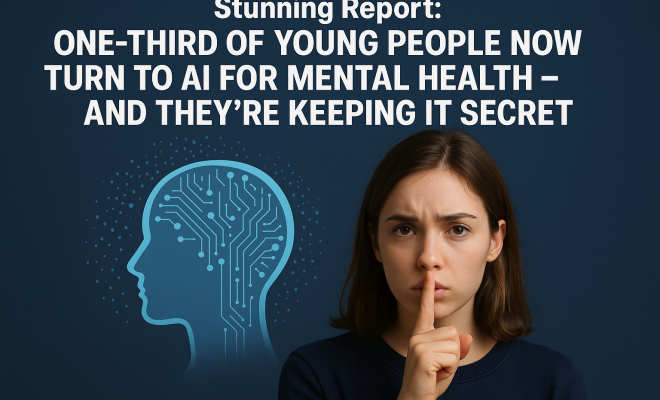
It’s a quiet revolution happening right under our noses, and for many parents, it might come as a genuine shock. A groundbreaking new report from Jack.org, released on October 9, 2026, just ahead of World Mental Health Day, has uncovered a truly remarkable trend: a full one-third of young people surveyed are now regularly using generative AI (GenAI) for mental health support. Think about that for a moment. One in three. But here’s the kicker, the part that truly makes you lean in: nearly half of these young users are keeping their reliance on AI mental health support for young people entirely private.
This isn’t just a fleeting tech fad; it’s a significant shift in how an entire generation is attempting to cope with the complex landscape of their emotional well-being. We’re talking about adolescents and young adults grappling with everything from academic stress and social anxiety to more profound struggles, and rather than automatically turning to traditional channels, they’re whispering their worries into the digital ether. Why? The reasons are multifaceted, deeply rooted in the current state of mental healthcare, and frankly, quite understandable when you consider the pervasive barriers that have long plagued our systems.
The Silent Shift: Why Young People Are Turning to AI
Let’s be honest, accessing traditional mental health care can feel like navigating an obstacle course, especially for young people. The Jack.org research points directly to these systemic hurdles as primary drivers behind the surge in AI adoption. First up, there’s the sheer cost. Therapy, even with insurance, can be prohibitively expensive. For a teenager or a young adult just starting out, the idea of footing a bill for weekly sessions can be a non-starter. This financial barrier alone pushes countless individuals to seek free or low-cost alternatives, and AI chatbots fit that bill perfectly.
Then there are the infamous wait times. In many regions, getting an appointment with a qualified therapist can take weeks, even months. When you’re in distress, waiting that long can feel like an eternity, exacerbating feelings of helplessness. Imagine a young person experiencing acute anxiety or depression; the immediate availability of an AI tool, 24/7, with no appointment necessary, becomes incredibly appealing. It’s instant access to what feels like a listening ear, a stark contrast to the often sluggish pace of human-led services. This immediacy, combined with the anonymity, creates a powerful draw for those who feel urgent needs.
Breaking Down Barriers: Cost, Wait Times, and the Stigma Factor
Beyond cost and availability, the elephant in the room for mental health has always been stigma. Despite growing awareness campaigns, there’s still a pervasive reluctance for many young people to openly admit they’re struggling, let alone seek professional help. The fear of being judged, labeled, or seen as ‘weak’ can be crippling. This is where AI mental health support for young people truly shines as an alternative, at least in their eyes.
When you confide in an AI chatbot, there’s no judgment. There’s no fear of awkward conversations with parents, no need to explain your feelings to a school counselor, and no concern that your peers might find out. It’s a completely private, anonymous interaction where you can articulate your deepest fears and anxieties without filters. This level of privacy is clearly a huge draw, evidenced by the nearly half of young users who are keeping their AI interactions under wraps. For a generation that grew up online, where privacy and control over their digital footprint are paramount, this anonymous outlet feels safe and empowering.
The Promise of AI: Initial Reactions and Perceived Helpfulness
So, what’s the actual user experience like? Are these young people finding genuine relief and guidance from their digital confidantes? A related study published in JAMA offers some fascinating insights. It found that a remarkable 93% of users rated the guidance they received from AI as helpful. That’s an overwhelmingly positive response, suggesting that for many, these digital interactions are providing some form of comfort, advice, or a sense of being heard.
This perceived helpfulness likely stems from several factors. AI chatbots can offer immediate, non-judgmental responses. They can provide structured exercises, coping strategies, or even simply a space to vent without interruption. For a young person grappling with overwhelming emotions, the ability to articulate those feelings and receive an instant, albeit algorithmic, response can be profoundly validating. It can feel like a neutral sounding board, a place to process thoughts without the added pressure of human interaction or the fear of saying the ‘wrong’ thing.
Expert Perspectives: Rachel Katz and the Ethical Minefield
While user satisfaction rates are high, the emergence of AI as a mental health tool is, understandably, raising significant questions among experts. Rachel Katz, a prominent voice in the mental health community, is one of many who are questioning the ethical implications and the true efficacy of AI when it comes to something as nuanced and deeply human as psychotherapy. Her concerns are valid and crucial to this ongoing conversation.
For one, there’s the issue of compounding stigma. If young people are increasingly turning to AI because they feel unable to seek human help due to stigma, is AI inadvertently reinforcing that stigma by becoming a ‘secret’ alternative? Are we, as a society, creating a scenario where young people feel even less comfortable discussing their mental health openly, because they have a private digital escape route? This is a troubling thought, suggesting that while AI might address immediate access issues, it could inadvertently perpetuate the very social barriers we’re trying to dismantle. (See: CDC on mental health resources.)
The Quality Conundrum: Can AI Truly Provide Psychotherapy?
Beyond stigma, Katz and others are deeply concerned about the quality of care. Can an algorithm, no matter how sophisticated, truly replicate the empathy, intuition, and nuanced understanding of a trained human therapist? Psychotherapy isn’t just about dispensing advice; it’s about building a therapeutic relationship, understanding complex emotional dynamics, recognizing subtle cues, and adapting interventions based on a deep understanding of human experience. AI, by its very nature, operates on data and algorithms. It can process information and generate responses, but can it genuinely ‘understand’ grief, trauma, or existential angst in the way a human can? For more context, see The AI Parenting Revolution: Are We Trading Connection For Convenience?.
There’s a significant difference between receiving helpful information or coping strategies and undergoing true therapeutic work that addresses the root causes of distress. While AI can offer support, it lacks the capacity for genuine human connection, which is often a critical component of healing and growth. There are also concerns about the potential for AI to misinterpret, misdiagnose (even if unintentionally), or provide generic advice that isn’t tailored to a young person’s specific, complex needs, potentially leading to stagnation or even harm. This quality conundrum is at the heart of the debate surrounding AI mental health support for young people.
The Broader Implications: A Generation in Crisis and Digital Therapists
This shift towards “digital therapists” isn’t happening in a vacuum. It’s unfolding against the backdrop of a well-documented global youth mental health crisis. Rates of anxiety, depression, and other mental health challenges among adolescents and young adults have been on a worrying upward trajectory for years. Factors like social media pressures, academic stress, economic uncertainty, and global events have all contributed to a generation that often feels overwhelmed and ill-equipped to cope.
In this context, the appeal of AI becomes even clearer. It’s a readily available tool in a landscape where traditional resources are stretched thin and often inaccessible. Parents and mental health professionals are now engaged in an emotionally charged debate, weighing the undeniable benefits of immediate, anonymous access against the profound risks of relying on technology for something so fundamentally human. Are we witnessing the evolution of mental healthcare, or are we inadvertently creating a new set of problems by substituting human connection with algorithmic interaction?
Monetization Opportunities: Navigating the New Landscape
Naturally, where there’s a significant trend and unmet need, there are also burgeoning commercial opportunities. The rise of AI mental health support for young people is creating a vibrant new market for various services and products. For instance, online therapy platforms that connect users with human therapists are seeing high-CPC (cost-per-click) ad opportunities. These platforms can position themselves as the ‘human alternative’ or a step up from AI, offering a bridge for those who have explored AI but now seek deeper, professional human connection.
Similarly, human-led mental health apps that offer guided meditations, journaling prompts, or peer support groups, often overseen by professionals, are also well-positioned. These apps can leverage the AI trend by offering a more personalized, human-curated experience, perhaps even using AI internally to triage needs but always funneling users towards human interaction or professionally vetted content. The key for these platforms will be to differentiate themselves by emphasizing the unique value of human expertise and connection that AI, for all its advancements, simply cannot replicate.
Beyond Therapy: Education, Well-being, and Parental Oversight
The opportunities extend beyond direct therapy. There’s a growing need for educational courses and resources focused on digital well-being. Parents, educators, and young people themselves need guidance on how to use AI tools responsibly, understand their limitations, and recognize when human intervention is truly necessary. Courses on media literacy, critical thinking about online information, and fostering healthy digital habits are becoming increasingly vital. This is about empowering individuals to make informed choices about their mental health resources in a rapidly evolving technological landscape.
Finally, and perhaps most critically for parents, there are significant opportunities in cybersecurity solutions for parental monitoring. If nearly half of young people are keeping their AI usage private, parents are often left in the dark about how their children are seeking support. Tools that offer responsible, ethical monitoring options, allowing parents to understand their child’s digital interactions and intervene when necessary, could become essential. This isn’t about surveillance, but about providing parents with the insights they need to ensure their children are getting appropriate care, whether from AI or human professionals, and to identify potential risks before they escalate.
The Role of Data Privacy and Security in AI Mental Health
As young people increasingly turn to AI for sensitive mental health discussions, the issues of data privacy and security become paramount. Unlike traditional therapy, where strict confidentiality laws protect patient information, the regulatory landscape for AI mental health platforms is still evolving. What happens to the intensely personal data shared with an AI chatbot? Is it anonymized? Is it used to train the AI, potentially exposing vulnerabilities? These are not trivial questions.
Parents and young users need to be acutely aware of the terms of service and privacy policies of these AI tools. Many free or low-cost AI services might, by design, collect and analyze user data to improve their algorithms or for targeted advertising. This creates a potential conflict of interest: a tool designed to offer support might also be subtly profiting from a young person’s emotional vulnerability. The risk of data breaches, though rare, also looms large. A breach of highly sensitive mental health conversations could have devastating consequences for a young person’s reputation, trust, and overall well-being. Transparent data handling practices, robust encryption, and clear consent mechanisms are absolutely essential for any AI mental health platform to be considered truly ethical and safe. (See: NIMH statistics on mental illness.)
Ethical Design Principles for AI Mental Health Tools
Given the sensitive nature of mental health, developing AI tools in this space demands a strong ethical framework. It’s not enough for AI to be “helpful”; it needs to be responsibly designed. Key ethical principles should guide the creation and deployment of AI mental health support for young people.
- Transparency: Users should always know they are interacting with an AI, not a human. The limitations of the AI should be clearly communicated.
- Safety and Harm Prevention: AI must be designed to recognize and appropriately respond to crisis situations, such as suicidal ideation or self-harm, by directing users to human emergency services. It should never offer harmful or inappropriate advice.
- Bias Mitigation: AI models are trained on data, and if that data contains biases (e.g., against certain demographics or mental health conditions), the AI could perpetuate or even amplify those biases in its responses. Developers must actively work to ensure fairness and inclusivity.
- Privacy by Design: Data privacy and security should be baked into the core architecture of the AI system, not an afterthought. This includes anonymization, encryption, and strict access controls.
- Human Oversight and Intervention: AI should function as a supportive tool, not a replacement for human care. There should be clear pathways for users to transition to human support when needed, and human professionals should be involved in monitoring and refining AI performance.
- Age Appropriateness: AI content and interaction styles should be tailored to the developmental stage and cognitive abilities of young users, avoiding complex jargon or overly simplistic responses for complex issues.
Adhering to these principles is crucial for building trust and ensuring that AI mental health support truly serves the best interests of young people. For more context, see Shocking: Kids in Crisis Face More Emergency Holds and Restraints — What Every Parent Needs to Know Now.
The Spectrum of AI Mental Health Interventions: Beyond Chatbots
While chatbots are currently a prominent form of AI mental health support for young people, the landscape is much broader and rapidly evolving. It’s important to recognize the diverse ways AI is being integrated:
- AI-Powered Wearables: Devices that monitor physiological indicators like heart rate variability, sleep patterns, and activity levels can use AI to detect subtle shifts that might indicate rising stress or anxiety, prompting users to engage in mindfulness exercises or seek support.
- Virtual Reality (VR) Therapy: AI can power immersive VR environments designed for exposure therapy for phobias, social skills training for anxiety, or relaxation techniques, providing a controlled and personalized therapeutic space.
- Gamified Mental Health Apps: Many apps now use AI to personalize game difficulty, provide adaptive coping strategies, or offer motivational feedback, making mental health interventions more engaging and accessible for young people.
- AI-Assisted Diagnostics: While not direct therapy, AI is being developed to help clinicians analyze language patterns, facial expressions, or even social media activity (with consent) to identify mental health risks earlier, allowing for timely human intervention.
- Personalized Content Curation: AI can recommend specific articles, videos, or exercises tailored to a young person’s expressed needs and emotional state, acting like a highly personalized digital librarian for mental well-being resources.
Understanding this spectrum helps us see that AI’s role isn’t just about conversation; it’s about creating a more comprehensive, personalized, and accessible ecosystem of support, with chatbots being just one facet.
Comparative Effectiveness: AI vs. Human Therapy vs. Blended Care
The core question for many remains: how does AI stack up against human therapy? And what about a hybrid approach? Research into comparative effectiveness is still in its early stages, but some initial findings and hypotheses are emerging:
- AI for Initial Support & Psychoeducation: AI excels at providing immediate, judgment-free listening, basic psychoeducation (explaining symptoms, coping mechanisms), and structured exercises. For mild to moderate stress, anxiety, or as a first step, it can be highly effective.
- Human Therapy for Complex Issues: For deep-seated trauma, complex mental health conditions (e.g., severe depression, eating disorders, psychosis), or situations requiring nuanced relational work, human therapy remains the gold standard. The therapeutic alliance, empathy, and ability to adapt to unforeseen complexities are uniquely human.
- Blended Care as the Future: Many experts believe the most promising path lies in blended care models. Imagine a scenario where AI handles initial intake, provides daily check-ins, offers coping skills practice, and monitors progress, while a human therapist focuses on deeper therapeutic work during scheduled sessions. The AI could provide data to the therapist, allowing for more efficient and informed sessions. This approach leverages the strengths of both, maximizing accessibility and depth of care.
It’s not an “either/or” situation; it’s about finding the optimal integration that serves young people best, recognizing that different needs require different levels and types of support.
The Road Ahead: A Call for Balance and Informed Choices
The Jack.org report has thrown a bright spotlight on a quiet, yet profound, transformation in how young people are seeking mental health support. The statistics are undeniable: AI mental health support for young people is here, it’s being used widely, and often, it’s a secret. This isn’t a phenomenon we can ignore or simply dismiss. It demands our attention, our research, and our thoughtful engagement.
As parents, educators, and mental health professionals, our challenge is to move beyond initial reactions – whether they be fear or unbridled enthusiasm – and instead, cultivate a nuanced understanding. How can we harness the accessibility and anonymity that makes AI so appealing, while simultaneously safeguarding against its limitations? How do we ensure that young people are making informed choices, understanding that while AI can be a helpful tool for initial support or coping strategies, it is not a substitute for the deep, empathetic, and often challenging work of human-led therapy when complex issues arise? The conversation around AI mental health support for young people isn’t just about technology; it’s about the very future of how we care for the emotional well-being of our next generation. And that, frankly, is a conversation we can’t afford to get wrong.
Frequently Asked Questions About AI Mental Health Support for Young People
The rise of AI in mental health brings up a lot of questions for parents, young people, and professionals. Here are some of the most common ones: (See: WHO on mental health response.)
Q1: Is AI mental health support safe for my child?
A1: It depends heavily on the specific AI tool and how it’s used. Reputable AI mental health apps often have safeguards, like recognizing crisis language and directing users to emergency services. However, AI lacks human empathy and judgment, so it shouldn’t be the sole source of support for serious issues. It’s safest when used as a supplemental tool for coping strategies or initial venting, with parental awareness and oversight, and alongside professional human care when needed.
Q2: Can AI diagnose mental health conditions?
A2: No. While AI can analyze patterns in language and behavior, it cannot provide a clinical diagnosis. Diagnosing mental health conditions requires a trained human professional who can conduct comprehensive assessments, understand nuanced contexts, and apply clinical judgment. AI can sometimes help identify potential symptoms or risk factors, but any diagnostic information from an AI should be viewed with extreme caution and always verified by a human expert.
Q3: What are the biggest risks of young people using AI for mental health?
A3: There are several key risks. First, AI can’t replace the deep connection and nuanced understanding of a human therapist, potentially leading to inadequate care for complex issues. Second, there are significant privacy concerns; personal data shared with AI might not be as protected as with human therapy. Third, AI could potentially provide inaccurate or unhelpful advice, or even exacerbate feelings of isolation if young people retreat further into digital interactions instead of seeking human connection. Finally, there’s the risk of reinforcing stigma if young people feel they need to hide their struggles with AI rather than talking openly with trusted adults.
Q4: How can I, as a parent, know if my child is using AI for mental health support?
A4: Since many young people keep this private, it can be challenging. Open communication is key. Start a conversation about digital well-being generally, not just about AI. Ask about their online habits and what tools they use to cope with stress. Look for unusual app usage, or changes in their online behavior. Ethical parental monitoring tools, discussed earlier, might offer some insight, but always prioritize building a trusting relationship where your child feels comfortable sharing their experiences, digital or otherwise.
Q5: When should a young person transition from AI support to human therapy?
A5: A young person should consider human therapy if their symptoms are worsening, they feel overwhelmed, the AI isn’t providing sufficient relief, they’re experiencing suicidal thoughts or self-harm urges, or if their daily functioning (school, social life, sleep) is significantly impaired. AI can be a good starting point or a supplemental tool, but persistent or severe mental health challenges always warrant professional human intervention.
Q6: Are there any regulations for AI mental health tools for young people?
A6: The regulatory landscape is still playing catch-up. Unlike medical devices or pharmaceutical drugs, AI mental health apps often fall into a grey area. Some regions are beginning to develop guidelines, especially concerning data privacy (like GDPR in Europe or state-specific laws in the US) and consumer protection. However, comprehensive, specific regulations for the efficacy and safety of AI as a mental health intervention are still evolving globally. This is why user discretion and informed choices are so important.
Q7: Can AI tools help prevent mental health crises?
A7: Potentially, yes. By offering immediate access to coping strategies, mindfulness exercises, and a space to vent, AI can help young people manage stress and anxiety before it escalates. Some AI tools are designed to monitor emotional patterns and provide proactive interventions or nudges. However, they are not a foolproof prevention method and cannot replace early intervention by human professionals for those at high risk.
Trending Now
- this guide on gaming in the classroom as a learning tool, not a distraction
- this guide on the ai parenting revolution: are we trading connection for convenience?
- this guide on shocking: kids in crisis face more emergency holds and restraints — what every parent needs to know now
- Urgent: New Study Reveals Alarming Truth About Toddler Screen Time — You Won’t Believe What It Does to Their Brains
Frequently Asked Questions
Why are young people using AI for mental health support?
Young people are turning to AI for mental health support primarily due to barriers in accessing traditional care, such as high costs and long wait times for appointments. Generative AI offers a free or low-cost alternative, making it an attractive option for those struggling with emotional issues.
What percentage of young people are using AI for mental health?
According to a report from Jack.org, one-third of young people surveyed are regularly using generative AI for mental health support. This trend highlights a significant shift in how this generation approaches mental wellness.
Are young people keeping their use of AI for mental health a secret?
Yes, nearly half of the young users of AI for mental health support are keeping their reliance on these tools private. This secrecy may stem from societal stigma surrounding mental health and an overall reluctance to discuss their struggles openly.
What are the main barriers to traditional mental health care for young people?
The main barriers include the high cost of therapy, even with insurance, and the long wait times for appointments. These challenges discourage many young individuals from seeking help through conventional mental health services.
How is AI changing the landscape of mental health support for youth?
AI is revolutionizing mental health support for youth by providing accessible, immediate assistance that circumvents traditional barriers. This shift allows young people to address their emotional well-being more freely and privately, marking a significant change in mental health care approaches.
What did we miss? Let us know in the comments and join the conversation.