Why a CEO’s Bold Claim About Indian Parenting Norms Is Dividing a Nation
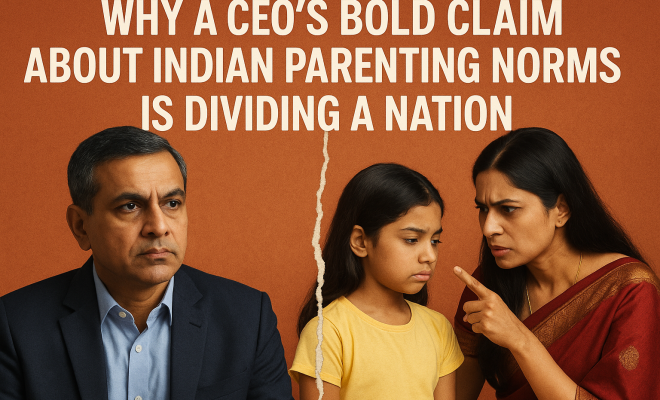
In a country as culturally rich and historically deep as India, certain traditions are held with an almost sacred reverence. Among these, the concept of filial piety and the veneration of parents often stand supreme. For generations, the idea that parents are akin to deities – deserving of unquestioning obedience and boundless respect – has been a bedrock of Indian family life. So, when a prominent figure publicly challenges this fundamental belief, it’s bound to send ripples, if not shockwaves, through society. That’s precisely what happened on September 28, 2026, when Jasveer Singh, the co-founder and CEO of the Gurgaon-based dating app Knot Dating, took to X (formerly Twitter) and dropped a veritable bombshell: “Parents are not God.”
Singh’s assertion, delivered with the characteristic directness of a tech entrepreneur, wasn’t just a casual observation. It was a pointed critique of deeply ingrained Indian parenting norms, arguing that parenthood, at its core, is a biological function that confers responsibility, not automatic wisdom, intelligence, or moral superiority. He contended that simply giving birth doesn’t grant parents unlimited authority over their offspring, nor does it obligate children to lifelong, unquestioning obedience. This isn’t just a discussion; it’s a full-blown societal debate, forcing many to re-evaluate what they’ve always understood about family, authority, and the evolving relationship between generations in India.
The Unspoken Contract: “Parents Are God”
To truly grasp the magnitude of Singh’s statement, one must first understand the prevailing cultural ethos it challenges. The phrase “Ma Baap Bhagwan Hote Hain” (Parents are God) isn’t just a saying in India; it’s a foundational principle taught from childhood. It encapsulates an entire philosophy of life where parental sacrifices are seen as immeasurable, their wisdom as infallible, and their desires as paramount. This belief system is woven into the very fabric of Indian society, influencing everything from career choices and marriage partners to daily decisions and financial obligations.
For centuries, this unspoken contract has largely ensured social cohesion and stability. Children are expected to care for their elderly parents, to seek their blessings, and often, to prioritize their parents’ wishes above their own. This isn’t necessarily viewed as a burden, but rather as a dharma – a righteous duty. The narrative often presented is one of reciprocal love and respect, where parents dedicate their lives to their children, and children, in turn, honor that dedication. Deviation from this norm can often lead to social ostracization, familial discord, and profound guilt. It’s a powerful system, and one that many believe is essential for maintaining Indian cultural identity and family values.
Jasveer Singh’s Provocative Stance: Deconstructing Parenthood
Jasveer Singh’s post, however, cuts through this traditional narrative with a sharp, modern scalpel. His argument fundamentally redefines parenthood, stripping away the divine aura and repositioning it as a human endeavor with inherent responsibilities, rather than divine rights. “Parenthood is a biological process,” he asserted, highlighting that while it creates a profound bond and a duty of care, it doesn’t automatically imbue individuals with superior judgment or moral rectitude. This distinction is crucial.
He wasn’t denying the love or effort parents put in. Instead, he was questioning the automatic assumption of infallibility and unlimited authority that often accompanies the parental role in India. Singh’s perspective suggests that while respect is earned and deserved for good parenting, it shouldn’t be a default setting simply due to the act of procreation. This aligns with a growing global discourse that emphasizes individual autonomy and the importance of healthy, boundaries-based relationships, even within families. It’s a call for a more nuanced understanding of family dynamics, one that acknowledges parental sacrifice but also empowers children to forge their own paths and opinions without feeling shackled by an archaic sense of obligation.
Filial Piety vs. Individual Autonomy: A Generational Clash
The debate ignited by Singh is, at its heart, a generational clash between traditional Indian parenting norms and the aspirations of a younger, more globally connected populace. Historically, filial piety has been a cornerstone of many Asian cultures, including India. It emphasizes respect for elders, obedience, and the care of parents in their old age. This system has been praised for fostering strong family bonds and providing a built-in support network.
However, as India rapidly modernizes and its youth are exposed to diverse ideas through the internet and global media, the emphasis is shifting towards individual autonomy, personal freedom, and self-actualization. Young Indians are increasingly seeking to make their own choices regarding education, career, marriage, and lifestyle, often clashing with parental expectations rooted in tradition. Singh’s comments resonate deeply with many who feel stifled by the pressure to conform to parental wishes, even when those wishes conflict with their own well-being or aspirations. It gives voice to a silent struggle many have faced, feeling guilty for wanting to live a life that deviates from their parents’ script.
The Economic and Social Underpinnings of Traditional Indian Parenting Norms
It’s important to understand that traditional Indian parenting norms didn’t just emerge out of thin air; they are deeply intertwined with the country’s economic and social history. For centuries, India was predominantly an agrarian society where joint families were the norm. Children were an economic asset, contributing to farm labor, and providing security in old age when there were no formal pension systems or social safety nets. Parents invested heavily in their children, viewing them as an insurance policy for their later years. In this context, the expectation of lifelong obedience and care made logical sense.
Moreover, arranged marriages, often facilitated by parents, were a practical means of forging alliances, consolidating property, and ensuring social status. The individual’s choice was often secondary to the family’s collective good. Fast forward to today, and while some of these factors still hold sway in rural areas, urban India is vastly different. Nuclear families are becoming more common, children are often educated to pursue careers far from home, and there’s a growing middle class with disposable income and access to modern healthcare, somewhat reducing the absolute dependency of parents on their children for survival. Yet, the cultural expectations, the ‘parents are God’ philosophy, have often lagged behind these socio-economic shifts, creating tension. (See: understanding filial piety in cultures.)
The Role of Guilt and Obligation in Indian Families
One of the most powerful tools in maintaining traditional Indian parenting norms is the subtle, yet pervasive, use of guilt and obligation. Children are often reminded of the sacrifices their parents made – the sleepless nights, the financial struggles, the compromises in their own lives – as a means of ensuring compliance. This isn’t always malicious; often, it stems from a genuine belief that parents know best and that children owe them an eternal debt.
However, as Singh implies, this can become a heavy burden. Young adults often grapple with immense guilt if they choose a career path their parents disapprove of, marry someone outside their caste or community, or even simply move away for personal growth. The emotional blackmail, however unintentional, can be crippling, leading to mental health issues, strained relationships, and a deep sense of unfulfillment. Singh’s challenge isn’t just about disrespecting parents; it’s about advocating for a healthier, more equitable emotional landscape within families, where love and respect are freely given, not extracted through obligation.
Finding a Middle Ground: Respect Without Blind Obedience
The core of the debate isn’t about whether children should disrespect their parents. Few would argue for that. Instead, it’s about defining the nature of that respect. Can one respect their parents deeply, appreciate their sacrifices, and still maintain their individual agency? Can love exist without blind obedience? Many progressive thinkers, and indeed, many young Indians, believe the answer is a resounding yes.
The evolving perspective suggests that respect should be reciprocal. Parents, too, should respect their children’s autonomy, choices, and boundaries. This doesn’t diminish the parents’ role but rather transforms it from an authoritarian one to a more mentorship-based relationship. It fosters open communication, mutual understanding, and the ability for both generations to learn from each other. This middle ground seeks to preserve the warmth and closeness of Indian family life while shedding the patriarchal and sometimes suffocating aspects of traditional Indian parenting norms.
The Impact of Social Media on Challenging Traditional Norms
It’s no accident that this debate was sparked on X, a platform known for its ability to amplify voices and ignite rapid-fire discussions. Social media has become an invaluable tool for young Indians, and indeed, for marginalized voices across the globe, to challenge long-standing traditions and create a space for alternative viewpoints. In a society where directly confronting elders or challenging established norms might be difficult in person, platforms like X provide a degree of anonymity and a broader audience, allowing individuals to articulate their frustrations and find solidarity with others who share similar feelings.
Jasveer Singh, as a CEO and public figure, used his platform to initiate a conversation that many might have been having in hushed tones behind closed doors. His post gave legitimacy and visibility to a sentiment that was already bubbling under the surface for many. This isn’t just a fleeting Twitter trend; it’s a testament to how digital spaces are fundamentally altering the way societal norms are discussed, debated, and ultimately, reshaped in India.
Beyond the Headlines: What Does This Mean for the Future of Indian Families?
While Singh’s statement certainly stirred the pot, it’s crucial to look beyond the immediate controversy and consider its long-term implications for Indian parenting norms. This isn’t just a CEO’s opinion; it’s a symptom of a larger shift. As India continues its rapid development, with increasing urbanization, education, and exposure to global ideas, the traditional family structure and dynamics are inevitably going to evolve.
What we’re witnessing is a painful but necessary recalibration. It’s a move towards families built on mutual respect, understanding, and individual freedom, rather than strict hierarchy and obligation. This doesn’t mean the end of family values; rather, it’s an opportunity to redefine them in a way that is more inclusive, healthier, and sustainable for future generations. Parents may no longer be seen as ‘Gods,’ but they can still be revered as mentors, confidantes, and loving figures who guide rather than dictate. The challenge, of course, lies in navigating this transition with empathy and open dialogue on both sides, ensuring that while old norms are questioned, the essential bonds of family remain strong and adaptable.
Navigating the Nuances: The Spectrum of Indian Parenting
It’s important to remember that “Indian parenting norms” aren’t a monolith. While the “Parents are God” philosophy is widespread, the actual practice of parenting varies significantly across India’s diverse regions, religions, castes, and socio-economic strata. You’ll find a wide spectrum, from highly authoritarian households to surprisingly progressive ones, even within traditional frameworks. For example, some urban, educated families might adopt a more democratic approach, encouraging open discussion and individual decision-making, while still valuing respect for elders. On the other hand, certain rural or more conservative communities might adhere very strictly to hierarchical structures and parental dictates in all major life decisions.
The challenge arises when these differing expectations clash, particularly within intergenerational relationships or when young people from traditional backgrounds move to urban centers and encounter more liberal viewpoints. This diversity means that while Jasveer Singh’s statement resonates with many, it might feel alien or even disrespectful to others who genuinely believe in the sanctity of parental authority and find comfort and stability in those traditions. The conversation isn’t about eradicating tradition, but about understanding its varied manifestations and how they adapt to modern life.
The Mental Health Toll of Unquestioning Obedience
Beyond the cultural and economic factors, there’s a significant mental health dimension to the debate around Indian parenting norms. The constant pressure to conform, the fear of disappointing parents, and the heavy burden of guilt can have profound psychological consequences on young Indians. We’re seeing rising rates of anxiety, depression, and stress among youth who feel trapped between their personal aspirations and familial expectations. Many report feeling unable to express their true selves, pursue passions that aren’t deemed “acceptable,” or even choose partners they truly love, all to avoid parental disapproval and the societal shame that often accompanies it. (See: parenting styles and cultural impact.)
Therapists in India often report dealing with cases where parental interference in career, marriage, and personal life choices is a primary cause of distress. This isn’t to say Indian parents are intentionally harmful; often, their actions stem from a place of love and a desire for their children’s well-being, as they understand it. However, the outcome can be a generation struggling with identity crises, low self-esteem, and a diminished sense of agency. Singh’s statement, for many, was a validation of these internal struggles, suggesting that it’s okay to prioritize one’s mental well-being and autonomy, even if it means challenging long-held family tenets.
Expert Perspectives: Psychology Meets Culture
Psychologists and sociologists studying Indian family dynamics often highlight the concept of an “interdependent self” prevalent in collectivist cultures like India, as opposed to the “independent self” emphasized in Western cultures. In an interdependent self-concept, a person’s identity is deeply intertwined with their relationships and social roles, particularly within the family. This can explain why individual autonomy might be seen as less important than family harmony or obligation.
However, experts also point out that healthy interdependence requires mutual respect and boundaries, not absolute submission. Dr. Shreya Sharma, a Mumbai-based family therapist, notes, “The challenge for Indian families is to evolve from rigid hierarchy to a more flexible interdependence. This means parents nurturing their children’s independence while children still value and care for their elders. It’s about shifting from ‘control’ to ‘guidance’ and from ‘obligation’ to ‘choosing to care.'” This shift is difficult because it requires both generations to redefine their roles and expectations, a process often fraught with emotional pain and misunderstanding.
The Role of Gender in Indian Parenting Norms
The impact of traditional Indian parenting norms is also heavily gendered. Girls and young women often face even more stringent expectations regarding obedience, modesty, and conformity, especially concerning marriage and career choices. They might be pressured into early marriages, discouraged from pursuing higher education or careers far from home, and expected to prioritize their marital family over their personal ambitions. While boys also face pressure in career choices (often towards engineering or medicine), they typically have more freedom in other aspects of their lives and are often seen as the primary caregivers for elderly parents, carrying the weight of familial legacy.
Jasveer Singh’s challenge, therefore, resonates particularly strongly with young Indian women who often bear the brunt of patriarchal family structures. It empowers them to question the double standards and to advocate for their own rights to autonomy and self-determination, which is a significant step towards gender equality within Indian society.
Looking Ahead: Towards a More Empathetic Family Model
The ongoing dialogue spurred by statements like Singh’s signals a crucial evolutionary stage for Indian families. It’s not about abandoning parents or disrespecting elders, but about constructing a family model that is more empathetic, equitable, and sustainable for the 21st century. This future model likely involves:
- Reciprocal Respect: Children respect parental wisdom, and parents respect children’s autonomy.
- Open Communication: Encouraging honest dialogue about expectations, fears, and aspirations.
- Boundaries: Establishing healthy emotional and physical boundaries within families.
- Emotional Intelligence: Fostering an environment where feelings can be expressed without fear of judgment or guilt-tripping.
- Support, Not Control: Parents offering guidance and support rather than dictating life choices.
This transition won’t be easy. It requires both generations to unlearn deeply ingrained behaviors and beliefs. But the potential reward is immense: stronger, healthier family bonds based on genuine love and mutual understanding, rather than obligation and fear.
Frequently Asked Questions About Indian Parenting Norms
Q1: What exactly does “Parents are God” (Ma Baap Bhagwan Hote Hain) mean in the Indian context?
A1: This phrase signifies that parents are to be revered with the same devotion and unquestioning respect as deities. It implies their wisdom is infallible, their sacrifices are immense, and children owe them lifelong obedience and care. It’s a foundational principle that guides family dynamics, decision-making, and moral conduct.
Q2: Why is Jasveer Singh’s statement “Parents are not God” so controversial in India?
A2: Singh’s statement directly challenges a deeply ingrained cultural and religious belief that has historically maintained social cohesion and family structures in India. It questions the absolute authority and infallibility traditionally ascribed to parents, advocating for individual autonomy and earned respect, rather than automatic veneration. This is seen by some as disrespectful to elders and traditional values. (See: recent debates on Indian parenting norms.)
Q3: How do traditional Indian parenting norms affect young people today?
A3: Young people often experience significant pressure to conform to parental expectations regarding career choices (often engineering or medicine), arranged marriages, and lifestyle. This can lead to feelings of guilt, lack of personal freedom, identity crises, and mental health issues like anxiety and depression when their aspirations clash with family wishes. The fear of disappointing parents or bringing shame upon the family can be a heavy burden.
Q4: Are these traditional norms universal across all of India?
A4: No, “Indian parenting norms” are not monolithic. They vary significantly across regions, religions, castes, and socio-economic backgrounds. While the core principle of filial piety is widespread, its application differs. Urban, educated families might adopt more liberal approaches compared to rural or more conservative communities. The debate itself highlights the diversity of experiences within India.
Q5: What are the economic reasons behind traditional Indian parenting norms?
A5: Historically, in an agrarian society with joint families, children were an economic asset for labor and old-age security, as formal pension systems were absent. Parents invested in children as an “insurance policy.” Arranged marriages also served economic and social functions, like property consolidation and alliance building. These factors reinforced the expectation of lifelong obedience and care from children.
Q6: Is challenging traditional norms considered disrespectful in India?
A6: In many traditional settings, yes, directly challenging elders or established norms can be perceived as highly disrespectful. However, with increasing globalization and exposure to diverse ideas, particularly among urban youth, there’s a growing movement to redefine respect as reciprocal – where children respect parents, and parents, in turn, respect their children’s autonomy. Social media plays a significant role in providing platforms for these challenges.
Q7: What is the desired “middle ground” in this debate?
A7: The desired middle ground is one where children can deeply respect their parents, appreciate their sacrifices, and maintain strong family bonds, without sacrificing their individual autonomy or feeling obligated to blind obedience. It advocates for reciprocal respect, open communication, healthy boundaries, and parents acting as mentors and guides rather than strict authoritarians. The goal is to evolve traditional values for a healthier, more empathetic family dynamic.
Q8: How does gender play a role in Indian parenting expectations?
A8: Gender significantly impacts parenting expectations. Girls and young women often face more stringent controls and expectations, especially concerning modesty, marriage age, and career choices that might take them away from home. They may be pressured to prioritize the needs of their marital family. While boys also face career pressures, they typically have more personal freedom and are often seen as the primary caregivers for elderly parents.
Q9: What are the potential long-term impacts of this shift in Indian parenting norms?
A9: The long-term impacts could include healthier family relationships built on mutual respect and understanding, reduced mental health burdens on youth, increased individual autonomy, and a redefinition of family values that are more inclusive and adaptable to modern life. It doesn’t mean the end of family but a recalibration towards a more equitable and empathetic model for future generations.
Trending Now
Frequently Asked Questions
What did the CEO of Knot Dating say about Indian parenting norms?
Jasveer Singh, the co-founder and CEO of Knot Dating, stated that 'Parents are not God,' challenging the traditional belief in India that parents deserve unquestioning obedience and reverence. His statement sparked a significant debate about the responsibilities and authority of parents in the context of evolving family dynamics.
Why is the statement 'Parents are not God' controversial in India?
The statement is controversial because it directly challenges the long-held belief in India that parents are akin to deities, deserving of absolute respect and obedience. This cultural ethos, encapsulated in the phrase 'Ma Baap Bhagwan Hote Hain,' forms the foundation of familial relationships and societal norms.
How has Indian society reacted to the CEO's claims?
The reaction has been mixed, with many people re-evaluating their understanding of family authority and parental roles. Singh's bold claim has ignited discussions on the responsibilities of parenthood and the evolving relationship between generations, highlighting a potential shift in societal values.
What cultural beliefs does Singh's statement challenge?
Singh's statement challenges the deeply ingrained belief that parental sacrifices and wisdom are infallible. It questions the notion that simply giving birth grants parents unlimited authority, suggesting instead that parenthood should be based on responsibility rather than reverence.
What implications does this debate have for Indian families?
This debate encourages Indian families to reconsider traditional power dynamics and the expectations placed on both parents and children. It opens up discussions on mutual respect, autonomy, and the evolving definitions of authority and responsibility within familial relationships.
Have you experienced this yourself? We'd love to hear your story in the comments.