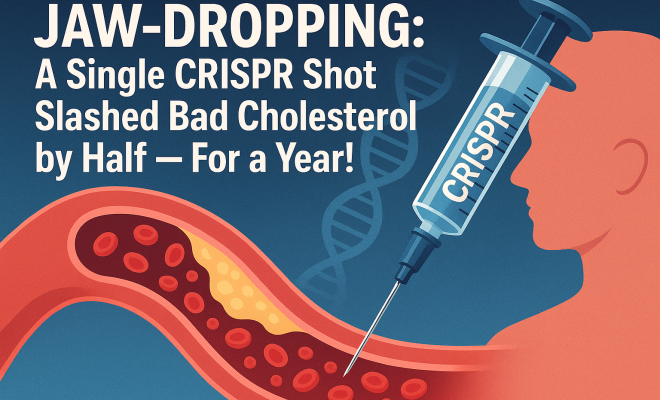
Jaw-Dropping: A Single CRISPR Shot Slashed Bad Cholesterol by Half — For a Year!
Imagine a world where managing high cholesterol wasn’t a daily pill, a constant worry, or a lifelong regimen of dietary restrictions. What if, with a single, precisely delivered treatment, your ‘bad’ cholesterol could be cut by half, and that effect lasted for an entire year, perhaps even longer? That’s not some far-off science fiction fantasy; it’s the astounding reality emerging from the latest advancements in CRISPR gene-editing technology. When we talk about the future of medicine, especially for widespread conditions like high cholesterol, this is the kind of breakthrough that genuinely merits our attention.
The news is buzzing about a new CRISPR-Cas9 therapy that has shown truly remarkable results in early trials. We’re talking about a single intravenous infusion that, at its highest dose, reduced LDL cholesterol – that’s the notorious ‘bad’ cholesterol – by a staggering 52.5%. And here’s the kicker: this profound reduction was still holding strong a full year after treatment. For anyone living with the shadow of cardiovascular disease, or simply trying to keep their cholesterol in check, this isn’t just good news; it’s potentially transformative. It’s also why understanding the potential CRISPR cholesterol therapy cost is becoming such a hot topic.
As a lifelong educator and someone deeply invested in how innovation can genuinely improve lives, I can tell you that these kinds of developments are what we dream about. They represent not just scientific achievement, but a promise of better health outcomes and a higher quality of life for millions. But with great innovation often comes a hefty price tag, at least initially. So, while the efficacy of this therapy is undeniably exciting, it’s crucial to start thinking about the practicalities, particularly the economic ones. What might a treatment like this actually cost? How will it compare to existing therapies? And what factors will ultimately determine its accessibility?
The Unprecedented Promise of CRISPR for Cholesterol Management
Let’s really dig into what makes this CRISPR therapy so groundbreaking. For decades, the cornerstone of cholesterol management has been statins, alongside lifestyle changes. Statins have been revolutionary in their own right, saving countless lives by lowering LDL cholesterol. But they require daily adherence, and some people experience side effects or simply don’t respond adequately. Other injectable therapies have emerged, offering more potent reductions, but they too require regular administration, often every few weeks or months.
This new CRISPR-Cas9 approach, however, offers something fundamentally different: a one-time genetic intervention. Instead of continuously introducing a drug to manage a symptom, CRISPR aims to correct the underlying genetic predisposition that contributes to high cholesterol. Specifically, this therapy targets the PCSK9 gene. You see, the PCSK9 protein plays a crucial role in regulating LDL receptor levels on liver cells. By editing the gene that produces PCSK9, the therapy essentially tells the liver to produce less of this protein. With less PCSK9, more LDL receptors remain on the liver’s surface, which then ‘hoover up’ more LDL cholesterol from the bloodstream. It’s an elegant, permanent (or at least very long-lasting) solution at the genetic level, rather than a temporary pharmaceutical fix.
The trial results have been nothing short of astonishing. Not only did the highest dose achieve a 52.5% reduction in LDL-C, but the early data also reported no dose-limiting toxicity, no serious adverse events directly attributable to the therapy, and no significant liver enzyme changes (Grade 3 or higher) in the 15 patients studied. This safety profile, even in early stages, is incredibly encouraging. When you combine such efficacy with apparent safety and the convenience of a single shot, you’ve got a potential paradigm shift in how we approach one of the world’s most prevalent health challenges.
Understanding the Technology Behind the Breakthrough
To truly appreciate the potential and the future CRISPR cholesterol therapy cost, it helps to grasp the underlying technology. CRISPR-Cas9 stands for Clustered Regularly Interspaced Short Palindromic Repeats and CRISPR-associated protein 9. That’s a mouthful, I know, but think of it as a pair of molecular scissors that can precisely cut DNA at specific locations. The ‘guide RNA’ component directs the Cas9 enzyme to the exact spot on the gene you want to edit, and then Cas9 makes the cut. Once the DNA is cut, the cell’s natural repair mechanisms kick in. Scientists can then introduce a new piece of DNA or simply allow the cell to repair the break, which can inactivate the gene.
In the case of this cholesterol therapy, the goal is to inactivate the PCSK9 gene in liver cells. The therapy uses a delivery system, often a modified virus (like an adeno-associated virus, or AAV), to carry the CRISPR components into the target cells – in this case, liver cells. Once inside the liver cells, the CRISPR machinery goes to work, making the precise edit to the PCSK9 gene. Because liver cells are long-lived and constantly perform their function, a single successful edit can have a lasting effect. This ‘one-and-done’ potential is a huge part of its appeal, but also a significant factor in how its pricing will be structured. (See: NIH study on CRISPR and cholesterol.)
The precision of CRISPR is what makes it so powerful. Unlike older gene therapies that could integrate DNA somewhat randomly, CRISPR allows for highly targeted edits. This reduces the risk of unintended consequences, though off-target edits remain a critical area of research and concern. The rapid development and refinement of CRISPR technology over the last decade have been nothing short of astounding, transforming it from a lab curiosity into a viable therapeutic tool. This journey from basic science to clinical application is complex and expensive, and those costs inevitably factor into the final price patients might face.
The Multi-Factorial Equation of CRISPR Cholesterol Therapy Cost
Let’s be blunt: groundbreaking therapies are rarely cheap. The CRISPR cholesterol therapy cost, once it reaches market, is likely to be substantial. But what exactly drives these figures? It’s not just about the chemicals in the vial. We’re talking about a multifaceted equation that includes research and development, clinical trial expenses, manufacturing complexities, regulatory hurdles, and even the perceived value of a cure or long-term treatment for a chronic condition. For more context, see new advancements in medical treatments.
First, consider the sheer investment in R&D. Developing a gene therapy like this involves years, often decades, of intensive scientific research, countless experiments, and a massive financial outlay. Biotech companies pour billions into understanding molecular biology, designing gene-editing tools, and developing safe and effective delivery mechanisms. Each failed experiment, each setback, adds to the cumulative cost that must eventually be recouped through successful therapies.
Then there are the clinical trials. Moving from preclinical studies in labs to human trials is a monumental step. Phase 1, 2, and 3 trials involve recruiting patients, meticulous monitoring, extensive data collection, and robust statistical analysis. These trials are incredibly expensive, running into hundreds of millions of dollars for a single drug. Ensuring patient safety, demonstrating efficacy, and navigating ethical considerations all contribute to this enormous cost center.
Finally, manufacturing gene therapies is a specialized and often bespoke process. Unlike mass-produced pills, these are complex biological products that require sterile environments, highly skilled personnel, and stringent quality control. The viral vectors used for delivery, for instance, are notoriously difficult and expensive to produce at scale. All these elements combine to create a high baseline cost for production, which will certainly influence the final price tag for patients.
Comparing CRISPR’s Potential Cost to Existing Cholesterol Treatments
To put the potential CRISPR cholesterol therapy cost into perspective, it’s helpful to compare it to existing treatments. Right now, the vast majority of people with high cholesterol rely on statins. Generic statins are incredibly affordable, often costing just a few dollars a month. Even brand-name statins are relatively inexpensive compared to newer biological drugs. Over a lifetime, the cost of statins can add up, but it’s generally manageable for most insured individuals.
Then we have the more recent injectable PCSK9 inhibitors, like evolocumab (Repatha) and alirocumab (Praluent). These drugs are biologicals, meaning they are produced in living systems, and they are significantly more expensive than statins. A year’s supply of these injectables can easily run into the thousands of dollars, often between $5,000 and $10,000 annually, depending on insurance coverage and rebates. They are highly effective for patients who can’t tolerate statins or whose cholesterol isn’t adequately controlled by them. However, they require ongoing injections, usually every two to four weeks.
If the CRISPR therapy offers a ‘one-and-done’ solution that lasts for years, or even a lifetime, its pricing model will likely reflect that. We’ve seen other one-time gene therapies for rare diseases hit the market with price tags upwards of $2 million to $3 million. While high cholesterol is far more common, the principle might be similar: a high upfront cost for a potentially permanent solution, rather than lower, recurring costs for ongoing management. The economic argument here is that a single, high-cost treatment could ultimately be more cost-effective over a patient’s lifetime than decades of medication, doctor visits, and potential complications from poorly controlled cholesterol, such as heart attacks or strokes. This is where the health economics experts will really earn their keep, analyzing the long-term value proposition.
The Role of ‘Value-Based Pricing’ and Insurance Coverage
When a therapy like this emerges, especially with such a high potential price, the concept of ‘value-based pricing’ becomes paramount. This isn’t just about what it costs to produce the drug, but what value it brings to the healthcare system and the patient. For a condition like high cholesterol, which contributes to heart disease – the leading cause of death globally – the value of a lasting solution is immense. This value can be quantified in terms of reduced hospitalizations, fewer heart attacks and strokes, increased quality of life, and even productivity gains as people remain healthier and more active for longer.
So, instead of just a ‘cost-plus’ model (cost of production plus profit margin), pharmaceutical companies often argue for a price that reflects the long-term savings and benefits. This is a complex calculation, and it’s almost always contentious. Payers, like insurance companies and government health programs, will scrutinize these claims rigorously. They’ll perform their own cost-effectiveness analyses, comparing the upfront CRISPR cholesterol therapy cost against the lifetime costs of current treatments and the downstream expenses of treating cardiovascular events. (See: Nature article on CRISPR advancements.)
Insurance coverage will be the ultimate gatekeeper for most patients. For such an expensive therapy, insurers will likely require prior authorization and may limit its use to specific patient populations – perhaps those with very high LDL cholesterol unresponsive to other treatments, or those with genetic forms of hypercholesterolemia. The negotiation between drug manufacturers and payers will be intense, shaping who ultimately gains access to this incredible innovation. It’s a dance between innovation, affordability, and equitable access that we’ve seen play out with every major medical breakthrough. For more context, see the impact of innovative therapies on health.
Ethical Considerations and Equity of Access
Beyond the pure economics, the emergence of a potentially curative gene therapy for a widespread condition like high cholesterol raises significant ethical questions, particularly concerning equity of access. If the CRISPR cholesterol therapy cost is prohibitive for many, will it exacerbate existing health disparities? Will only the wealthy or those with premium insurance plans be able to afford this life-changing treatment?
As an educator who has spent years advocating for equal access to quality education, I see clear parallels here. Just as education should be a right, not a privilege, so too should access to life-saving medical innovations. We have a moral imperative to ensure that such powerful therapies don’t become exclusive to a privileged few. This means robust discussions about pricing strategies, potential government subsidies, and international collaborations to make these treatments globally accessible. We also need to consider the ethical implications of altering the human genome, even for therapeutic purposes. While editing somatic cells (non-reproductive cells) like liver cells doesn’t raise the same concerns as germline editing (which affects future generations), the broader societal implications of widespread gene editing are something we must grapple with carefully and thoughtfully.
These are not simple questions, and there are no easy answers. But they are conversations we must have now, as the technology continues its rapid march from the lab to the clinic. We need to proactively build frameworks that prioritize both innovation and equitable access, ensuring that the promise of CRISPR benefits all of humanity, not just a select segment.
The Journey from Clinical Trial to Widespread Availability
While the early trial results are incredibly exciting, it’s crucial to remember that this therapy is still in its relatively nascent stages. The journey from a promising Phase 1 trial to widespread clinical availability is long, arduous, and fraught with potential challenges. This particular trial, for instance, involved a small number of patients (15 mentioned in the highest dose group) and focused on safety and initial efficacy. While the results were exceptional, larger, longer, and more diverse trials (Phase 2 and 3) are needed to confirm these findings, establish long-term safety, and identify any rare side effects that might not appear in a small cohort.
Regulatory approval from bodies like the FDA in the United States or the EMA in Europe is a rigorous process. These agencies demand extensive data on safety, efficacy, and manufacturing quality. This review process can take years, even for ‘breakthrough’ therapies. Each step adds to the overall investment and, consequently, to the final CRISPR cholesterol therapy cost. Furthermore, even after approval, there’s the challenge of scaling manufacturing to meet demand. Producing complex gene therapies at a commercial scale for potentially millions of patients is a logistical and technical hurdle that will require significant investment in infrastructure and expertise.
So, while we can be optimistic, we must temper our enthusiasm with a healthy dose of realism. This therapy, if all goes well, is still several years away from being a routine option for most patients. But the fact that we’re even having this conversation, based on such compelling early data, is a testament to the incredible progress in genetic medicine. For more context, see battling hidden health crises. (See: CDC resources on cholesterol management.)
Future Projections and Long-Term Impact on Healthcare
Looking ahead, the long-term impact of a successful CRISPR cholesterol therapy could be monumental. Imagine a future where a significant portion of the population could receive a single treatment in their lifetime that effectively eliminates their risk of high LDL cholesterol, dramatically reducing the incidence of heart attacks and strokes. This wouldn’t just be a win for individual patients; it would have a profound effect on public health and the global economy.
The healthcare system could see a reduction in the burden of chronic disease management, fewer emergency room visits for cardiac events, and a decreased need for costly surgical interventions like bypasses or stents. While the upfront CRISPR cholesterol therapy cost might be high, the potential savings in downstream healthcare expenses over decades could be enormous. This is the ‘value’ argument that companies will present, and it’s one that health economists will be scrutinizing intensely.
Moreover, this breakthrough could pave the way for other gene-editing therapies for a host of common, chronic conditions. If we can successfully and safely edit genes to control cholesterol, what else might be possible? Diabetes? Hypertension? Autoimmune diseases? The potential ripple effect of this success could accelerate research and development across the entire field of gene therapy, ushering in a new era of personalized and potentially curative medicine. It’s an exciting prospect, one that could fundamentally reshape how we think about health and disease.
The Patient’s Perspective: Hope and Practical Realities
For patients currently struggling with high cholesterol, this news offers a powerful beacon of hope. The idea of a single shot replacing daily pills or regular injections, with such a dramatic and lasting effect, is truly revolutionary. It promises not just better health outcomes, but a significant improvement in quality of life, freeing individuals from the constant burden of managing a chronic condition.
However, it’s also essential for patients to understand the practical realities. The journey from initial trial results to broad accessibility will be long. They should also be prepared for the likely high cost, at least initially, and the complexities of insurance coverage. Patient advocacy groups will undoubtedly play a crucial role in lobbying for fair pricing and broad access, ensuring that this groundbreaking therapy doesn’t remain out of reach for those who need it most.
As someone who believes deeply in empowering individuals through knowledge, I urge patients and their families to stay informed, ask questions, and engage with their healthcare providers about these developments. While the future is bright, navigating the landscape of advanced therapies will require an informed and proactive approach. This CRISPR therapy represents a monumental leap forward in our battle against heart disease, and while the sticker price will be a major discussion point, the sheer potential it holds for human health is truly priceless.
Trending Now
Frequently Asked Questions
How does CRISPR reduce cholesterol levels?
CRISPR technology targets specific genes responsible for producing LDL cholesterol, effectively editing them to reduce levels. In recent trials, a single intravenous infusion led to a remarkable 52.5% reduction in 'bad' cholesterol, with effects lasting up to a year.
What are the benefits of CRISPR for high cholesterol?
The primary benefit of CRISPR for high cholesterol is its potential to significantly reduce LDL levels with a single treatment, eliminating the need for daily medications and restrictive diets. This breakthrough could transform cholesterol management and improve overall cardiovascular health.
What is the cost of CRISPR cholesterol therapy?
While specific pricing details for CRISPR cholesterol therapy are not yet available, initial treatments of advanced gene-editing therapies often come with high costs. As this technology evolves, its affordability and accessibility will become critical topics for discussion.
How long does CRISPR cholesterol therapy last?
Initial trials indicate that CRISPR cholesterol therapy can maintain its effects for at least one year after a single treatment. This long-lasting impact represents a significant advancement in managing high cholesterol compared to traditional therapies.
Is CRISPR cholesterol therapy safe?
Safety assessments are ongoing, but early trials of CRISPR cholesterol therapy have shown promising results. Researchers are closely monitoring participants to ensure any potential side effects are understood and managed effectively as the therapy progresses.
What did we miss? Let us know in the comments and join the conversation.