Unbelievable: AI’s Brutal Impact on Grads Reveals Urgent Need for These Trade Skills
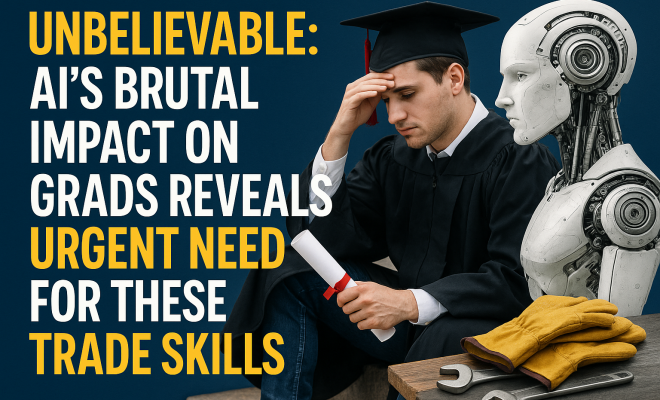
Look, if you’re a Gen Z student right now, or you’re guiding one, you’ve probably heard the buzz about AI. It’s everywhere, right? But what you might not be grasping is the sheer, brutal impact it’s already having on recent college graduates. We’re not talking about some far-off dystopian future; we’re talking about right now, today, in the real world.
A recent study from economists at the U.S. Census Bureau paints a pretty stark picture. After ChatGPT burst onto the scene in November 2022, graduates in college majors most exposed to AI saw their initial employment prospects tank. We’re talking a 5 percentage point drop in their likelihood of landing a job right out of school, and a painful 13% slip in initial earnings. Imagine graduating with a shiny new degree, only to find yourself taking a lower-paying gig in retail or a restaurant, because the jobs you trained for are suddenly being eaten by algorithms. It’s like graduating into a major recession, but this time, the enemy isn’t just a bad economy; it’s a rapidly evolving technology.
This isn’t just an academic exercise for me. As someone who’s spent years in education, from K-12 classrooms to leading university departments, I’ve seen firsthand how quickly the landscape can change. This alarming development is forcing a massive rethink of what ‘success’ looks like after graduation. It’s why we’re seeing more and more Gen Z individuals — the generation that’s supposed to be digitally native and adaptable — making a sharp pivot towards trade schools. They’re looking for hands-on careers, the kind of in-demand trade skills for Gen Z graduates that are less susceptible to AI displacement, and frankly, offer a much more secure path. It’s a critical moment for career guidance, for reskilling, and for embracing alternative education pathways. And if you’re smart, you’ll pay attention, because understanding these shifts is key to future-proofing your career, or the career of someone you care about.
1. Electrician: Powering the Future, Unfazed by AI
When you think about jobs that AI can’t easily automate, what comes to mind? For me, it’s anything that requires complex physical dexterity, on-the-spot problem-solving in unpredictable environments, and a deep understanding of physical systems. That’s why electricians are at the top of my list for in-demand trade skills for Gen Z graduates. We’re talking about a career that’s absolutely essential to modern life, from keeping the lights on in our homes to wiring complex industrial machinery and, increasingly, installing the infrastructure for renewable energy and electric vehicles.
The demand for skilled electricians isn’t just steady; it’s growing. Think about the massive push for green energy – solar panels, wind turbines, smart grids. All of that requires specialized electrical knowledge and installation. Then there’s the electrification of transportation; every charging station, every electric vehicle, needs an electrician to connect it safely and efficiently. These aren’t tasks you can hand off to a robot or an algorithm. They require a human touch, a keen eye for detail, and the ability to troubleshoot real-world, often dangerous, problems. The job outlook for electricians is projected to grow much faster than average, according to the Bureau of Labor Statistics, offering stable employment and good wages.
2. Plumbing and Pipefitting: Essential Services, Always in Demand
Here’s another one that’s a no-brainer: plumbing. Seriously, who’s going to automate fixing a burst pipe in the middle of the night? Or installing a new water heater? Or designing and implementing complex piping systems for commercial buildings? These are foundational services that society simply cannot function without. Plumbing and pipefitting offer incredibly resilient and in-demand trade skills for Gen Z graduates, precisely because they are so hands-on, physically demanding, and require intricate knowledge of water, waste, and gas systems.
The work often involves diagnostics, precise measurements, soldering, fitting, and navigating tight, sometimes unpleasant, spaces. AI can’t crawl under a house to diagnose a leak, nor can it expertly install a complex network of pipes in a new high-rise. These professionals are critical for public health, safety, and comfort. As infrastructure ages and new construction continues, the need for skilled plumbers and pipefitters will only increase. It’s a trade that offers immediate employment opportunities and a clear path to becoming a highly paid, independent contractor.
3. HVAC Technicians: Keeping Us Comfortable, AI-Proof Careers
Alright, let’s talk about comfort. Whether it’s sweltering summer or a freezing winter, we rely on heating, ventilation, and air conditioning (HVAC) systems to keep our homes and workplaces livable. And who installs, maintains, and repairs these complex systems? HVAC technicians. This is another prime example of in-demand trade skills for Gen Z graduates that offer robust job security in the face of AI advancement.
An HVAC technician’s job involves a blend of mechanical aptitude, electrical knowledge, and an understanding of thermodynamics. They’re troubleshooting intricate systems, handling refrigerants, dealing with ductwork, and ensuring optimal air quality. These are dynamic tasks that require critical thinking, manual dexterity, and the ability to adapt to a wide variety of equipment and environments. While smart thermostats might use AI to optimize energy usage, the actual installation, repair, and maintenance of the physical units still requires a human expert. With climate change making extreme weather events more common, and with continuous advancements in energy-efficient systems, the demand for skilled HVAC professionals is only set to grow. (See: U.S. Census Bureau data.)
4. Welding and Fabrication: Building the World, One Seam at a Time
If you want to talk about building things, really building things from the ground up, then welding and fabrication have to be on your radar. From bridges and skyscrapers to ships, cars, and even intricate sculptures, welding is the backbone of modern construction and manufacturing. These are highly specialized and in-demand trade skills for Gen Z graduates, requiring precision, focus, and a deep understanding of metallurgy and structural integrity. While robotic welders exist for repetitive tasks in controlled factory settings, they can’t handle the diverse, often custom, and challenging environments that human welders operate in.
Think about repair work on an oil rig, or custom fabrication for a unique architectural project, or even artistic metalwork. These jobs demand human judgment, adaptability, and the ability to work with a variety of materials and in often unconventional positions. Welders are crucial in so many industries – manufacturing, construction, aerospace, automotive, energy, and even underwater repair. The skill set is transferable, the demand is constant, and the pay can be excellent, especially for those who specialize in advanced techniques or hazardous environments. It’s a gritty, rewarding career for those who like to see tangible results from their work. For more context, see AI's impact on children and education.
5. Automotive Technicians (Especially EV Specialists): The Future of Transport Needs You
Alright, let’s address the elephant in the garage: cars. While AI is certainly making inroads into autonomous driving and vehicle diagnostics, the need for skilled human hands to maintain and repair vehicles isn’t going away. In fact, it’s evolving, and that’s where the opportunity lies for Gen Z. We’re talking about automotive technicians, particularly those who specialize in electric vehicles (EVs).
Modern cars are essentially computers on wheels, and EVs take that complexity to a whole new level with high-voltage systems and sophisticated battery technology. While diagnostic software can pinpoint problems, it still takes a human technician to interpret those diagnostics, physically repair or replace components, and handle the intricacies of these advanced systems. This isn’t just about changing oil anymore; it’s about understanding complex electrical systems, battery management, and advanced propulsion technologies. The transition to EVs means a massive demand for technicians with these new, specialized in-demand trade skills for Gen Z graduates. It’s a field that combines traditional mechanical aptitude with cutting-edge technology, making it incredibly resistant to full AI displacement.
6. Cybersecurity Technicians: Protecting Our Digital Lives
Now, I know what you’re thinking. ‘Cybersecurity? Isn’t that a tech job, not a trade?’ And you’re right, it’s definitely tech. But the lines are blurring, and the hands-on, problem-solving nature of a cybersecurity technician’s role makes it an incredibly valuable and in-demand trade skill for Gen Z graduates, especially as AI poses new threats and creates new vulnerabilities. We’re talking about the people who are on the front lines, protecting our digital infrastructure, our personal data, and our national security.
AI is a double-edged sword here. It can help identify threats, but it can also be used by malicious actors. The human element of understanding complex attack vectors, responding to live incidents, patching vulnerabilities, and designing resilient systems is paramount. These technicians aren’t just running algorithms; they’re thinking like attackers, anticipating threats, and implementing real-world solutions. The demand for cybersecurity professionals is skyrocketing, and many entry-level positions can be secured with certifications and practical training, rather than a traditional four-year degree. It’s a field that requires continuous learning, critical thinking, and a strong ethical compass – all things AI can’t replicate.
7. Heavy Equipment Operators and Mechanics: Building Infrastructure, Powering Industry
Let’s get back to the physical world, the world of concrete, steel, and earthmoving. Heavy equipment operators and mechanics are absolutely indispensable. Think about any major construction project – roads, bridges, new buildings, utility installations. None of it happens without skilled individuals operating massive machinery like excavators, bulldozers, cranes, and loaders. And when that equipment breaks down, you need mechanics who understand these complex, often custom-built, machines inside and out. These are hands-on, high-skill, and incredibly in-demand trade skills for Gen Z graduates.
While there’s talk of autonomous heavy equipment, the reality is that complex, variable, and often hazardous construction sites still require human operators with judgment, spatial awareness, and the ability to adapt to changing conditions. And even autonomous machines will need human mechanics to maintain and repair them. The sheer size, power, and complexity of this equipment means that troubleshooting and repair are far from simple. It’s a field that offers excellent pay, robust job security, and the satisfaction of seeing tangible progress on massive projects. If you like working with big machines and seeing the results of your labor, this could be a fantastic path.
8. Medical Technicians (e.g., Radiologic Technologists, Dental Hygienists): Healthcare’s Human Touch
Finally, let’s turn to healthcare. While AI is certainly transforming diagnostics and data analysis in medicine, the direct, hands-on care and technical operation of medical equipment still largely require human professionals. Medical technicians, like radiologic technologists or dental hygienists, represent a category of in-demand trade skills for Gen Z graduates that are inherently resistant to full AI displacement because they combine technical expertise with essential human interaction and empathy.
Radiologic technologists, for instance, operate complex imaging equipment (X-ray, MRI, CT scans). While AI can help interpret images, it’s the technologist who positions the patient, ensures their comfort and safety, adjusts the equipment for optimal imaging, and troubleshoots any issues. This requires a delicate touch, critical thinking, and the ability to interact with patients who might be anxious or in pain. Similarly, dental hygienists perform intricate procedures like cleaning, scaling, and educating patients on oral health. These are tasks that demand fine motor skills, a keen eye, and the ability to build rapport and trust with patients. The healthcare sector is always growing, and these roles provide stable, meaningful employment that combines technical skill with indispensable human qualities. (See: New York Times article on AI impact.)
9. Agricultural Technicians: Feeding the World, Smarter and Stronger
Agriculture might seem like an old-world profession, but it’s actually at the forefront of technological innovation. We’re not talking about simple farming here; we’re talking about agricultural technicians, specializing in things like precision agriculture, hydroponics, aeroponics, and managing complex farm machinery. These are increasingly in-demand trade skills for Gen Z graduates, combining traditional knowledge of crops and livestock with cutting-edge technology.
Modern agriculture uses drones for crop monitoring, AI for yield prediction, and sophisticated sensor networks for soil health. But who maintains these drones, calibrates the sensors, and repairs the high-tech irrigation systems? Human agricultural technicians. They’re also vital for operating and maintaining advanced farm equipment, which is becoming more automated but still requires skilled human oversight and intervention for complex tasks, especially in varied terrain or unexpected conditions. With a growing global population and increasing concerns about food security, the demand for professionals who can merge agricultural science with practical technical skills is only going to skyrocket. This field offers a chance to work with nature and technology, providing crucial services to society. For more context, see cell phone bans and student success.
10. Renewable Energy Technicians (Solar, Wind): Building a Sustainable Tomorrow
The push for renewable energy isn’t just a trend; it’s a fundamental shift in how we power our world. This creates an enormous demand for specialized technicians who can install, maintain, and repair solar panels, wind turbines, and other green energy infrastructure. These are quintessential in-demand trade skills for Gen Z graduates, offering purpose-driven work with excellent long-term prospects.
Think about the sheer scale of a wind farm or a large solar array. Installing and maintaining these systems requires working at heights, handling complex electrical components, understanding mechanical systems, and adhering to strict safety protocols. While AI can help optimize energy grids, it can’t climb a 300-foot wind turbine to fix a gearbox or install solar panels on a rooftop. These jobs are physically demanding, mentally stimulating, and directly contribute to combating climate change. Governments and corporations worldwide are investing billions in renewable energy, guaranteeing a robust and growing job market for these specialized technicians for decades to come.
The Pivotal Shift: Why Trades are a Smart Bet for Gen Z
The message from that Census Bureau study is crystal clear: the traditional path of a four-year degree isn’t the golden ticket it once was, especially for certain majors vulnerable to AI. We’re in a new era where practical, hands-on, and AI-resistant skills are becoming increasingly valuable. For Gen Z graduates, this isn’t a setback; it’s an opportunity to forge a career path with genuine job security and excellent earning potential.
What makes these in-demand trade skills for Gen Z graduates so resilient? It boils down to a few key factors: they require complex physical dexterity that robots struggle with, they involve unpredictable problem-solving in dynamic environments, they often necessitate direct human interaction and empathy, and they deal with physical infrastructure that needs human installation, maintenance, and repair. These aren’t jobs that an algorithm can simply ‘do better’ or ‘do faster.’
Navigating the New Educational Landscape
So, what does this mean for education? It means we need to seriously rethink our priorities. As the owner of Lynch Consulting Group and online education magazines like The Edvocate and The Tech Edvocate, I’ve been advocating for a more diverse and adaptable educational ecosystem for years. This current situation with AI only underscores the urgency.
We need robust career guidance programs that highlight these trade pathways earlier in a student’s journey. We need to destigmatize vocational and technical education, recognizing it not as a ‘lesser’ alternative, but as a smart, strategic choice for a secure future. For those already in college or recently graduated, reskilling programs and certifications in these in-demand trade skills for Gen Z graduates are absolutely vital. Platforms like P-20 Education Careers can help connect individuals with these opportunities, and tools like Entelechy, my AI-powered personal tutor, can assist in mastering new skills efficiently.
Investing in Your Future: Beyond the Hype
Don’t fall for the hype that AI is going to take *all* jobs. It’s going to transform *many* jobs, and eliminate some. But it’s also creating new opportunities, particularly for those with the foresight to invest in skills that complement, rather than compete with, artificial intelligence. The smart money for Gen Z graduates is on mastering practical, hands-on trades that provide tangible value and require human judgment. For more context, see mental health resources in schools. (See: BBC coverage of AI in jobs.)
The decline in initial earnings and employment for AI-exposed college majors isn’t just a statistic; it’s a wake-up call. It’s a clear signal that the world of work is changing faster than many realize. By embracing these in-demand trade skills, Gen Z can not only future-proof their careers but also become the essential workforce that keeps our modern society functioning and evolving. It’s about making smart choices today for a secure and prosperous tomorrow, and sometimes, the smartest choice isn’t always the most traditional one.
Frequently Asked Questions About Trade Careers for Gen Z
Q1: Are trade jobs really a stable career path, or are they just a temporary solution?
Absolutely, they’re a stable career path, and often more so than many traditional four-year degree jobs right now. The trades discussed here are fundamental to our society’s infrastructure, comfort, health, and energy needs. People will always need electricity, working plumbing, heating and cooling, and things built. While technology evolves, the core need for human expertise in installation, maintenance, and repair remains constant. Many trade professionals also have the option to start their own businesses, offering even greater autonomy and earning potential.
Q2: Do I need a four-year degree to get into these trade professions?
No, that’s one of the biggest advantages! Most trade professions require specialized training through vocational schools, community colleges, apprenticeships, or industry certifications. These programs are typically shorter, more focused, and significantly less expensive than a traditional bachelor’s degree. You can often start earning money much faster, with less student debt, making them a very attractive option for Gen Z.
Q3: What’s the earning potential like in these trade careers compared to a college degree?
The earning potential can be excellent, often rivaling or exceeding many jobs that require a four-year degree, especially once you gain experience and specialize. For example, experienced electricians, plumbers, and HVAC technicians can easily earn six figures. Even entry-level positions often offer competitive wages. When you factor in the lower educational costs and faster entry into the workforce, the financial return on investment for trade skills can be incredibly high.
Q4: Are trade jobs physically demanding? What if I’m not a “muscle” person?
Some trade jobs, like heavy equipment operation or certain aspects of welding, can be physically demanding. However, many roles, such as cybersecurity technician, medical technician, or even aspects of HVAC and automotive work, require more mental acuity, problem-solving, and fine motor skills than brute strength. The key is to find a trade that aligns with your individual strengths and interests. There’s a wide spectrum of physical requirements across the trades.
Q5: How can I explore these trade options and figure out which one is right for me?
Start by researching! Look up local vocational schools, community colleges, and apprenticeship programs in your area. Many offer open houses, informational sessions, or short introductory courses. You can also reach out to professionals in these fields for informational interviews – ask about their daily work, challenges, and what they enjoy most. Online resources, career fairs, and platforms like P-20 Education Careers can also provide valuable insights and connections to help you make an informed decision.
Trending Now
- our breakdown of 15 books to recommend to kids who love harry potter
- This One Decision Is Quietly Revolutionizing…
- The Game-Changing Bill That Could Revolutionize Mental Health Resources in Schools
- this guide on staggering: millions of parents are deleting their kids’ photos online — here’s why
Frequently Asked Questions
What impact has AI had on recent college graduates?
AI has significantly impacted recent college graduates, particularly in majors heavily exposed to AI technologies. A study revealed a 5% decrease in their job prospects and a 13% reduction in initial earnings, leading many to take lower-paying jobs in retail or restaurants instead of their trained professions.
Why are Gen Z students turning to trade schools?
Gen Z students are increasingly pivoting to trade schools due to the job market's rapid changes influenced by AI. Trade skills are seen as less vulnerable to automation, providing more secure career opportunities in hands-on roles that are in high demand.
What trade skills are in demand for Gen Z graduates?
In-demand trade skills for Gen Z graduates include electrical work, plumbing, carpentry, and other hands-on professions. These careers are considered more resilient against AI displacement and often offer competitive salaries and job security.
How can graduates future-proof their careers against AI?
Graduates can future-proof their careers by acquiring trade skills that are less susceptible to automation. Embracing alternative education pathways, such as vocational training and reskilling programs, can also enhance job security and adaptability in a rapidly changing job market.
What does success look like for recent graduates in the age of AI?
Success for recent graduates in the age of AI is evolving. It increasingly involves pursuing careers that offer job security, such as trades, rather than traditional degree paths that may lead to underemployment due to technological advancements.
Have you experienced this yourself? We'd love to hear your story in the comments.