Baffling: Why the Fed’s Next Move on Rates Just Got Wildly Unpredictable
“`html
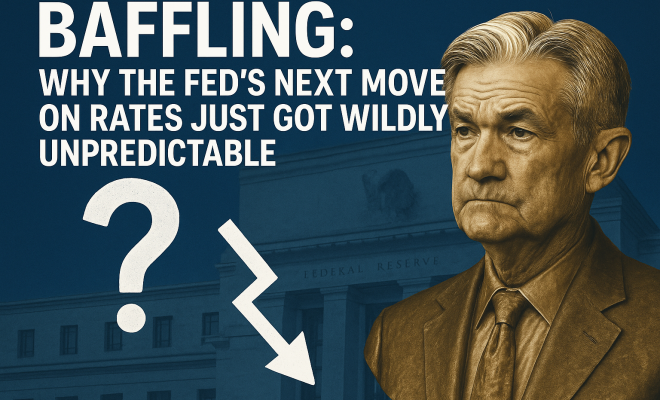
Just a few weeks ago, the smart money was all but certain. The Federal Reserve, after a brief pause, was widely expected to pull the trigger again, pushing interest rates higher in September. The reasoning seemed solid: inflation, while cooling, remained stubbornly above the central bank’s 2% target, and the labor market, despite some signs of slowing, was still tight enough to fuel wage growth. But then, the script flipped, and it did so with a surprising jolt that has economists, investors, and homeowners alike scratching their heads. We covered automation platforms overview in more detail.
The catalyst for this sudden shift in the interest rates forecast? A July jobs report that landed with a thud, defying expectations and painting a picture of a weakening labor market. Instead of the modest gains many predicted, the economy shed an unexpected 23,000 jobs. This wasn’t just a slight miss; it was a significant data point that threw a wrench into the Fed’s meticulously laid plans and ignited a fierce debate about what comes next. What seemed like a forgone conclusion just days prior now looks like a coin flip, and the implications for everything from your mortgage rate to your investment portfolio are profound.
The July Jobs Report: A Cold Shower for Rate Hike Enthusiasts
To truly grasp the magnitude of this shift in the interest rates forecast, we need to talk about that July jobs report. It wasn’t merely a piece of economic data; it was a seismic event that forced a re-evaluation of the entire monetary policy landscape. Economists had largely penciled in a modest increase in employment, perhaps 150,000 to 200,000 new jobs, reflecting a gradual cooling of the red-hot labor market without tipping into recession. What we got instead was a net loss of 23,000 jobs. Now, let’s be clear, one month’s data doesn’t make a trend, but this particular miss was striking because it bucked a long-standing pattern of consistent job creation.
This unexpected contraction in employment figures immediately raised red flags. For years, the Fed has been fighting inflation, often pointing to a tight labor market as a key driver of wage pressures and, by extension, elevated prices. A significant weakening on the jobs front suggests that one of the primary engines of inflation might be sputtering out faster than anticipated. If businesses are pulling back on hiring or, worse, laying off workers, it implies a broader slowdown in economic activity. This directly complicates the Fed’s dual mandate: maximizing employment and stabilizing prices. You can’t credibly hike rates to fight inflation if the economy is simultaneously shedding jobs at an alarming rate without risking a deeper downturn.
The Fed’s Dual Mandate: A Tightrope Walk in a Shifting Wind
Understanding the Federal Reserve’s dilemma requires a quick refresher on its core responsibilities. The Fed operates under a “dual mandate” established by Congress: to achieve maximum employment and stable prices. These two goals, while seemingly straightforward, often pull in opposite directions, especially during periods of economic transition. When inflation is high, the Fed typically raises interest rates to cool demand and bring prices down. But this tightening often comes at the cost of job creation, as higher borrowing costs discourage investment and expansion. There’s a fuller look at rising mortgage costs explained.
For much of the past year, the Fed’s focus has been squarely on price stability, aggressively hiking rates to combat inflation that soared to multi-decade highs. The robust labor market, characterized by low unemployment and strong wage growth, allowed them to do so without immediate concerns about mass job losses. However, the July jobs report has fundamentally altered this calculus. Now, the employment side of the mandate is demanding attention. If the Fed continues to raise rates, it risks exacerbating a potential downturn in the labor market, pushing unemployment higher and undermining its commitment to maximum employment. This is precisely why the interest rates forecast has become so muddled; the Fed is caught between two powerful, often conflicting, objectives.
Inflation’s Persistent Grip: The Other Side of the Coin
While the jobs report has injected considerable uncertainty into the interest rates forecast, we can’t ignore the other half of the Fed’s mandate: price stability. Inflation, though significantly down from its peak, remains elevated. In June, the Consumer Price Index (CPI) showed inflation at 3.5%, still a noticeable distance from the Fed’s long-term target of 2%. Core inflation, which strips out volatile food and energy prices, often considered a better gauge of underlying price pressures, has also shown a stubborn resistance to falling quickly.
This persistent inflation is the primary reason why some Fed officials and many economists were still advocating for a September rate hike. Their argument is that while the economy might be showing signs of weakness, inflation hasn’t been definitively tamed. Easing up on monetary tightening too soon could allow inflation to re-accelerate, undoing all the painful work of the past year. It’s a classic “damned if you do, damned if you don’t” situation. Raise rates and risk a recession; hold rates and risk persistent inflation. This tension between the weakening labor market and still-elevated inflation is the crucible in which the next interest rates forecast will be forged.
The July Fed Meeting: A Glimpse into Internal Divisions
The internal debate within the Federal Reserve isn’t just theoretical; it played out quite visibly at the July Federal Open Market Committee (FOMC) meeting. While the committee ultimately voted to hold rates steady, the decision wasn’t unanimous. A contentious 9-3 vote revealed significant dissent, with three members advocating for a rate hike. This isn’t a minor detail; it highlights the genuine uncertainty and differing perspectives within the central bank’s most influential body.
These dissenting votes likely came from members who prioritize fighting inflation above all else, perhaps believing that the labor market, despite some softening, could still withstand another quarter-point increase. Their concern would be that pausing too early sends the wrong signal, potentially reigniting inflationary expectations. The fact that three members felt strongly enough to publicly dissent, even as the majority opted for a pause, underscores just how finely balanced the arguments are. It also tells us that the September meeting will likely be another lively discussion, with both hawks and doves making their case with renewed vigor, especially in light of the latest jobs data. (See: July Jobs Report from BLS.)
Mortgage Rates and the American Homeowner: A Direct Impact
For millions of Americans, the Federal Reserve’s interest rates forecast isn’t an abstract economic concept; it’s a direct determinant of their financial well-being. Nowhere is this more apparent than in the housing market. Mortgage rates are intricately linked to the Fed’s policy rate, specifically the federal funds rate. While not a direct one-to-one correlation, changes in the federal funds rate ripple through the financial system, influencing the cost of borrowing for everything from credit cards to car loans, and most significantly, mortgages.
When the Fed began its aggressive hiking cycle, mortgage rates soared, making homeownership less affordable and putting a damper on refinancing activity. A potential pause or even a future cut in the federal funds rate, suggested by a weakening labor market, could lead to a stabilization or even a modest decline in mortgage rates. This would be a welcome development for prospective homebuyers struggling with affordability and for current homeowners who might be eyeing a refinance. The uncertainty surrounding the Fed’s next move means that anyone in the housing market is essentially holding their breath, waiting for clarity on where these crucial rates are headed. Commercial searches for “current mortgage rates” are surging, reflecting this widespread anxiety and hope.
Investment Strategies in an Unpredictable Landscape
Beyond homeowners, investors are also acutely attuned to the interest rates forecast. The cost of money, dictated by the Fed, has a profound impact on asset valuations across the board. Higher rates generally make bonds more attractive relative to stocks, as they offer a better risk-free return. They also increase the cost of capital for businesses, potentially dampening corporate earnings and making equity investments less appealing. Conversely, lower rates tend to fuel equity markets, as borrowing becomes cheaper and bonds offer less competitive returns.
This new uncertainty, sparked by the jobs report, forces investors to re-evaluate their strategies. If the Fed is indeed less likely to hike in September, it could be seen as a positive for growth stocks, which are often more sensitive to interest rate changes. However, if the reason for the pause is a rapidly deteriorating economy, that’s a different story entirely, potentially signaling broader headwinds for corporate profits. The market is now grappling with conflicting signals: an easing Fed might be good, but a weakening economy that forces their hand is not. This complexity is driving increased demand for “investment strategies for an uncertain economy” as individuals and institutions try to navigate these choppy waters.
The Road Ahead: Data Dependency and the Path of Least Regret
The Federal Reserve has consistently reiterated its commitment to being “data-dependent,” meaning its decisions are driven by the latest economic indicators rather than a predetermined path. This philosophy is now being tested in real-time. The July jobs report is just one piece of the puzzle, albeit a significant one. Before the September meeting, the Fed will receive another round of critical data, including the August jobs report, the latest inflation figures (CPI and PCE), and various other economic surveys. Each of these data points will be scrutinized with unprecedented intensity, shaping the final interest rates forecast.
The concept of the “path of least regret” also comes into play here. For much of 2022 and early 2023, the Fed’s path of least regret was to err on the side of aggressive tightening to ensure inflation was brought under control. The regret of letting inflation become entrenched was deemed far greater than the regret of over-tightening. However, with the labor market showing signs of weakness, the calculus might be shifting. The path of least regret might now involve a more cautious approach, prioritizing the avoidance of a deep recession over an immediate return to the 2% inflation target. This strategic pivot, if it occurs, would represent a significant policy shift.
Beyond September: What the Future Holds for Interest Rates
While the immediate focus is on the September meeting, it’s crucial to think beyond that single decision. The latest data doesn’t just impact whether the Fed hikes next month; it also shapes the longer-term interest rates forecast. If the labor market continues to weaken, and inflation shows further signs of cooling, it could open the door not just to a sustained pause, but potentially to rate cuts sometime in 2024. This is a scenario that seemed almost unthinkable just a few months ago, when the narrative was dominated by “higher for longer.”
Conversely, if the jobs report was an anomaly and subsequent data points show renewed strength in the economy or a re-acceleration of inflation, the Fed could still revert to a more hawkish stance. The market is currently pricing in a higher probability of no hike in September, but those probabilities are fluid and can change rapidly with each new economic release. We are in a truly dynamic environment where the future trajectory of interest rates is more uncertain than it has been in years, demanding constant vigilance from anyone whose finances are touched by these critical decisions. Related reading: impact of the Fed's decision.
Navigating the New Economic Reality: Advice for Individuals and Businesses
Given this heightened uncertainty in the interest rates forecast, what should individuals and businesses do? For homeowners, if you’re considering refinancing or buying, staying informed about current mortgage rates and understanding your personal financial situation is paramount. Don’t make rash decisions based on speculation. Instead, consult with financial advisors and mortgage professionals who can offer tailored advice. Rates can move quickly, so having a clear strategy and being ready to act when conditions are favorable can make a significant difference.
For investors, diversification remains a timeless principle. In an unpredictable market, spreading your investments across different asset classes and sectors can help mitigate risk. Re-evaluating your portfolio’s sensitivity to interest rate changes is also a wise move. Companies with heavy debt loads or those that rely on consumer discretionary spending might be more vulnerable in a slowing economy, while defensive sectors or those with strong balance sheets might fare better. For businesses, managing debt, optimizing cash flow, and carefully planning capital expenditures become even more critical when the cost of borrowing is in flux. Having a robust financial plan that accounts for various interest rate scenarios can provide a crucial competitive edge in this bewildering new economic reality. (See: Federal Reserve Monetary Policy Overview.)
The Global Ripple Effect: Beyond U.S. Borders
It’s important to remember that the Federal Reserve’s decisions don’t happen in a vacuum. The U.S. dollar is the world’s primary reserve currency, and changes in the federal funds rate have significant global implications. When the Fed hikes rates, it often strengthens the dollar, making imports cheaper for Americans but making U.S. goods more expensive for other countries. This can put pressure on economies that rely heavily on exports to the U.S. or that hold significant dollar-denominated debt. See also what to expect from the Fed.
For emerging markets, a strong dollar and high U.S. interest rates can be particularly challenging. It makes it harder for them to service their dollar debts and can lead to capital outflows as investors seek higher returns in dollar-denominated assets. This dynamic means central banks around the world are also watching the Fed’s interest rates forecast with bated breath. A pause or pivot by the Fed could offer some relief to these economies, potentially stabilizing their currencies and reducing the burden of their debt. Conversely, continued hawkishness would likely exacerbate existing pressures, highlighting the interconnectedness of the global financial system.
Historical Parallels: What Can We Learn from the Past?
While every economic cycle has its unique characteristics, looking at historical periods of similar uncertainty can offer valuable perspectives. For instance, the early 1990s saw the Fed navigate a similar tightrope walk, battling inflation while trying to avoid a recession. The “soft landing” achieved then – where inflation was brought down without a severe economic downturn – is often cited as a benchmark. However, the economic structure, global dependencies, and technological landscape are vastly different today.
Another relevant period might be the mid-2000s, where the Fed was cautiously raising rates before the 2008 financial crisis. The challenge then, as now, was identifying whether economic weakness was transitory or indicative of a deeper problem. The lesson from history is often about the difficulty of precise timing and the potential for unexpected shocks. The Fed’s current situation is a unique blend, battling supply-side driven inflation with a rapidly shifting labor market, making historical parallels useful for context, but not as direct predictors of the future interest rates forecast.
Expert Perspectives: Diverging Views on the Horizon
The current economic landscape has led to a wide array of opinions among prominent economists and market strategists. On one side, you have the “hawks” who argue that the Fed hasn’t done enough to truly tame inflation. They point to still-elevated core inflation, strong consumer spending in some sectors, and the potential for wage-price spirals. For them, any pause or pivot is premature and risks a resurgence of inflation, necessitating even more aggressive tightening down the road. They would likely argue that the July jobs report is an outlier, or a sign of necessary cooling, not a signal for the Fed to ease up.
On the other side are the “doves,” who emphasize the lagging effects of monetary policy and the increasing signs of economic deceleration. They highlight rising credit card debt, a slowdown in manufacturing, and now, the weakening labor market. Their view is that the Fed has already done enough, and continuing to hike rates risks pushing the economy into an unnecessary and potentially severe recession. They see the July jobs report as validation of their concerns, arguing that the true impact of past rate hikes is only now beginning to manifest. This divergence in expert opinion underscores the complexity and the fine margins involved in shaping the interest rates forecast.
The Consumer Confidence Factor: A Key Variable
One often-underestimated factor in the Fed’s decision-making and the broader economic outlook is consumer confidence. When people feel secure in their jobs and optimistic about their financial future, they’re more likely to spend, invest, and take on debt. This fuels economic activity. Conversely, when confidence falters, perhaps due to job losses or fears of a recession, consumers tend to pull back, tightening their belts and saving more. This reduction in demand can quickly translate into slower economic growth.
The July jobs report, with its unexpected job losses, could significantly dent consumer confidence if it’s perceived as the start of a broader trend. If households begin to worry about job security, their spending habits will inevitably shift. The Fed monitors various consumer confidence indices closely, as these can be leading indicators of future economic activity. A sharp drop in consumer confidence following a weakening labor market could further strengthen the argument for a more cautious approach to interest rate policy, directly influencing the interest rates forecast. This builds on emergency rate hike consequences.
Frequently Asked Questions About the Interest Rates Forecast
What is the Federal Funds Rate?
The federal funds rate is the target interest rate set by the Federal Open Market Committee (FOMC) of the U.S. Federal Reserve. It’s the rate at which commercial banks borrow and lend their excess reserves to each other overnight. While not a direct consumer rate, it influences all other interest rates in the economy, including mortgage rates, credit card rates, and savings account yields. (See: New York Times on Jobs Report.)
How does the July jobs report affect the Fed’s decision?
The July jobs report, showing an unexpected loss of 23,000 jobs, suggests a weakening in the labor market. A weaker labor market can reduce wage pressures, which in turn helps to cool inflation. This data point challenges the Fed’s previous stance that the economy could withstand more rate hikes, making a September hike less likely as the Fed balances its dual mandate of maximum employment and stable prices.
What is the Fed’s “dual mandate”?
The Federal Reserve’s dual mandate, established by Congress, requires it to pursue two primary goals: maximizing employment and maintaining stable prices (i.e., controlling inflation). These goals can sometimes conflict, forcing the Fed to make difficult trade-offs in its monetary policy decisions.
Will mortgage rates go down if the Fed pauses rate hikes?
A sustained pause in Fed rate hikes, or especially future rate cuts, could lead to a stabilization or even a modest decline in mortgage rates. Mortgage rates are influenced by the federal funds rate, but also by broader market conditions, inflation expectations, and demand for mortgage-backed securities. So, while a Fed pause is generally positive for mortgage rates, it’s not a guaranteed one-to-one drop.
What does “data-dependent” mean for the Fed?
“Data-dependent” means the Federal Reserve bases its monetary policy decisions on the latest economic data and indicators, rather than following a predetermined schedule or forecast. This allows them to react to evolving economic conditions, like changes in inflation or employment figures, and adjust their approach accordingly.
What are the risks if the Fed stops hiking too soon?
If the Fed stops hiking rates too soon, the primary risk is that inflation could re-accelerate or become entrenched at an elevated level. This would undo the progress made in bringing down prices and potentially necessitate even more aggressive tightening later, which could be more damaging to the economy.
What are the risks if the Fed hikes too much?
If the Fed hikes rates too much or too aggressively, it risks pushing the economy into a recession, leading to significant job losses and a slowdown in economic activity. This would undermine its goal of maximum employment and could cause broader financial instability.
How often does the FOMC meet to discuss interest rates?
The Federal Open Market Committee (FOMC) typically meets eight times per year, approximately every six weeks. They can also hold unscheduled meetings if economic conditions warrant an immediate policy response.
“`
Trending Now
Frequently Asked Questions
What caused the Fed's interest rate predictions to change?
The Federal Reserve's interest rate predictions shifted dramatically due to an unexpected July jobs report, which revealed a loss of 23,000 jobs instead of the anticipated gain. This significant deviation raised concerns about a weakening labor market, prompting a reevaluation of the Fed's plans for future rate hikes.
How does the July jobs report impact interest rates?
The July jobs report revealed a surprising job loss, contradicting previous expectations of modest gains. This unexpected contraction raised doubts about the strength of the labor market, leading to uncertainty about the Federal Reserve's next move on interest rates, making future hikes less predictable.
What are the implications of a weaker labor market for homeowners?
A weaker labor market may lead to lower interest rates as the Federal Reserve reassesses its monetary policy. This could result in more favorable mortgage rates for homeowners, but the unpredictability of the Fed's decisions adds uncertainty to the housing market.
Why is the July jobs report considered a significant event?
The July jobs report is significant because it marked a notable deviation from a long-standing trend of job creation, showing a loss of 23,000 jobs. This unexpected data point triggered a major reassessment of economic conditions and the Federal Reserve's monetary policy.
What does the term 'smart money' refer to in the context of interest rates?
In the context of interest rates, 'smart money' refers to informed investors or economists who analyze market trends and economic data to predict future movements. Prior to the July jobs report, many in this group believed the Fed would raise rates, but the new data has led to uncertainty.
Agree or disagree? Drop a comment and tell us what you think.