The Silent Crisis: Why AI Is Fueling HR Burnout – And How to Fight Back
“`html
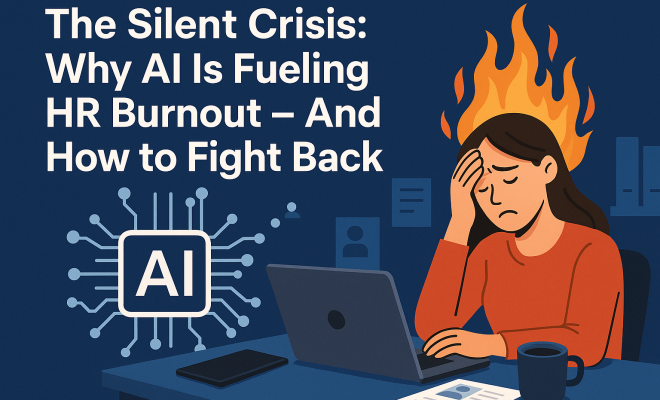
We’ve all heard the promises: Artificial Intelligence will streamline our workflows, boost productivity, and free us from mundane tasks. For human resources teams, in particular, AI was supposed to be a game-changer, offering more time for strategic initiatives and human connection. Yet, a recent study, brought to light by Fair Play Talks on August 4, 2026, paints a starkly different, even alarming, picture. Instead of liberation, many HR professionals are finding themselves trapped in a new kind of digital treadmill, facing an elevated risk of HR burnout directly linked to the very AI tools meant to help them.
It’s a counter-intuitive finding that’s quickly gaining traction, striking a nerve with anyone grappling with the rapid pace of technological change. The idea that AI, despite its efficiency claims, could be a silent contributor to mental fatigue and an ‘always-on’ culture is unsettling, to say the least. But as we dig deeper, the reasons become clear: information saturation, relentless task-switching, and the demanding oversight of multiple AI agents are creating what some are calling ‘AI brain fry.’ This isn’t just about adapting to new software; it’s about a fundamental shift in how we work, think, and manage our energy. Let’s explore the nine core reasons behind this escalating HR burnout crisis and, more importantly, what we can do about it.
1. Cognitive Overload from Information Saturation: The Brain Drain
Imagine trying to drink from a firehose. That’s often what it feels like for HR professionals trying to keep up with the sheer volume of data, alerts, and insights generated by an array of AI tools. From applicant tracking systems powered by AI to predictive analytics for employee retention, these platforms are constantly churning out information. While each piece of data might be valuable in isolation, the cumulative effect is a relentless deluge that overwhelms cognitive processing.
This isn’t just about reading more emails or reports; it’s about the mental effort required to sift through vast datasets, interpret complex algorithms, and make decisions based on AI-generated recommendations. The human brain wasn’t designed for this level of constant input and analysis. When you’re constantly evaluating AI outputs, checking for biases, and validating data points, your mental energy gets depleted far more quickly than it would performing traditional, less data-intensive tasks. This relentless cognitive demand is a primary driver of HR burnout.
2. Relentless Task-Switching: The Mental Whiplash
One of the insidious effects of integrating multiple AI tools is the exponential increase in task-switching. An HR professional might start their day reviewing AI-generated performance reports, then jump to an AI-powered recruitment platform to screen candidates, only to be interrupted by an alert from an AI-driven employee engagement tool. Each switch requires a mental reset, an adjustment to a new interface, and a shift in focus.
Research consistently shows that task-switching is incredibly inefficient and mentally exhausting. Every time you switch tasks, there’s a ‘switching cost’ — a brief period where your brain has to reorient itself. Do this dozens of times a day across different AI platforms, each with its own logic and demands, and it’s no wonder HR teams feel like they’re constantly playing catch-up, never quite settling into deep work. This fragmented workflow directly contributes to feelings of stress, anxiety, and ultimately, HR burnout.
3. The ‘Always-On’ Culture: No Off Switch
AI tools, by their very nature, operate 24/7. This constant availability, while seemingly a benefit, subtly extends the expectation of human availability. If an AI system identifies a critical issue with employee engagement at 2 AM, there’s an implicit pressure for an HR professional to address it promptly, even if it means checking their phone outside of working hours. The lines between work and personal life blur even further when the ‘office’ is always generating new information and demanding attention.
This ‘always-on’ mentality is incredibly detrimental to mental health. Our brains need downtime to process, rest, and recharge. When the digital demands follow us home, when the alerts keep coming, and the data keeps flowing, that essential recovery time is eroded. This perpetual state of readiness, driven by AI’s continuous operation, is a significant factor in the accelerating rates of HR burnout, leaving little room for true disengagement and relaxation.
4. Demanding Oversight of Multiple AI Agents: The Manager of Machines
It’s not enough to simply deploy AI tools; they require constant human oversight. HR professionals aren’t just using these tools; they’re managing them, monitoring their performance, checking for algorithmic biases, and ensuring they align with organizational values and legal compliance. This means understanding how each AI system works, its limitations, and its potential impact on employees.
Imagine managing a team of highly intelligent, but sometimes unpredictable, assistants. That’s the reality for many HR professionals. Each AI agent, whether it’s for onboarding, talent management, or employee wellness, needs a human supervisor. This added layer of management, distinct from managing human employees, adds significant complexity and mental load. The responsibility for ensuring these powerful tools are used ethically and effectively falls squarely on HR, creating a unique pressure that exacerbates HR burnout.
5. The Fear of Obsolescence and Continuous Learning Curve: The Treadmill of Knowledge
The pace of AI development is breathtaking. What’s cutting-edge today might be outdated tomorrow. For HR professionals, this translates into a perpetual learning curve. There’s a constant need to understand new AI capabilities, adapt to updated software versions, and learn entirely new platforms. This fear of being left behind, of becoming obsolete in a rapidly evolving technological landscape, adds immense psychological pressure. (See: Mental health in the workplace.)
This isn’t a one-time training session; it’s a continuous, never-ending process of acquiring new skills and knowledge. While professional development is generally positive, the sheer speed and volume of change in AI can feel overwhelming, like trying to run a marathon on a treadmill that keeps speeding up. This pressure to constantly upskill, coupled with existing workloads, drains mental resources and contributes heavily to HR burnout.
6. Erosion of Human Connection and Empathy: The Digital Divide
At its core, HR is about people. It’s about understanding human needs, fostering relationships, and providing support. While AI can automate administrative tasks, it can also inadvertently create a barrier to genuine human connection. When more interactions become mediated by algorithms – from initial candidate screening to automated feedback systems – the opportunities for empathetic, face-to-face engagement can diminish.
HR professionals often derive satisfaction from helping people, resolving conflicts, and building a positive workplace culture. If their role becomes primarily about managing machines and interpreting data, rather than direct human interaction, it can lead to a sense of detachment and a loss of purpose. This emotional toll, the feeling of being less ‘human’ in a human-centric role, is a silent but potent contributor to HR burnout.
7. Algorithmic Bias and Ethical Dilemmas: The Weight of Responsibility
AI isn’t perfect; it can inherit and even amplify human biases present in its training data. For HR teams, this presents a significant ethical challenge. They are often on the front lines, responsible for ensuring fairness, equity, and inclusion in hiring, promotions, and performance management. When AI tools introduce or perpetuate bias, HR professionals bear the heavy burden of identifying and mitigating these issues.
This isn’t a simple technical fix; it requires deep critical thinking, ethical reasoning, and often, challenging the very tools meant to simplify processes. The stress of knowing that a flawed algorithm could negatively impact someone’s career, or even an entire demographic, is immense. This constant vigilance against algorithmic injustice, combined with the technical complexity of addressing it, adds a profound layer of stress that contributes to HR burnout.
8. Increased Expectations and Performance Pressure: The Illusion of Efficiency
The promise of AI is increased efficiency and productivity. While AI can deliver on these fronts, it often comes with a commensurate increase in expectations. Managers and leadership might assume that because HR has AI tools, they should be able to handle significantly larger workloads, deliver faster results, and provide deeper insights than ever before. This creates a vicious cycle.
Instead of AI freeing up time, it can simply lead to more tasks being piled onto HR’s plate. The perception is that ‘the machine does the heavy lifting,’ so the human should be able to do even more. This unrealistic pressure, coupled with the cognitive demands of managing AI, means HR professionals are working harder, not smarter, and often feeling like they’re failing to meet ever-escalating demands. This relentless pressure is a clear pathway to severe HR burnout.
9. Lack of Adequate Training and Support Systems: Dropped in the Deep End
The rapid rollout of AI tools often outpaces the provision of comprehensive training and robust support systems. HR professionals might be given access to powerful new software but without sufficient education on how to leverage it effectively, interpret its outputs, or troubleshoot common issues. This leaves them feeling isolated and struggling to master complex systems on their own.
When training is superficial or ongoing support is lacking, the ‘efficiency’ promised by AI turns into frustration and wasted time. HR teams spend valuable hours trying to figure out convoluted interfaces or correct AI errors, rather than focusing on strategic tasks. A lack of psychological support for adapting to these new modes of work also means the mental health impacts of AI adoption often go unaddressed. This gap between technology deployment and human enablement is a critical factor in driving HR burnout.
The Business Cost of HR Burnout: Beyond Individual Well-being
It’s easy to focus on the individual toll of HR burnout, but the organizational ramifications are just as severe, if not more so. When HR professionals are burned out, it doesn’t just impact their personal health; it directly affects the health of the entire organization. A significant study by Gallup in 2023 estimated that burnout costs the global economy trillions of dollars in lost productivity each year. For HR, this translates into several critical business impacts.
Decreased Productivity and Errors
Burned-out HR teams are less productive. Cognitive overload and constant task-switching lead to mistakes in crucial areas like payroll, compliance, and employee relations. These errors can result in legal issues, financial penalties, and a damaged employer brand. When HR isn’t operating at its best, the entire employee experience suffers.
Higher Turnover Rates in HR
Unhappy and overworked HR professionals are more likely to leave. The cost of replacing an HR employee can range from 50% to 200% of their annual salary, considering recruitment, onboarding, and training. High turnover disrupts continuity, strains remaining team members, and depletes institutional knowledge, making it harder for the HR function to be strategic.
Reduced Employee Engagement and Morale
HR is often the first point of contact for employee issues, concerns, and support. If HR professionals are overwhelmed and disengaged themselves, their ability to effectively support other employees diminishes. This can lead to a ripple effect, reducing overall employee morale and engagement across the company. A disengaged workforce is less productive, less innovative, and more likely to seek opportunities elsewhere. (See: Mental health and the workplace.)
Stunted Strategic Initiatives
The promise of AI was to free HR for more strategic work. However, if HR is trapped in the ‘AI brain fry’ cycle, they’re spending their time managing machines and battling overwhelm, not developing crucial talent strategies, fostering culture, or driving organizational change. This means the organization misses out on the very strategic contributions HR is uniquely positioned to offer.
Damaged Employer Brand and Reputation
A poorly managed HR function, especially one struggling with burnout, can severely damage a company’s reputation. This might manifest as delayed responses to employee inquiries, errors in HR processes, or a perceived lack of empathy. In today’s transparent world, negative experiences can quickly spread, making it harder to attract top talent and retain existing employees.
Strategies for Mitigating HR Burnout in the AI Era
Recognizing the problem is the first step; the next is implementing actionable strategies. Companies need a multi-faceted approach that balances technological advancement with human well-being. It’s not about rejecting AI, but about integrating it thoughtfully and sustainably.
1. Thoughtful AI Implementation and Integration
Don’t just roll out AI tools without a clear strategy. Conduct thorough pilots, involve HR teams in the selection process, and choose tools that truly augment human capabilities rather than simply adding complexity. Prioritize user-friendly interfaces and ensure new tools integrate smoothly with existing systems to minimize task-switching friction.
2. Invest in Comprehensive Training and Ongoing Support
Moving beyond basic tutorials, provide in-depth training on how to interpret AI outputs, identify biases, and troubleshoot effectively. Establish clear channels for ongoing technical support and create internal communities of practice where HR professionals can share best practices and challenges. Consider dedicated ‘AI coaches’ within the HR team.
3. Redefine HR Roles and Responsibilities
With AI handling more administrative tasks, HR roles need to evolve. Shift focus from transactional duties to strategic responsibilities like culture building, talent development, and ethical AI oversight. Clearly define what AI will handle and what remains human-centric, creating roles that emphasize judgment, empathy, and strategic thinking.
4. Promote Digital Well-being and Boundaries
Implement policies that encourage disconnecting from work, such as ‘no email after hours’ or ‘meeting-free blocks.’ Encourage HR leadership to model healthy digital habits. Provide resources for stress management, mindfulness, and mental health support. Actively work to counter the ‘always-on’ culture by valuing downtime and rest.
5. Establish Ethical AI Frameworks and Oversight
Develop clear internal guidelines for ethical AI use, data privacy, and bias mitigation. Empower HR professionals with the knowledge and authority to challenge AI outputs they deem unfair or inaccurate. Foster a culture where questioning AI is seen as a strength, not a weakness. Consider forming an interdisciplinary AI ethics committee.
6. Foster Human Connection and Collaboration
Actively create opportunities for HR professionals to engage in high-touch human interactions. This could be through mentorship programs, team-building activities, or direct employee engagement initiatives. Remind them that their core value lies in their humanity and empathy, not just their ability to manage technology. Encourage HR to connect with employees personally, rather than relying solely on AI insights.
7. Monitor Workload and Performance Realistically
Regularly assess HR workloads and adjust expectations. Don’t assume AI automatically translates to the capacity for double the work. Use data to understand where HR teams are spending their time and identify bottlenecks. Celebrate successes and acknowledge the effort required to master new technologies, rather than solely focusing on efficiency gains.
Expert Perspectives on AI and HR Well-being
Leading thinkers in HR and organizational psychology are sounding the alarm and offering solutions. Dr. Elena Rodriguez, a prominent organizational psychologist specializing in tech-induced stress, notes, “The biggest mistake companies make is treating AI implementation as a purely technical project. It’s a human project. Without careful consideration of the psychological impact on employees, especially those in critical support roles like HR, the benefits of AI will be overshadowed by human costs.”
Similarly, Mark Johnson, a veteran HR consultant, emphasizes the need for a ‘human-in-the-loop’ approach. “It’s not about automating HR out of existence; it’s about augmenting human judgment. We need HR professionals to be the strategic orchestrators, guiding the AI, not just executing its commands. This requires a significant investment in their critical thinking and ethical reasoning skills, alongside technical training.” These experts agree that a proactive, human-centered strategy is essential to prevent HR burnout and unlock AI’s true potential.
Frequently Asked Questions About HR Burnout and AI
Q1: Is HR burnout unique to the AI era, or has it always been a problem?
While HR burnout isn’t entirely new (it’s often been a demanding field), the AI era introduces unique stressors. The ‘always-on’ nature of AI, cognitive overload from data saturation, relentless task-switching between different AI platforms, and the ethical burden of algorithmic bias are novel challenges that significantly amplify the risk of burnout compared to previous technological shifts.
Q2: Can’t AI actually reduce burnout by automating repetitive tasks?
In theory, yes. AI excels at automating mundane, repetitive tasks, which should free up HR professionals for more strategic, fulfilling work. However, the reality often falls short. The benefits are frequently offset by the new demands of managing AI, dealing with its outputs, maintaining oversight, and the increased expectations placed on HR teams. If not implemented thoughtfully, AI can create a different kind of burnout rather than alleviate it.
Q3: How can HR leaders convince upper management about the risks of AI-induced HR burnout?
HR leaders need to quantify the risks in business terms. Present data on potential turnover costs, decreased productivity from errors, and the impact on overall employee engagement if HR is burned out. Frame it as a strategic risk to the organization, not just an HR problem. Highlighting the ethical implications of unchecked AI and the potential for reputational damage can also be persuasive.
Q4: What are some practical steps for an individual HR professional feeling overwhelmed by AI?
Start by setting clear boundaries: turn off notifications after hours, schedule dedicated focus time for deep work, and practice task batching to reduce switching. Advocate for better training and support within your organization. Connect with peers to share strategies. Don’t be afraid to take breaks and prioritize self-care. If possible, identify which AI tools are truly beneficial and which are adding unnecessary complexity, and discuss this with your manager.
Q5: Will HR professionals eventually become obsolete due to AI?
No, HR professionals won’t become obsolete, but their roles will undoubtedly evolve. AI can handle data analysis and administrative tasks, but it cannot replicate human empathy, strategic judgment, ethical reasoning, or the ability to build genuine relationships. The future of HR lies in leveraging AI as a powerful assistant while doubling down on the uniquely human aspects of the role – fostering culture, coaching leaders, and navigating complex human dynamics. It’s about augmentation, not replacement.
Q6: What role does company culture play in preventing AI-related HR burnout?
Company culture is paramount. A culture that values employee well-being, encourages open communication, supports continuous learning, and fosters psychological safety is much better equipped to handle the challenges of AI integration. If the culture is one of relentless pressure and unrealistic expectations, AI will only exacerbate existing problems. Leadership must champion a balanced approach that respects human limitations and prioritizes mental health.
The escalating risk of HR burnout in the age of AI isn’t just an HR problem; it’s a critical organizational challenge. Companies must recognize that simply implementing AI isn’t enough; they need to strategically manage its integration, provide robust support for their teams, and prioritize the well-being of the humans who are tasked with overseeing these powerful technologies. Ignoring this ‘AI brain fry’ will not only harm individuals but ultimately undermine the very efficiency and innovation that AI promises to deliver.
“`
Trending Now
Frequently Asked Questions
How is AI contributing to HR burnout?
AI contributes to HR burnout by creating cognitive overload through information saturation, relentless task-switching, and the constant monitoring of multiple AI tools. This leads to mental fatigue and an 'always-on' culture, which can overwhelm HR professionals.
What are the signs of HR burnout caused by AI?
Signs of HR burnout caused by AI include feelings of being overwhelmed, difficulty concentrating, increased stress levels, and a sense of being trapped in a fast-paced digital environment. These symptoms stem from the constant influx of data and tasks from AI systems.
What can HR professionals do to combat AI-related burnout?
HR professionals can combat AI-related burnout by implementing strategies such as prioritizing tasks, setting boundaries for technology use, and fostering a culture of open communication. Additionally, taking regular breaks and focusing on mental well-being can help mitigate burnout.
Why do HR teams feel overwhelmed by AI tools?
HR teams feel overwhelmed by AI tools due to the sheer volume of data and alerts generated, which can lead to cognitive overload. The fast-paced nature of these technologies requires constant attention, making it challenging for HR professionals to manage their workload effectively.
What is 'AI brain fry' in the context of HR?
'AI brain fry' refers to the mental fatigue experienced by HR professionals due to the demands of managing multiple AI tools and the constant influx of information. This phenomenon highlights the negative impact of technology on cognitive function and work-life balance.
What's your take on this? Share your thoughts in the comments below — we read every one.