7 Ways Solar Activity Alerts Impact Your Daily Life
“`html
Understanding Solar Activity Alerts
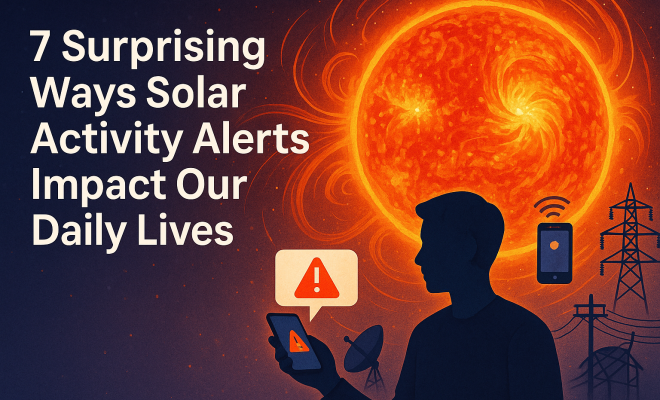
Solar activity alerts are crucial notifications issued by organizations like the National Oceanic and Atmospheric Administration (NOAA) to inform the public and various industries about potential disturbances caused by solar phenomena. The NOAA’s Space Weather Prediction Center (SWPC) rigorously monitors solar activity to provide timely alerts, watches, and warnings that could impact Earth’s technological systems and natural phenomena.
These alerts focus on solar storms, geomagnetic disturbances, and their effects on GPS systems, communications, and even power grids. This vigilance is essential because the impacts of solar activity can lead to immediate disruptions in daily life, making the alerts not only relevant but also potentially critical to public safety.
The Mechanics of Solar Activity
Solar activity is driven by the Sun’s magnetic field, which undergoes periodic changes as part of its solar cycle. The 11-year cycle can produce solar flares and coronal mass ejections (CMEs) that send charged particles hurtling toward Earth. When these particles collide with Earth’s magnetosphere, they can create geomagnetic storms that disrupt technological systems. Understanding this process is vital for grasping why solar activity alerts are issued and how they can impact everyday life.
In essence, solar activity alerts serve as warnings about potential disturbances caused by solar phenomena. The NOAA provides a range of alerts categorized by severity, helping individuals and organizations prepare for possible impacts.
The Role of NOAA in Monitoring Solar Activity
NOAA’s Space Weather Prediction Center is the leading authority in tracking solar activity and issuing alerts. The SWPC employs advanced satellite technologies and ground-based observatories to monitor solar conditions continuously. These tools allow meteorologists to predict solar events and their potential impacts on Earth.
One of the key aspects of NOAA’s work is the use of real-time data to issue solar activity alerts. This information is typically segmented into alerts, watches, and warnings, categorized by threat levels. For example, a watch indicates that a solar event is likely to occur, while a warning signifies that a significant event is expected to impact Earth shortly. This categorization aids decision-making for industries that could be affected by solar activity.
Impact on Technology
The influence of solar activity on technology cannot be overstated. Solar storms can disrupt radio communications, GPS navigation, and satellite operations. For instance, when a solar storm occurs, it can cause radio blackouts that last from minutes to hours, disrupting air travel and emergency communications.
Moreover, GPS systems can experience outages or inaccurate positioning during intense solar activity, which can affect navigation for both civilian and military operations. The implications of such disturbances can be significant, particularly in fields that rely on accurate satellite data, such as agriculture, shipping, and emergency response.
According to a study by the National Academy of Sciences, a severe solar storm could cost the United States up to $2 trillion in damages, emphasizing the need for effective solar activity alerts.
Impact on Power Grids
Solar activity alerts are particularly important for power grid operators. Geomagnetic storms have the potential to induce electric currents in power lines, which can lead to transformer damage or even widespread blackouts. This phenomenon was dramatically illustrated during the 1989 geomagnetic storm that knocked out power in Quebec, Canada, for several hours. Such events underscore the importance of monitoring solar activity and preparing for possible disruptions.
Utilities depend on solar activity alerts to implement preventive measures. For example, during heightened solar activity, grid operators may take steps such as adjusting power generation levels and reconfiguring the grid to ensure stability. This proactive approach can minimize the risk of outages and protect infrastructure. (See: National Oceanic and Atmospheric Administration.)
Furthermore, a 2019 report from the Federal Emergency Management Agency (FEMA) indicated that the resilience of power grids is heavily dependent on the timely dissemination of solar activity alerts, which has led to increased funding for monitoring and infrastructure upgrades.
Effects on Aviation and Space Missions
The aviation industry is another sector that relies heavily on solar activity alerts. Solar storms can disrupt high-frequency radio communications used by aircraft, particularly in polar regions. Airlines may alter flight paths to avoid areas of intense solar activity, which can lead to delays and increased operational costs.
Furthermore, astronauts aboard the International Space Station (ISS) are vulnerable to increased radiation levels during solar events. Alerts from NOAA enable space agencies to take necessary precautions, such as postponing spacewalks or adjusting the ISS’s orbit to minimize exposure. This protective measure is vital to ensuring the safety of astronauts working in low Earth orbit.
In the context of commercial space travel, companies like SpaceX and Blue Origin are increasingly aware of solar activity alerts as they plan missions. The reliance on timely alerts for safe operations is becoming a standard part of their flight planning protocols.
Natural Phenomena: Auroras and More
While the technological impacts of solar activity may dominate the conversation, there are also stunning natural phenomena associated with solar storms, primarily the auroras. Solar particles colliding with Earth’s atmosphere create vibrant displays of lights—aurora borealis in the northern hemisphere and aurora australis in the southern hemisphere.
When NOAA issues solar activity alerts, it often prompts excitement for aurora viewing, particularly in regions that may not typically experience these light shows. The visibility of auroras is heightened during periods of increased solar activity, and enthusiasts often take to social media to share their sightings, turning solar alerts into community events.
Research indicates that during extreme solar storms, the auroras can be seen much farther from the poles than usual, even reaching latitudes as low as Texas or Florida. This phenomenon serves to educate the public about solar activity and its effects, fostering a greater appreciation for space weather.
Real-Time Solar Activity Alerts: A Community Resource
In our interconnected world, real-time solar activity alerts are more than just scientific notifications—they represent a community resource. The NOAA provides public access to its alerts, watches, and warnings, making them available to interested citizens, businesses, and organizations. This transparency allows anyone to stay informed about potential solar events and their possible effects.
Additionally, various online platforms and mobile applications have emerged to provide solar activity updates. These tools cater to a diverse audience, from casual observers to professionals in industries affected by solar activity. Engaging with solar activity alerts empowers individuals to prepare for potential disruptions and enhances public awareness about space weather.
The rise of social media has further amplified the reach of these alerts, as platforms like Twitter and Facebook allow users to share real-time updates, insights, and personal experiences related to solar activity, fostering a sense of community among space weather enthusiasts.
Preparing for Solar Activity: Tips and Best Practices
Given the potential impacts of solar activity, preparation is key. Here are some actionable tips that individuals and organizations can consider to minimize disruptions:
- Stay Informed: Regularly check NOAA’s SWPC website for the latest solar activity alerts and warnings.
- Have a Communication Plan: Ensure that your family or organization has a communication plan in place to account for potential disruptions in technology.
- Backup Important Data: Protect essential data by backing it up in multiple locations, including external drives and cloud storage.
- Monitor Solar Activity: Use mobile apps or online tools to receive real-time updates about solar activity.
- Prepare for Power Outages: Have an emergency kit ready that includes flashlights, batteries, and non-perishable food in case of a power outage.
- Educate Others: Share information about solar activity alerts with friends and family to raise awareness and preparedness in your community.
Case Studies of Solar Activity Alerts in Action
Examining historical instances where solar activity alerts played a critical role can offer insights into their importance. For example, the 2012 coronal mass ejection caused a massive solar storm that, had it been directed at Earth, could have resulted in significant disruptions to technology and electrical grids. Fortunately, NOAA had issued alerts in advance, allowing power companies to implement protective measures that ultimately avoided widespread outages. (See: NASA Solar System Exploration.)
Another pertinent case is the 2003 Halloween solar storms. During this period, a series of intense solar flares and CMEs wreaked havoc on various technological systems. The alerts issued by NOAA were instrumental in helping airlines reroute flights and allowing satellite operators to reorient their spacecraft to minimize exposure to radiation. This proactive approach significantly mitigated potential damage and operational disruptions.
Additionally, the 1989 Quebec blackout serves as a cautionary tale. The geomagnetic storm induced by solar activity led to a loss of power for millions, highlighting the critical nature of timely solar activity alerts and the need for infrastructure resilience to withstand such events.
Expert Perspectives on Solar Activity Alerts
Experts in space weather and solar activity emphasize the growing need for enhanced monitoring and timely alerts. Dr. Tamitha Skov, a prominent space weather physicist, states, “As we become more dependent on technology, the need for early warning systems has never been more critical. Solar activity alerts not only protect our infrastructure but also enhance our understanding of space weather phenomena.”
Furthermore, NOAA’s collaboration with international agencies, such as the European Space Agency (ESA), showcases a global effort to refine solar monitoring systems. By pooling resources and knowledge, these organizations aim to develop more sophisticated models to predict solar activity accurately, ensuring that alerts are issued with greater precision and timeliness.
According to Dr. Skov, integrating machine learning algorithms into monitoring systems could significantly enhance the prediction accuracy of solar events, allowing for even more reliable and timely alerts.
Statistics on Solar Activity and Its Impact
Understanding the frequency and impact of solar activity can help in gauging the importance of solar activity alerts. Data shows that during the last solar cycle (Solar Cycle 24), there were over 200 measurable solar flares, with several reaching the X-class category, which are the most intense. These flares carry significant potential for disrupting communications and GPS systems.
Moreover, studies indicate that geomagnetic storms, particularly those classified as G4 or G5 (on a scale of G1 to G5), can result in power grid failures affecting millions of people. For instance, a G4 storm can induce electric currents strong enough to damage transformers, while a G5 storm can lead to power outages that last for several days or even weeks.
In 2021, a survey conducted by the National Oceanic and Atmospheric Administration found that 70% of surveyed businesses were either not aware of solar activity alerts or did not have a response plan in place, highlighting a significant gap in preparedness that needs to be addressed.
Frequently Asked Questions (FAQ)
What is a solar flare?
A solar flare is a sudden burst of radiation from the Sun’s surface that can impact space weather and lead to disruptions in technology, including satellite operations and radio communications.
What is a coronal mass ejection (CME)?
A coronal mass ejection is a significant release of plasma and magnetic field from the solar corona. CMEs can cause geomagnetic storms when directed towards Earth, leading to potential disruptions in electrical systems and communications. (See: Scientific articles on solar activity.)
How do solar activity alerts differ from watches and warnings?
Solar activity alerts are immediate notifications of potential solar events, while watches indicate a possibility of such events occurring in the near future. Warnings are issued when a solar event is expected to happen shortly and may have immediate impacts on Earth.
Who should pay attention to solar activity alerts?
Various sectors should monitor solar activity alerts, including aviation industries, power grid operators, satellite operators, and even individuals who rely on GPS technology for navigation.
How can someone receive real-time solar activity alerts?
Individuals can receive real-time solar activity alerts through NOAA’s Space Weather Prediction Center website, as well as through various mobile applications and online platforms that specialize in space weather updates.
What steps can businesses take to prepare for solar activity alerts?
Businesses should develop contingency plans that include monitoring solar activity alerts, training staff on emergency procedures, and ensuring that critical infrastructure is protected from potential disruptions caused by solar events.
How often does solar activity occur?
Solar activity, including solar flares and CMEs, can occur at any time, but is more frequent during the solar maximum phase of the solar cycle, which occurs approximately every 11 years. During these periods, the Sun’s activity significantly increases, leading to more frequent solar events.
Conclusion: The Importance of Solar Activity Alerts
Solar activity alerts are a critical component of modern life, as they provide essential information regarding potential disruptions caused by solar phenomena. From their impacts on technology, aviation, and power grids to the stunning natural displays of auroras, understanding these alerts empowers individuals and organizations to take proactive measures. As we increasingly rely on technology for everyday connectivity, being aware of and prepared for the implications of solar activity can enhance safety and reduce the risk of disruption.
In an age where information is readily available, engaging with solar activity alerts fosters a culture of preparedness and awareness. Keeping abreast of solar conditions can lead to informed decisions that protect both technological infrastructure and personal connectivity during solar events.
“`
Frequently Asked Questions
What are solar activity alerts?
Solar activity alerts are notifications issued by organizations like NOAA to inform the public about potential disturbances caused by solar phenomena, such as solar storms and geomagnetic disturbances. These alerts help individuals and industries prepare for impacts on technology and safety.
How does solar activity affect daily life?
Solar activity can disrupt GPS systems, communications, and power grids, leading to immediate impacts on daily life. Understanding these effects is essential for preparing for potential disruptions caused by solar phenomena.
Who monitors solar activity?
The National Oceanic and Atmospheric Administration (NOAA) monitors solar activity through its Space Weather Prediction Center (SWPC). They utilize advanced technologies to continuously track solar conditions and issue timely alerts.
What causes solar flares and CMEs?
Solar flares and coronal mass ejections (CMEs) are caused by changes in the Sun's magnetic field during its 11-year solar cycle. These events release charged particles that can impact Earth when they collide with its magnetosphere.
Why are solar activity alerts important?
Solar activity alerts are crucial for public safety as they inform about potential disruptions to technology and infrastructure. By categorizing alerts by severity, NOAA helps individuals and organizations prepare for possible impacts.
Agree or disagree? Drop a comment and tell us what you think.