
NASA’s Roman Telescope: Unveiling 100,000 Exoplanets
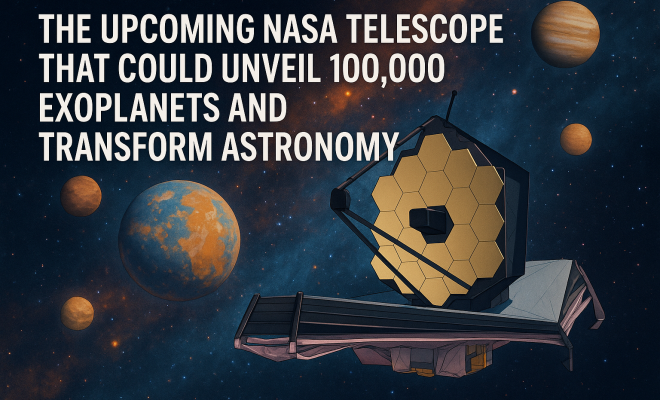
“`html
The excitement surrounding exoplanets discovery has reached a new peak with the anticipated launch of NASA’s Nancy Grace Roman Space Telescope. This groundbreaking observatory is set to revolutionize our understanding of planetary systems, boasting the potential to uncover around 100,000 exoplanets—an astounding leap from the nearly 6,300 confirmed to date. As we stand on the brink of a new era in astronomy, the implications of Roman’s findings could reshape our approach to searching for worlds beyond our solar system.
The Roman Space Telescope: A New Era of Observation
Scheduled for launch in the mid-2020s, the Nancy Grace Roman Space Telescope represents a significant advancement in astronomical technology. Named after the first chief of NASA’s astronomy division, Roman has been designed to tackle some of the most pressing questions about our universe. With its large field of view and advanced imaging capabilities, Roman will survey the sky more efficiently than any existing telescope.
Roman’s primary mission revolves around exoplanets discovery, but it also aims to investigate dark energy and the distribution of galaxies in the cosmos. Equipped with a wide-angle camera that captures images of vast regions of space at once, Roman will be able to identify not only exoplanets but also a myriad of astronomical phenomena, broadening our understanding of the universe.
The Scale of Discovery: 100,000 Exoplanets
One of the most astonishing aspects of the Roman Space Telescope is its projected capability to discover around 100,000 exoplanets. This figure is staggering compared to the current total of nearly 6,300 confirmed exoplanets, revealing a vast and largely unexplored frontier. Scientists believe that many of these potential new worlds could be Earth-like, existing in the habitable zones of their respective stars.
This leap in discovery is made possible by Roman’s advanced technology, which will detect exoplanets using the gravitational microlensing technique. This innovative method exploits the bending of light caused by a star’s gravity, allowing the telescope to spot planets that might otherwise remain hidden in the shadows of their parent stars. The potential for finding diverse planetary systems—including those located on the far side of the Milky Way—highlights the telescope’s importance in the ongoing quest for understanding our cosmic neighborhood.
Understanding the Implications of Discovering More Exoplanets
The implications of discovering 100,000 exoplanets are profound and multifaceted. Firstly, such a large dataset will enhance our understanding of planetary formation and evolution. By analyzing the characteristics of these newly discovered worlds, scientists can discern patterns and anomalies that may inform theories about how planetary systems develop. This can lead to better models of our own solar system and offer insights into the conditions that foster planetary habitability.
Moreover, the prospect of finding Earth-like exoplanets raises tantalizing questions about the possibility of extraterrestrial life. With Roman’s ability to identify planets within habitable zones, researchers hope to locate environments that might support life as we know it—or perhaps even forms of life that challenge our current understanding.
Unveiling Hidden Worlds: The Far Side of the Milky Way
While many current surveys are focused on the closer regions of our galaxy, the Roman Space Telescope opens up the potential to survey areas previously unseen by astronomers. The telescope’s advanced capabilities will allow researchers to peer deeper into the Milky Way, unveiling hidden worlds and planetary systems that current methodologies simply cannot reach.
This exploration of the far side of the Milky Way is critical, as it may lead to discoveries that reshape our understanding of the galaxy’s structure and the distribution of its stellar and planetary populations. The prospect of discovering entirely new classes of planets, or even previously unknown exoplanetary systems, could fundamentally alter our models of galactic formation and evolution.
Enhancing Existing Methods of Exoplanet Detection
Current exoplanet detection methods, including the transit method and radial velocity method, have provided invaluable insights into the nature of exoplanets. However, they are often limited in scope, detecting only a fraction of the planets that may exist. Roman’s introduction into the astronomical landscape is expected to complement these existing methods, providing a more holistic approach to exoplanets discovery.
The telescope’s ability to combine microlensing with other detection techniques will enhance the accuracy and reliability of findings. For example, it can help confirm the existence of planets detected by other means, providing a larger and more comprehensive dataset for scientists to analyze. This cross-validation will be crucial in distinguishing between true exoplanet signals and potential false positives.
The Role of Public Interest in Exoplanetary Research
The public’s fascination with the possibility of alien worlds plays a significant role in the ongoing interest and investment in exoplanet research. The announcement of Roman’s ambitious goals has generated excitement not just in scientific communities but also among the general public. This enthusiasm can lead to increased funding and support for future missions aimed at exploring the cosmos.
Public interest is vital for the advancement of scientific knowledge, as it encourages educational programs and outreach initiatives that engage younger generations. By fostering curiosity about the universe, we can inspire the next wave of scientists and astronomers who will continue the search for exoplanets and ultimately, extraterrestrial life.
Challenges Ahead: What Scientists Must Overcome
Despite the immense potential of the Roman Space Telescope, there are significant challenges that scientists will face as they embark on this journey of discovery. One of the primary challenges lies in the interpretation of the data. As the number of discovered exoplanets increases, so too does the complexity of analyzing their characteristics and understanding their significance within the broader context of the universe.
Additionally, the sheer volume of data produced by Roman will require innovative methods for processing and categorizing discoveries. Advanced algorithms and artificial intelligence may play a crucial role in managing this influx of information, allowing scientists to extract meaningful conclusions from the vast amounts of data.
The Future of Exoplanetary Research
As we look ahead to the future of exoplanets discovery, the Roman Space Telescope is poised to be a transformative force in astronomy. The anticipated yield of 100,000 exoplanets will not only expand our catalog of known worlds but will also prompt new questions and avenues for research.
In the coming years, we can expect to see a surge in collaborative efforts between astronomers, astrophysicists, and experts from various fields to analyze Roman’s findings. The integration of diverse perspectives will enrich our understanding of the cosmos and our place within it, ultimately driving the quest for knowledge and exploration further than ever before.
Insights from Recent Exoplanet Discoveries
Recent discoveries in the field of exoplanets have already begun to provide insights into the types of worlds that exist beyond our solar system. For instance, the discovery of TOI-561b, an ultra-hot rocky planet located about 280 light-years away, highlights the diversity of planetary environments. This planet orbits its star in just over 12 hours and has surface temperatures that can reach up to 2,400 degrees Fahrenheit (1,300 degrees Celsius).
Another noteworthy example is the detection of water vapor in the atmosphere of K2-18b, a planet in its star’s habitable zone. This discovery has sparked discussions regarding the potential for life on exoplanets that exhibit such characteristics. These findings underscore the importance of Roman, as it is likely to uncover many more planets with similar or even more intriguing features.
Comparing Exoplanet Detection Methods
Understanding the strengths and weaknesses of various detection methods is crucial for the field of exoplanetary research. The three primary methods include the transit method, the radial velocity method, and gravitational microlensing.
- Transit Method: This involves monitoring the brightness of a star over time. When a planet transits in front of its star, it causes a temporary dip in brightness. This method has led to the discovery of thousands of exoplanets but is limited to those that orbit close to their stars.
- Radial Velocity Method: This technique detects variations in the velocity of a star due to the gravitational pull of an orbiting planet. While effective, it often favors larger planets that exert a more substantial gravitational influence, potentially biasing results.
- Gravitational Microlensing: This method, which Roman will utilize extensively, can detect distant planets by observing the bending of light from a background star as a planet passes between it and Earth. This method is advantageous because it can reveal planets at much greater distances than the other two methods.
The integration of these methods through advanced technology, as with Roman, will allow for a more comprehensive understanding of the population of exoplanets and their characteristics.
Future Missions and Collaborations
The launch of the Roman Space Telescope will not occur in isolation. It is part of a broader tapestry of missions and collaborations aimed at enhancing our understanding of exoplanets. The upcoming James Webb Space Telescope (JWST) is expected to work in tandem with Roman, taking detailed observations of the atmospheres of newly discovered exoplanets. Together, these missions will provide a more complete picture of the potential for life beyond Earth.
Furthermore, international collaborations such as the European Space Agency’s CHEOPS mission, which focuses on characterizing known exoplanets, will complement Roman’s discoveries. This collaborative effort aims to build a more comprehensive database that will aid in understanding the formation and evolution of planetary systems.
FAQ About Exoplanets Discovery
What is an exoplanet?
An exoplanet, or extrasolar planet, is a planet that orbits a star outside of our solar system. They vary widely in size, composition, and distance from their stars.
How are exoplanets discovered?
Exoplanets are discovered using several methods, including the transit method, radial velocity method, and gravitational microlensing. Each method has its advantages and limitations. The Roman Space Telescope will utilize gravitational microlensing extensively, which allows it to detect planets at great distances.
What is the significance of the habitable zone?
The habitable zone is the region around a star where conditions may be suitable for liquid water to exist on a planet’s surface, potentially fostering the development of life. Finding exoplanets within this zone is crucial for the search for extraterrestrial life.
How many exoplanets are currently confirmed?
As of now, nearly 6,300 exoplanets have been confirmed. This number is expected to rise dramatically with the capabilities of the Roman Space Telescope.
What are the challenges of studying exoplanets?
Challenges in studying exoplanets include detecting faint signals from distant planets, interpreting vast amounts of data, and distinguishing between true exoplanet signals and noise. The Roman Space Telescope aims to address these challenges through its innovative detection methods.
Future Trends in Exoplanet Research
The field of exoplanet research is rapidly evolving, with several trends likely to shape its future. One significant trend is the increasing use of artificial intelligence (AI) and machine learning in data analysis. These technologies can help process the vast amounts of data generated by telescopes like Roman, identifying patterns and making predictions about the characteristics of newly discovered exoplanets.
Another trend is the growing collaboration between astronomers and planetary scientists. As we uncover more exoplanets, interdisciplinary approaches will be essential to understand their atmospheres, compositions, and potential for habitability. For instance, insights from geology can shed light on the formation processes of rocky exoplanets, while astrobiology will be critical in assessing the implications of these discoveries for life beyond Earth.
Expected Contributions to Exoplanetary Science
The Roman Space Telescope is expected to provide contributions across various dimensions of exoplanetary science. For instance, it will improve our understanding of planet formation and migration. By capturing a larger sample of planets at different stages of their development, Roman can help answer critical questions about how planets form and evolve within their stellar systems.
Furthermore, the telescope will enhance our knowledge of exoplanet atmospheres. By studying the light that passes through an exoplanet’s atmosphere during transits, scientists can detect the presence of specific molecules—such as water vapor, carbon dioxide, and methane—crucial for assessing potential habitability.
Case Studies: Key Exoplanets of Interest
As Roman prepares for its launch, several exoplanets have emerged as key targets for future research. One example is Proxima Centauri b, located just over four light-years away in the habitable zone of the closest star to our solar system. Despite its close proximity, the planet’s atmosphere has yet to be fully characterized, making it an exciting prospect for the Roman Space Telescope.
Additionally, the TRAPPIST-1 system, which hosts seven Earth-sized planets, presents a rich case for understanding the dynamics of multi-planet systems. The varying sizes and orbits of these planets offer a unique opportunity to compare different planetary environments and their potential for hosting life.
Conclusion: A New Era of Cosmic Exploration
The launch of the Nancy Grace Roman Space Telescope marks the beginning of a new chapter in our exploration of the universe. With its unparalleled capabilities and ambitious goals, Roman has the potential to uncover a staggering number of exoplanets, transforming our understanding of planetary systems and the possibilities for life beyond Earth. The excitement surrounding this mission reflects not only the scientific community’s aspirations but also the public’s enduring fascination with the cosmos. As we prepare for this monumental leap in exoplanets discovery, we are reminded of the limitless possibilities that await us among the stars.
“`
Frequently Asked Questions
What is the Nancy Grace Roman Space Telescope?
The Nancy Grace Roman Space Telescope is an upcoming NASA observatory set to launch in the mid-2020s. It aims to revolutionize astronomy by discovering around 100,000 exoplanets and investigating dark energy and galaxy distribution, utilizing advanced imaging technology and a large field of view.
How many exoplanets has NASA discovered so far?
As of now, NASA has confirmed nearly 6,300 exoplanets. The upcoming Roman Space Telescope is expected to significantly increase this number, potentially uncovering around 100,000 new exoplanets, vastly expanding our understanding of planetary systems.
What will the Roman Space Telescope help us learn?
The Roman Space Telescope will enhance our knowledge of exoplanets, dark energy, and the structure of galaxies. Its advanced technology will allow for efficient sky surveys, potentially leading to the discovery of Earth-like planets in habitable zones around their stars.
When will the Roman Space Telescope be launched?
The Nancy Grace Roman Space Telescope is scheduled for launch in the mid-2020s. This mission will mark a significant advancement in astronomical research and could transform our understanding of the universe.
Why is the Roman Space Telescope important for astronomy?
The Roman Space Telescope is important because it represents a leap in observational technology, enabling the discovery of a vast number of exoplanets and providing insights into dark energy and galaxy formation, thus reshaping our approach to exploring the cosmos.
What’s your take on this? Share your thoughts in the comments below — we read every one.

