AI’s Impact on Student Thinking: A Professor’s Grief (2026)
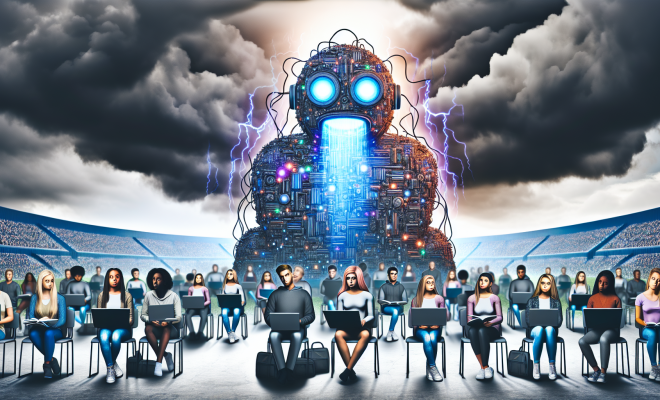
In an era characterized by rapid technological advancements, the realm of education finds itself grappling with an unprecedented challenge: the influence of artificial intelligence (AI) on student learning and intellectual development. On May 1, 2026, Jane Sloan Peters, a professor of religious studies at the University of Mount Saint Vincent, voiced her concerns in an insightful piece published by Daily Nous, highlighting the emotional toll that AI is taking on the educational landscape.
Understanding the Emotional Toll of AI in Education
Peters articulates a profound sense of grief as she navigates her teaching responsibilities amidst the growing prevalence of AI tools in academic settings. She reflects on a time when students were deeply engaged in the struggle to develop their own ideas—an intellectual journey that fostered individual growth and creativity. This fundamental shift towards AI assistance has sparked a troubling realization: students are increasingly reliant on technology to do the heavy lifting of learning.
The Decline of Intellectual Struggle
One of the most significant changes Peters notes is the decline in the intellectual struggle that students once embraced as a part of their education. Prior to the advent of AI tools, students faced challenges that encouraged them to think critically and develop their arguments. Now, with sophisticated AI systems at their fingertips, many students opt for convenience over effort, leading to a decrease in original thought and creativity.
- Critical thinking: Once a cornerstone of academic success, critical thinking is being overshadowed by the ease of AI-generated content.
- Intellectual curiosity: The desire to explore and understand complex subjects is waning as students turn to AI for quick answers.
- Personal investment: Students are less likely to engage deeply with course materials, opting instead for summarizations and answers provided by AI.
Widespread Anxiety Among Educators
Peters’ reflections resonate with educators nationwide, who share her fears about the long-term consequences of AI on student learning outcomes. The universal concern among teachers and parents is palpable; many are grappling with whether AI is enhancing or diminishing the educational experience. This anxiety is not unfounded, as studies have shown that students who rely heavily on AI for academic assistance often struggle to articulate their thoughts and engage in meaningful discussions.
The Counterintuitive Frame of Grief
What sets Peters’ perspective apart is her framing of grief as a legitimate response to the changes brought about by AI in education. She argues that this emotional response is not merely a reflection of nostalgia for a bygone era but a recognition of what is being lost in the current educational climate. The grief stems from witnessing students who, instead of grappling with difficult concepts, are opting for the shortcuts that AI provides.
Changing the Narrative Around Technology
As educators confront these challenges, it becomes imperative to change the narrative surrounding technology in classrooms. While AI tools can provide valuable assistance in certain contexts, they should not replace the fundamental learning processes that encourage intellectual growth. Peters emphasizes the importance of fostering environments where students are encouraged to struggle with complex ideas and engage in deep thinking.
Strategies for Educators
To mitigate the adverse effects of AI on learning, educators can adopt several strategies:
- Integrating AI as a tool: Rather than allowing AI to dominate the learning process, educators should frame it as a supplementary tool that aids understanding.
- Encouraging creativity: Assignments that require original thought and creativity can help students engage with the material on a deeper level.
- Promoting discussions: Facilitating open discussions about the ethical implications of AI can encourage critical thinking.
The Future of Education in an AI World
Looking ahead, the future of education in an AI-dominated world remains uncertain. As technology continues to evolve, so too must our approaches to teaching and learning. Educators are called to adapt their methods, ensuring that students not only have access to AI tools but also the skills to use them responsibly and creatively.
Finding a Balance
Ultimately, the challenge lies in finding a balance between utilizing AI and preserving the essence of education—the development of critical thinking, creativity, and intellectual resilience. Peters’ emotional journey as an educator serves as a poignant reminder of the need to engage with the realities of technological advancement while safeguarding the core values that underpin effective learning.
Conclusion: A Call to Action for Educators and Parents
The reflections shared by Jane Sloan Peters resonate deeply with an audience of educators and parents who are witnessing the transformation of education in the age of AI. The challenge ahead is not to resist technology but to redefine its role in the educational process. By acknowledging the emotional toll that these changes can bring and actively working to foster environments that encourage critical thought and creativity, we can strive to ensure that our students do not lose the ability to think deeply and independently.
As we navigate this rapidly changing landscape, it is crucial for both educators and parents to remain vigilant, ensuring that the tools at our disposal enhance the learning experience rather than diminish it. The grief felt by educators like Peters is a call to action—a reminder that in the face of technological change, we must advocate fiercely for the preservation of the intellectual struggle that defines true education.