NASA Alerts: Two Airplane-Sized Asteroids Set for Close Approach to Earth in 2026
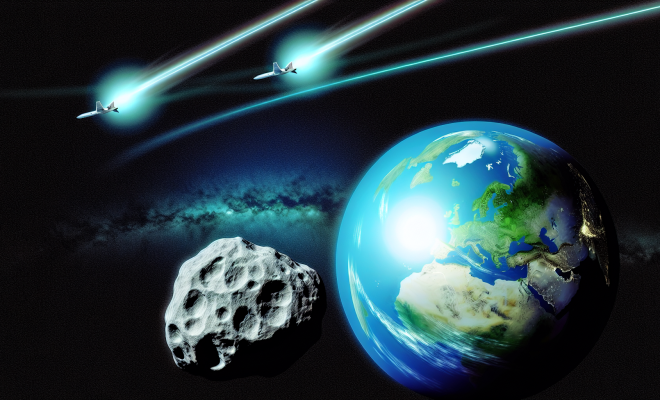
In a recent announcement, NASA confirmed that two near-Earth asteroids, designated as 2026 HJ3 and 2026 HR, will make a close approach to our planet on April 27, 2026. While the size of these celestial bodies is comparable to that of an airplane, scientists assure that there is no risk of impact. These findings highlight the ongoing efforts to monitor near-Earth objects (NEOs) and the advancements in planetary defense technologies.
Understanding Near-Earth Objects
Near-Earth objects are defined as asteroids or comets that come within 1.3 astronomical units (AU) from the Sun, which is approximately 93 million miles away from Earth. Among these, some have orbits that bring them dangerously close to our planet, potentially posing a threat. NASA’s Planetary Defense Coordination Office actively tracks these objects to assess their trajectories and determine any potential risks they may pose.
The Asteroids: 2026 HJ3 and 2026 HR
Both asteroids, 2026 HJ3 and 2026 HR, have been identified as being approximately the size of commercial airplanes. Specifically:
- 2026 HJ3: Estimated to be about 100 feet in diameter.
- 2026 HR: Slightly larger, measuring approximately 120 feet across.
Despite their significant size, NASA has confirmed that both will pass safely millions of miles away from Earth, ensuring no risk of collision. This close approach presents an excellent opportunity for astronomers and scientists to study the composition and behavior of these asteroids.
The Importance of Monitoring Asteroids
The routine monitoring of near-Earth objects is crucial for several reasons:
- Risk Assessment: Identifying potential threats allows scientists to develop strategies to mitigate risks.
- Trajectory Refinement: Continuous observation helps refine models of an asteroid’s path.
- Scientific Research: Studying asteroids enhances our understanding of the solar system and the building blocks of planets.
NASA employs a variety of telescopes and satellites to detect and track these objects. Notable technology includes the Pan-STARRS telescopes in Hawaii and the NEOWISE mission, which is focused on finding and characterizing NEOs.
Planetary Defense Initiatives
NASA’s efforts to defend Earth from potential asteroid impacts have gained momentum over the past few decades. The agency has invested in various initiatives aimed at improving detection and developing possible deflection strategies. Key initiatives include:
- Double Asteroid Redirection Test (DART): A mission aimed at testing the feasibility of altering an asteroid’s trajectory through kinetic impact.
- Asteroid Terrestrial-impact Last Alert System (ATLAS): A system designed to provide early warnings of incoming asteroids.
- International Collaborations: Working with global partners to enhance asteroid detection capabilities.
Such initiatives are essential as they prepare humanity for any unforeseen asteroid threats in the future.
Public Engagement and Awareness
As NASA continues to monitor near-Earth asteroids, public awareness and engagement in planetary defense efforts remain vital. Educational programs and outreach initiatives help the general public understand the significance of these celestial objects and the ongoing efforts to protect Earth.
For instance, NASA’s Asteroid Day events encourage communities to learn more about asteroids and the science behind tracking them. Engaging the public fosters a sense of responsibility and awareness about our planet’s safety.
Conclusion: A Safe Approach
As we approach April 27, 2026, the close approach of asteroids 2026 HJ3 and 2026 HR serves as a reminder of the importance of continued vigilance in monitoring near-Earth objects. While these asteroids present no threat, they offer a unique opportunity for scientists to study their characteristics and behaviors. NASA’s commitment to tracking NEOs underlines the necessity of planetary defense, ensuring that we are prepared for any potential future threats.
In the grand scheme of our solar system, asteroids like 2026 HJ3 and 2026 HR are but fleeting visitors. However, with the right tools, knowledge, and international collaboration, we can safeguard our planet from the unknown, ensuring that Earth remains a safe harbor in the vastness of space.