
Iran’s Defiant Rhetoric: A Warning to America Amid Geopolitical Tensions
Introduction
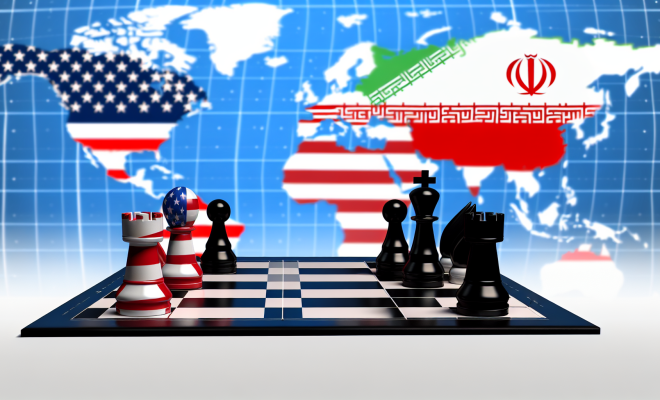
In a striking escalation of rhetoric, a senior adviser to Iran’s Supreme Leader has issued a fierce warning to the United States, stating that Iran will “smash and shatter America.” This declaration comes amid claims of U.S. strategic failures and hints at potential negotiations for mercy talks, reflecting a significant shift in the geopolitical landscape between the two nations. The implications of these statements are profound, underscoring the growing tensions that characterize U.S.-Iran relations.
Context of the Tensions
The relationship between Iran and the United States has been fraught with conflict and suspicion for decades. Since the 1979 Iranian Revolution, which saw the toppling of the U.S.-backed Shah, the two nations have been locked in a cycle of hostility marked by sanctions, military confrontations, and diplomatic impasses. Recent developments have further strained these relations, particularly in light of Iran’s nuclear ambitions and its role in regional conflicts.
Recent Developments
The latest warning from Iran follows a series of U.S. actions perceived as aggressive by Tehran, including military deployments in the Persian Gulf and ongoing sanctions aimed at crippling Iran’s economy. In this charged atmosphere, the Iranian government has intensified its rhetoric, suggesting a more confrontational stance as a means of both internal consolidation and external signaling.
The Senior Adviser’s Statement
The senior adviser, whose identity remains undisclosed, articulated the threats during a public address, emphasizing Iran’s resolve to respond decisively to perceived aggressions from the United States. His words were not merely bluster; they echoed a deep-seated sentiment within Iranian leadership that views the U.S. as an existential threat.
Key Phrases and Their Implications
- “Smash and shatter America”: This phrase encapsulates a defiant spirit and suggests a willingness to confront U.S. policies head-on, possibly through military or asymmetric tactics.
- Claims of U.S. strategic failure: This assertion reflects Iran’s belief that the U.S. has overextended itself militarily and politically, particularly in the Middle East.
- Plea for mercy talks: The mention of negotiations hints at a possible shift in strategy, where Iran might be open to discussions under specific conditions, despite its aggressive posturing.
The Role of U.S. Officials
While specific names were not mentioned in the Iranian adviser’s remarks, the implications are clear: U.S. officials involved in current negotiations are under scrutiny. Their ability to navigate these complex waters will be critical in determining whether the tensions escalate further or give way to diplomatic solutions.
U.S. Diplomatic Efforts
In response to the heightened rhetoric, U.S. officials have been engaged in a delicate balancing act. On one hand, they are attempting to maintain pressure on Iran through sanctions and military readiness; on the other, they are exploring avenues for dialogue to prevent further escalation. Recent reports indicate a renewed interest in talks, albeit under the shadow of Iran’s aggressive statements.
Geopolitical Ramifications
The implications of this exchange extend beyond the bilateral relationship between Iran and the U.S. The warning from Iran is a signal to its regional adversaries, particularly Israel and Saudi Arabia, that it remains a formidable power in the Middle East. It also highlights the shifting alliances and enmities that characterize the region.
The Middle East Landscape
The Middle East is a complex tapestry of alliances, and Iran’s bold stance could further polarize relationships among key players. Countries that have historically aligned with the U.S., such as Israel, may feel emboldened to take a more aggressive stance against Iranian influence, while nations sympathetic to Iran could rally in support.
The Domestic Context
Within Iran, the statement is likely to resonate with nationalistic sentiments. The Iranian leadership often leverages anti-American rhetoric to unify the populace against perceived external threats. This tactic serves to distract from domestic issues and consolidate power among the ruling elite.
Public Sentiment in Iran
The Iranian public’s response to U.S. policies has historically been shaped by a sense of victimization and siege mentality. As economic pressures mount due to sanctions, the government’s ability to frame the U.S. as a common enemy plays a crucial role in maintaining internal cohesion. The rhetoric of “smashing and shattering” America taps into this narrative.
International Reactions
The international community has taken note of Iran’s latest threats, with mixed responses. European allies of the U.S. have expressed concern over the potential for military escalation and the need for continued diplomatic engagement. Meanwhile, nations that have historically supported Iran, such as Russia and China, may see this as an opportunity to enhance their partnerships with Tehran.
The European Perspective
European nations are caught in a challenging position, seeking to uphold the nuclear deal that Iran has partially abandoned while also addressing U.S. interests in the region. The balancing act requires delicate diplomacy as they navigate the competing interests of maintaining stability and engaging with Iran.
Conclusion
The recent warning from Iran’s senior adviser marks a significant moment in U.S.-Iran relations, encapsulating the defiance and determination of the Iranian leadership in the face of U.S. policies. As both nations grapple with their respective strategic failures and ambitions, the potential for conflict remains high, necessitating careful diplomatic efforts to prevent further escalation.
In the coming months, the world will be watching closely as the U.S. seeks to engage in mercy talks while Iran remains poised to assert its influence. The outcome of these interactions will have far-reaching consequences for regional stability and international relations.


