Perseverance Rover Finds Fluorescent Corundum Gems on Mars (2026)
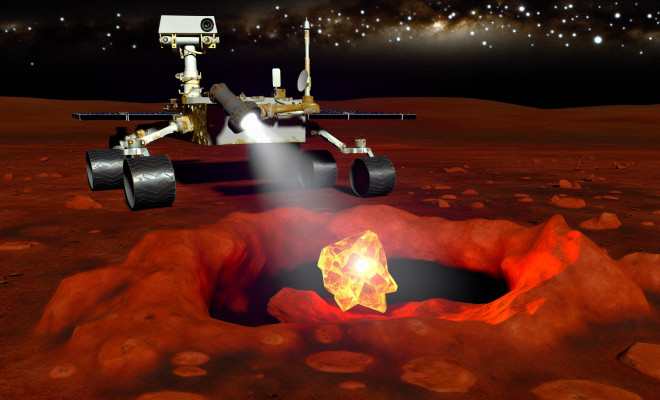
In a remarkable breakthrough, NASA’s Perseverance rover has uncovered tiny fluorescent gemstones on Mars, specifically composed of corundum. This discovery, made outside the rim of Jezero Crater, marks the first time such gems have been identified on the Red Planet, sparking interest in planetary geology and the processes that shape different celestial bodies.
The Discovery of Fluorescent Gems
The finding was announced on March 29, 2026, and represents a significant achievement in our understanding of Martian geology. Perseverance, which landed on Mars in February 2021, has been tasked with exploring the Jezero Crater’s ancient river delta, an area believed to have once harbored water and potentially life. The rover’s advanced scientific instruments have enabled it to analyze the composition of various materials, leading to this unprecedented discovery.
Composition and Formation of the Gems
The microscopic gemstones identified by the Perseverance rover are primarily made up of corundum, a mineral that can form either rubies or sapphires depending on the presence of chromium or iron and titanium, respectively. Unlike Earth, where tectonic activity plays a significant role in the formation of such gemstones, the Martian variants are believed to have been formed through meteorite impacts. This process is indicative of the unique geological history of Mars, contrasting sharply with the tectonic-driven processes that create similar gems on our home planet.
Geological Implications
This discovery not only sheds light on the existence of gemstones on Mars but also emphasizes the differences in geological processes between Earth and Mars. On Earth, gemstones like rubies and sapphires typically form in metamorphic rocks under significant heat and pressure, often due to tectonic movements. However, the findings from Jezero Crater suggest that similar minerals can arise from entirely different processes, such as high-energy impacts that create conditions sufficient for gem formation.
The Science Behind the Discovery
The fluorescent nature of the gems adds another layer of intrigue. Fluorescence occurs when a material absorbs light at one wavelength and then re-emits it at a longer wavelength. This property is not only fascinating from a scientific perspective but also useful for identification and analysis. The Perseverance rover utilizes sophisticated laser technology to analyze rock and soil samples, and the detection of these fluorescent minerals highlights the rover’s capability to identify complex geological features on Mars.
Significance of the Find
The discovery of these gemstones is significant for several reasons:
- Understanding Martian Geology: The presence of fluorescent corundum provides insights into the geological history of Mars and the processes that have shaped its surface.
- Implications for Past Life: Understanding the mineral composition of the Martian surface can help scientists draw conclusions about the planet’s past environment and its potential to support life.
- Comparison with Earth: This find allows for a comparative analysis of geological processes on Earth and Mars, enhancing our understanding of planetary formation.
Future Research Directions
As the Perseverance rover continues its exploration of Jezero Crater, scientists are eager to further investigate these gemstones and their implications. Future missions may focus on:
- Detailed Mineral Analysis: Conducting more in-depth studies of the gem’s composition to determine the exact conditions under which they formed.
- Exploration of Other Locations: Investigating other regions of Mars for similar mineralogical features, which could provide additional context for Martian geology.
- Preparing for Sample Return Missions: The findings may inform future sample return missions that aim to bring Martian materials back to Earth for comprehensive analysis.
Conclusion
The discovery of fluorescent corundum gemstones by NASA’s Perseverance rover is a significant milestone in our exploration of Mars. It not only enriches our understanding of Martian geology but also opens new avenues for research into the planet’s history and potential for past life. As scientists continue to analyze these findings, the implications for planetary science are vast, promising to deepen our knowledge of not just Mars, but of the broader processes that govern planetary formation across the universe.