The Edvocate

Top Menu

Main Menu

  • Start Here
    • Our Brands
    • Governance
      • Lynch Education Consulting, LLC.
      • Dr. Lynch’s Personal Website
      • Careers
    • Write For Us
    • Books
    • The Tech Edvocate Product Guide
    • Contact Us
    • The Edvocate Podcast
    • Edupedia
    • Pedagogue
    • Terms and Conditions
    • Privacy Policy
  • PreK-12
    • Assessment
    • Assistive Technology
    • Best PreK-12 Schools in America
    • Child Development
    • Classroom Management
    • Early Childhood
    • EdTech & Innovation
    • Education Leadership
    • Equity
    • First Year Teachers
    • Gifted and Talented Education
    • Special Education
    • Parental Involvement
    • Policy & Reform
    • Teachers
  • Higher Ed
    • Best Colleges and Universities
    • Best College and University Programs
    • HBCU’s
    • Diversity
    • Higher Education EdTech
    • Higher Education
    • International Education
  • Advertise
  • The Tech Edvocate Awards
    • The Awards Process
    • Finalists and Winners of The 2026 Tech Edvocate Awards
    • Finalists and Winners of The 2025 Tech Edvocate Awards
    • Finalists and Winners of The 2024 Tech Edvocate Awards
    • Finalists and Winners of The 2023 Tech Edvocate Awards
    • Finalists and Winners of The 2021 Tech Edvocate Awards
    • Finalists and Winners of The 2022 Tech Edvocate Awards
    • Finalists and Winners of The 2020 Tech Edvocate Awards
    • Finalists and Winners of The 2019 Tech Edvocate Awards
    • Finalists and Winners of The 2018 Tech Edvocate Awards
    • Finalists and Winners of The 2017 Tech Edvocate Awards
    • Award Seals
  • Apps
    • GPA Calculator for College
    • GPA Calculator for High School
    • Cumulative GPA Calculator
    • Grade Calculator
    • Weighted Grade Calculator
    • Final Grade Calculator
  • The Tech Edvocate
  • Post a Job
  • AI Powered Personal Tutor

logo

The Edvocate

  • Start Here
    • Our Brands
    • Governance
      • Lynch Education Consulting, LLC.
      • Dr. Lynch’s Personal Website
        • My Speaking Page
      • Careers
    • Write For Us
    • Books
    • The Tech Edvocate Product Guide
    • Contact Us
    • The Edvocate Podcast
    • Edupedia
    • Pedagogue
    • Terms and Conditions
    • Privacy Policy
  • PreK-12
    • Assessment
    • Assistive Technology
    • Best PreK-12 Schools in America
    • Child Development
    • Classroom Management
    • Early Childhood
    • EdTech & Innovation
    • Education Leadership
    • Equity
    • First Year Teachers
    • Gifted and Talented Education
    • Special Education
    • Parental Involvement
    • Policy & Reform
    • Teachers
  • Higher Ed
    • Best Colleges and Universities
    • Best College and University Programs
    • HBCU’s
    • Diversity
    • Higher Education EdTech
    • Higher Education
    • International Education
  • Advertise
  • The Tech Edvocate Awards
    • The Awards Process
    • Finalists and Winners of The 2026 Tech Edvocate Awards
    • Finalists and Winners of The 2025 Tech Edvocate Awards
    • Finalists and Winners of The 2024 Tech Edvocate Awards
    • Finalists and Winners of The 2023 Tech Edvocate Awards
    • Finalists and Winners of The 2021 Tech Edvocate Awards
    • Finalists and Winners of The 2022 Tech Edvocate Awards
    • Finalists and Winners of The 2020 Tech Edvocate Awards
    • Finalists and Winners of The 2019 Tech Edvocate Awards
    • Finalists and Winners of The 2018 Tech Edvocate Awards
    • Finalists and Winners of The 2017 Tech Edvocate Awards
    • Award Seals
  • Apps
    • GPA Calculator for College
    • GPA Calculator for High School
    • Cumulative GPA Calculator
    • Grade Calculator
    • Weighted Grade Calculator
    • Final Grade Calculator
  • The Tech Edvocate
  • Post a Job
  • AI Powered Personal Tutor
  • The AI Parenting Revolution: Are We Trading Connection For Convenience?

  • Shocking: Kids in Crisis Face More Emergency Holds and Restraints — What Every Parent Needs to Know Now

  • Urgent: New Study Reveals Alarming Truth About Toddler Screen Time — You Won’t Believe What It Does to Their Brains

  • New Research: This Is the Real Reason AI Cheating in Schools Is Exploding

  • This Game-Changing Bill Could Completely Transform Your Kids’ Financial Future

  • Americans of all ages want more federal help with childcare costs. Gen Z most of all.

  • Dramatic Shift: This New School Choice Program Could Redefine Education Funding

  • Outrageous: Biden Admin Quietly Killing Key Student Loan Program — Here’s How

  • Know a Middle Grade Reader Who Needs a Great New Book

  • This One Bill Could Drastically Reshape Custody Battles for Millions of Parents

Uncategorized
Home›Uncategorized›See the Young Moon & Venus: March 19, 2026 Skywatching Guide

See the Young Moon & Venus: March 19, 2026 Skywatching Guide
By Matthew Lynch
March 19, 2026
0
Spread the love

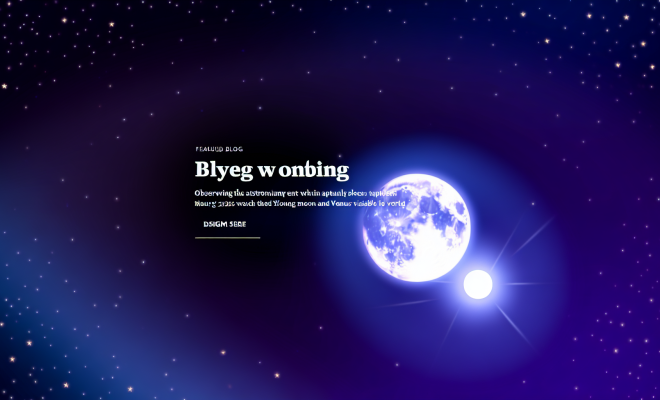
On March 19, 2026, skywatchers will be treated to a spectacular celestial event featuring one of the youngest visible moons of the year, accompanied by the dazzling planet Venus. This unique occurrence will unfold shortly after sunset, offering observers a chance to see a remarkably narrow crescent moon less than 24 hours past its new phase.

Setting the Scene: The Moon and Venus

The crescent moon, often referred to as a hairline crescent, will be positioned low in the western sky, approximately 10 degrees above the horizon. This sighting will be particularly accessible to observers in mid-northern latitudes, where the brightness of Venus will aid in locating the faint lunar crescent. At a magnitude of -3.9, Venus will be the standout feature in the post-sunset sky, providing a bright guide for those looking to catch a glimpse of the moon.

Best Viewing Conditions

To optimize your viewing experience, it’s essential to plan ahead. The crescent moon will become visible about 45 minutes after sunset, making it crucial to be in position before then. Here are some tips for a successful viewing:

  • Choose a clear location: Find an area with minimal light pollution to enhance visibility.
  • Time your observation: Aim to be ready about 45 minutes post-sunset for the best chance to spot the crescent moon.
  • Use Venus as your guide: Look for the bright, shining Venus just above the horizon to help locate the moon.

The Science Behind the Crescent Moon

The moon goes through a series of phases, and the crescent we’ll see on March 19 is particularly noteworthy as it is just emerging from the new moon phase. The new moon occurs when the moon is positioned between the Earth and the sun, making it nearly invisible from our perspective. As it begins to wax, the moon will gradually become more illuminated, transitioning from the slender crescent we will see to a fuller shape in the coming days.

Additional Celestial Events

This event does not stand alone; March 19 also coincides with several other astronomical phenomena. Notably, observers may have the opportunity to witness potential northern lights due to incoming coronal mass ejections (CMEs) from the sun. These CMEs can unleash streams of charged particles into the Earth’s atmosphere, leading to beautiful auroras in the polar regions and sometimes even further south.

Moreover, early risers will have another chance to observe Mercury, the closest planet to the sun, before sunrise on the following mornings. This combination of events creates an exciting week for skywatchers, providing multiple opportunities to engage with the cosmos.

The Importance of Skywatching

Skywatching not only serves as a captivating hobby but also plays a vital role in fostering a deeper understanding of our universe. Events like the appearance of the crescent moon and Venus serve as a reminder of the dynamic processes occurring beyond our planet. They encourage enthusiasts, from novice stargazers to seasoned astronomers, to step outside, look up, and engage with the wonders of the night sky.

Getting Involved in Astronomy

For those interested in expanding their knowledge and appreciation for astronomy, there are several ways to get involved:

  • Join local astronomy clubs: Many communities have clubs that host star parties, lectures, and observing nights.
  • Use astronomy apps: Numerous apps are available that provide real-time information about celestial events and help identify stars and planets.
  • Attend planetarium shows: Local planetariums often offer educational programs and shows that delve into various aspects of astronomy.

Conclusion

As March 19, 2026, approaches, mark your calendars for this exceptional celestial event featuring the young crescent moon alongside Venus. Prepare your viewing location, gather your friends or family, and take part in this awe-inspiring experience. Whether you are a long-time astronomy enthusiast or a curious newcomer, this event is a perfect opportunity to connect with the universe and enjoy the breathtaking beauty of the night sky.


Previous Article

Double Auroral Delight: Earth Braces for Two ...

Next Article

CISA Flags Critical SharePoint & Zimbra Flaws ...

Matthew Lynch

Related articles More from author

  • Uncategorized

    3 More Tips for Faculty Members New to Administrative Roles

    January 2, 2025
    By Matthew Lynch
  • Uncategorized

    Ebola Travel Restrictions 2026: Your Essential Guide

    July 8, 2026
    By Matthew Lynch
  • Uncategorized

    Task Force Report: Enhancing the Value of Higher Ed Degrees

    January 2, 2025
    By Matthew Lynch
  • Uncategorized

    RE-NEET 2026 Analysis: Shocking Cut-Offs & Ranks Revealed

    June 23, 2026
    By Matthew Lynch
  • Uncategorized

    Earth-Like Exoplanet Discovered 50 Light-Years Away

    April 5, 2026
    By Matthew Lynch
  • Uncategorized

    Understanding AI Tools: A Parent’s Guide to AI Literacy in Schools

    August 22, 2026
    By Matthew Lynch

Search

Registration and Login

  • Log in
  • Entries feed
  • Comments feed
  • WordPress.org

Newsletter

Signup for The Edvocate Newsletter and have the latest in P-20 education news and opinion delivered to your email address!

RSS feed: Matthew on Education Week Matthew on Education Week

  • Au Revoir from Education Futures November 20, 2018 Matthew Lynch
  • 6 Steps to Data-Driven Literacy Instruction October 17, 2018 Matthew Lynch
  • Four Keys to a Modern IT Approach in K-12 Schools October 2, 2018 Matthew Lynch
  • What's the Difference Between Burnout and Demoralization, and What Can Teachers Do About It? September 27, 2018 Matthew Lynch
  • Revisiting Using Edtech for Bullying and Suicide Prevention September 10, 2018 Matthew Lynch

About Us

The Edvocate was created in 2014 to argue for shifts in education policy and organization in order to enhance the quality of education and the opportunities for learning afforded to P-20 students in America. What we envisage may not be the most straightforward or the most conventional ideas. We call for a relatively radical and certainly quite comprehensive reorganization of America’s P-20 system.

That reorganization, though, and the underlying effort, will have much to do with reviving the American education system, and reviving a national love of learning.  The Edvocate plans to be one of key architects of this revival, as it continues to advocate for education reform, equity, and innovation.

Newsletter

Signup for The Edvocate Newsletter and have the latest in P-20 education news and opinion delivered to your email address!

Contact

The Edvocate
910 Goddin Street
Richmond, VA 23230
(601) 630-5238
[email protected]
  • situs togel online
  • dentoto
  • situs toto 4d
  • situs toto slot
  • toto slot 4d
Copyright (c) 2026 Matthew Lynch. All rights reserved.