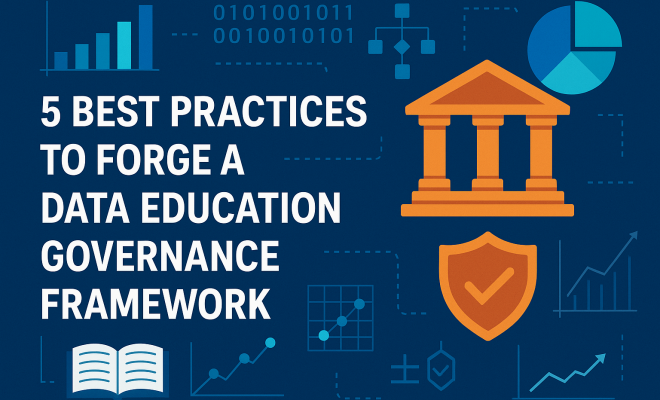
Forge a Data Education Governance Framework: 5 Best Practices
“`html
In an era where data reigns supreme, the need for a solid data governance framework in educational institutions has never been more critical. With the rise of technology in education, schools and universities are generating massive amounts of data daily, from student performance metrics to administrative processes. Yet, without a structured approach to managing this data, institutions risk falling prey to inaccuracies, compliance issues, and a host of other challenges. This article delves into the five best practices that can help forge an effective data governance framework, ensuring that educational institutions harness the power of their data responsibly and effectively.
1. Establish a Clear Vision and Strategy
The first step in creating a successful data governance framework is to establish a clear vision and strategy. This sets the tone for how data will be handled within the institution. A well-defined vision articulates what the organization hopes to achieve with its data governance efforts, whether it’s enhancing student outcomes, improving decision-making, or ensuring compliance with regulations.
To develop an effective strategy, involve key stakeholders, including administrators, faculty, and IT personnel. Collaborating with these groups can help identify critical data assets, define governance roles, and establish shared goals. The strategy should also align with the institution’s overall mission, ensuring that data efforts support broader educational objectives.
2. Define Roles and Responsibilities
Once a vision and strategy are in place, the next step is to define roles and responsibilities within the data governance framework. This clarity is essential for accountability and effective data management. Identify who will be responsible for data stewardship, data quality, compliance, and security, among other areas.
Consider establishing a data governance committee that includes representatives from different departments. This committee can oversee data governance initiatives, facilitate communication among stakeholders, and ensure that data governance policies are consistently applied across the institution. Clearly defined roles also help to empower staff, allowing them to take ownership of their data responsibilities.
3. Develop Data Policies and Standards
Creating comprehensive data policies and standards is a cornerstone of any robust data governance framework. These policies should cover various aspects of data management, including data classification, data security, privacy, and data sharing. Well-defined standards ensure consistency in how data is collected, stored, and utilized. (compliance strategies for accreditation)
For instance, policies should clearly outline how student data is to be handled, ensuring compliance with regulations such as FERPA (Family Educational Rights and Privacy Act). Furthermore, institutions should establish standards on data quality, including guidelines for data entry, validation, and cleansing processes. By instituting these policies, educational institutions can mitigate risks while enhancing the reliability of their data.
4. Implement Data Quality Management Practices
Data quality is central to the success of a data governance framework. Poor data quality can lead to erroneous conclusions, misinformed decisions, and compliance issues. Therefore, implementing robust data quality management practices is crucial. This includes regular assessments of data accuracy, completeness, and timeliness.
Consider utilizing data profiling tools and conducting periodic audits to evaluate data quality. Additionally, establishing a feedback loop for data users can help identify data quality issues early. Training staff on best practices for data entry and management also plays a vital role in maintaining high-quality data. When everyone understands the importance of data integrity, the institution is better positioned to leverage its data effectively. (See: What is Data Governance and Why It Matters.)
5. Foster a Data-Driven Culture
A successful data governance framework extends beyond policies and procedures; it requires a cultural shift towards data-driven decision-making. To foster this culture, institutions must promote the value of data across all levels of the organization. This involves training staff on how to interpret data and use it to inform their work.
Encouraging collaboration between departments is also essential. When faculty and administration work together, they can share insights derived from data, leading to more informed strategies and initiatives. Recognizing and rewarding data-driven achievements can further incentivize this culture. Ultimately, a data-driven approach empowers staff and enhances overall institutional effectiveness.
6. Ensure Compliance with Regulations
In the realm of education, compliance with data protection regulations is non-negotiable. Institutions must keep up with laws like FERPA, GDPR (General Data Protection Regulation), and HIPAA (Health Insurance Portability and Accountability Act) to protect sensitive information. A well-structured data governance framework should explicitly address compliance requirements, integrating them into all data policies and practices.
Consider appointing a compliance officer or team responsible for monitoring regulatory changes and ensuring that the institution adheres to these laws. Regular training sessions for staff on compliance issues can also help mitigate risks. By prioritizing compliance, educational institutions not only protect themselves from legal ramifications but also build trust with students and other stakeholders.
7. Continuously Evaluate and Adapt
Finally, a successful data governance framework is never static; it requires ongoing evaluation and adaptation. As technology evolves and the educational landscape shifts, institutions must be ready to adjust their data strategies accordingly. Regular assessments of the data governance framework can help identify areas for improvement and ensure that the institution remains aligned with its goals.
Consider establishing key performance indicators (KPIs) to measure the effectiveness of the data governance efforts. Solicit feedback from data users and stakeholders to gauge the framework’s impact on decision-making and operations. By being proactive in evaluating and adapting your data governance framework, your institution can continue to leverage data as a powerful tool for educational success.
8. Leverage Technology for Data Governance
In today’s digital age, technology plays a crucial role in enhancing the effectiveness of a data governance framework. Various tools and platforms can assist institutions in automating data management processes, ensuring data quality, and facilitating compliance. For example, data governance software like Collibra or Informatica can streamline data management tasks, offering centralized repositories where data policies and standards can be maintained.
Furthermore, implementing cloud-based solutions can enhance accessibility while ensuring that data is stored securely. Cloud technologies often come equipped with advanced security measures and compliance certifications, which can help educational institutions mitigate risks associated with data breaches. Additionally, incorporating machine learning algorithms can automate data quality checks, providing real-time insights into data health.
9. Data Literacy Training Programs
Building a data-driven culture requires more than just policies and tools; it necessitates a workforce that is skilled in data literacy. Data literacy training programs can empower staff and faculty to understand and leverage data effectively. These programs should cover essential topics such as data interpretation, data visualization techniques, and the ethical use of data.
Institutions can consider partnering with organizations that offer specialized data literacy training. Workshops, online courses, and seminars can be tailored to various roles within the institution, ensuring that everyone from administrators to educators understands how to utilize data in their respective functions. This investment in training not only improves data management but also enhances overall organizational capability. (See: Data Governance Framework in Education.)
10. Case Studies: Successful Implementation of Data Governance Frameworks
Examining real-world examples can provide valuable insights into how educational institutions successfully implement their data governance frameworks. For instance, the University of California system adopted a comprehensive data governance model that integrates various campuses and departments. They established a centralized data governance council that oversees data policy across the organization, ensuring cohesive data management practices. As a result, they reported increased data accuracy and improved compliance with state and federal regulations.
Similarly, a community college in Florida implemented a data governance framework that focused on data quality and user access. They utilized data management software to track student performance, which allowed faculty to make data-driven instructional decisions. The college experienced a significant boost in student retention rates as a result of targeted interventions based on data insights. engaging community partnerships offers useful background here.
11. Common Challenges in Data Governance
While implementing a data governance framework can yield significant benefits, institutions often face challenges that can hinder their progress. One common issue is resistance to change. Faculty and staff may be accustomed to traditional methods of data management, making it difficult to embrace new policies and technologies. Addressing these concerns through effective communication and demonstrating the benefits of the data governance framework is crucial for gaining buy-in.
Another challenge is the lack of resources. Many educational institutions operate under tight budgets, which can limit their ability to invest in advanced data governance technologies or hire dedicated data governance staff. To overcome this, institutions can consider leveraging existing resources, such as forming partnerships with other organizations or utilizing open-source data governance tools.
12. Frequently Asked Questions (FAQs)
What is a data governance framework?
A data governance framework is a structured approach that outlines how data is managed, protected, and utilized within an organization. It includes policies, roles, responsibilities, and standards that guide data management practices to ensure data integrity and compliance with relevant regulations. This builds on guide to educational law.
Why is data governance important in education?
Data governance is crucial in education as it ensures that the vast amounts of data generated are accurate, secure, and used effectively to improve student outcomes and operational efficiency. Strong data governance helps institutions comply with legal requirements and enhances decision-making processes.
How can institutions measure the effectiveness of their data governance framework?
Institutions can measure the effectiveness of their data governance framework through key performance indicators (KPIs) such as data accuracy rates, compliance audit results, user satisfaction surveys, and the speed of data retrieval processes. Regular feedback from stakeholders can also provide insights into areas for improvement.
What are the best practices for implementing a data governance framework?
Best practices for implementing a data governance framework include establishing a clear vision and strategy, defining roles and responsibilities, developing comprehensive policies, ensuring data quality management, fostering a data-driven culture, ensuring regulatory compliance, and continuously evaluating and adapting the framework as needed. (See: Guide to Data Governance.)
Who should be involved in the data governance process?
Key stakeholders in the data governance process should include administrators, faculty, IT personnel, data stewards, and legal compliance officers. Involving representatives from various departments ensures a holistic approach to data governance, as different perspectives can highlight unique data management challenges and opportunities.
What tools are available for data governance?
There are numerous tools available to support data governance efforts. Some widely used options include Collibra, Informatica, Alation, and Talend. These platforms offer features such as data lineage tracking, policy management, and data quality assessment. Additionally, many educational institutions are utilizing business intelligence tools like Tableau or Power BI to help visualize and analyze data effectively.
How can data governance impact student success?
Effective data governance can lead to improved student success by ensuring that educational institutions have accurate and timely data to inform decision-making. For example, well-governed data can identify at-risk students early, allowing for targeted interventions that can help increase retention and graduation rates. Additionally, data-driven insights can enhance curriculum development and instructional practices tailored to student needs.
What role does data privacy play in data governance?
Data privacy is a critical aspect of data governance. Institutions must establish policies that protect sensitive student information and comply with relevant privacy laws. This includes implementing access controls, anonymizing data where appropriate, and ensuring that data is only shared in ways that respect student privacy and comply with regulations like FERPA and GDPR.
What are the long-term benefits of a solid data governance framework?
In the long term, a robust data governance framework can lead to enhanced institutional reputation, improved operational efficiency, and better educational outcomes. By fostering trust among stakeholders and demonstrating a commitment to data integrity, institutions can position themselves as leaders in the educational landscape. Moreover, as data governance practices mature, they can evolve into a competitive advantage, enabling institutions to innovate and respond swiftly to changing educational demands.
Conclusion
Developing a strong data governance framework is essential for educational institutions aiming to harness the power of data responsibly. By following these best practices—establishing a clear vision, defining roles, developing policies, ensuring data quality, fostering a data-driven culture, ensuring compliance, leveraging technology, training staff, and continuously evaluating the framework—institutions can create an environment where data is not just collected, but effectively utilized to enhance educational outcomes. As the educational landscape continues to evolve, those institutions that prioritize data governance will undoubtedly find themselves at the forefront of innovation and success.
“`
Trending Now
Frequently Asked Questions
What is a data governance framework in education?
A data governance framework in education is a structured approach that defines how data is managed, protected, and utilized within educational institutions. It ensures compliance, enhances data quality, and aligns data management strategies with the institution's educational goals.
Why is data governance important in schools?
Data governance is crucial in schools because it helps manage the vast amounts of data generated daily. It ensures data accuracy, compliance with regulations, and supports informed decision-making, ultimately enhancing student outcomes and operational efficiency.
What are the best practices for data governance?
Best practices for data governance include establishing a clear vision and strategy, defining roles and responsibilities, ensuring stakeholder involvement, implementing data quality measures, and fostering a culture of accountability regarding data management.
How can educational institutions improve data management?
Educational institutions can improve data management by creating a comprehensive data governance framework. This involves setting clear strategies, defining roles, engaging stakeholders, and ensuring data quality and compliance, which can lead to better decision-making and outcomes.
Who should be involved in data governance in education?
Key stakeholders in data governance include administrators, faculty, IT personnel, and potentially students. Their involvement helps identify critical data assets, define governance roles, and establish shared goals, ensuring that the data governance framework is effective and comprehensive.
What's your take on this? Share your thoughts in the comments below — we read every one.