1.7 Million Satellites: A Catastrophic Threat to Our Night Sky
“`html
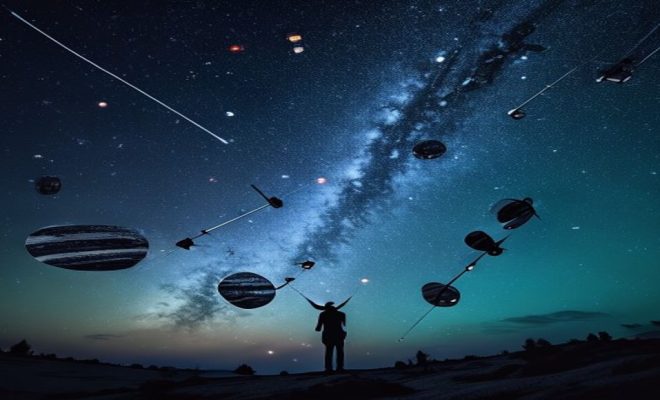
The night sky has long been a source of inspiration and wonder for humanity. However, recent research from the European Southern Observatory (ESO) raises critical alarms about the future of our cosmic views. With plans for over 1.7 million satellites to be launched into space, the impact on astronomy could be catastrophic. The study reveals that these satellites could increase the brightness of the night sky by up to four times, threatening the integrity of ground-based astronomical observations.
The Rising Threat of Satellite Constellations
As technology progresses, space is becoming increasingly crowded. Companies like Reflect Orbital have ambitious goals, intending to deploy thousands of satellites to enhance global communications, internet access, and other technological advancements. While these initiatives may seem beneficial, the cumulative effect of such vast satellite networks is raising serious concerns among astronomers and scientists around the globe.
Specifically, the ESO’s report warns that even the dimmest of satellites can interfere with ground-based telescopes. The brighter the sky becomes due to these artificial lights, the more challenging it becomes to detect and study celestial phenomena. Astronomers are already facing difficulties caused by existing satellite constellations, and the planned influx of additional satellites exacerbates the problem.
The Emotional Toll: Fear of Losing the Night Sky
There’s an emotional resonance surrounding the prospect of losing our access to the night sky. Many people cherish the beauty of starlit nights, and the thought of an obstructed view is disconcerting—almost heartbreaking. As the ESO’s research circulates, it highlights a growing public concern: the fear of missing out on the awe-inspiring vastness of the universe.
Social media has amplified these concerns, with more individuals discussing their childhood memories of stargazing and the joy it brought them. This sense of nostalgia fuels a powerful emotional reaction to the idea of a light-polluted sky that could overshadow the splendor of our cosmos.
The Technical Challenges of Satellite Brightness
The technical aspects of satellite brightness are complex. Even with well-intentioned designs aimed at minimizing glare, there are inherent challenges in creating satellites that remain invisible to the naked eye. Reflect Orbital, for example, aims to launch up to 50,000 satellites that are as dim as possible. However, experts argue that the sheer volume of these satellites means that even the dimmest will still contribute to an overall increase in sky brightness.
Researchers are calling for stricter regulations, suggesting that a global limit should be set at 100,000 satellites. This would help preserve the dark sky necessary for astronomical research and enhance humanity’s understanding of the universe. The complexity of this issue begs a larger question: How should we balance technological advancements with scientific preservation?
The Call for Global Regulations
In light of this growing crisis, there’s a strong call within the scientific community for immediate action. Organizations such as the ESO are advocating for global regulations that can effectively manage the deployment of satellites. The proposed regulations include not only a limit on the number of satellites but also strict mandates governing their visibility. If satellites can be rendered invisible to the naked eye, it could greatly alleviate the impact on astronomy.
One of the most significant hurdles in establishing these regulations is the international nature of space. Multiple countries and private companies are involved in satellite launches, complicating efforts to enforce uniform standards. The need for a cooperative global approach is paramount to address these challenges successfully.
Commercial Interests vs. Scientific Preservation
The clash between commercial space expansion and scientific preservation is at the heart of the current debate. Proponents of satellite deployment argue that the advantages—improved communication, global internet access, and advancements in technology—are too significant to ignore. However, this perspective often overlooks the long-term consequences for astronomical research.
Many scientists are concerned that the exponential growth of satellite networks could stifle groundbreaking discoveries that rely on pristine dark skies. When the observations of celestial events become muddled by artificial lights, the ability to make sense of the universe diminishes. This raises ethical questions about our responsibilities: Should we prioritize immediate technological benefits over the pursuit of knowledge? (See: Satellite internet and its impact.)
How Much Brighter Will the Night Sky Become?
The potential for the night sky to grow four times brighter is a startling statistic that puts the issue into perspective. To understand the implications, one must consider how astronomers rely on specific levels of darkness to observe celestial bodies and phenomena. For instance, faint objects like distant galaxies and exoplanets could become nearly impossible to study.
As the brightness increases, it becomes challenging not just for professional astronomers but also for amateur stargazers. The allure of spotting a shooting star or capturing a glimpse of the Milky Way might soon fade into the memories of those who cherish those experiences.
The Hubble Space Telescope and Ground-Based Observatories
While space telescopes like the Hubble have revolutionized our understanding of the cosmos, ground-based observatories remain crucial for ongoing research. They provide valuable data and insights that complement the findings from space missions. If the sky becomes significantly brighter due to satellites, these observatories may find it increasingly difficult to operate effectively.
In fact, studies show that major observatories have already had to adjust their operations due to light pollution. The potential for further complications from a sky crowded with satellites raises urgent questions about the future of ground-based astronomy. Will future generations be deprived of the chance to witness the universe from their own backyards?
Public Awareness and Advocacy
Raising public awareness about the potential consequences of satellite proliferation is essential. The more people understand the impact of satellites on astronomy, the more likely they are to advocate for solutions. Astronomers, educators, and environmental activists alike need to join forces to communicate the significance of preserving our dark skies.
Public campaigns can inform individuals about the risks posed by satellite networks, encouraging them to engage with policymakers. Advocacy groups can work to ensure that those in charge of satellite deployment are held accountable for their impact on astronomy and the environment at large.
Potential Solutions for Mitigating Satellite Impact
While the challenges posed by satellites are daunting, there are potential solutions that could help mitigate their impact on astronomy. One promising approach is the development of new technologies that can reduce satellite brightness. For instance, scientists are exploring coatings and designs that could minimize reflective surfaces, making satellites less intrusive in the night sky. (light pollution in Atacama)
Furthermore, astronomers are advocating for the use of adaptive optics—a technology that compensates for atmospheric distortion—to enhance observations even in light-polluted areas. While this won’t eliminate the problem, it could allow astronomers to continue their vital work despite the challenges posed by artificial light.
The Future of Astronomy: Navigating Uncertain Waters
The future of astronomy hangs in the balance as we grapple with the impact of satellites on astronomy. As the number of satellites in orbit increases, the potential consequences for scientific exploration and our connection to the cosmos become more profound. It’s essential for scientists, policymakers, and the public to engage in meaningful dialogue about how to preserve our ability to study the universe.
In the face of commercial pressures and technological advancements, the question remains: How can we ensure that future generations have the opportunity to gaze up at the night sky, filled with stars and celestial wonders? As stakeholders unite to confront this growing crisis, the balance between technological progress and scientific discovery must be carefully navigated.
Understanding Light Pollution
Light pollution is a significant factor in the impact of satellites on astronomy. Essentially, it refers to the excessive or misdirected artificial light produced by human activities, which can obscure our view of the night sky. This phenomenon not only affects professional astronomers but also has broader implications for ecosystems, wildlife, and human health.
According to the International Dark-Sky Association, nearly two-thirds of the U.S. population and one-third of the world’s population can no longer see the Milky Way due to light pollution. The core problem lies in the artificial glow emitted from urban areas, which is exacerbated by satellite constellations. As the number of satellites rises, the cumulative light they emit can contribute to this already serious issue. (See: NASA's overview of satellites.)
Addressing light pollution requires a multifaceted approach, including public policy changes, community awareness campaigns, and technological innovation. By improving lighting design and using shielding techniques, we can reduce the negative effects of artificial light on both our environment and astronomical research.
Impact on Citizen Science and Community Astronomy
The implications of satellite proliferation extend beyond professional astronomy into the realm of citizen science and community astronomy initiatives. Many amateur astronomers rely on dark skies to observe celestial events and contribute to scientific data collection. As the night sky becomes brighter, these opportunities will become scarcer.
For instance, organizations like the Great World Wide Star Count encourage individuals to engage in stargazing and data collection. These initiatives foster a sense of wonder and passion for astronomy among the public. However, with more satellites in the sky, the effectiveness of these programs may diminish as light pollution grows.
Community observatories that provide access to telescopes for local stargazers are also at risk. The joy of discovering the beauty of the cosmos could be hindered by artificial lighting, leading to reduced public interest in astronomy and science as a whole.
Future Technologies in Astronomy: A Double-Edged Sword
While satellite technology poses challenges for astronomy, it can also offer solutions. Advanced technologies are being developed to counteract some of the detrimental effects caused by satellite constellations. For example, scientists are working on algorithms that can filter out satellite trails from astronomical images, allowing for clearer observations of celestial phenomena.
Additionally, some research institutions are exploring the use of artificial intelligence to aid astronomers in identifying and classifying celestial objects despite the interference from satellites. These advances could pave the way for a new era of astronomical research, balancing the benefits of satellite technology with the need for accurate data collection.
FAQ: Understanding the Impact of Satellites on Astronomy
What is the main concern regarding satellites and astronomy?
The main concern is that the increasing number of satellites in low Earth orbit contributes to light pollution, which interferes with ground-based astronomical observations and makes it harder to detect faint celestial objects.
How do satellites contribute to light pollution?
Satellites reflect sunlight and emit artificial light, which can brighten the night sky. This increased brightness makes it challenging for astronomers to observe faint stars, galaxies, and other astronomical phenomena. For more on this, see astronomers' concerns on projects.
What are the potential solutions to mitigate the impact of satellites on astronomy?
Solutions include developing satellite technologies that minimize light emissions, implementing regulations to limit the number of satellites, and using adaptive optics to enhance observations in light-polluted areas.
Why is public awareness important in this issue?
Public awareness encourages advocacy for regulations and policies that protect dark skies. When people understand the impact of satellites on astronomy, they are more likely to support efforts to mitigate light pollution. (See: Impact of light pollution on health.)
What role can amateur astronomers play in the discussion about satellites?
Amateur astronomers can help raise awareness about the issue of satellite light pollution through their observations, sharing experiences, and participating in citizen science initiatives that highlight the importance of dark skies for observing celestial events.
The Broader Impact of Satellites on Science
The implications of satellite proliferation span more than just astronomy. They touch a variety of scientific fields including meteorology, environmental science, and even biology. As satellites become more prevalent, there’s a risk of data contamination across these disciplines as well.
For instance, satellite data is essential for tracking climate change and monitoring the environment. If satellites contribute to light pollution, it may hinder our ability to collect accurate data on nocturnal patterns, such as animal behaviors. Many species rely on natural light cycles for their reproductive and feeding activities. A brighter night sky could disrupt these cycles, leading to unforeseen ecological consequences.
Comparative Case Studies: Impact on Observational Astronomy
Several case studies illustrate the impact of satellite networks on observational astronomy. For example, in 2019, astronomers conducted research using data from the Large Synoptic Survey Telescope (LSST). The LSST, designed to capture faint astronomical phenomena, faced challenges due to satellite trails interfering with its observations.
Another notable case is the Atacama Large Millimeter/submillimeter Array (ALMA) in Chile. The facility had to adapt its observational programs to account for increasing satellite interference, leading to decreased efficiency in data collection. These examples underscore the urgent need to reconsider satellite deployment policies in the context of preserving observational opportunities for astronomers.
Engaging the Next Generation of Astronomers
As we navigate this complex landscape, engaging the next generation of astronomers is critical. Educational initiatives can foster interest in astronomy while raising awareness about the challenges posed by satellite constellations. Schools and universities should emphasize the importance of dark skies in their curricula, encouraging students to explore the universe while highlighting the need for preservation.
Workshops, competitions, and outreach programs can inspire young minds to take action and advocate for dark sky initiatives in their communities. By cultivating a sense of responsibility toward our cosmic heritage, we can empower future astronomers to work toward solutions that balance technological advancements with the preservation of our night sky.
Conclusion: A Call to Action
The implications of an increasingly crowded sky filled with satellites extend beyond the scientific community; they touch upon our cultural connection to the night sky and the sense of wonder it inspires. As we embrace technological advancements, we must also take a moment to reflect on their impact on our ability to explore and understand the universe. Balancing these interests is no small task, but it’s vital for preserving the beauty of the cosmos for generations to come.
“`
Trending Now
Frequently Asked Questions
How will the increase in satellites affect astronomy?
The planned launch of over 1.7 million satellites could drastically increase the brightness of the night sky, potentially by up to four times. This would interfere with ground-based astronomical observations, making it more challenging for astronomers to detect and study celestial phenomena.
What are the emotional impacts of losing the night sky?
The prospect of losing our view of the night sky evokes strong emotions, as many cherish the beauty of starlit nights. Concerns about obstructed views have sparked nostalgia among individuals recalling their childhood stargazing experiences, highlighting a deep-seated appreciation for the cosmos.
Why are satellite constellations a concern for scientists?
Satellite constellations pose a significant concern for scientists because even the dimmest satellites can disrupt ground-based telescopes. As the number of satellites increases, the cumulative brightness makes it increasingly difficult to observe and study celestial events.
What companies are launching large numbers of satellites?
Companies like Reflect Orbital are among those planning to deploy thousands of satellites to enhance global communications and internet access. While these projects aim to provide technological advancements, they contribute to the growing concerns about light pollution and its effects on astronomy.
What has the European Southern Observatory reported about satellites?
The European Southern Observatory (ESO) has reported that the increase in satellite launches could severely impact astronomy by brightening the night sky. Their research indicates that this could hinder the ability of astronomers to conduct ground-based observations effectively.
What did we miss? Let us know in the comments and join the conversation.