The AI Parenting Revolution: Are We Trading Connection For Convenience?
“`html
It started with a seemingly innocuous post from a San Francisco software engineer named Alvin Sng. He shared a video, charming in its way, of his baby being read to by a chatbot. What might have been a quaint, tech-savvy moment instead exploded across the internet, igniting a fierce debate about the future of parenting and the increasingly prominent role of artificial intelligence in our most intimate family moments. Sng faced a torrent of online ridicule, but beneath the surface of the outrage, a fascinating and somewhat troubling trend was revealed: AI parenting is already far more common than many of us realize.
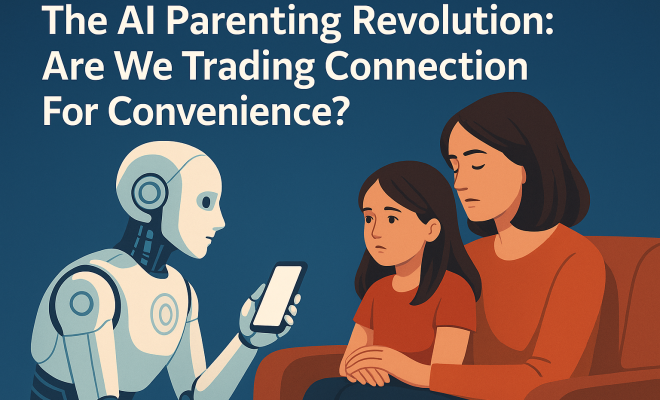
This isn’t just about a father using a chatbot for story time. This is about a seismic shift in how parents approach the monumental task of raising children. We’re seeing a profound integration of AI into everything from daily routines to crucial decision-making, and it’s sparking conversations that cut deep into our understanding of human connection, child development, and the very essence of what it means to be a parent in the 21st century. Is this a liberating innovation, or are we on a slippery slope toward outsourcing the irreplaceable bond between parent and child?
1. The Viral Spark: Alvin Sng’s Chatbot Experiment
Alvin Sng, a software engineer deeply immersed in the world of AI, made headlines when he posted a video showing a large language model (LLM) reading a bedtime story to his infant. The video, which he likely shared as a playful peek into his AI-infused life, quickly went viral. It depicted a tablet displaying a chatbot interface, its synthesized voice narrating a children’s book while his baby lay nearby, ostensibly listening. For Sng, it might have been a simple, clever use of technology to assist with a common parental task – a testament to how ‘parenting hits different when you work in AI,’ as he put it.
However, the internet, as it often does, reacted with a mixture of fascination and fierce condemnation. Critics immediately pounced on the perceived lack of human interaction, the inherent ‘coldness’ of a machine voice replacing a parent’s warmth, and the broader implications for child development. Was this innovation, or was it a form of neglect? Sng’s experience became a lightning rod, forcing many to confront their discomfort with AI encroaching on such a personal, formative aspect of childhood.
2. The Unseen Reality: Most Parents Already Use AI
While Sng’s specific method of using a chatbot for story time might have seemed outlandish to some, the broader truth is that AI parenting is already widespread. A surprising survey revealed that a staggering 81% of parents have, in some form, utilized artificial intelligence for parenting tasks. This isn’t just a niche trend among tech workers; it’s a mainstream phenomenon. Parents are turning to AI for a multitude of reasons, often seeking convenience, information, or even a digital helping hand in their demanding daily lives.
Think about it: voice assistants like Alexa or Google Assistant scheduling appointments, setting timers for screen time, or even answering a child’s endless ‘why’ questions. Smart baby monitors that track sleep patterns and alert parents to changes. Educational apps that adapt to a child’s learning pace. These are all forms of AI quietly integrating into our homes and routines, often without us consciously labeling them as ‘AI parenting.’ The line between helpful technology and a full-fledged AI assistant is increasingly blurred, and parents, often exhausted and overwhelmed, are embracing these tools readily.
3. The Appeal of AI: Making Parenting Easier (or So We Think)
The primary driver behind the rapid adoption of AI in parenting is simple: the promise of making life easier. The same survey that highlighted AI’s prevalence also found that a remarkable 90% of parents believe AI technology simplifies their parenting journey. This isn’t a trivial statistic; it speaks to the immense pressures modern parents face. From managing schedules and household chores to navigating complex educational choices and developmental milestones, the demands are relentless.
AI offers immediate access to information, automates routine tasks, and provides personalized suggestions, theoretically freeing up parental time and mental energy. Imagine quickly researching a fever symptom at 3 AM, getting instant ideas for a toddler’s tantrum, or having an AI-powered app create a customized learning plan for a struggling student. These capabilities are incredibly enticing, offering a sense of control and support in an often chaotic environment. For many, AI isn’t replacing parenting; it’s augmenting it, providing a much-needed assistant in the demanding world of child-rearing.
4. Beyond Convenience: Following AI Advice Over Parental Instincts
Here’s where the conversation around AI parenting takes a more profound and potentially concerning turn. The reliance on AI isn’t confined to mere convenience or information gathering; it’s extending into areas traditionally governed by parental intuition and human judgment. The survey indicated that nearly a third of parents have actually followed AI advice over their own instincts. This isn’t just about what time to pick up groceries; it includes critical areas like health and emotional guidance.
Consider the implications: a parent might consult an AI for advice on managing a child’s anxiety, disciplinary approaches, or even dietary recommendations, and then prioritize the AI’s output over their gut feeling or even professional human advice. While AI can process vast amounts of data and offer statistically probable solutions, it lacks empathy, context, and the nuanced understanding of an individual child’s unique personality and family dynamics. The question then becomes: are we inadvertently training ourselves to distrust our own parental instincts, developed through years of experience and deep connection, in favor of an algorithm? (See: Children's mental health resources.)
5. Expert Warnings: The Potential Harms of AI on Child Development
Despite the widespread adoption and perceived benefits of AI parenting, a chorus of experts is raising serious red flags. Their concerns center on the potential long-term harms AI could inflict on children’s learning, critical thinking, and social-emotional development. Human interaction, particularly with primary caregivers, is fundamental to a child’s growth. It’s how they learn language, develop emotional regulation, understand social cues, and build secure attachments.
When AI steps into roles traditionally filled by human interaction – like reading stories, engaging in conversation, or offering emotional support – there’s a risk of diminishing these vital developmental opportunities. Experts worry that over-reliance on AI could lead to children having reduced attention spans, struggling with complex problem-solving that requires creativity and nuance, and even experiencing delays in developing empathy and social skills. The human brain is wired for human connection, and substituting even a fraction of that with algorithmic interaction could have unforeseen consequences. For more context, see the impact of screen time on toddlers.
6. The Content Quality Conundrum: Low-Quality AI-Generated Material
Another significant concern regarding AI parenting, particularly in areas like education and entertainment, is the quality of AI-generated content. As AI tools become more accessible, there’s a proliferation of content created by algorithms rather than human authors, educators, or artists. This includes stories, educational modules, and even interactive games. The problem is that not all AI-generated content is created equal, and much of it can be of low quality, lacking originality, depth, and crucial pedagogical soundness.
For children, exposure to poorly constructed narratives, factually inaccurate information, or emotionally flat interactions through AI could be detrimental. It might hinder their ability to distinguish between reliable and unreliable sources, stifle their imagination, and expose them to biases embedded within the AI’s training data. Ensuring that children interact with high-quality, thoughtfully designed content – whether human-created or AI-assisted – is paramount, and the current landscape of AI-generated material is a wild west that parents must carefully navigate.
7. Screen Time’s Shadow: The Broader Impact on Development
The debate around AI parenting is inextricably linked to the long-standing concerns about screen time and its impact on child development. Many AI parenting tools are delivered via screens – tablets, smartphones, smart displays. While AI can offer personalized and interactive experiences, it doesn’t negate the established risks associated with excessive screen exposure for young children.
Pediatricians and child development specialists have consistently warned about the potential for screen time to interfere with sleep, reduce opportunities for active play and exploration, and even contribute to language delays. When AI is integrated into these screen-based activities, it adds another layer of complexity. Is the AI enhancing the screen time, making it more ‘educational’ or ‘engaging,’ or is it simply another sophisticated distraction that pulls children further away from real-world, hands-on experiences and crucial human interactions? Finding the right balance between leveraging AI’s potential and safeguarding children from the known pitfalls of excessive screen use is perhaps one of the greatest challenges in this emerging era of AI parenting.
8. The Intimate Line: AI in the Family Circle
The core of the viral controversy surrounding Alvin Sng’s video, and indeed the broader discussion of AI parenting, boils down to a fundamental question: how much technology is too much when it comes to the most intimate and formative aspects of family life? There’s a visceral reaction many people have to the idea of a machine, however sophisticated, taking over roles traditionally held by parents or other caregivers. Reading a bedtime story, comforting a crying child, teaching empathy – these are deeply human acts that forge emotional bonds and shape a child’s understanding of the world.
When AI steps into these shoes, even partially, it challenges our deeply held beliefs about what constitutes good parenting and healthy child development. Is a synthesized voice delivering a story the same as a parent’s voice, with its unique inflections, warmth, and the accompanying physical presence? Can an algorithm truly understand and respond to a child’s nuanced emotional state in the way a loving parent can? These are not merely technological questions; they are profoundly philosophical and emotional ones that touch upon the very definition of family and connection in an increasingly digitized world.
9. Navigating the Future: A Balanced Approach to AI Parenting
So, where do we go from here? The reality is that AI is not going away. Its integration into our lives, including our family lives, will only deepen. The key, then, is not to reject AI outright, but to approach AI parenting with intentionality, critical thinking, and a clear understanding of its potential benefits and significant drawbacks. This calls for a balanced approach, one that prioritizes human connection and child development while thoughtfully leveraging AI as a tool, not a replacement.
Parents must become digitally literate, understanding how AI works, its limitations, and how to evaluate the quality and safety of AI-powered applications. Setting clear boundaries for screen time and AI interaction is crucial, ensuring that technology serves as an enhancement to, rather than a substitute for, real-world experiences and human relationships. Ultimately, the goal should be to use AI to free up parental time and energy for what truly matters: engaging, connecting, and nurturing the unique individuals our children are becoming. The revolution of AI parenting is here, and how we choose to navigate it will profoundly shape the next generation.
10. Ethical Considerations: Data Privacy and Algorithmic Bias in AI Parenting
Beyond the developmental concerns, a major ethical minefield in AI parenting involves data privacy and algorithmic bias. Many AI tools designed for children collect vast amounts of information – everything from voice recordings and facial expressions to learning patterns and even biometric data. Who owns this data? How is it stored, used, and protected? The potential for this sensitive information to be misused, hacked, or sold to third parties is a significant worry. Parents need to be acutely aware of the privacy policies of any AI-powered device or app they introduce into their children’s lives. (See: AI's role in modern parenting.)
Then there’s the issue of algorithmic bias. AI systems learn from the data they’re trained on. If that data reflects existing societal biases – whether related to race, gender, socioeconomic status, or disability – the AI can perpetuate and even amplify those biases. An educational AI, for instance, might inadvertently reinforce stereotypes or fail to recognize diverse learning styles if its training data was not representative. This could lead to an uneven or even harmful learning experience for some children, subtly shaping their worldview and opportunities based on the AI’s inherent, unexamined prejudices. It’s a subtle but powerful influence that demands careful scrutiny from both developers and parents.
11. The Impact on Parental Roles: Redefining Nurturing
AI parenting isn’t just changing how children develop; it’s fundamentally shifting the landscape of what it means to be a parent. Historically, parenting involved a mix of instinct, tradition, community wisdom, and learning through trial and error. Now, a parent can ask an AI for “the best way to handle sibling rivalry” or “how to teach a 5-year-old about sharing.” This immediate access to information, while helpful, can also erode the confidence that comes from personal experience and intuitive decision-making. For more context, see the ban on AI in classrooms for young kids.
Are we outsourcing not just tasks, but aspects of nurturing itself? When an AI suggests the ‘perfect’ response to a child’s sadness, does it diminish a parent’s opportunity to practice empathy, to sit with discomfort, and to learn their child’s unique emotional language through direct interaction? This isn’t to say AI can’t offer valuable insights, but there’s a fine line between using AI as a resource and allowing it to dictate the deeply personal and often messy process of emotional connection and guidance. The art of nurturing involves presence, imperfection, and a willingness to learn alongside your child, qualities that algorithms can’t truly replicate.
12. Case Studies and Examples: AI in Action (Good and Bad)
Let’s look at some tangible examples of AI parenting in practice. On the positive side, consider an AI-powered educational app like Homer or ABCmouse that adapts its curriculum to a child’s individual learning pace and style. If a child struggles with phonics, the AI can offer more practice activities in that area, while accelerating through concepts they’ve mastered. This personalization can be incredibly beneficial for engagement and effective learning, especially for children with specific learning needs.
Another positive example is smart baby monitors that use AI to distinguish between different types of cries or to track breathing patterns, offering parents peace of mind and potentially alerting them to medical concerns. These tools aren’t replacing parental interaction but augmenting their ability to respond effectively. However, on the flip side, we’ve seen instances of AI-powered toys that record children’s conversations without adequate security, leading to privacy breaches. Or consider the phenomenon of “AI friends” for lonely children, like some chatbot companions, which, while offering a semblance of interaction, can potentially impede the development of real-world social skills and the ability to navigate complex human relationships. The spectrum of AI application is wide, and its impact varies wildly depending on its design and implementation.
13. The Role of Regulation and Industry Standards
Given the rapid proliferation of AI parenting tools and the potential risks, the conversation around regulation and industry standards is becoming increasingly urgent. Currently, the landscape is largely unregulated, leaving parents to navigate a complex market with varying levels of quality, safety, and ethical considerations. We need clearer guidelines for data privacy, especially when it involves children’s data. There should be transparency requirements for how AI models are trained and what biases might be embedded within them.
Beyond government regulation, the industry itself has a responsibility to develop ethical AI principles specifically for child-facing applications. This could include independent auditing of AI content for accuracy and age-appropriateness, stricter data encryption, and clear disclaimers about the limitations of AI advice. Without a concerted effort to establish these safeguards, the potential for harm, both in terms of child development and data security, will only grow. This isn’t about stifling innovation, but about ensuring that innovation serves the best interests of children and families.
14. Future Outlook: The AI Nanny and Beyond
Looking ahead, the evolution of AI parenting is likely to become even more sophisticated. We might see the emergence of fully integrated “AI nannies” – robotic or virtual assistants capable of not just scheduling and educating, but also providing emotional companionship, personalized developmental activities, and even basic physical care. Imagine smart homes where AI anticipates a child’s needs, adjusts environmental factors, and provides tailored learning experiences throughout the day.
While this might sound like science fiction, the foundational technologies are already in development. The question isn’t whether this will happen, but how we’ll manage its integration. Will these advanced AI systems truly free up parents for deeper, more meaningful interactions, or will they create a new form of digital dependency, further eroding the irreplaceable human element of child-rearing? Preparing for this future means engaging in proactive discussions now about ethical design, societal impact, and maintaining the primacy of human connection as technology advances at an unprecedented pace. For more context, see the effects of AI in education. (See: Impact of technology on child development.)
Frequently Asked Questions About AI Parenting
Q1: What exactly is “AI parenting”?
AI parenting refers to the use of artificial intelligence technologies to assist with or influence child-rearing tasks and decisions. This can range from simple smart home devices that manage schedules to complex educational apps, smart baby monitors, and even AI chatbots providing advice or reading stories. It’s about leveraging algorithms and machine learning to support parents in various aspects of their children’s lives.
Q2: Is AI parenting inherently bad for children?
Not necessarily. AI parenting isn’t inherently good or bad; its impact depends heavily on how it’s used. When used thoughtfully as a tool to augment human interaction, provide convenience, or offer personalized learning, AI can be beneficial. However, over-reliance on AI, especially for emotional connection, critical decision-making, or as a replacement for human interaction, can have potential harms on a child’s social, emotional, and cognitive development.
Q3: What are the main benefits of using AI in parenting?
Parents often turn to AI for convenience, efficiency, and personalized support. Benefits include automating routine tasks (like scheduling or reminders), instant access to information, personalized educational content that adapts to a child’s pace, monitoring tools (like smart baby monitors), and even creative play prompts. For busy and overwhelmed parents, AI can offer a sense of relief and control.
Q4: What are the biggest risks of AI parenting for children?
The primary risks involve potential negative impacts on child development, such as reduced opportunities for human interaction vital for social and emotional skills, diminished attention spans, potential exposure to low-quality or biased content, privacy concerns related to data collection, and the risk of parents overriding their own instincts in favor of algorithmic advice. Excessive screen time, often associated with AI tools, is also a concern.
Q5: How can parents ensure they’re using AI parenting tools safely and effectively?
A balanced approach is key. Parents should be digitally literate, understand the limitations of AI, and carefully vet any AI-powered apps or devices for privacy policies and content quality. Prioritize human interaction over AI, set clear screen time boundaries, and use AI as an enhancement, not a replacement, for your parental role. Always trust your instincts, and consult human experts (pediatricians, educators) for critical decisions.
Q6: Will AI eventually replace human parents?
Experts overwhelmingly agree that AI cannot and should not replace human parents. The unique emotional bond, empathy, nuanced understanding, and unconditional love provided by human caregivers are fundamental to a child’s healthy development and cannot be replicated by an algorithm. AI can be a helpful assistant, but it lacks the capacity for true human connection and intuition.
Q7: What should I look for in an AI parenting app or device?
When choosing AI parenting tools, look for transparent privacy policies, strong data encryption, age-appropriate content, positive reviews from other parents, and endorsements from child development specialists. Prioritize tools that encourage active participation and critical thinking, rather than passive consumption. Be wary of tools that promise to “fix” all parenting challenges or replace essential human interaction.
“`
Trending Now
- the complete explanation
- this guide on new research: this is the real reason ai cheating in schools is exploding
- this guide on this game-changing bill could completely transform your kids’ financial future
- Americans of all ages want more…
- this guide on dramatic shift: this new school choice program could redefine education funding
Frequently Asked Questions
How is AI changing parenting?
AI is changing parenting by integrating technology into daily routines, such as using chatbots for storytelling or decision-making. This shift raises questions about the balance between convenience and the essential human connection between parents and children.
What are the concerns about AI in parenting?
Concerns about AI in parenting include the potential loss of emotional connection and the risk of outsourcing crucial parenting responsibilities to technology. Critics worry that relying on AI could negatively impact child development and the parent-child bond.
Who is Alvin Sng and what did he do?
Alvin Sng is a software engineer from San Francisco who gained attention for posting a video of a chatbot reading a bedtime story to his baby. His experiment sparked widespread discussion on the implications of using AI in parenting.
Is AI parenting a trend?
Yes, AI parenting is becoming increasingly common, with many parents incorporating technology into their child-rearing practices. This trend has ignited debates about its effects on family dynamics and the essence of parenting in the modern age.
What are the benefits of using AI in parenting?
Benefits of using AI in parenting include increased convenience, assistance with daily tasks, and access to educational resources. AI tools can help parents manage routines more efficiently, but they also raise important questions about emotional engagement.
Agree or disagree? Drop a comment and tell us what you think.