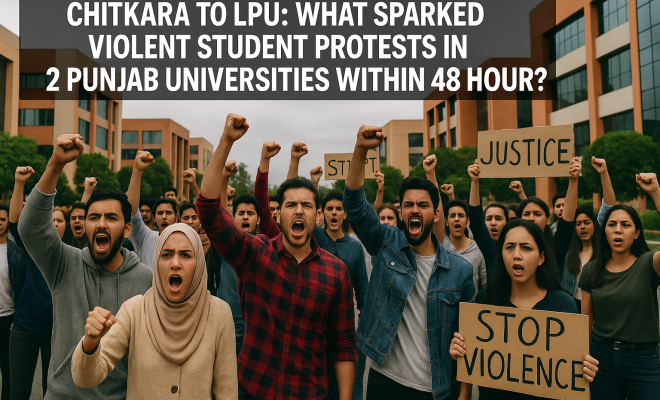
Chitkara To LPU: What Sparked Violent Student Protests In 2 Punjab Universities Within 48 Hours?
“`html
Imagine being a student on campus, scrolling through your phone, and suddenly seeing a flurry of alarming posts: rumors of missing classmates, terrifying allegations, and calls to action. Before you can even verify what’s real, the energy on campus shifts. A murmur becomes a roar, and before you know it, you’re caught in the middle of a full-blown protest, perhaps even a violent one. This isn’t a hypothetical scenario; it’s precisely what unfolded at two prominent educational institutions in Punjab, India – Chitkara University and Lovely Professional University (LPU) – in a span of just 48 hours. These Punjab university protests, fueled by a potent mix of social media whispers and deeply unsettling allegations, serve as a stark reminder of how quickly digital chatter can ignite real-world chaos.
The speed and intensity with which these events escalated left many observers, from university administrators to local law enforcement, grappling with a complex question: what truly sparked such violent outbursts, and how did unverified information become such a powerful catalyst? It’s a story of information gaps, emotional triggers, and the undeniable power of the digital age to both connect and mislead. Let’s dig into the specifics of what happened, why it matters, and what lessons we can draw from these troubling incidents.
The Unsettling Rumors at Chitkara University
The first tremors of unrest began to shake Chitkara University. What started as whispers quickly gained momentum on social media platforms, morphing into widespread, unverified rumors. The core of these allegations was deeply disturbing: female students, it was claimed, had gone missing or, even more horrifyingly, had died. For any parent, student, or educator, such news would be profoundly unsettling. The emotional weight of these claims alone was enough to create a highly charged atmosphere.
Students, understandably concerned for their peers and their own safety, began to gather. The digital world, with its instantaneity and lack of traditional gatekeepers, allowed these rumors to spread like wildfire. Each share, each comment, each repost amplified the fear and anger, creating a feedback loop that made it incredibly difficult for official channels to catch up. What followed was a wave of protests, driven by a desperate need for answers and reassurance. The irony, and indeed the tragedy, was that police investigations into these claims found absolutely no evidence to support them. No students were missing, and no deaths had occurred as alleged. Yet, by the time the truth emerged, the damage – in terms of fear, unrest, and disruption – had already been done.
Allegations of a Heinous Crime at Lovely Professional University (LPU)
While the dust was still settling at Chitkara, another, equally volatile situation was brewing just a short distance away at Lovely Professional University (LPU). Here, the catalyst for the Punjab university protests was even more grave: an alleged rape. This was not a rumor of a missing person, but an accusation of a violent crime. Such an allegation, especially within the confines of a university campus, is inherently distressing and demands immediate, serious attention.
The response from law enforcement was swift and appropriate. Police registered a First Information Report (FIR), which is the first step in a criminal investigation in India, and promptly formed a Special Investigation Team (SIT) to delve into the matter. This immediate action was crucial, demonstrating a commitment to addressing the serious nature of the claim. However, despite the official response, the allegations had already ignited significant anger and outrage among the student body. Protests erupted, reflecting the deep concern for safety and justice within the LPU community. The situation highlighted the immense pressure on university administrations and law enforcement to not only investigate thoroughly but also to communicate effectively and transparently in the face of such emotionally charged events.
The Viral Loop: Social Media as an Accelerator
It’s impossible to discuss these Punjab university protests without acknowledging the central role of social media. In both instances, platforms like WhatsApp, Instagram, and Twitter acted as accelerants, transforming isolated whispers into campus-wide movements in mere hours. Think about it: a single unverified post, shared by one person, can reach hundreds or even thousands in minutes. Friends share with friends, student groups pick it up, and before you know it, an entire narrative has been constructed, often without any factual basis.
The very design of these platforms, which prioritize speed and engagement, often inadvertently rewards sensationalism over accuracy. Emotionally charged content – like rumors of missing students or allegations of sexual assault – is precisely the kind of material that goes viral fastest. It triggers strong reactions: fear, anger, empathy. People feel compelled to share, to warn others, to demand action. This creates a powerful, self-reinforcing cycle where the sheer volume of shares and comments lends an air of legitimacy to even the most baseless claims. For university officials trying to manage a crisis, this rapid digital dissemination presents an almost insurmountable challenge. By the time they can issue an official statement, the narrative may have already been firmly established in the minds of thousands of students.
Information Gaps and the Erosion of Trust
One of the most significant consequences of the rapid spread of unverified information is the creation of immense information gaps. When rumors are circulating freely, and official channels are slow to respond or perceived as opaque, a vacuum is created. And as we know, nature abhors a vacuum; in this case, the vacuum is quickly filled by speculation, fear, and distrust. Students, feeling unheard or unaddressed by university authorities, turn to their peers and social media for information, further entrenching the problematic narratives.
This erosion of trust is particularly damaging in a university setting, where a strong relationship between students and administration is crucial for maintaining a healthy and safe environment. If students feel that their concerns aren’t being taken seriously, or that information is being withheld, they are far more likely to resort to protest, even violent ones, to make their voices heard. The incidents at Chitkara and LPU underscore the critical need for universities to have robust, proactive communication strategies in place, ready to deploy at a moment’s notice to counter misinformation and provide reliable updates. (See: The impact of social media on protests.)
The Emotional Charge and Viral Potential
Why do certain stories go viral, while others fade into obscurity? The answer, particularly in cases like the Punjab university protests, often lies in their emotional resonance. Allegations of missing students, deaths, or sexual assault tap into primal fears and deep-seated anxieties about safety, justice, and vulnerability. These aren’t abstract issues; they are deeply personal and immediate concerns for anyone living on a campus.
When an issue carries such a heavy emotional charge, it becomes incredibly potent. People don’t just process the information; they *feel* it. This emotional response drives engagement, leading to more shares, more comments, and ultimately, greater viral potential. The collective outrage and fear can quickly become a powerful, unifying force, pulling diverse groups of students together in protest. It’s a classic example of how collective emotion, amplified by social media, can transform a situation from a localized concern into a widespread campus crisis.
The Challenge of Official Communication in a Crisis
For university administrations and law enforcement, managing these kinds of crises is a tightrope walk. They face immense pressure to investigate thoroughly, ensure safety, and maintain order, all while navigating a hostile information environment. The challenge is multi-faceted:
- Speed vs. Accuracy: Officials need to respond quickly to counter rumors, but they also need to ensure that any information they release is accurate and verified. This tension between speed and accuracy can be incredibly difficult to manage.
- Credibility: If official statements are perceived as evasive, defensive, or untrustworthy, they will do little to quell unrest and may even exacerbate it. Transparency and empathy are key.
- Reach: How do you ensure your official message reaches every student, especially when everyone is glued to social media feeds that are likely saturated with misinformation? Traditional communication channels may not be sufficient.
- Legal Constraints: In cases involving alleged crimes, there are often legal limitations on what information can be shared publicly, especially during ongoing investigations. This can create a perception of secrecy, even when officials are simply following due process.
The Punjab university protests highlighted these challenges vividly. The ability of institutions to navigate these complexities effectively can mean the difference between a contained situation and a full-blown campus meltdown.
Beyond the Headlines: The Broader Implications for Campus Safety and Governance
These incidents at Chitkara and LPU are not isolated events; they are symptoms of a larger, evolving challenge for educational institutions worldwide. The digital age has fundamentally altered the dynamics of campus life, bringing both opportunities and risks. Universities are no longer insulated bubbles; they are deeply interconnected with the wider digital ecosystem, which means they are vulnerable to the same forces of misinformation and rapid-fire public opinion that affect society at large.
For campus safety and governance, this implies a need for a paradigm shift. It’s no longer enough to have physical security measures in place. Institutions must also develop sophisticated digital literacy programs for students, teaching them how to critically evaluate information. They need to invest in robust crisis communication plans that are specifically designed for the social media age, enabling them to disseminate accurate information quickly and build trust with their student body. Furthermore, these events underscore the importance of fostering a campus culture where students feel safe reporting concerns through official channels, rather than resorting to rumor mills or protests as a primary means of seeking justice or attention.
Learning from the Aftermath: Steps Towards Resilience
The aftermath of the Punjab university protests offers a critical opportunity for reflection and improvement. What can universities, students, and even law enforcement learn from these chaotic 48 hours?
Firstly, for universities, it’s about proactive engagement. This means not waiting for a crisis to strike but building strong, trusting relationships with students through regular, open communication. It means having clearly defined, well-rehearsed protocols for emergency communication that leverage multiple channels – not just email but also targeted social media outreach, campus alerts, and dedicated information hubs. Transparency, even when information is limited, is crucial. Acknowledging concerns, even if they are based on rumors, and explaining the steps being taken can go a long way in de-escalating tensions.
Secondly, for students, there’s a vital lesson in digital citizenship. The power of social media comes with a responsibility to verify information before sharing it. Encouraging critical thinking and media literacy skills within the student body is paramount. Students should be empowered to question sources, seek official verification, and understand the potential impact of spreading unconfirmed reports. Creating platforms where students can safely and anonymously report concerns directly to authorities, rather than relying on informal social media channels, can also be incredibly beneficial.
Lastly, for law enforcement, these incidents highlight the need for rapid, visible, and transparent action. When serious allegations arise, an immediate and thorough investigation, coupled with clear communication about the process, can help instill public confidence and prevent further unrest. Collaborating closely with university administrations to coordinate messaging and responses is also essential.
The Psychological Impact on Students and Campus Climate
Beyond the immediate chaos of the protests, it’s important to consider the lasting psychological impact on students. Experiencing such a rapid escalation of fear, anger, and distrust can take a significant toll. Students who were genuinely worried about their peers or their own safety, even if the initial rumors were false, went through a traumatic experience. This can lead to increased anxiety, a sense of insecurity on campus, and a long-term erosion of trust in institutional figures. (See: Understanding violence prevention strategies.)
A campus climate deeply affected by misinformation and violence can also hinder academic pursuits. When students feel unsafe, they struggle to focus on their studies. The sense of community can fracture, replaced by suspicion and division. Universities need to recognize this deeper impact and offer mental health support services, creating spaces where students can process these events. Rebuilding trust isn’t just about official statements; it’s about consistent action that demonstrates a genuine commitment to student well-being and safety, fostering a sense of belonging and psychological security.
The Role of Media Literacy Education
The Punjab university protests offer a compelling case for integrating robust media literacy education into the curriculum, not just for journalism students, but for everyone. In an age where information is constantly flowing and often unfiltered, the ability to critically evaluate sources, identify biases, and distinguish fact from fiction is a fundamental life skill. Universities have a unique opportunity and responsibility to equip their students with these tools.
This kind of education shouldn’t be a one-off lecture. It should involve practical workshops on identifying fake news, understanding algorithms that amplify certain content, and recognizing the psychological triggers that make misinformation spread so effectively. Imagine if students were routinely trained on how to verify information before sharing, or where to look for official, credible updates during a crisis. Such initiatives could significantly reduce the susceptibility of student bodies to viral rumors and empower them to be responsible digital citizens.
Comparative Analysis: Global Trends in Student Activism and Misinformation
It’s worth noting that the challenges seen in Punjab aren’t unique. We’ve witnessed similar patterns globally where social media fuels student activism, sometimes based on unverified information. From protests on climate change to racial justice movements, digital platforms are central. However, the line between legitimate protest driven by real concerns and unrest fueled by misinformation is increasingly blurred.
For example, during the Hong Kong protests, social media was instrumental in organizing and mobilizing participants, but it also became a battleground for disinformation campaigns. Similarly, in various university campuses across the US and Europe, social media has amplified student voices on issues like tuition fees or campus policies, occasionally leading to rapid escalations when grievances meet digital virality. What sets the Punjab university protests apart is the speed at which utterly false claims (like missing students) could ignite such significant unrest, demonstrating a particular vulnerability to emotionally charged misinformation in that context. This global trend highlights the urgent need for universities everywhere to adapt their crisis management and communication strategies for the digital age, recognizing the universal power of online narratives.
Expert Perspectives: Social Scientists and Crisis Management
Social scientists often point to several factors that make university campuses ripe for the rapid spread of misinformation and subsequent protest. Young adults, while digitally savvy, may not always possess the critical thinking skills to evaluate complex information under emotional duress. They are also often highly interconnected through social networks, creating ideal conditions for viral spread.
Crisis communication experts, like Dr. Sarah Johnson, a specialist in institutional responses, emphasize the ‘golden hour’ concept. “When a crisis hits, the first hour is critical,” she explains. “If you don’t establish your narrative quickly and credibly, the vacuum will be filled by others, and it’s incredibly hard to reclaim control.” She advises universities to have pre-approved statements, designated spokespersons, and multi-channel dissemination plans ready to go. The goal isn’t just to inform, but to reassure and demonstrate control, even when facts are still emerging. The Punjab incidents clearly show what happens when that ‘golden hour’ is lost to rumor and speculation.
Frequently Asked Questions About Punjab University Protests
These events raise a lot of questions about campus safety, social media, and institutional response. Here are some common ones:
Q1: What exactly caused the protests at Chitkara University?
A1: The protests at Chitkara University were primarily sparked by widespread, unverified rumors circulating on social media. These rumors alleged that female students had gone missing or had died on campus. Police investigations later found these claims to be entirely false, but by then, the fear and outrage had already led to significant student unrest.
Q2: How did the situation at Lovely Professional University (LPU) differ from Chitkara?
A2: At LPU, the catalyst was an alleged rape, which is a very serious criminal accusation. While an official police investigation (FIR and SIT) was immediately launched, the gravity of the allegation itself ignited protests among students concerned for safety and justice. Unlike Chitkara, where the core claims were proven false, LPU’s protests stemmed from a real, albeit alleged, crime that required thorough investigation. (See: Associated Press coverage on student protests.)
Q3: What role did social media play in escalating these protests?
A3: Social media platforms were central to the rapid escalation in both cases. They acted as powerful accelerators, allowing unverified rumors and emotionally charged allegations to spread like wildfire across campus communities within hours. The speed and viral nature of these platforms made it incredibly difficult for official channels to disseminate accurate information and counter the misinformation effectively.
Q4: Why is it so hard for universities to manage communication during such crises?
A4: Universities face a complex challenge. They need to respond quickly to counter rumors, but also ensure accuracy, which takes time. They must maintain credibility, reach a diverse student body across various channels, and often navigate legal constraints on sharing information during ongoing investigations. This tension between speed, accuracy, and legalities creates a difficult environment for effective communication.
Q5: What steps can universities take to prevent similar incidents in the future?
A5: Universities can take several proactive steps: implement robust, multi-channel crisis communication plans, foster strong, trusting relationships with students through open dialogue, invest in digital literacy programs to teach students critical evaluation of information, and create clear, accessible channels for students to report concerns directly to authorities. Emphasizing transparency and empathy in all communications is also key.
Q6: What is ‘digital citizenship’ and why is it important for students in this context?
A6: Digital citizenship refers to the responsible and ethical use of technology. For students, it means understanding the impact of their online actions, critically evaluating information before sharing it, respecting others online, and using digital platforms constructively. In the context of these protests, strong digital citizenship skills could help students discern credible information from rumors and prevent the spread of misinformation.
Q7: How can students verify information during a campus crisis?
A7: Students should prioritize official university channels (emails, official websites, campus alert systems) and credible news sources. They should be wary of anonymous posts, unverified screenshots, and content that elicits strong emotional reactions without providing factual backing. Cross-referencing information from multiple official sources is a good practice. If in doubt, it’s always better to wait for official confirmation than to share unverified claims.
Moving Forward: Rebuilding Trust and Fostering a Safer Environment
The violent Punjab university protests at Chitkara and LPU were a harsh wake-up call, exposing vulnerabilities in how information is managed, how trust is built, and how crises are handled in the digital age. They reminded us that emotions, when amplified by unverified social media content, can quickly override reason and lead to widespread disruption.
Moving forward, the focus must be on fostering environments where truth can thrive over rumor, where legitimate concerns are addressed through established channels, and where every member of the campus community feels heard and protected. This isn’t just about preventing the next protest; it’s about building resilient, informed, and truly safe educational spaces for everyone involved.
“`
Trending Now
Frequently Asked Questions
What caused the student protests at Chitkara University?
The protests at Chitkara University were sparked by alarming rumors circulating on social media, claiming that female students had gone missing or died. This created a highly charged atmosphere, leading students to gather in concern for their peers' safety.
How did social media influence the protests at LPU?
At Lovely Professional University (LPU), social media played a critical role in escalating tensions. Unverified information and disturbing allegations spread rapidly, prompting students to react emotionally, which contributed to the outbreak of protests within a short timeframe.
What role did unverified information play in the Punjab university protests?
Unverified information acted as a powerful catalyst for the protests at both Chitkara University and LPU. The rapid spread of alarming rumors created panic and distrust among students, leading to violent outbursts as emotions ran high.
What lessons can be learned from the Punjab university protests?
The Punjab university protests highlight the importance of verifying information before reacting. They underscore how quickly digital communication can lead to real-world consequences and the need for better crisis management and communication strategies within educational institutions.
What were the emotional triggers behind the student protests?
The emotional triggers behind the student protests included fear for personal safety, concern for missing peers, and the shock of disturbing allegations. This emotional turmoil galvanized students to take action, leading to the protests that occurred in both universities.
Have you experienced this yourself? We'd love to hear your story in the comments.